ATV Rules on Florida Forest Roads
It's incredibly frustrating, isn't it? You get that itch to load up the ATV and explore some of Florida's beautiful backwoods, maybe access a remote hunting spot or just enjoy the ride, only to be hit with a wave of uncertainty about where you can legally go. The rules around using ATVs on our state's forest roads can feel like a labyrinth, changing from one management area to the next, leaving many of us scratching our heads. This guide is designed to cut through that confusion, giving you a clear understanding of the regulations governing ATV use on Florida's forest roads so you can ride confidently and responsibly.
Understanding Florida's ATV Regulations on Forest Roads
Florida is blessed with vast expanses of public land, from sprawling National Forests to numerous State Forests and Wildlife Management Areas (WMAs). Each offers unique opportunities for outdoor recreation, but with that variety comes a patchwork of regulations, especially when it comes to off-road vehicles like ATVs. You can't just assume that what's allowed in one area will fly in another; ignorance of the rules can lead to hefty fines, or worse, damage to the very natural beauty we all want to enjoy.
The Landscape of Public Access and Vehicle Use
When you think about taking your ATV out, the first hurdle is figuring out where you're even allowed to operate it. Unlike driving your truck on a paved highway, ATV use on public lands is generally restricted to designated trails and roads. This isn't just about safety; it's about protecting sensitive ecosystems, preventing soil erosion, and minimizing disturbance to wildlife. Imagine rolling into a pristine palmetto flat only to find ATV tracks tearing through vital deer bedding areas—it's not a pretty sight, and it certainly impacts other users like hunters. Understanding these underlying reasons helps us appreciate why the rules are in place, even when they feel restrictive. It's a delicate balance of access and preservation.
Specifics for National Forests (Ocala, Apalachicola, Osceola)
Florida's National Forests, including the Ocala, Apalachicola, and Osceola, are often popular destinations for outdoor enthusiasts. For ATVs, these lands generally operate under what's known as a "Travel Management Rule." This rule means that motor vehicle use, including ATVs, is restricted to designated routes shown on a Motor Vehicle Use Map (MVUM). You absolutely need to get your hands on the current MVUM for the specific National Forest you plan to visit. These maps clearly mark which roads and trails are open to which types of vehicles, and for how long.
For example, in the Ocala National Forest Hunting area, you'll find a variety of sandy trails and roads. While some are clearly open to ATVs, others might be limited to licensed street-legal vehicles or entirely closed. The MVUM is your bible here. Operating an ATV off these designated routes, even if it looks like a faint trail, is a big no-no and can lead to a citation. Generally, within National Forests, you might not need a specific "OHV permit" like you would in some other states, but you must adhere strictly to the MVUM. For more general guidelines, check out Public Hunting Land in Florida.
State Forest and WMA Variances
Moving beyond the National Forests, Florida's State Forests and Wildlife Management Areas (WMAs) introduce their own set of rules, which can be even more diverse. State Forests, managed by the Florida Forest Service, often have designated ATV trail systems, but these are typically separate from general forest roads and usually require a specific trail pass or permit. These trails are often maintained for recreational riding, not necessarily for hunting access.
WMAs, managed by the Florida Fish and Wildlife Conservation Commission (FWC), are designed primarily for wildlife conservation and public hunting. This means that vehicle access, especially for ATVs, is often much more restricted. Many WMAs, such as those within Hunting the Everglades and Big Cypress or even smaller, more accessible ones, will explicitly state "No ATVs" or "No motorized vehicles off designated main roads" in their area-specific regulations. If ATV use is allowed, it's typically limited to specific management roads for accessing hunting stands, and usually only during certain seasons or hunt periods. You'll need to check the specific WMA brochure for the area you intend to visit. In some cases, you might be allowed to use an ATV on a WMA to retrieve game, but only after bagging an animal and often with strict guidelines on how and where you can drive. Don't forget that most WMAs also require a The Florida WMA Management Area Permit in addition to your hunting license, which is a separate consideration from vehicle rules.
| Public Land Type | Primary Management Agency | Typical ATV Access Rules | Common Permits/Decals Required | Key Resource to Check |
|---|---|---|---|---|
| National Forests | U.S. Forest Service | Restricted to designated routes on Motor Vehicle Use Map (MVUM). Off-road travel prohibited. | None specific for OHV in FL | Forest Service MVUM for specific forest |
| State Forests | Florida Forest Service | Often have dedicated ATV trail systems. May require separate trail pass/permit. General forest roads often restricted. | State Forest ATV trail pass/permit | Individual State Forest Website |
| Wildlife Mgmt. Areas | Florida Fish & Wildlife (FWC) | Highly restricted. Often "No ATVs" or limited to specific main roads/seasons for hunting access. | WMA Management Area Permit (for hunting) | Specific WMA Brochure/Regulations |
Legal Requirements for Operating an ATV on Florida Forest Roads
Beyond knowing where you can ride, it's equally important to understand the legalities of operating your ATV. Florida has specific requirements for the vehicles themselves and for the operators, whether you're on a public forest road or a dedicated trail. Skipping these steps can lead to penalties that can quickly sour your outdoor adventure.
Vehicle Registration and Titling
In Florida, off-highway vehicles (OHVs), which include ATVs, are generally not required to be registered or titled if they are operated exclusively on private property or designated public OHV trails that are not part of the state's highway system. This is a common point of confusion. If you're riding solely on a designated ATV trail within a State Forest, for instance, you typically won't need a tag like a car.
However, if you intend to operate your ATV on any public road or highway, even briefly to get from one section of a trail to another, it generally needs to be street-legal. Making an ATV street-legal in Florida usually means adding headlights, taillights, brake lights, mirrors, a horn, and turn signals, and then registering it as a "motor vehicle." This is a complex process, and most ATVs are not designed for highway use. For the purpose of forest roads, most of which are not considered "public highways" in the traditional sense, you're usually looking at the off-road rules. Always confirm if the specific forest road you're on crosses over into areas considered a public road where registration might be required.
Rider Safety Gear and Age Restrictions
Safety is paramount, and Florida has clear rules to protect ATV riders, particularly younger ones.
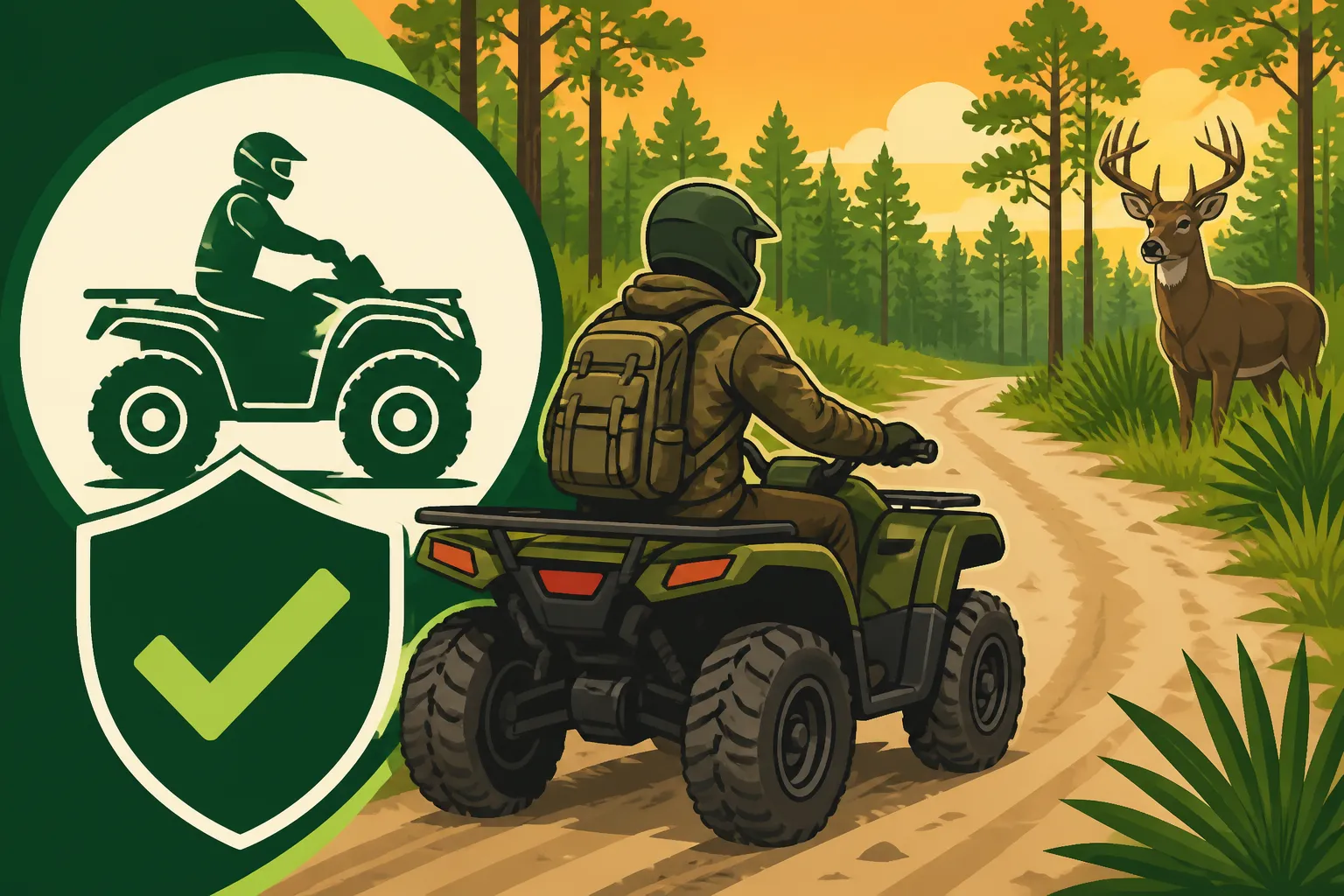
- Helmets: Any person operating an ATV on public lands in Florida, or on designated ATV trails, must wear a safety helmet. This isn't just a suggestion; it's a legal requirement. Choose a helmet that meets federal safety standards (DOT approved).
- Eye Protection: Similarly, eye protection is mandatory for ATV operators on public lands. Goggles or a helmet with a face shield are essential to protect your eyes from debris, branches, and insects.
- Age Restrictions: Florida law prohibits anyone under 16 years of age from operating an ATV on public lands unless they are accompanied by an adult and meet specific safety requirements. Furthermore, riders under 16 must also have completed an approved ATV safety course. This is crucial for keeping our youth safe and preventing accidents. It's not just about what's legal; it's about good judgment and ensuring everyone comes home safely.
Permitting and Decal Requirements
While Florida doesn't have a statewide "OHV permit" for all public lands, specific areas might require them. As mentioned before, some State Forests with dedicated ATV trail systems will require you to purchase a permit or decal to access those trails. These permits help fund the maintenance of the trails and facilities. Make sure to check the specific State Forest's website or contact their office before you go.
For Wildlife Management Areas, as discussed, the primary "permit" you'll need for hunting access is The Florida WMA Management Area Permit itself, which is separate from ATV-specific permits. Within WMAs, if ATV use is permitted for game retrieval or specific access, it's usually implicitly covered by your WMA permit, but the rules are still very strict on where and when you can operate. It's rare to find an FWC-managed area that has open, recreational ATV trails; their focus is generally on low-impact access for hunting and fishing. Always confirm any decal or permit requirements for your specific destination to avoid unexpected issues.
Navigating and Staying Compliant on Florida Forest Roads
So, you've got your ATV in good order, you understand the basic legal requirements, and you're ready to hit the trails. Now comes the practical side of staying compliant and safe out there. Florida's terrain can be deceptive, and the boundaries between legal and illegal ATV use aren't always marked with flashing lights.
Identifying Legal ATV Trails and Roads
This is arguably the most critical aspect of responsible ATV use on public land. The old adage "when in doubt, don't" applies perfectly here.
- Official Maps are Your Best Friend: For National Forests, the Motor Vehicle Use Map (MVUM) is the definitive guide. For State Forests and WMAs, their official brochures and maps will detail designated vehicle access points and any restricted areas. Don't rely on old maps or verbal directions; get the most current official information.
- Mapping Apps as a Game-Changer: Modern technology can be a huge asset. Apps like onX Hunt or GoHunt are incredibly useful for overlaying property boundaries and designated public land features onto a satellite image of the landscape. They can show you in real-time if you're on a legal road or if you're about to cross into a restricted zone. Using onX Layers for Florida Land Status can help you visualize exactly where you are in relation to designated trails and property lines, which is invaluable for ensuring you stick to legal routes. It's often the difference between a great day and a ticket.
- Recognizing Open vs. Closed: Look for signage. Forest roads and trails often have signs indicating whether they are open or closed to motorized vehicles, or if there are specific restrictions. Learn to recognize these. A closed gate, a "No Vehicles" sign, or even a natural barrier like a downed tree across a faint track should be taken as a clear indication that the route is not open for ATV use. You can also glean a lot from checking Vehicle Rules on Florida Public Land for general information.
Environmental Impact and Responsible Riding
Florida's ecosystems are incredibly diverse and often fragile. From ancient cypress swamps to sprawling pine flatwoods and sensitive wetlands, our natural environment is easily impacted by off-road activity.
- Stick to Marked Trails: This cannot be stressed enough. Going off-trail, even for a short distance, can damage vegetation, create new erosion channels, disturb wildlife, and spread invasive species. Florida's sandy soils are particularly susceptible to erosion, and ATV ruts can quickly become deep, impassable trenches, especially during heavy rains.
- Protect Wildlife: Remember that many of these areas are critical habitat for a wide array of wildlife, including deer, turkeys, and even Florida black bears. Excessive noise and off-trail intrusions can displace animals, disrupt breeding patterns, and stress wildlife. Be especially mindful during sensitive times like nesting seasons or deer fawning periods. For those interested in Hunting Florida's Green Swamp or other natural areas, preserving the habitat is key to long-term hunting success.
- Respect Other Users: Public lands are for everyone. Hunters, hikers, birdwatchers, and equestrians all share these spaces. Operating your ATV responsibly means minimizing noise, yielding to other users, and being courteous. Nobody enjoys having their peaceful outdoor experience shattered by a loud, fast-moving ATV.
Consequences of Non-Compliance
Breaking the rules, whether intentionally or not, can have significant repercussions.
- Fines and Penalties: Operating an ATV in a restricted area, failing to wear a helmet, or riding underage without proper supervision can all result in fines. These aren't usually cheap and can range from a couple hundred dollars to much more, depending on the severity of the violation.
- Vehicle Impoundment: In some cases, repeated violations or particularly egregious acts of non-compliance can lead to your ATV being impounded. This is a major headache and an expensive process to recover your vehicle.
- Loss of Privileges: Depending on the violation, you could face a temporary or permanent ban from certain public lands, impacting your ability to hunt or recreate in those areas in the future. Wildlife officers take these rules seriously because they are in place to protect our shared natural resources and ensure everyone can enjoy them safely. It's always best to be overly cautious and double-check the rules for the specific area you're exploring, whether it's Ocala National Forest Hunting or a local WMA.
By understanding and adhering to Florida's ATV rules on forest roads, you're not just avoiding trouble; you're also doing your part to preserve these incredible natural spaces for future generations of outdoor enthusiasts.
Disclaimer
This article is for general informational purposes only and does not constitute professional advice. Laws, prices and regulations vary by location and change over time. Consult a qualified professional for guidance on your specific situation.