Florida Rabbit Habitat Restoration Efforts
Florida's rabbit populations, a beloved small game species for many hunters, have faced significant challenges over the decades due to widespread habitat loss and degradation. It's a frustrating reality when you remember chasing cottontails through fields as a kid, only to find those same areas now developed or overgrown with invasives. This guide dives deep into the proactive efforts underway across the Sunshine State to restore vital rabbit habitat, ensuring healthier populations and continued hunting opportunities for future generations.
The Pressures on Florida's Rabbit Populations
Florida's rich, diverse ecosystems are home to both Eastern cottontails and marsh rabbits, two species that, while resilient, aren't immune to the relentless march of development and changing land use. It's easy to assume rabbits are everywhere, but their numbers in many areas have seen a noticeable dip, directly impacting the quality and availability of hunting opportunities. This decline isn't a single issue, but rather a complex web of environmental and human-induced pressures that have chipped away at their ability to thrive.
Habitat Loss and Fragmentation
The most significant hurdle for Florida's rabbits is, without a doubt, the vanishing and breaking up of their preferred habitats. Rabbits need specific types of cover and food sources – often a mosaic of open grassy areas, dense brush for escape, and nearby wetlands for marsh rabbits. As Florida's human population grows, these crucial areas are converted into housing developments, agricultural fields, or commercial zones. What's left behind are often small, isolated pockets of habitat that are too fragmented to support healthy, genetically diverse rabbit populations. Imagine a rabbit trying to cross a busy highway to find a mate or new food sources; it's a perilous journey, if not an impossible one.
Even within natural areas, changes in land management practices, or a lack thereof, can degrade habitat quality. Fire suppression, for instance, can lead to dense, uniform stands of timber that lack the open understory and diverse forage rabbits need. Overgrown palmetto thickets, while offering some cover, can become so dense that they limit the growth of palatable grasses and forbs, making it a "green desert" for a hungry cottontail. This fragmentation makes populations more vulnerable to local extinctions, as rabbits can't easily disperse and repopulate areas.
Predation Pressures and Competition
While habitat loss is the big picture, increased predation and competition for resources also play a significant role in localized rabbit population struggles. With human development often comes an increase in generalist predators like coyotes, raccoons, and even domestic cats and dogs, which thrive on the edge of urban and suburban areas. These predators can exert heavy pressure on rabbit populations, especially in fragmented habitats where escape cover might be sparse or inconsistent.
Furthermore, changes in the ecosystem, such as the introduction or proliferation of non-native species, can intensify competition for food and space. Feral hogs, for example, can devastate ground cover and forage beds, directly impacting the plants rabbits depend on. Even native species, if their populations are out of balance due to human intervention, can increase competition. It's a delicate balance out there, and any shift can tip the scales against smaller game like rabbits. Understanding these interwoven pressures is the first step towards effective Florida Rabbit Habitat Restoration Efforts.
Strategic Approaches to Rabbit Habitat Restoration
Thankfully, efforts are underway across Florida to reverse these trends and actively restore the habitats that rabbits, and countless other species, depend on. These aren't just theoretical ideas; they're hands-on, boots-on-the-ground initiatives that are making a real difference. The goal is to recreate and maintain the dynamic, diverse landscapes that once characterized much of the state, providing the food, cover, and breeding grounds necessary for robust rabbit populations.
Prescribed Fire and Understory Management
One of the most powerful and historically accurate tools in Florida's ecological toolkit is prescribed fire. Our pine forests, flatwoods, and prairies evolved with fire, and many native plants and animals, including rabbits, depend on it. Prescribed burns clear out dense undergrowth, reduce competition from invasive species, and stimulate the growth of fresh, nutritious grasses and forbs that rabbits love to eat. It's like hitting a reset button on the landscape, opening up the forest floor and creating a mosaic of burnt and unburnt patches that offer both fresh food and immediate escape cover.
Beyond fire, mechanical understory management, such as disking or roller-chopping, can mimic some of fire's effects, especially in areas where burning isn't feasible or safe. These techniques break up dense brush, expose bare soil for new plant growth, and create openings that rabbits can utilize for foraging and travel. The key is creating diverse structure – not just clear-cutting, but creating patches of different vegetation heights and densities. This thoughtful management is crucial on many Wildlife Management Areas (WMAs) and other public lands where hunters pursue small game. You can learn more about general WMA management in The Florida WMA Management Area Permit.
Native Vegetation Planting and Enhancement
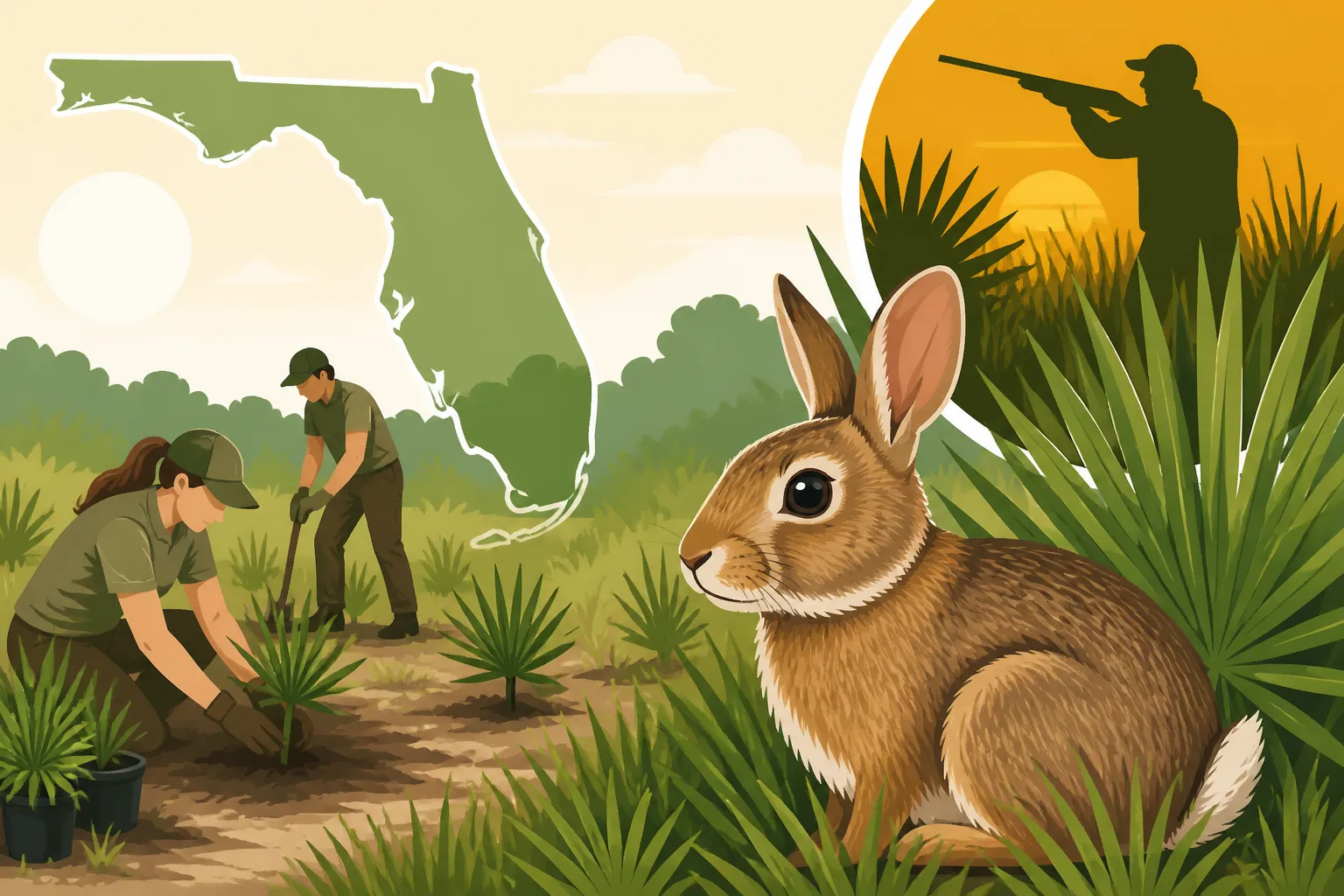
Restoring rabbit habitat often involves actively putting back what's been lost: native plants. Florida has an incredible diversity of grasses, forbs, and shrubs that provide ideal forage and cover for rabbits. These native species are adapted to the local climate and soil conditions, and they support the entire food web, unlike many non-native alternatives. Planting species like partridge pea, native sunflowers, various bluestems, and wiregrass can transform a degraded area into a rabbit paradise. These plants not only offer food but also the low-lying, dense cover that rabbits need to hide from predators.
In areas where native seed banks have been depleted, or where invasive species have taken over, active planting becomes essential. This isn't just about throwing seeds around; it's often a carefully planned process involving soil preparation, selecting the right ecotypes, and ongoing monitoring to ensure success. Groups like Quail Forever and local conservation organizations often lead these efforts, working with landowners and public land managers to establish diverse, productive habitats. These targeted plantings are much more than just aesthetics; they are critical for the survival and expansion of rabbit populations, directly supporting Florida Cottontail and Marsh Rabbit Populations.
Brush Piles and Escape Cover
While open foraging areas are important, rabbits simply cannot survive without dense, impenetrable cover to escape from predators. This is where brush piles come into their own as a simple, yet highly effective, restoration technique. A well-constructed brush pile provides immediate refuge from hawks, owls, coyotes, and bobcats. They also offer nesting sites and protection from harsh weather. These aren't just random piles of sticks; they are often built with a sturdy base of larger logs, topped with smaller branches to create a labyrinth of escape routes.
On private lands, landowners can easily create these structures using downed trees or pruned branches. On public lands and WMAs, habitat managers strategically place brush piles in conjunction with other efforts, ensuring there's a good mix of open foraging areas and secure hiding spots. These small but mighty structures can make a huge difference in the survival rates of rabbits, especially juveniles, and can dramatically increase the carrying capacity of an area for small game. Think of it as creating little mini-fortresses for your future rabbit hunting pursuits, which you can read more about in Florida Squirrel and Rabbit Populations.
How Hunters and Enthusiasts Can Contribute to Rabbit Habitat Restoration
It's easy to feel overwhelmed by the scale of habitat loss, but as hunters and conservationists, we have a vital role to play in these restoration efforts. Our passion for the outdoors and for healthy game populations positions us uniquely to make a tangible difference. It's not just about taking from the land; it's about giving back and ensuring that the tradition of small game hunting, like pursuing Small Game and Predator Hunting in Florida, continues for generations to come.
Supporting Conservation Initiatives
Financial support and volunteer hours are the lifeblood of most habitat restoration projects. Organizations like the National Wild Turkey Federation (NWTF), Ducks Unlimited, and Quail Forever, while focusing on their namesake species, often implement broad habitat management strategies that directly benefit rabbits. For instance, prescribed burns carried out for turkey or quail habitat greatly improve conditions for rabbits. Joining these organizations, or donating to local land trusts and conservation groups, puts your money directly into hands-on habitat work.
Another powerful way to contribute is by purchasing specific licenses and stamps. When you buy your Florida Hunting Licenses and What They Cost or a federal duck stamp, a portion of those funds goes directly to conservation and habitat acquisition and management. It's a built-in conservation funding mechanism that we, as hunters, directly support. Volunteering your time for clean-up days, planting projects, or brush pile construction on public lands or local conservation areas is also incredibly valuable. Many WMAs rely on volunteer efforts to supplement their often-stretched resources.
Advocacy and Education
Beyond direct action, being an advocate for sound conservation policy and educating others about the importance of habitat is crucial. Attend local FWC meetings, write letters to your representatives, or simply have conversations with non-hunters about the benefits of habitat management. Explaining how prescribed fire, for example, is not destructive but vital for ecological health, can change perceptions and build broader support for these efforts. This kind of advocacy helps ensure that habitat restoration remains a priority in Florida's land-use planning.
Sharing your knowledge and passion, perhaps even using a platform like GoHunt to scout potential areas and identify good habitat, can inspire others. GoHunt's mapping and data tools can help you understand land ownership and habitat types, which can be invaluable when discussing conservation needs with landowners or local officials. The more people understand the interconnectedness of species and habitat, the stronger the voice for conservation becomes. Education can dispel myths and foster a greater appreciation for Florida's unique ecosystems, paving the way for more successful restoration projects.
The Future of Florida's Rabbit Habitat and Hunting
The work of rabbit habitat restoration is an ongoing journey, not a destination. With continued growth and changing environmental factors, adapting our strategies and maintaining a long-term vision is paramount. The good news is that dedication to these efforts is strong, and innovation is always on the horizon, promising a brighter future for Florida's cottontails and marsh rabbits, and for those who enjoy pursuing them.
Collaboration and Long-Term Vision
Effective habitat restoration in a state as complex and dynamic as Florida requires broad collaboration. It's not just FWC or one private organization doing the work; it's a partnership between state agencies, federal entities like the U.S. Forest Service, private landowners, conservation groups, and the hunting community. These collaborations allow for larger-scale projects, sharing of resources, and a unified approach to habitat management across property lines. Imagine a patchwork of properties all managed with fire, native plantings, and brush piles – that's when you start to see landscape-level changes that truly benefit wildlife.
Developing long-term management plans that account for climate change, invasive species, and shifting land-use patterns is also vital. This means setting realistic goals, continuously monitoring progress, and being flexible enough to adjust strategies as new information becomes available. The health of our rabbit populations is a bellwether for the health of many other ground-dwelling species, and a commitment to these long-term visions ensures a more resilient ecosystem for everything from Bobwhite Quail in Florida to migratory birds.
Technological Tools for Habitat Planning
In the modern era, technology is playing an increasingly important role in habitat restoration planning and execution. Geographic Information Systems (GIS) allow wildlife managers to analyze land cover, identify critical habitat areas, and plan prescribed burns or planting projects with incredible precision. Drones can be used to monitor habitat changes, track the spread of invasive species, or assess the effectiveness of restoration efforts over large areas. This data-driven approach helps maximize the impact of every dollar and every hour spent on the ground.
Tools like GoHunt, for instance, can be invaluable for individual hunters or small groups looking to understand habitat on a micro-level. While often highlighted for big game, its detailed satellite imagery, land ownership overlays, and habitat assessment tools can help you identify areas on public land that might have undergone recent prescribed burns, or pinpoint transition zones and thickets perfect for rabbits. Understanding these habitat features before you even step foot in the woods can make your Scouting Florida Public Land Before Season much more effective and help you appreciate the ongoing restoration efforts from a different perspective. These technological advancements, combined with traditional knowledge and hard work, are shaping the future of rabbit habitat in Florida.
| Restoration Technique | Primary Goal | Benefits for Rabbits | Best Use Case |
|---|---|---|---|
| Prescribed Fire | Reduce dense fuels, stimulate new growth | Creates fresh forage, improves sightlines, opens up dense cover, controls invasives | Pine flatwoods, prairies, longleaf pine ecosystems |
| Native Vegetation Planting | Restore lost food/cover sources | Provides high-quality forage, dense protective cover, improves biodiversity | Degraded agricultural fields, clear-cuts, old fields |
| Brush Pile Construction | Create immediate escape cover | Offers refuge from predators, nesting sites, protection from weather | Areas lacking dense natural cover, field edges |
| Mechanical Treatment | Break up dense vegetation | Creates openings, stimulates regrowth, can mimic fire effects where burning is unsafe | Overgrown shrublands, dense palmetto thickets |
| Invasive Species Removal | Reduce competition | Frees up resources for native plants, reduces non-native cover | Any area with established invasive plant populations |
Disclaimer
This article is for general informational purposes only and does not constitute professional advice. Laws, prices and regulations vary by location and change over time. Consult a qualified professional for guidance on your specific situation.