Florida Deer Vehicle Collisions
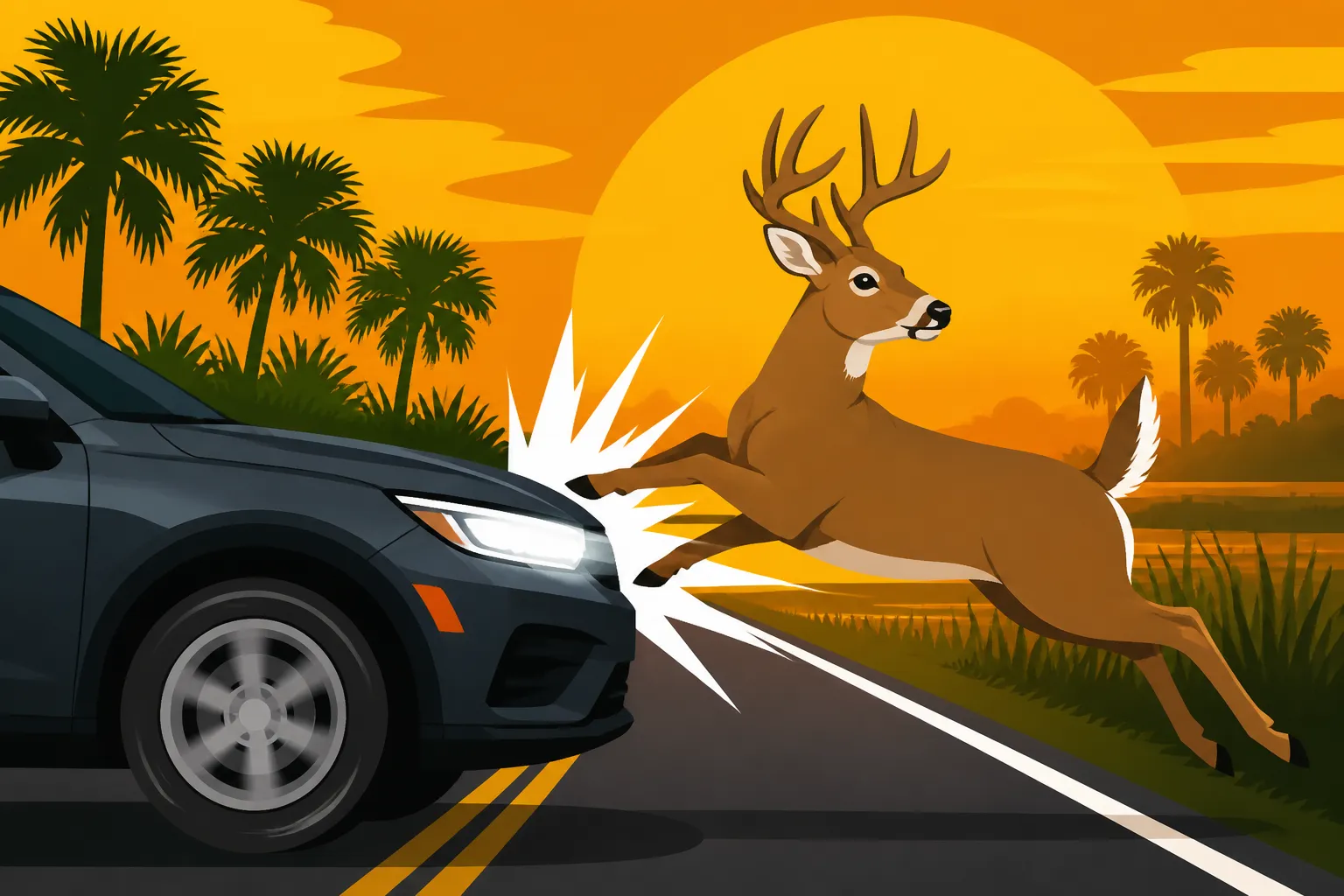
Many folks don't necessarily associate Florida with deer-vehicle collisions, often thinking of states further north when picturing a deer jumping out in front of a car. But let me tell you, as someone who's spent decades driving these backroads and major highways, hitting a deer is a very real, and often terrifying, possibility right here in the Sunshine State. This guide is all about helping you understand why these incidents happen, pinpointing when and where you're most at risk, and giving you concrete steps to take to avoid them or deal with the aftermath if the worst should occur.
Unpacking Florida's Deer Collision Conundrum
It’s a strange paradox, isn't it? We live in a state known for its beaches, theme parks, and sprawling suburban developments, yet deer are a constant presence, sometimes alarmingly close to where we live and commute. The surprise factor is a huge part of the problem here, as many drivers simply aren't expecting a deer to dart out from the palmettos.
The "Invisible" Deer Population
You might not think of Florida as a "deer state" like Pennsylvania or Michigan, but we have a healthy, thriving population of white-tailed deer right under our noses. From the pine flatwoods of the Panhandle down to the cypress swamps of South Florida, deer are abundant. They’ve adapted remarkably well to our diverse landscapes, often becoming quite adept at living near human activity without being overtly visible.
These aren't always the massive-bodied bucks you see up north, either. Florida deer, particularly in the southern regions, tend to be smaller, which can sometimes make them even harder to spot in low light. Despite their size, they pack a considerable punch if struck by a vehicle. It's easy to dismiss the risk when you don't see them frequently, but that doesn't mean they aren't there, especially along those rural roads that border thick cover.
Habitat Fragmentation and Increased Encounters
One of the biggest drivers of deer-vehicle collisions in Florida is habitat fragmentation. As our state continues to grow, sprawling developments, new highways, and expanding agriculture carve up the natural landscape. What were once vast, uninterrupted tracts of forest and scrub are now crisscrossed by roads, forcing deer to navigate an increasingly human-dominated world.
This means deer often find themselves in narrower corridors, pushing them closer to road edges and increasing the necessity of crossing busy thoroughfares to access food, water, or mates. Think about those stretches of highway where one side is a subdivision and the other is a dense patch of woods—that’s a recipe for increased deer activity near traffic. They learn to adapt, but their natural instincts often put them directly in the path of vehicles.
The Impact of the Rut and Other Factors
Deer behavior isn't constant; it fluctuates with the seasons, and understanding these shifts is crucial for drivers. The breeding season, or rut, is arguably the most dangerous time for deer encounters on roads. During the rut, bucks are singularly focused on finding does, often throwing caution to the wind as they travel extensively. Does, in turn, are moving more to avoid persistent bucks, and yearling deer are pushed out by their mothers, making them inexperienced and prone to wandering.
While the rut timing varies across Florida (you can find more details on When the Florida Rut Peaks by Zone), it generally falls within the cooler months, increasing deer activity significantly. Beyond the rut, other factors can influence deer movement. Hunting seasons can shift deer patterns as they seek refuge in less disturbed areas. Even something as simple as a sudden cold front can increase deer movement as they forage more intensely before or after a temperature drop, a concept hunters understand well when considering Hunting Deer After a Cold Front. Keeping these natural rhythms in mind can help you anticipate when deer are likely to be more active.
Identifying High-Risk Zones and Times
Knowing when and where deer are most likely to be active is your first line of defense against a potential collision. It’s not just random; there are predictable patterns that emerge when you look at the data.
Dawn, Dusk, and Night: When Deer Are Most Active
If you’ve ever hunted, you know deer are crepuscular, meaning they are most active during the twilight hours of dawn and dusk. This is when they move from bedding areas to feeding grounds and vice versa. Unfortunately, these are also the times when human visibility is at its lowest, and our own commutes often overlap with these peak deer activity periods.
During these low-light conditions, deer can be incredibly difficult to spot. Their natural camouflage helps them blend into the shadows, and their eyes, when caught in headlights, can sometimes create a momentary "deer in headlights" effect, freezing them in place. The transition from high beams to low beams for oncoming traffic can also momentarily blind you to roadside movement. This means reducing your speed and increasing your vigilance during these critical hours is paramount, especially on unlit rural roads or those bordering natural habitat.
Seasonal Peaks: Fall and Early Winter
While deer are a year-round presence, their activity truly ramps up in the fall and early winter months across Florida. This directly correlates with the rut, as we discussed, but it's also influenced by cooler weather, which makes deer more comfortable moving during daylight hours, and the availability of certain food sources. As oaks drop their acorns and other mast crops ripen, deer spend more time foraging, often requiring them to cross roads to get to prime feeding spots.
The varying deer seasons across the state (which you can learn more about in Why Florida's Deer Seasons Vary So Much by Zone) also contribute to shifting deer movement. Even though hunting pressure isn't directly causing collisions, it can displace deer, causing them to move into areas they might not typically frequent, increasing the unpredictability for drivers. So, when the weather starts to cool and the holidays approach, be extra mindful on the roads.
Geographic Hotspots: Where to Be Extra Vigilant
Certain areas of Florida are simply more prone to deer encounters than others. Generally, you'll find higher concentrations of collisions in areas where dense cover meets roadways, or where roads act as corridors between larger tracts of undeveloped land. Think about counties with significant portions of national forests, state forests, or large wildlife management areas. For instance, areas around the Ocala National Forest, Apalachicola National Forest, and even parts of the Everglades perimeter see considerable deer activity.
Rural highways that cut through agricultural lands, especially those bordered by thick palmetto heads or pine stands, are also prime locations. Deer use these natural travel corridors to move between feeding and bedding areas. Even in more suburban areas, if you're driving through a neighborhood that borders a large preserve or green space, the risk is elevated. Using mapping tools, like those found on GoHunt, typically designed for hunting, can actually provide invaluable insights into deer habitats and travel corridors, which can be surprisingly useful for drivers too. Understanding Deer Density by Florida Zone can also give you a general idea of where the populations are highest.
| Factor | High-Risk Period/Location | Why? |
|---|---|---|
| Time of Day | Dawn (5-8 AM) & Dusk (5-8 PM) | Deer are crepuscular, moving to/from feeding/bedding; low driver visibility. |
| Season | Fall & Early Winter (October-January) | Rutting activity, increased foraging for mast crops, cooler weather. |
| Road Type | Rural highways, unlit roads | Higher speeds, less light, often bordered by dense natural habitat. |
| Habitat Type | Forest edges, palmetto thickets, swamps | Natural cover providing bedding and escape routes near roadways. |
| Sign | Deer crossing signs, recent roadkill | Official warnings and visible evidence of high deer activity. |
Proactive Measures to Avoid a Collision
While you can't control wild deer, you can certainly control your driving habits and prepare your vehicle to minimize the risk of a collision. It's about being prepared and aware, not just reacting.
Defensive Driving: Your Best Line of Defense
This might sound like common sense, but defensive driving is truly your most effective tool against deer collisions. It means actively scanning the road ahead and to the sides, not just focusing on the vehicle in front of you. Deer often hesitate at the roadside before darting out, so a wider field of vision gives you precious extra seconds to react.
Here's a critical tip: if you see one deer, assume there are more. Deer rarely travel alone. A doe might cross, followed by her fawns, or a buck might be pushing a doe, with other deer trailing behind. Reducing your speed, especially in identified deer crossing zones or during peak hours, significantly increases your reaction time. If a collision appears imminent, it's generally safer to hit the deer rather than swerve violently into oncoming traffic, off the road, or into a tree. While instinct might tell you to swerve, severe injury and even fatalities are more often caused by drivers losing control of their vehicle attempting to avoid the animal, rather than from the direct impact with the deer itself.
Vehicle Enhancements and Maintenance
Your vehicle itself plays a role in safety. Regularly check your headlights and make sure they are properly aimed and clean. Using your high beams when safe and legal (i.e., no oncoming traffic or vehicles ahead) can significantly extend your visibility range, giving you more time to spot a deer’s reflective eyes. Fog lights, while not designed specifically for deer, can sometimes help illuminate the road edges more effectively in certain conditions.
Beyond lighting, ensure your brakes are in excellent condition. Having responsive, well-maintained brakes could be the difference between a close call and a collision. Good tire tread also enhances braking performance, especially on wet Florida roads. As for aftermarket "deer whistles," their effectiveness is highly debated. While some drivers swear by them, scientific studies have largely shown them to be ineffective at deter deterring deer. Don't rely on them as your primary defense.
Utilizing Data and Awareness Tools
Staying informed about local wildlife activity can give you an edge. Many communities now have social media groups or apps where people report recent deer sightings or incidents. While not official, this grassroots intel can sometimes highlight a particularly active area.
From a different angle, tools typically used by hunters, like GoHunt's detailed maps and satellite imagery, can indirectly benefit drivers. By understanding how hunters scout for deer (e.g., Scouting Florida Public Land Before Season or Reading Aerial Photos for Florida Deer), you can learn to identify common deer travel corridors, pinch points, and funnel areas near your regular driving routes. Knowing that deer frequently use a particular palmetto head as a funnel to cross a road (as discussed in Hunting a Funnel Between Two Palmetto Heads) can give you a critical heads-up, even if you’re just commuting to work and not carrying a bow. The more you understand deer movement, the better equipped you are to anticipate and avoid them.
What to Do If a Collision Occurs
Despite all your best efforts, a collision with a deer can still happen. When it does, your immediate actions are crucial for safety, reporting, and managing the aftermath. It's a jarring experience, but having a plan can help you navigate it.
Safety First: Secure the Scene
The moment you realize you've hit a deer, your primary concern should be safety. Try to pull your vehicle over to the side of the road as safely and quickly as possible, away from active traffic. Turn on your hazard lights immediately to alert other drivers to your presence.
Once stopped, assess yourself and any passengers for injuries. Even a seemingly minor impact can cause whiplash or other unseen trauma. If anyone is injured, call 911 right away. Only if it is absolutely safe to do so, and you are not in danger from traffic or the animal, should you briefly step out to survey the damage. Crucially, do not approach an injured deer. A wounded animal, even one that appears docile, can be unpredictable, lash out with hooves, and cause further injury. Keep a safe distance.
Reporting the Incident and Documenting Damage
After ensuring safety, the next step is to report the incident. You should contact local law enforcement (e.g., Florida Highway Patrol or your county sheriff's office) to report the collision, especially if there's significant vehicle damage, personal injury, or if the deer is blocking the roadway. An official report will be vital for your insurance claim.
Next, notify your insurance company as soon as possible. Take clear, well-lit photos of the scene, your vehicle's damage, and, if possible and safe, the deer from a distance. Documenting everything thoroughly will streamline the claims process. Remember, comprehensive coverage on your auto insurance policy is typically what covers animal collisions, not collision coverage. It’s always a good idea to understand your policy beforehand.
Legalities and Carcass Handling
In Florida, if you hit and kill a deer with your vehicle, you (or another person) may be allowed to take the deer for consumption, but there are specific requirements. You must notify the Florida Fish and Wildlife Conservation Commission (FWC) within 24 hours to report the incident and obtain a permit number. This is critical for legal possession; failing to do so could result in a wildlife violation. This is strictly a salvage situation, not a hunting opportunity, and it's regulated to prevent abuse.
Even if you choose not to take the deer, you should still report the incident to law enforcement, who can then coordinate with FWC or local road crews for carcass removal if it poses a hazard. If you do decide to salvage the animal, be prepared for the work involved. Handling venison, especially in Florida’s hot climate, requires immediate action to prevent spoilage. Concepts like Field Dressing a Deer in Hot Weather and Butchering a Deer at Camp become highly relevant here, ensuring that if you do salvage the animal, you do so properly and ethically to make good use of the meat.
Disclaimer
This article is for general informational purposes only and does not constitute professional advice. Laws, prices and regulations vary by location and change over time. Consult a qualified professional for guidance on your specific situation.