Deer Meat Yield From a Florida Buck
One of the biggest questions that runs through every Florida hunter's mind after a successful harvest, especially when dragging a buck out of thick palmetto scrub on a sweltering afternoon, is: "How much actual meat am I going to get from this?" It's a common frustration, the discrepancy between the impressive sight of a buck in the field and the often humbling pile of venison in the freezer. This guide will walk you through the realistic expectations for deer meat yield from a Florida buck, helping you understand the factors involved and how to maximize your harvest.
Understanding the Factors That Influence Your Venison Yield
Getting a solid estimate of venison yield isn't just about the size of the deer; it's a complex equation involving several critical factors. From the moment you pull the trigger or release the arrow, decisions and conditions impact how much delicious, lean protein ends up on your plate.
The Critical Role of Live Weight and Dressed Weight
First, let's talk numbers. When hunters discuss deer size, they often refer to "live weight" – what the deer weighed when it was alive. This is rarely what you measure directly. More commonly, you'll encounter "dressed weight," which is the weight of the deer after it has been field dressed. This means removing the internal organs, but the hide, head, and lower legs are still attached. A good rule of thumb is that dressed weight is typically about 75-80% of the live weight. So, if you manage to weigh your buck after field dressing, you can approximate its live weight from there.
The actual meat yield, however, is a further reduction. This is where the term "boneless meat yield" comes into play. Factors like how much fat is trimmed, how much bone is removed, and even how meticulous your butchering is, all contribute to this final number. Generally, you can expect a boneless meat yield to be around 50-60% of the dressed weight, or roughly 30-40% of the live weight. So, a 150-pound live weight Florida buck might only yield 45-60 pounds of boneless venison. It’s always less than you imagine, isn't it?
Age, Nutrition, and Overall Health of the Buck
Just like us, deer come in all shapes and sizes, and their overall health and age play a huge role in their meat yield. A young, healthy buck, full of muscle and carrying minimal fat, will often have a higher meat-to-bone ratio than an older, perhaps more dominant, but potentially leaner or less muscular buck. Bucks that have been through a tough rut can drop a lot of weight, especially in lean muscle, as they expend massive energy chasing does.
Nutrition is also paramount. A buck feeding consistently on high-quality forage, say in an agricultural area with plentiful row crops or a property with well-managed food plots, will generally carry more weight and muscle than a buck struggling in an area with sparse or poor-quality food sources. If you've been Hunting After a Poor Acorn Year, for instance, you might notice that deer are generally thinner, which directly impacts the meat yield. Scouting with tools like GoHunt's mapping features can sometimes help identify areas with better habitat and potential for healthier deer, though ultimately, you're relying on what Mother Nature provides. Understanding the Florida Buck Age Structure in your hunting area can also give you an idea of the general health and size of the deer you might encounter.
Regional Differences: Panhandle vs. South Florida Deer
Florida is a long state, and the deer herds vary significantly from one end to the other. You often hear hunters talking about how deer in certain areas are "bigger" or "smaller." This isn't just anecdotal; it's a biological reality. Generally, deer harvested in the Florida Panhandle and northern parts of the state tend to be larger-bodied, more closely resembling their whitetail cousins further north. This is due to factors like more fertile soils, better forage, and often a cooler climate that allows deer to put on more mass.
In contrast, deer in Central and South Florida, particularly in areas like the Everglades or the expansive palmetto flatwoods, are often smaller-bodied. They are still strong and resilient, adapted to their challenging environments, but they don't typically reach the same live weights as their northern counterparts. This means that a "big" buck in South Florida might yield significantly less meat than an average-sized buck from the Panhandle. It's an important distinction that directly impacts your expectations. You can learn more about these differences in our article Why Panhandle Deer Grow Bigger Than South Florida Deer and by understanding Florida's Four Deer Management Zones Explained.
Calculating Your Expected Deer Meat Harvest
Now that we understand the variables, let's get down to some practical numbers. While every deer is unique, we can use general percentages to get a reasonable estimate of your venison yield.
From Field to Freezer: Estimating Boneless and Bone-in Yields
The journey from a deer in the field to neatly packaged meat in your freezer involves several stages, each with a percentage loss.
- Live Weight: This is the deer as it stands in the woods.
- Field Dressed Weight: After gutting, you lose about 20-25% of the live weight. So, a 150 lb live weight buck would be around 112-120 lbs dressed.
- Hanging Weight (Carcass Weight): After skinning, de-heading, and removing the lower legs, you lose another 5-10%. This is the weight of the usable carcass. From our 150 lb live weight buck, this might be around 100-110 lbs.
- Boneless Meat Yield: This is the final product. After boning out the cuts and trimming any excess fat or gristle, you're looking at about 50-60% of the hanging weight. Using our example, that's roughly 50-66 lbs of boneless venison.
If you opt for bone-in cuts like roasts or certain chops, your yield percentage will be higher, simply because the bones remain. However, for most hunters, boneless meat is the goal for ease of cooking and storage. It's always a good idea to communicate your preferences clearly if you're using a professional processor.
The Impact of Field Dressing and Processing Methods
The care you take in the field and the method of processing significantly influence the final meat quality and yield. Poor field dressing, especially in Florida's warm climate, can lead to spoiled meat, reducing your usable yield. Leaving internal organs in too long, or failing to properly cool the carcass, can mean losing entire sections of the deer. You might find our guide on Field Dressing a Deer in Hot Weather particularly helpful for Florida conditions.
When it comes to processing, whether you're a do-it-yourself hunter or using a professional, the technique matters. A skilled butcher, or a meticulous home processor, will maximize meat recovery, carefully trimming away sinew, bone, and fat while preserving as much lean muscle as possible. A less experienced hand might leave more meat on the bone or trim excessively, leading to a lower overall yield. Many hunters learn how to do this themselves, finding it a rewarding part of the hunt, and you can learn how by reading about Butchering a Deer at Camp. For those who prefer professional help, knowing where to find a good one is key, and our article on Processing Meat Near a Florida Hunting Camp can point you in the right direction.
What to Expect from a Florida Buck of Different Sizes
Let's look at some typical yield expectations based on various Florida buck sizes. Keep in mind these are averages, and individual deer will always vary.
| Live Weight (Approx.) | Dressed Weight (Approx.) | Boneless Meat Yield (Approx.) | Common Florida Zones |
|---|---|---|---|
| 100 lbs | 75-80 lbs | 35-40 lbs | Central, South Florida |
| 120 lbs | 90-96 lbs | 45-50 lbs | Central, South Florida |
| 150 lbs | 112-120 lbs | 55-65 lbs | Panhandle, North Florida |
| 170 lbs | 127-136 lbs | 60-75 lbs | Panhandle, North Florida |
As you can see, even a decent-sized 150-pound buck might only give you enough venison to fill a medium-sized cooler. This table highlights why those regional differences mentioned earlier are so important – a 100-pound buck is a common harvest in many parts of Florida, and knowing what to expect from it helps manage expectations. This is where understanding your hunting area, perhaps by using scouting tools that help with game camera placement and monitoring, can give you a better idea of the deer available. GoHunt also offers robust mapping features that can assist in identifying prime deer habitat where larger, healthier deer might roam.
Maximizing the Edible Meat From Your Florida Deer
So, how do you ensure you get the most out of your hard-earned harvest? It comes down to a few key practices, from the moment the deer hits the ground until it's ready for the freezer.
Best Practices for Field Dressing in Florida's Climate
Florida's heat and humidity are notorious for spoiling game meat quickly. This means speed is of the essence when it comes to field dressing. As soon as you've confirmed your deer is down and you've tagged it (don't forget Florida Deer Reporting Requirements), get to work. Open up the body cavity completely, remove all internal organs, and make sure to wipe out as much blood and debris as possible. Many hunters carry a small bottle of water or even some paper towels for this.
Once field dressed, the goal is rapid cooling. If you're near your vehicle, get the deer into the shade and, if possible, drape it with a game bag that allows air circulation. Some hunters will even place bags of ice in the body cavity for immediate cooling, especially if they have a long drag or drive ahead. Don't underestimate the impact of even an hour in direct sunlight on a warm Florida day; it can be the difference between prime venison and questionable meat. Proper field dressing is the absolute first step in ensuring good quality and maximizing your yield.
Proper Care and Transport for Optimal Meat Quality
After field dressing, how you transport your deer also plays a crucial role. If you're dragging it, try to do so in a way that minimizes dirt and debris entering the cavity. Once at your vehicle, secure the deer to prevent excessive movement that could bruise the meat. If temperatures are high, keeping the carcass cool is paramount. A truck bed with an open tailgate for air circulation might work for a short trip on a cool evening, but for anything longer or warmer, you'll need a cooler filled with ice.
For a smaller deer, some hunters will quarter it and place the quarters directly on ice in large coolers. Ensure the drain plug is open to let melted ice water escape, as submerged meat can become waterlogged. For larger deer, consider a large tarpaulin or game bags to protect the carcass during transport, aiming to get it to a cooler location or processor as quickly as possible. The goal is to get that core body temperature down as fast as you can. This is also where advice about Aging Venison in Hot Weather comes into play; sometimes, the best "aging" in Florida is simply getting it cold and keeping it cold.
Processing Your Deer: DIY or Professional Butcher?
Deciding whether to process your deer yourself or take it to a professional is a choice many Florida hunters face.
Doing it yourself gives you complete control over the cuts, the trimming, and often results in a deeper connection to the entire hunting process. You can experiment with different methods, save money on processing fees, and ensure every usable scrap of meat is accounted for. Many find it incredibly rewarding to break down their own animal, learning about anatomy and the various cuts. There's a real sense of accomplishment in cooking a meal with venison you processed yourself. However, it requires time, a clean workspace, the right tools, and knowledge. If you're new to it, there's a learning curve, and initial yields might not be as high as an experienced butcher.
Taking your deer to a professional butcher is often the more convenient option, especially for hunters with limited time, space, or equipment. A good butcher has the expertise, facilities, and cold storage to process your deer efficiently and hygienically. They can provide a wide range of cuts, make sausages, jerky, and even specialty items. This can save you a lot of effort and ensure you get a high-quality product. The downside is the cost, which can add up, but for many, the peace of mind and convenience are well worth it. Before entrusting your hard-earned venison to anyone, make sure they have a good reputation.
Beyond the Basics: Storage, Cuts, and Culinary Delights
Once you've got your venison, the journey isn't over. Proper storage and understanding how to use different cuts are key to enjoying your harvest year-round.
Preparing and Freezing Your Florida Venison
The best way to store venison for the long term is by freezing it. Before freezing, ensure your meat is well-wrapped to prevent freezer burn, which can degrade quality and flavor. Vacuum sealing is by far the best method, removing all air and protecting the meat from oxidation. If you don't have a vacuum sealer, wrap cuts tightly in plastic wrap, then again in freezer paper or heavy-duty freezer bags. Label each package with the cut and the date so you know exactly what you're reaching for.
Properly frozen venison can last 9-12 months, sometimes even longer, without a significant drop in quality. Thaw it slowly in the refrigerator for the best results, rather than at room temperature, which can encourage bacterial growth. Knowing how to store your venison effectively ensures that the effort you put into getting that buck out of the woods and processed pays off with delicious meals for months to come.
Exploring Different Cuts and Their Uses
Florida bucks, even the smaller ones, offer a fantastic variety of cuts, each suited to different cooking methods.
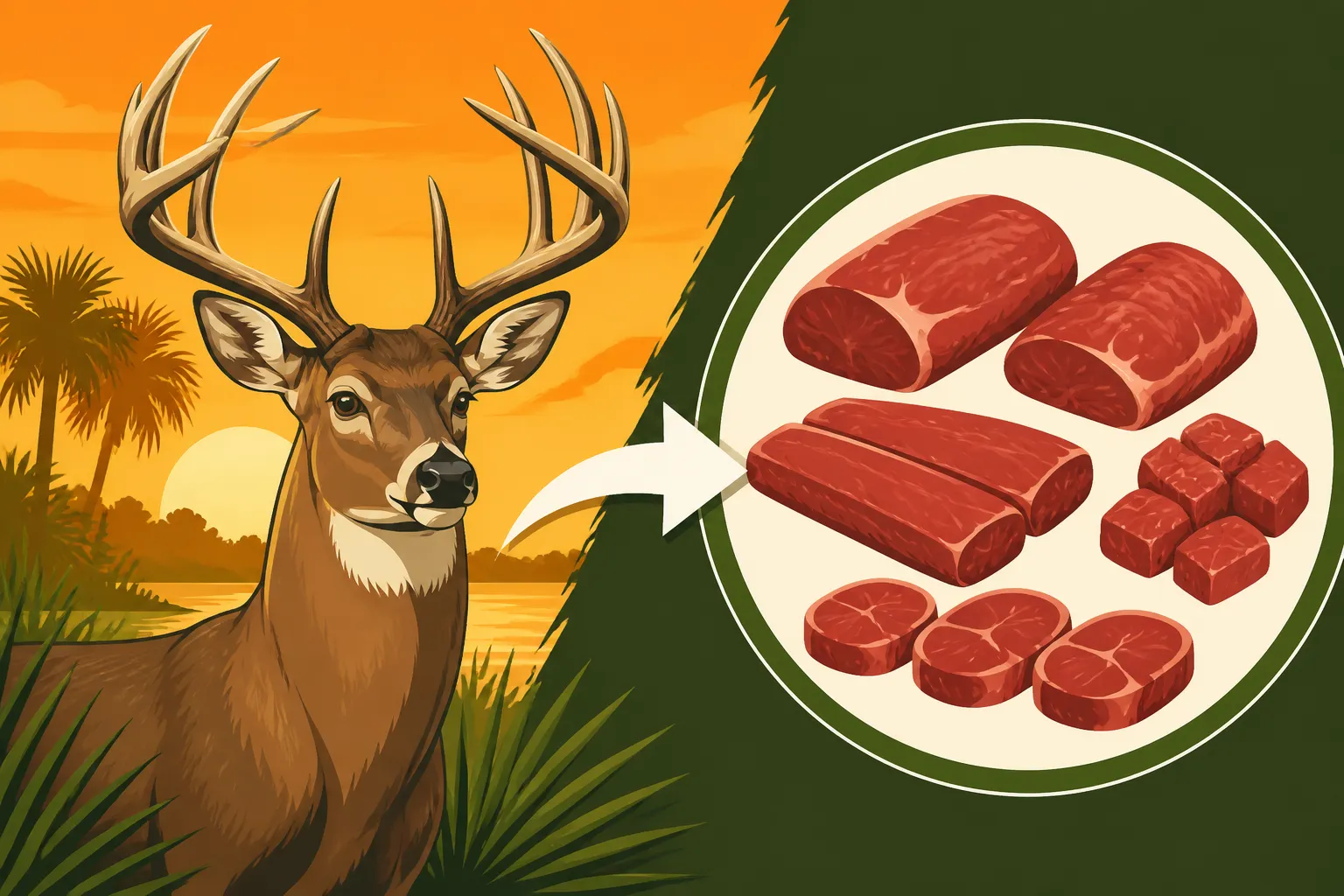
- Backstraps (Loins): These are often considered the prime cuts, incredibly tender and best seared, grilled, or roasted whole.
- Tenderloins: The most tender of all, these small strips are found inside the cavity along the spine. They cook quickly and are delicious pan-seared.
- Roasts (Shoulder, Rump): Excellent for slow cooking, braising, or roasting. They can be tough if cooked too quickly, but low and slow methods tenderize them beautifully.
- Steaks (Round, Sirloin): These are great for grilling or pan-frying, but be mindful not to overcook them, as venison is very lean and can dry out quickly. Marinating can add moisture and flavor.
- Ground Venison: A versatile option, perfect for burgers, chili, tacos, or mixing with a fattier meat like pork for sausage. This is often where trimmings from other cuts end up.
- Stew Meat: Cubes of tougher cuts, ideal for long simmers in rich sauces.
Don't be afraid to experiment! Venison is incredibly versatile, and finding your favorite ways to prepare each cut is part of the joy of hunting. You might be surprised at the culinary options a Florida buck can provide.
Handling Venison from CWD Surveillance Zones
It's important to be aware of any wildlife management regulations, especially concerning diseases like Chronic Wasting Disease (CWD). In Florida, if you harvest a deer in a designated CWD surveillance zone, there will be specific rules about carcass movement and testing requirements. For example, the state has had a confirmed CWD case in Holmes County, leading to Florida's Holmes County CWD Zone. These regulations are put in place to monitor and prevent the spread of the disease.
Generally, hunters are often required to leave certain parts of the deer, like the brain and spinal column, within the harvest zone. Testing may be required before moving the carcass or certain parts out of the area. It’s crucial to check the latest regulations for Handling Venison From a CWD Surveillance Zone before your hunt, especially if you plan to hunt near or within any identified CWD areas. These rules are for the health of the deer herd and to protect consumers, so understanding and adhering to them is paramount.
Disclaimer
This article is for general informational purposes only and does not constitute professional advice. Laws, prices and regulations vary by location and change over time. Consult a qualified professional for guidance on your specific situation.