Florida Deer Damage Permits for Farmers
For Florida farmers, the sight of lush, thriving crops can quickly turn to frustration when deer decide your hard work is their personal buffet. The damage caused by deer can range from minor browsing to extensive destruction, impacting yields, reducing profits, and causing immense stress. This guide is here to walk you through the specifics of Florida Deer Damage Permits for Farmers, a vital tool for managing these impacts, and explore other strategies to protect your agricultural investments.
Understanding Deer Damage in Florida Agriculture
Deer are an integral part of Florida's wildlife, but their natural foraging habits often bring them into direct conflict with agricultural operations. When deer populations are high or natural food sources are scarce, cultivated fields and orchards become irresistible targets, leading to significant economic and operational challenges for farmers.
The Economic Impact on Farms
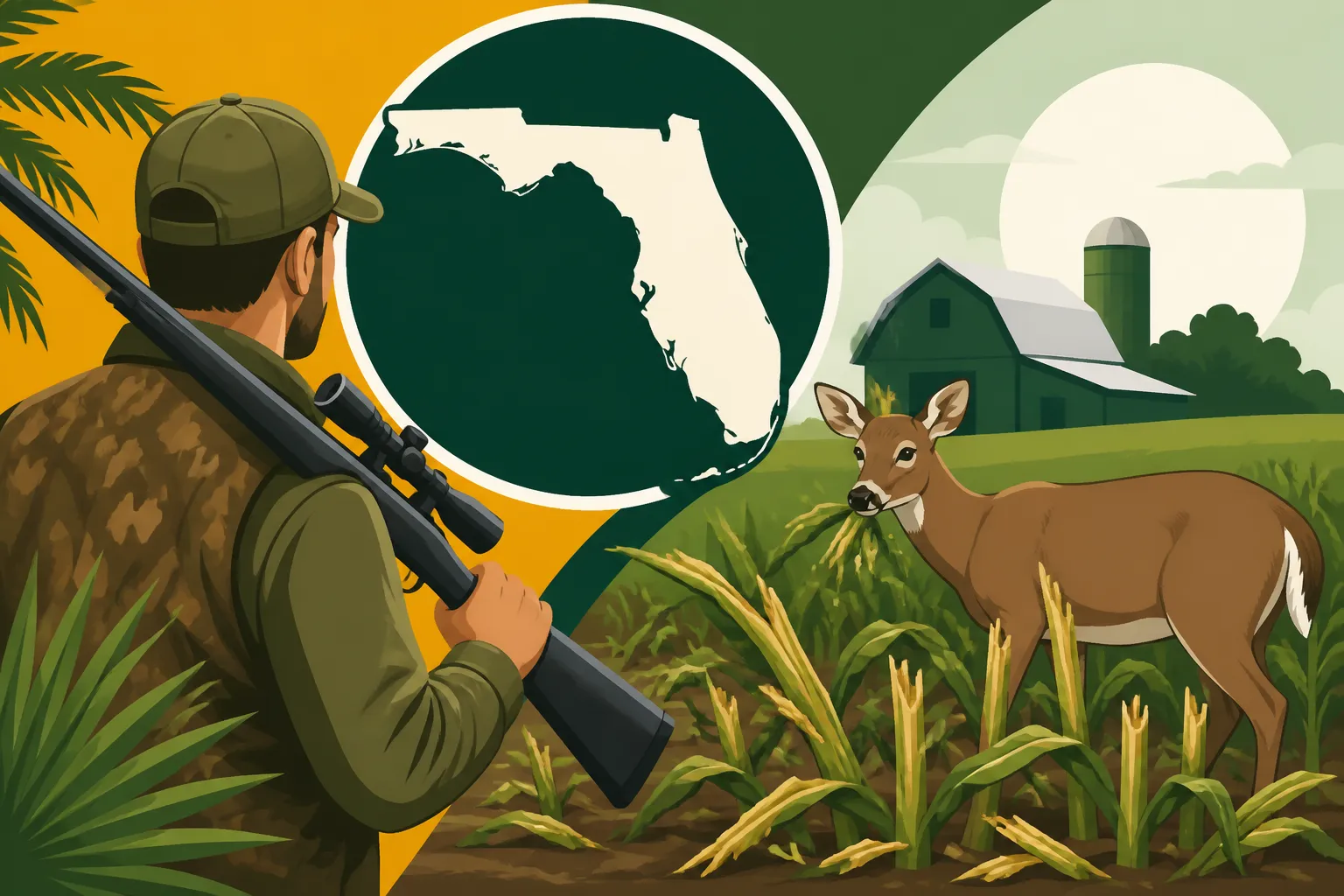
The financial toll of deer damage on Florida farms is no small matter. Imagine a citrus grower investing countless hours and dollars into their groves, only to find young saplings stripped bare of leaves or bark, stunting their growth or even killing them outright. It’s a gut punch. Row crops, like corn, soybeans, peanuts, or even leafy greens, are particularly vulnerable during crucial growth stages. Deer will browse tender shoots, trample young plants, and consume mature crops, directly leading to reduced yields and lower market value. Nursery operations, too, suffer when ornamental plants or fruit trees are damaged, making them unsellable.
The economic impact isn't just about the immediate loss of product. It also includes the cost of replanting, the expense of applying deterrents, and the general devaluation of land that is perceived as being under constant deer pressure. For many small to medium-sized farms, these losses can make the difference between a profitable year and one that barely breaks even, or worse, leads to significant debt. It's a constant battle against a seemingly endless appetite, and without effective management, the situation can feel overwhelming.
Why Standard Hunting Seasons Aren't Always Enough
You might think, "Why can't farmers just rely on regular hunting seasons?" And that's a valid question. The truth is, while sport hunting plays a crucial role in statewide deer management, it often falls short when it comes to addressing acute, localized agricultural damage. Florida's regular deer seasons, which vary significantly by Florida's Four Deer Management Zones Explained, are set for recreational hunters and have specific bag limits, weapon restrictions, and timeframes. These seasons simply aren't designed to provide the immediate, targeted relief that a farmer experiencing severe crop destruction needs.
For instance, damage might peak outside of established hunting seasons, or the specific deer causing the most trouble might be primarily antlerless deer, which can be harder to harvest during standard buck-focused seasons. Furthermore, many agricultural lands are not actively hunted, or they might be surrounded by properties where deer can find sanctuary. Traditional hunting alone rarely reduces deer numbers sufficiently or quickly enough in problem areas to prevent ongoing economic harm. This gap in management is precisely why specialized tools like deer damage permits exist—to give farmers a more direct and flexible way to protect their livelihoods when traditional methods prove insufficient.
What Are Florida Deer Damage Permits?
When deer become more than just a passing nuisance and start posing a serious threat to a farmer's livelihood, the Florida Fish and Wildlife Conservation Commission (FWC) offers a specific solution: deer damage permits. These aren't your typical hunting licenses; they are a targeted management tool designed to mitigate agricultural losses.
Purpose and Legal Framework
A Florida deer damage permit is essentially a special authorization issued by the FWC that allows a landowner or their designated agent to remove deer causing significant damage to agricultural crops or other property outside of, or in addition to, the standard hunting seasons and regulations. The primary purpose is clear: to protect agricultural interests from substantial economic harm caused by wild deer. It's an acknowledgment that while deer are a valuable natural resource, their impact on farming can sometimes necessitate direct intervention.
The legal framework for these permits stems from Florida Statutes, which empower the FWC to manage wildlife and issue permits for the take of wildlife that is causing damage. This means that when a farmer applies for and receives one of these permits, they are operating entirely within the bounds of state law, provided they adhere strictly to the conditions outlined in the permit. This is a critical distinction, as taking deer outside of established seasons or without proper authorization can lead to severe penalties. It's important for anyone considering this route to first understand Florida Hunting Licenses and What They Cost for standard activities, then recognize that these damage permits are a separate, additional layer of regulatory compliance designed for specific circumstances.
Types of Permits and Allowable Actions
Deer damage permits are not a one-size-fits-all solution; they are tailored to the specific situation a farmer faces. An FWC biologist will assess the type and extent of damage to determine the most appropriate course of action. Generally, these permits might authorize:
- Take of Antlerless Deer: Often, it's the does and their offspring that contribute most to population growth and sustained damage. Permits frequently focus on removing antlerless deer, sometimes without regard to specific bag limits imposed during general seasons.
- Extended Seasons or Night Hunting: Damage permits can allow for the taking of deer outside of the regular hunting seasons or even at night, using artificial lights, under very strict conditions. Night hunting is typically prohibited for recreational purposes, so this is a significant deviation allowed specifically for damage control.
- Specific Methods: While firearms are usually the primary method, permits might also allow for certain trapping methods if deemed appropriate and humane by the FWC, though shooting is far more common for deer. The permit will explicitly state the weapons and methods allowed.
- Designated Individuals: The permit will specify who is authorized to take the deer—usually the landowner or specific individuals designated by them. This isn't a free-for-all; it's a controlled activity.
- Reporting Requirements: Every permit comes with strict reporting obligations. Farmers must accurately document every deer taken under the permit, including sex, date, and location. This data is crucial for the FWC to monitor the effectiveness of the permit and track deer populations.
- Carcass Disposal: The permit will also stipulate rules for carcass disposal, ensuring that deer are handled responsibly. In some cases, the meat can be utilized by the permit holder, donated, or must be disposed of according to FWC guidelines.
These specific authorizations highlight the serious nature of these permits. They are not merely an extension of recreational hunting but a targeted, regulated response to a genuine agricultural threat, requiring careful oversight and adherence to strict conditions.
The Application Process for a Deer Damage Permit
Applying for a deer damage permit isn't as simple as picking up a license at a sporting goods store. It's a structured process that involves careful documentation, assessment by FWC personnel, and a collaborative approach to finding the best solution for your farm.
Initial Steps and Documentation
If you're a farmer seeing significant deer damage, your first step is to thoroughly document the problem. This means taking detailed photographs and even videos of the damage to your crops, showcasing the extent of the impact. Don't just show one nibbled leaf; demonstrate widespread destruction, trampled areas, and repeated incursions. Estimate your financial losses as accurately as possible—this is crucial for demonstrating the economic harm. Keep records of your yield reductions, replanting costs, and any attempted deterrents that have failed.
Once you've compiled this evidence, you need to contact your local FWC regional office. Explain your situation clearly and express your need for a deer damage assessment. The FWC will typically assign a wildlife biologist to your case. This biologist is your primary point of contact and will guide you through the rest of the application. Having clear, concise documentation from the outset will greatly assist in their initial review and speed up the process. It's similar to the detail required when filing any official report; the more comprehensive your initial submission, the better equipped the FWC will be to understand your predicament.
Working with FWC Biologists
After your initial contact, an FWC wildlife biologist will schedule a visit to your property. This site visit is perhaps the most critical part of the application process. The biologist isn't just there to rubber-stamp a permit; they are there to conduct a thorough assessment of the damage, verify your claims, and understand the ecological context of your farm. They'll walk your fields with you, look for deer sign, evaluate the types of crops affected, and observe the surrounding habitat. They're looking to understand why deer are targeting your land and to confirm that the damage is indeed significant and directly attributable to deer.
During this visit, be prepared to discuss your farming practices, the history of deer activity on your land, and any previous attempts you've made to deter them. The biologist will work with you to develop a comprehensive deer management plan, which might include lethal removal through a permit but also often incorporates non-lethal strategies. They might even suggest tools like a GoHunt subscription, which can help you analyze property lines, identify deer travel corridors, or locate nearby bedding areas that could be contributing to the problem. Their expertise is invaluable in creating a strategy that is both effective for your farm and aligns with broader wildlife management goals. Their goal is to find a solution that protects your crops while maintaining a healthy deer population.
Permit Issuance and Conditions
If the FWC biologist determines that a deer damage permit is warranted, they will recommend its issuance. The permit itself will be a very specific document, outlining precisely what actions you are authorized to take. This is where attention to detail is paramount. The permit will typically specify:
- Number of Deer: The maximum number of deer that can be taken under the permit. This might be a fixed number or a range.
- Species and Sex: Often, permits are for antlerless deer only, but specific situations might allow for bucks as well.
- Timeframes: The exact dates during which the permit is valid, which could be outside of regular hunting seasons.
- Allowed Methods: The legal weapons or methods that can be used (e.g., specific firearms, bows, sometimes even trapping methods under highly controlled circumstances).
- Designated Personnel: Who, specifically, is authorized to take the deer (e.g., the farmer, family members, or designated employees).
- Disposal Requirements: Guidelines for how deer carcasses must be handled, including whether the meat can be kept, donated, or must be disposed of.
- Reporting: Strict requirements for reporting each deer taken, usually within a certain timeframe, along with details like sex, date, and location. This data is critical for FWC monitoring. You'll want to adhere to Florida Deer Reporting Requirements for any deer taken, even under these special permits.
It cannot be stressed enough: adherence to every condition on the permit is mandatory. Any deviation can result in the permit being revoked, fines, or other legal consequences. The FWC biologist will review these conditions with you to ensure full understanding. This is a privilege, not a right, designed to address a specific problem under controlled circumstances.
Managing Deer Damage Beyond Permits
While deer damage permits offer a crucial direct solution, they are often most effective as part of a broader, integrated approach to wildlife management on your farm. Focusing solely on lethal removal without addressing underlying attractants or access points might provide temporary relief but could lead to recurring problems.
Non-Lethal Deterrents
Sometimes, keeping deer away from your crops can be achieved without ever having to draw a weapon. Non-lethal deterrents come in various forms, each with its own pros and cons:
- Fencing: This is often the most effective but also the most expensive option. A robust, 8-foot-high woven wire fence can be highly successful at excluding deer. Electric fences, while less physically imposing, can also be very effective, especially multi-strand designs or those that combine taste aversion with a physical barrier. The challenge lies in the initial investment and ongoing maintenance, particularly for large acreages. For a smaller nursery or high-value crop area, it might be a perfect fit.
- Repellents: There's a wide range of deer repellents available, from sprays that make plants unpalatable to granular products that emit odors deer dislike. Many contain active ingredients like putrescent egg solids, thiram, or capsaicin. The effectiveness of repellents can vary greatly depending on deer pressure, weather conditions (rain can wash them away), and the specific product. They often require frequent reapplication, which adds to labor and cost. They are best suited for smaller areas or as a supplementary measure.
- Harassment Techniques: Devices like noisemakers, strobe lights, and even scarecrows can offer temporary relief. However, deer are remarkably adaptable creatures. They quickly become accustomed to static deterrents. Rotating different methods and incorporating movement or unpredictable elements can increase their effectiveness, but they rarely provide a long-term solution on their own. Some farmers have found success with motion-activated sprinklers in small, critical areas.
The key with non-lethal methods is persistence and variety. What works one month might be ignored the next.
Habitat Modification and Integrated Pest Management
Thinking about the bigger picture of your farm's ecosystem can lead to more sustainable deer damage solutions. This involves actively managing the habitat in and around your cultivated areas to make them less appealing to deer.
- Remove Attractive Cover: Deer seek dense cover for bedding and security. If you have thick brush, overgrown fencerows, or dense woods right next to your valuable crops, consider clearing or thinning these areas. By increasing the distance between secure bedding sites and your fields, you make the deer feel more exposed when they come to feed, potentially pushing them to areas where they feel safer.
- Planting Less Palatable Crops: While deer will eat almost anything if hungry enough, some crops are naturally less appealing than others. If you have flexibility in your planting schedule, consider planting a less preferred crop along the perimeter of a highly attractive crop. This can act as a buffer.
- Trap Crops: Conversely, some farmers strategically plant small plots of highly preferred crops (like clover or alfalfa) in areas away from their main production fields. These "trap crops" can sometimes divert deer pressure, concentrating them in an area where they can be more easily managed, perhaps through controlled hunting efforts.
- Using Technology for Analysis: Tools like a GoHunt membership or similar mapping applications can be incredibly useful here. By studying aerial photos, topographic maps, and property boundaries, you can identify natural funnels, potential bedding areas, and common travel routes that deer use to access your fields. Understanding these patterns allows you to place deterrents more strategically, focus management efforts, or even modify small sections of habitat to redirect deer movement away from vulnerable crops. This kind of detailed scouting is invaluable for Reading Aerial Photos for Florida Deer.
An integrated pest management approach combines multiple strategies—lethal and non-lethal—to achieve long-term control. It's about smart farming, not just reactive measures.
Cooperative Efforts and Community Approaches
Deer don't recognize property lines, and neither should your management strategy. What happens on your neighbor's land can directly impact the deer pressure on your farm, and vice-versa.
- Neighboring Landowner Collaboration: Talk to your neighbors, especially other farmers or large landowners. If multiple properties in an area are experiencing deer damage, a coordinated effort can be far more effective than individual actions. This could involve synchronized hunting efforts, shared costs for fencing, or developing a regional management plan with FWC. This collaborative spirit is essential, much like when landowners discuss Getting Private Land Permission in Florida for other hunting activities.
- Community Hunts and Controlled Hunting Initiatives: In some areas, organized community hunts, often facilitated by local FWC personnel, can help reduce deer populations across a broader landscape. This is especially true if a significant portion of the land is private and not typically open to hunting. Farmers might consider opening their land for controlled hunting by trusted individuals, adhering to Florida Landowner Deer Permit Rules if applicable, to help manage deer numbers during regular seasons, thereby reducing pressure outside of season.
- Understanding Regional Deer Movement: Leveraging tools like GoHunt can help you and your neighbors visualize how deer use the broader landscape. By understanding where deer are bedding, feeding, and traveling across multiple properties, you can collaborate on barrier placement, deterrents, or harvest strategies that consider the deer's natural patterns, leading to more sustainable control for everyone involved.
By working together, farmers can move from isolated battles to a united front, creating a more effective and sustainable solution to deer damage across the agricultural landscape.
Permit vs. Standard Hunting for Deer Damage Control
To further clarify the differences and advantages, let's look at a comparison between utilizing a deer damage permit and relying solely on Florida's regular hunting seasons for agricultural protection.
| Feature | Deer Damage Permit (Special FWC Authorization) | Standard Florida Deer Hunting Season |
|---|---|---|
| Primary Purpose | Prevent significant agricultural damage; targeted population reduction. | Recreational harvest; general population management. |
| Timing | Can be authorized outside of regular hunting seasons, year-round if needed. | Restricted to specific seasonal dates for each Which Zone Covers Your Florida County. |
| Bag Limits | Specific number of deer (often antlerless) authorized by the permit; flexible. | Strict bag limits (e.g., 2 bucks, 2 antlerless for certain zones); fixed. |
| Methods | Specific methods (e.g., shooting, often at night with lights) authorized by permit. | Restricted to legal weapons and methods per season (e.g., archery, muzzleloader, gun). |
| Location | Specific agricultural property experiencing verified damage. | Any legal hunting area (public or private) during open seasons. |
| Application | Requires detailed FWC application, site visit, damage assessment, and plan. | Purchase of a Florida Resident License Options or Florida Nonresident License Options and applicable permits. |
| Reporting | Mandatory, specific reporting of each deer taken under permit conditions. | Mandatory statewide deer reporting via FWC app or website. |
| Cost | No permit fee (time/effort for application/assessment); potential for guide fees if outsourced. | License and permit fees vary by residency and type. |
| Flexibility | High degree of flexibility to address immediate, acute damage. | Limited by fixed dates, methods, and bag limits. |
| Oversight | Direct FWC biologist involvement and oversight throughout the permit's duration. | General FWC regulation and enforcement. |
This table highlights why damage permits are a specialized tool, offering critical flexibility and direct intervention when standard hunting regulations simply aren't enough to protect a farmer's livelihood.
Disclaimer
The information provided in this guide is for general informational purposes only and does not constitute legal advice. While we strive to offer accurate and up-to-date information, hunting regulations and permit requirements in Florida can change. Always consult the most current Florida Fish and Wildlife Conservation Commission (FWC) regulations or contact your local FWC office for specific guidance before taking any action related to wildlife management or hunting permits.