Florida Swallow-Tailed Kite Migration
Have you ever been out in the Florida woods, perhaps scouting for deer or turkeys, and caught a flash of black and white, moving with an almost unbelievable grace through the canopy? You might have seen something truly special – the Florida swallow-tailed kite. These magnificent birds are one of the most elegant aerialists in our state's skies, but their presence is fleeting, a seasonal gift that can be easy to miss if you don't know when and where to look. This guide is dedicated to helping you understand, appreciate, and hopefully witness the incredible migration of these beautiful raptors right here in Florida.
What Exactly is the Florida Swallow-Tailed Kite?
Let's start by getting to know these feathered marvels a little better. The swallow-tailed kite isn't your average backyard bird; it's a raptor, a bird of prey, but one that moves with an almost ethereal lightness. They are truly distinctive, and once you've seen one, you'll never forget it. For those of us who spend a lot of time outdoors in Florida, recognizing these unique creatures adds another layer to our appreciation of the wild places we love.
Distinguishing Features of a Swallow-Tailed Kite
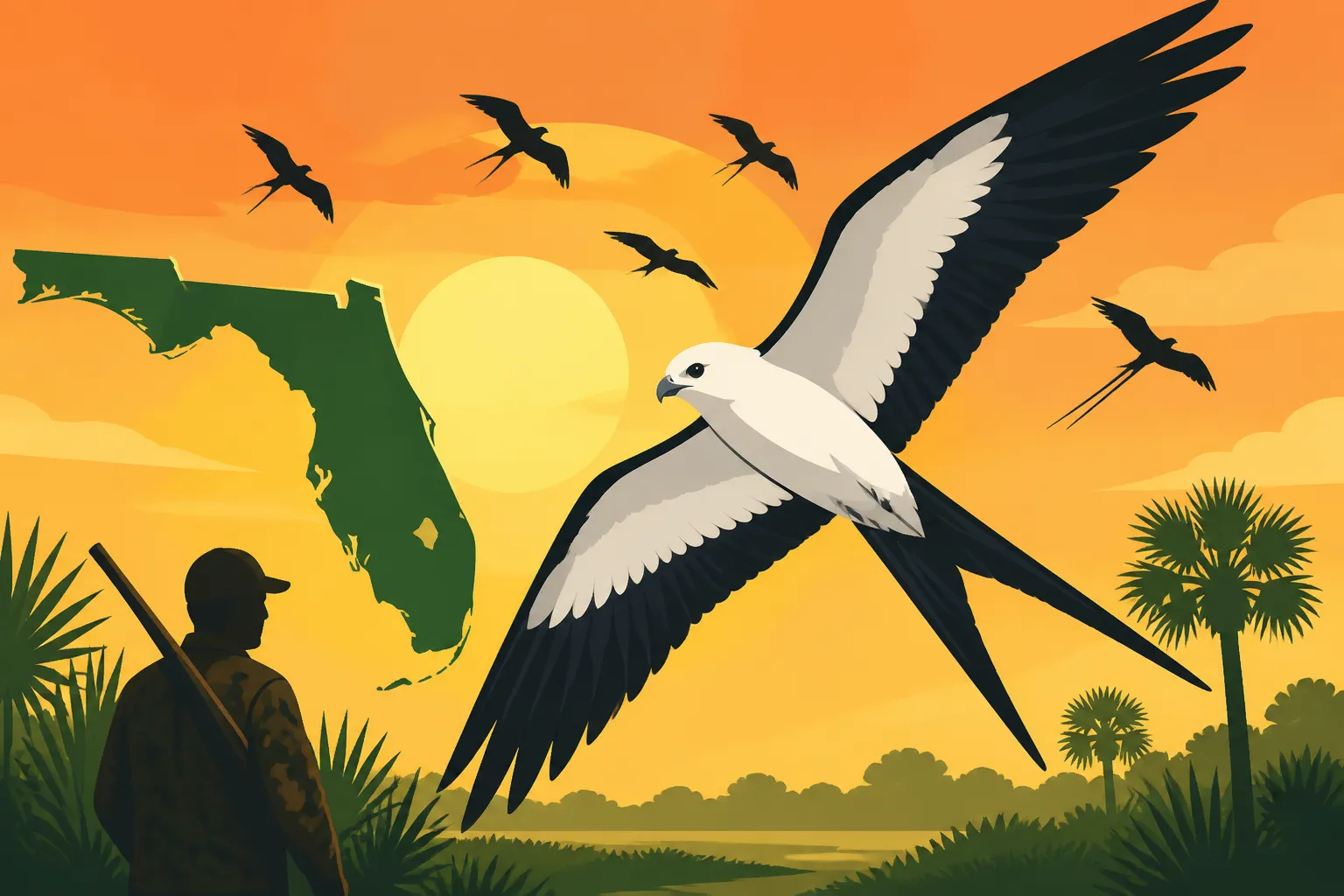
Imagine a bird that looks like a tuxedo-wearing glider, effortlessly slicing through the air. That's a swallow-tailed kite. Their most striking feature, of course, is their deeply forked tail, which gives them their name and acts like a rudder, allowing for incredible agility and acrobatic maneuvers. Their plumage is a stark, beautiful contrast: brilliant white on the head, neck, and underparts, set against glossy black on their back, wings, and that famous tail. They have long, pointed wings, creating a distinctive silhouette in flight – almost like a boomerang. You'll often see them soaring in wide circles, barely flapping, using thermals to gain altitude before gliding for long distances. They’re simply mesmerizing to watch, often hunting on the wing, snatching insects or small reptiles mid-flight.
If you're out there, maybe Scouting Florida Public Land Before Season for deer sign, and you spot a bird with this unmistakable profile, you'll know you're looking at something special. Unlike the heavier, more powerful flight of an osprey or an eagle, the kite's movements are fluid, almost delicate, a true master of the air currents. It's a reminder of the sheer diversity of wildlife that calls Florida home, even if only for part of the year.
Their Unique Role in Florida's Ecosystem
Swallow-tailed kites are not just pretty faces; they play a vital ecological role. As insectivores and carnivores, they help keep populations of large insects, lizards, and snakes in check. You'll often see them feeding on dragonflies, grasshoppers, and even tree frogs, snatching them from the air or from branches with incredible precision. They prefer to nest in tall trees, often near water sources, in vast, undisturbed tracts of cypress swamps or pine flatwoods.
Their presence is often an indicator of a healthy, functioning ecosystem, especially one with extensive wetlands and tall forests. In Florida, where we have such a rich variety of habitats, from the Everglades to the Panhandle pine forests, these birds thrive, at least for a season. They rely heavily on the abundant prey and secure nesting sites that these natural areas provide. Understanding their needs helps us appreciate the importance of preserving these wild spaces, not just for hunting, but for the overall biodiversity of our state. When you consider the balance of nature, every species, from the smallest insect to these magnificent raptors, has its place.
The Grand Journey: Understanding the Migration Pattern
The most fascinating aspect of the swallow-tailed kite is their incredible migratory journey. These birds are true globetrotters, traveling thousands of miles twice a year, driven by instinct and the changing seasons. It’s a testament to the endurance and navigational prowess of the natural world, a spectacle that reminds us of the interconnectedness of habitats across continents.
The North American Breeding Grounds and Southern Wintering
Swallow-tailed kites are neotropical migrants, meaning they breed in North America and winter in the tropics. Their primary breeding range in the United States is primarily the southeastern states, with Florida hosting a significant portion of the population. They arrive in Florida typically in late February or early March, ready to establish territories, build nests, and raise their young.
Once their chicks have fledged and are strong enough for the arduous journey, usually around late July or early August, they begin to gather. This congregation phase is one of the most awe-inspiring sights, as hundreds, sometimes thousands, of kites can be seen circling together in what's known as a "kettling." These pre-migration roosts are crucial staging points, where the birds fuel up and wait for the right weather conditions to begin their long flight south. They'll spend the winter months in South America, primarily in the Amazon basin, enjoying the abundant insect life there before making the return trip north. It’s a life cycle dictated by the sun and the availability of food across two hemispheres.
Navigating the Gulf and Central American Flyways
Their migration route is a marvel of natural navigation. From Florida, they typically fly southwest, across the Gulf of Mexico, or follow the coastlines of the Gulf, making their way through Central America. They often utilize well-established migratory pathways, or "flyways," taking advantage of prevailing winds to conserve energy. The journey is fraught with challenges – adverse weather, predation, and the sheer physical demand of flying such vast distances.
Imagine the sheer will it takes for a relatively small bird to cross open water or vast stretches of land, guided only by an innate compass. These birds are masters of exploiting thermal updrafts, allowing them to gain altitude and glide effortlessly for miles, minimizing wing flapping. This energy-efficient flight strategy is critical for their survival during such long-distance travel. If you're using an app like GoHunt to mark potential game trails or water sources, imagine these birds using natural "air currents" as their own invisible highways. It's a humbling thought, considering the technology we rely on for our own navigation.
When and Where to Witness This Spectacle in Florida
Catching a glimpse of the swallow-tailed kite, especially during their migratory periods, is an experience every outdoor enthusiast in Florida should aim for. It’s a fleeting window, but with a little planning and patience, you can witness one of nature’s most elegant shows.
Peak Migration Windows in the Sunshine State
The best times to see these magnificent birds in Florida are typically:
- Spring Arrival: Late February through early April. This is when they return to Florida to breed. You'll start seeing individuals or small groups.
- Fall Pre-Migration Congregation: Late July through late August. This is arguably the most spectacular time, as hundreds, sometimes thousands, of kites gather in large roosts before heading south.
The timing can vary slightly depending on weather patterns, but these windows provide the highest probability. If you miss the peak, you might still catch stragglers, but for the true spectacle, those are your prime opportunities. It's similar to knowing the Florida Youth Turkey Weekend Dates by Zone or the Florida Alligator Season Opening Date – timing is everything if you want to be there for the action.
| Season | Activity | Optimal Viewing Time | Typical Location |
|---|---|---|---|
| Spring | Arrival & Nesting | Late Feb – Early April | Cypress swamps, large forested wetlands |
| Summer | Fledging & Foraging | April – July | Over open fields, near wetland edges |
| Fall | Pre-Migration Kettling | Late July – Late August | Large communal roosts, soaring high over trees |
Identifying Key Roosting and Feeding Areas
Swallow-tailed kites gravitate towards specific habitats. They need tall trees for roosting, especially during migration, and abundant food sources. Look for:
- Cypress Swamps and River Bottoms: These areas offer tall, sturdy trees for nesting and roosting, and the wetlands provide a rich buffet of insects, small frogs, and lizards. Hunting Florida Cypress Swamp Edges can put you in prime kite territory.
- Large Pine Forests: Especially those bordering wetlands or agricultural fields. The tall pines offer excellent perching and roosting opportunities.
- Agricultural Areas and Pastures: Kites often forage over open fields where insects are plentiful. You might see them gracefully hunting over cow pastures or recently harvested fields.
- Wildlife Management Areas (WMAs): Many Florida Wildlife Management Areas are actively managed for diverse wildlife, often including the habitat these kites need. Using resources like the FWC app, or GoHunt, can help you locate these areas and understand the habitat types present. You can often find areas with extensive wetlands and tall timber, which are ideal.
One common scenario is to see them circling high above a large, dead cypress tree in a swamp, or a cluster of very tall pines on a property line. They favor these elevated spots for observation and to catch those precious thermals.
Tips for Spotting Kites from the Field
Spotting swallow-tailed kites requires a bit of patience and knowing what to look for:
- Look Up!: Seriously, these birds spend a lot of time soaring high. Bring binoculars. They often appear as distant black-and-white specks initially.
- Scan the Sky: Don't just look in one place. Kites cover a lot of ground, so slowly scan the horizon and overhead.
- Morning and Late Afternoon: While they can be active throughout the day, early mornings and late afternoons can be good, especially for observing them coming to or leaving a roost. During midday, they might be soaring so high they're hard to spot.
- Listen to Local Intel: Local birdwatching groups or even fellow hunters who spend time in specific areas often have good information on active roosts or reliable sighting spots.
- Patience is Key: Like many wildlife observations, it often comes down to simply being present in the right habitat during the right time window and patiently waiting. Sometimes, you just get lucky and one glides right over your Using a Ground Blind on Florida Public Land.
Remember, while we're often focused on game animals, observing these kites adds another rich layer to our outdoor experiences. Their elegant flight and annual journey are a true spectacle of Florida's wild beauty.
Protecting These Aerial Acrobats
As hunters and outdoor enthusiasts, we share a deep connection to the land and a responsibility for its wildlife. Understanding the challenges facing species like the swallow-tailed kite allows us to be better stewards of the environment.
Habitat Loss and Other Pressures
The biggest threat to swallow-tailed kites, like so many other species in our rapidly developing state, is habitat loss and degradation. As vast tracts of wetlands are drained, forests are fragmented, and natural areas are converted for development or agriculture, these birds lose the crucial nesting, roosting, and foraging grounds they depend on. Pesticide use can also impact their food supply, particularly large insects, which form a significant part of their diet.
Climate change is another emerging concern, potentially altering migration patterns, prey availability, and nesting success. While these birds are resilient, their long-term survival hinges on the availability of expansive, healthy ecosystems across their breeding and wintering ranges. It's a stark reminder that what happens in one part of the world can directly impact species that spend part of their lives in Florida.
How Hunters and Land Stewards Can Contribute
Many of us are already contributing to wildlife conservation through our hunting license purchases, which fund habitat management and research. Beyond that, there are specific ways we can help the swallow-tailed kite:
- Support Land Conservation: Advocate for and support initiatives that protect and restore large tracts of natural Florida habitats, especially wetlands and mature forests. Organizations working on preserving Florida's Green Swamp or other critical ecosystems are directly benefiting these birds.
- Responsible Land Use: If you own or manage land, consider practices that favor diverse wildlife. Maintaining mature trees, protecting wetland buffers, and reducing pesticide use can make a huge difference. Using tools like GoHunt to analyze aerial photos can help landowners visualize and plan for optimal habitat diversity on their property.
- Spread Awareness: Share your knowledge and passion for these birds with others. The more people who understand and appreciate the swallow-tailed kite, the more support there will be for their conservation.
- Report Sightings: Contribute to citizen science efforts by reporting your sightings to platforms like eBird. This data helps researchers track populations, migration routes, and identify critical habitats, all vital information for conservation planning.
By being mindful of the larger ecosystem, whether we're pursuing Year-Round Hog Hunting in Florida or Hunting an Osceola Gobbler in Palmetto Scrub, we contribute to a healthier environment for all wildlife, including these stunning aerial acrobats. The presence of swallow-tailed kites is a sign of a vibrant, healthy Florida, and by working together, we can ensure they continue to grace our skies for generations to come.
Disclaimer
This article is for general informational purposes only and does not constitute professional advice. Laws, prices and regulations vary by location and change over time. Consult a qualified professional for guidance on your specific situation.