Florida Crested Caracara Range
It's always a treat to encounter the unexpected when you're out in the Florida woods or across her vast prairies, and sometimes those encounters are with wildlife you can't hunt, but are fascinating nonetheless. If you've ever been hunting in certain parts of Florida and seen a large, striking bird that looks a bit like an eagle but walks more like a chicken, with a bold crest and a colorful face, you've likely seen a crested caracara. This guide will delve into the specific range of the Florida crested caracara, helping you understand where to find these magnificent birds and appreciate their unique place in our state's diverse ecosystem.
Understanding the Florida Crested Caracara
Often, as hunters, our focus is squarely on game species, whether we're after deer, hogs, or turkeys. But Florida's wild landscapes are home to so much more, and understanding the non-game species, particularly those with unique habitat needs, can really deepen our appreciation for the land we hunt. The crested caracara is one such bird, a truly distinctive raptor that stands out from the crowd.
A Hunter's Introduction to this Unique Raptor
Imagine you're quietly scouting a new piece of ranch land, maybe looking for a Scrape Lines Along a Sand Road or assessing the quality of a Late-Season Food Sources for Florida Whitetails. Suddenly, a large, dark bird with a white neck and an undeniable "helmet" of black feathers on its head struts across the field in front of you. That's our caracara. Unlike most raptors, which spend a good deal of their time soaring or perched high, these birds are often found on the ground, walking with a deliberate, almost comical gait. They're primarily black with striking white patches on their wings and tail, and their bare facial skin is a vibrant orange or red, intensifying during breeding season.
It’s easy to confuse them at first glance with a vulture due to their scavenging habits, or perhaps a large hawk or eagle because of their size and predatory nature. However, their unique crest, broad wings, and the way they hold their head while walking are unmistakable once you know what to look for. They often fly with shallow, powerful wingbeats interspersed with glides, and when perched, they tend to stand tall and alert, scanning the open landscape. Their calls are also quite distinct, a harsh, rattling cackle that can carry across open fields. They're truly a creature of open spaces, embodying the wild spirit of Florida's prairies.
Why They're So Distinctive Among Florida Birds
What really sets the crested caracara apart isn't just its striking looks, but its lifestyle. It's often called a "Mexican Eagle," and while that might give you a hint of its appearance, it doesn't fully capture its unique niche. Most raptors are strictly predators, killing their prey outright. While caracaras are certainly capable predators, hunting insects, reptiles, small mammals, and even young birds, they are also avid scavengers. They frequently feed on carrion, like roadkill or the remains of an animal left by a larger predator.
This dual feeding strategy makes them incredibly adaptable. You might see one picking at a carcass alongside vultures, or actively chasing down grasshoppers in a freshly cut hayfield. They're also known for kleptoparasitism, which is a fancy way of saying they steal food from other birds! They've been observed harassing buzzards and even eagles to drop their meals. Their nests are substantial, often built in tall cabbage palms or pine trees, and they'll fiercely defend their territory. For a hunter observing the broader ecosystem, seeing a caracara is a clear indicator of a healthy, open grassland environment.
Pinpointing the Crested Caracara's Range in Florida
The crested caracara isn't found throughout all of Florida. It has a rather specific stronghold, a particular niche that speaks volumes about its habitat requirements. Understanding this range is key, not just for birdwatchers, but for hunters who want to appreciate the full spectrum of wildlife in the areas they frequent.
The Core Strongholds: South Central Florida
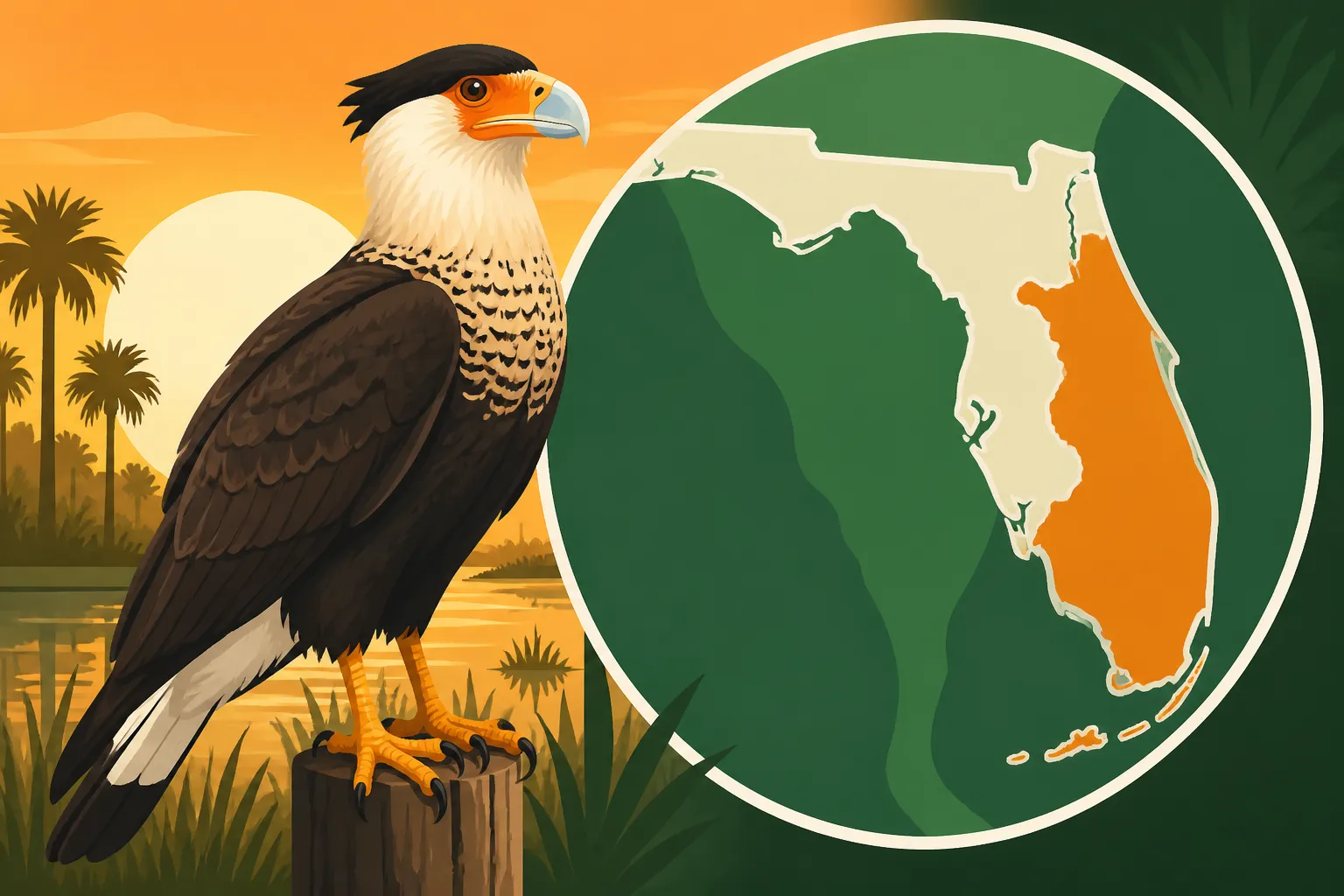
When we talk about the heart of the Florida crested caracara's range, we're talking about the vast, open grasslands and ranchlands of south-central Florida. Think east of Tampa, west of Fort Pierce, and north of Lake Okeechobee, stretching down into Collier County. This unique landscape, often referred to as the "Florida Prairie" or "cattle country," is their kingdom. Key counties where you have a strong chance of seeing these birds include:
- Osceola County: Home to massive cattle operations and undeveloped prairie.
- Okeechobee County: Especially around the shores of Lake Okeechobee and its surrounding agricultural lands. You might be considering Finding Access Near Okeechobee for a hog hunt, and you'll often find caracaras there.
- Highlands County: Characterized by its rolling sandhills and extensive cattle ranches.
- Polk County: The eastern and southern reaches, where agriculture and natural prairie persist.
- Glades County: Another area defined by its sprawling ranches and open country.
- Collier County: While much of it is Everglades, the northern and western sections with ranchland support caracaras.
These areas provide the perfect blend of open, short-grass pastures for foraging, scattered mature cabbage palms or pine trees for nesting and roosting, and plenty of prey items from insects to small mammals. Hunters who frequent these regions, perhaps hunting for White-Tailed Deer Across Florida on private ranch land or participating in a Year-Round Hog Hunting in Florida expedition, are most likely to encounter these magnificent birds. Scouting these areas, perhaps with a tool like GoHunt to understand land boundaries and features, can reveal prime caracara habitat.
Expanding Sightings and Peripheral Zones
While the core range is quite defined, nature is dynamic, and wildlife doesn't always read the maps we draw for them. There are occasional sightings of crested caracaras in peripheral counties, extending slightly north or west from their primary strongholds. These sporadic occurrences are often due to several factors:
- Juvenile Dispersal: Young birds, seeking new territories, might venture further than established breeding adults.
- Habitat Fragmentation/Changes: As Florida's landscape shifts with development, birds might be pushed into new areas or follow corridors of suitable habitat.
- Food Availability: A bumper crop of insects or an abundance of carrion in an adjacent area might draw them in temporarily.
For instance, you might occasionally hear reports from parts of Hardee, Manatee, or even Sarasota counties, especially where large agricultural fields or undeveloped wild lands border their core range. However, these are generally not breeding populations, but rather individuals exploring or passing through. It's important for hunters to know that while these birds are generally found in specific areas, keeping an eye out for them anywhere in Central or South Florida's open country isn't entirely out of the question. Tools like GoHunt can be valuable here, allowing you to scout vast areas, identify open country, and potentially spot areas that could support caracaras, even if they're on the fringe of their established range.
Habitat Preferences and What Hunters Should Observe
Understanding the specific types of habitat that crested caracaras prefer can give you a deeper appreciation for the landscapes you traverse as a hunter. It also subtly highlights the health of an ecosystem and the interconnectedness of all species, game or otherwise.
Grasslands, Prairies, and Pastures
The absolute cornerstone of caracara habitat in Florida is open country: grasslands, natural prairies, and, perhaps most commonly, actively grazed cattle pastures. Why are these so crucial?
- Clear Sightlines for Foraging: Caracaras are visual hunters and scavengers. Open fields allow them to spot prey (insects, small reptiles, rodents) or carrion from a distance, whether they're walking on the ground or flying overhead.
- Ease of Movement: Their ground-dwelling tendencies mean they need open areas to walk and run effectively. Dense scrub or thick forests, while common in Florida, simply aren't suitable.
- Carrion Access: These pastures often have large ungulates like cattle, and where there are cattle, there are occasionally unfortunate incidents that create carrion. Additionally, hunters operating in these areas might leave gut piles, which are a valuable food source for scavengers. Hunters scouting for Deer Drives With Three or Four Hunters or Hunting a Standing Peanut Field will be right in the middle of typical caracara country.
These open environments are not barren; they often contain a rich diversity of grasses and forbs that support a wide range of prey animals. The presence of caracaras is often a good sign of a robust grassland ecosystem, which also supports other open-country species like bobwhite quail, even if Florida Bobwhite Quail Decline is a concern in many areas.
Scattered Cabbage Palms and Pines
While caracaras need open ground to forage, they also need vertical structure for nesting and roosting. This is where the iconic Florida cabbage palms (Sabal palmetto) and scattered pine trees come into play.
- Nesting Sites: Caracaras build large, bulky nests in the crowns of tall cabbage palms or in the sturdy branches of solitary pine trees that rise above the flat landscape. These elevated positions offer security from ground predators and a vantage point for observing their territory.
- Roosting Spots: At night, or during hot midday hours, caracaras will often perch in these trees, escaping the sun and gaining a safe spot to rest.
- Territorial Markers: These prominent trees also serve as territorial markers, where pairs will often vocalize and display.
You'll notice this specific habitat mosaic when you're scouting areas like Hunting Florida's Central Ridge Sandhills or large cattle ranches in the core caracara range. It's that blend of wide-open spaces with just enough vertical structure that creates their ideal home. Knowing this can help you understand why certain areas you hunt might have them, while others just a few miles away might not.
Water Sources and Food Availability
No animal thrives without reliable food and water, and the crested caracara is no exception. In Florida's often hot and sometimes dry prairie environments, water sources are particularly important.
- Ponds and Wet Prairies: Even though caracaras prefer dry-ish open areas, nearby ponds, sloughs, or seasonally wet prairies provide crucial hydration, especially for young birds, and also attract a bounty of amphibian and insect prey.
- Diverse Prey Base: A healthy caracara population indicates a diverse and abundant prey base. From the myriad of insects found in the grass, to small snakes and lizards basking in the sun, to rabbits and rodents, their diet is broad. The presence of larger carrion from deer, cattle, or even Florida Feral Hog Diet and Rooting Damage also plays a role, especially in times of scarcity for live prey.
- Ranching Impact: Ironically, the cattle ranching that defines much of their habitat often helps maintain a steady food supply. Grazing keeps grass short, making prey more accessible. Calving seasons can provide easy carrion. Hunters who use aerial photos, perhaps with Reading Aerial Photos for Florida Deer in mind, can identify these open, ranching landscapes and see the potential for caracara encounters.
The overall health of these south-central Florida ecosystems, supported by careful land management, is directly reflected in the thriving caracara populations within their range.
| Feature | Crested Caracara | Turkey Vulture (Common) | Red-tailed Hawk (Common) |
|---|---|---|---|
| Appearance | Black body, white neck/tail, orange/red face, crested head | Black, featherless red head, silvery flight feathers | Brown back, white belly, rusty red tail (adults) |
| Movement | Often walks/struts on ground, powerful flight | Soars, teeters on thermals, rarely on ground | Soars, perches high, hunts from air |
| Diet | Omnivore: Carrion, insects, small mammals, reptiles, birds | Primarily carrion, exceptional sense of smell | Carnivore: Rodents, rabbits, snakes, birds |
| Habitat | Open grasslands, prairies, cattle ranches | Widespread, open country, forests, urban areas | Open country, forests, woodlands |
| Conservation Status | Florida State-Threatened | Common, protected | Common, protected |
| Behavior | Bold, inquisitive, sometimes aggressive scavenger/predator | Gregarious, often seen in groups, thermal soaring | Solitary, ambush predator |
| Vocalizations | Harsh, rattling cackles | Hisses and grunts (lacks a syrinx) | High-pitched "kee-eeeee-ar" scream |
Conservation Status and Hunter Awareness
When we talk about the range of any species, particularly one as distinctive as the crested caracara, it naturally leads to conversations about its status and our role in its continued presence. For hunters, this is especially relevant, as we are often the first to notice changes in wildlife populations and are deeply invested in the health of Florida's ecosystems.
State-Threatened and Federally Protected
It's important to recognize that the Florida crested caracara holds a significant conservation status. It is listed as State-Threatened by the Florida Fish and Wildlife Conservation Commission (FWC). This means it is protected by state law, and any harm to the birds, their nests, or their eggs is strictly prohibited. Furthermore, as a migratory bird, it also receives protection under the federal Migratory Bird Treaty Act.
What does this mean for hunters? Simply put, caracaras are not game birds. They cannot be hunted, harassed, or disturbed. While this might seem obvious, misidentification can happen. Knowing their unique appearance and where they typically range helps ensure that hunters can easily distinguish them from other birds and respect their protected status. If you are scouting a new area or walking through a piece of private land, understanding that you might encounter these birds adds another layer of appreciation for the wildness you're experiencing.
The Hunter's Role in Observation and Conservation
Hunters are, by nature, keen observers of the natural world. We spend countless hours in the field, often in remote or rarely visited areas, and our eyes are trained to pick up on subtle signs of wildlife. This makes us valuable partners in conservation efforts, even for species we don't hunt.
- Responsible Observation: If you encounter a crested caracara while hunting, enjoy the moment. Observe it from a distance, perhaps even taking a photograph if you can do so without disturbing the bird. This is where tools like GoHunt's mapping features can be incredibly useful, allowing you to mark a location where you spotted a caracara for future reference or to simply recall the encounter.
- Habitat Appreciation: The presence of caracaras is a strong indicator of healthy, open grassland and prairie habitats. Many of these areas are also prime for deer, hogs, and other game. By understanding what makes good caracara habitat, you also gain a deeper insight into the broader ecosystem that supports the game animals you pursue. Land management practices that benefit caracaras, such as maintaining open fields and scattered mature trees, often benefit deer and other wildlife as well.
- Reporting Significant Sightings: While casual sightings are common in their core range, if you happen to see a crested caracara far outside its typical known range, or if you notice anything unusual about their behavior or habitat, you can consider reporting it to the FWC or local Audubon chapters. Your boots-on-the-ground knowledge contributes to the larger understanding of these birds. For example, knowing the details of Florida's Four Deer Management Zones Explained might help contextualize where you're seeing different species.
By simply being aware, being respectful, and appreciating these magnificent birds, hunters play an important, albeit indirect, role in the ongoing conservation of the Florida crested caracara. It’s a reminder that our connection to the land goes far beyond the pursuit of game, extending to all the wild inhabitants that make Florida such a special place to be outdoors.
Disclaimer
This article is for general informational purposes only and does not constitute professional advice. Laws, prices and regulations vary by location and change over time. Consult a qualified professional for guidance on your specific situation.