Which Florida State Parks Allow Hunting
It's a common misconception among many hunters, especially those new to the Sunshine State, that Florida State Parks are entirely off-limits for hunting. While the vast majority of these beautiful natural areas are indeed managed for passive recreation and conservation, there are actually a select few state parks, or specific designated areas within them, where hunting opportunities are permitted. This guide will walk you through understanding these unique hunting areas, how to navigate the permitting process, and what you can expect when pursuing game in these special landscapes.
The Niche for Hunting in Florida State Parks
For many, the idea of hunting in a state park conjures images of crowded trails and wildlife viewing platforms, making it seem contradictory. However, Florida's approach to wildlife management is nuanced. While recreation is paramount in most state park units, some larger or more ecologically sensitive parks incorporate hunting as a vital tool for habitat and wildlife population management. It's not a free-for-all, but rather a carefully controlled system designed to maintain ecological balance.
Parks with Designated Public Hunting Areas
You won't find hunting allowed just anywhere within the state park system. Instead, the opportunities are often concentrated in specific areas that are either managed by the Florida Fish and Wildlife Conservation Commission (FWC) as part of their Wildlife Management Area (WMA) program, or operate under special state park hunt rules. These designated areas are usually larger, more remote, and perhaps less frequented by casual park visitors. The key distinction to remember is that you're not just hunting "a state park"; you're hunting a specific, designated public hunting unit that happens to fall within or be adjacent to a state park boundary.
Think of it this way: the primary designation might be "state park," but within that larger boundary, certain sections are specifically carved out and managed for regulated hunting. This means you need to be extra diligent in identifying these precise hunting zones. Many of these areas are listed on the FWC's public hunting lands map, and understanding how they integrate with the broader state park system is crucial. Public Hunting Land in Florida provides a great overview of the various types of public lands available to hunters across the state.
The Role of Habitat Management in Opening Hunt Opportunities
Why allow hunting in a state park at all? The answer often lies in ecological management. Florida's ecosystems are dynamic, and sometimes, unchecked populations of certain game species, particularly deer and feral hogs, can lead to significant habitat degradation. Over-browsing by deer can hinder forest regeneration, while feral hogs are notorious for rooting up sensitive plant communities, spreading disease, and preying on native wildlife.
In these instances, controlled hunting becomes a necessary tool to maintain healthy wildlife populations and preserve the overall ecological integrity of the park. It's about ensuring a balance. These hunts are often designed to remove a specific number of animals, targeting certain age classes or sexes, and are a scientific approach to conservation rather than purely recreational pursuits. State park personnel and FWC biologists work hand-in-hand to determine when and where these hunts are needed, often based on extensive wildlife surveys and habitat assessments.
Navigating the Quota Hunt System
Unlike some WMAs where you can simply purchase a daily or annual permit and show up, hunting in Florida State Parks with designated hunt units almost exclusively operates under a quota hunt system. This is where many hunters get tripped up, as it requires a bit more planning and a dose of luck.
Understanding Limited Entry and Application Periods
Quota hunts mean there's a limited number of hunters allowed into a specific area during a set time frame. This isn't just to manage hunter density; it's a critical part of the ecological management plan. The number of permits issued is carefully calculated to achieve specific harvest goals without over-pressuring the wildlife or disrupting the park's primary recreational uses. This results in competitive application processes.
Hunters must apply for these permits during designated application windows, typically months in advance of the actual hunting season. The FWC manages this application process, and often, more hunters apply than there are permits available. This means that drawing a permit can be challenging, particularly for popular parks or prime hunting dates. It's truly a lottery system, and persistence is key. Many hunters apply year after year before finally drawing a coveted tag. For a broader understanding of how these draws work, you might want to read up on the Florida WMA Quota Permit Application Process.
Required Licenses and Permits
Before you even think about applying for a state park quota hunt, you'll need to make sure your basic hunting credentials are in order. At a minimum, every hunter needs a Florida hunting license. The type of license depends on your residency and age. Beyond the base license, you'll almost certainly need a Florida Management Area Permit, as most state park hunt units are managed as part of the WMA system.
Here's a quick breakdown of what you'll typically need:
| Requirement | Description |
|---|---|
| Florida Hunting License | This is your foundational license. Residents and non-residents have different options, including annual or multi-year. You'll need this regardless of where you hunt in Florida. |
| Management Area Permit | Even though it's a state park, if the hunting unit is managed as a WMA, this permit is required for access. It helps fund the management of these public lands. |
| Quota Permit | Specific to the state park hunt itself. This is what you apply for in the lottery system. It grants you permission to hunt a specific area on specific dates. |
| Hunter Education | Most hunters born after May 31, 1975, must complete an approved hunter safety course. If this applies to you, get it done well in advance. |
| Federal Duck Stamp | If you plan to pursue waterfowl within a state park hunting area, the Federal Duck Stamp is a must-have, in addition to your state migratory bird permit. |
Remember that failing to possess any of these can invalidate your hunt and lead to penalties. It's always best practice to double-check the FWC regulations guide each year, as rules can occasionally change. For detailed information on costs and options, check out Florida Hunting Licenses and What They Cost. And if you're new to hunting, ensure you've completed your Florida Hunter Education Requirements.
Notable Florida State Parks Offering Hunting
While the list isn't exhaustive and can change, several Florida State Parks have historically offered, or currently offer, limited hunting opportunities. It's vital to research the most current regulations directly from the FWC website for any park you're considering, as seasons, rules, and even availability can vary year to year.
Examples of Parks and Target Species
Some of the state parks that have offered hunting in designated areas include:
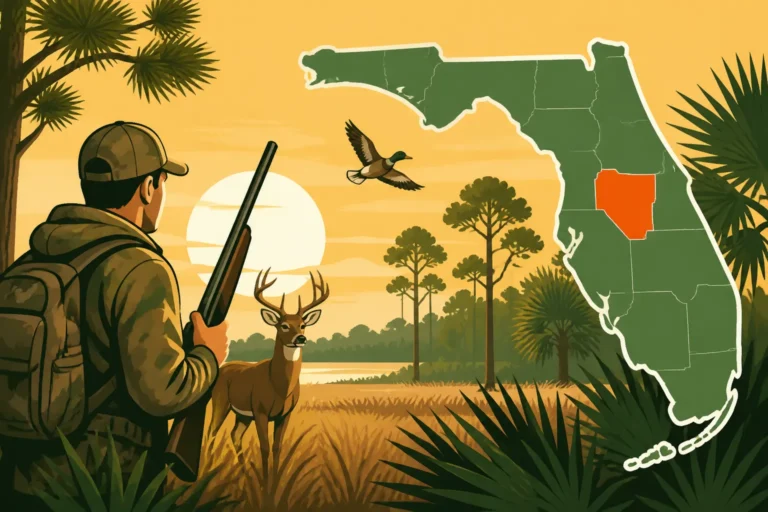
- Lake Kissimmee State Park: Located in Polk County, this park is a prime example where hunting for white-tailed deer and feral hogs has been managed through quota permits. The park's diverse habitats, from flatwoods to cypress swamps, offer challenging but rewarding experiences. Florida State Park Deer Quota Hunts often refer to opportunities in places like this.
- Paynes Prairie Preserve State Park: Near Gainesville, this unique ecosystem sometimes has quota hunts for deer and hogs, primarily to manage populations impacting the prairie's delicate balance. It's a vast landscape, offering a very different hunting experience than typical Florida scrub.
- Colt Creek State Park: Another example in Polk County, Colt Creek has offered limited public hunting for deer and hogs, often as special management hunts. It’s part of a larger conservation effort in the Green Swamp region.
When you do draw a permit for these areas, the primary species you'll likely be pursuing are white-tailed deer and feral hogs. Feral hogs are particularly prevalent across Florida and often have extended or year-round seasons in many public hunting areas due to their destructive nature. For more on these resilient animals, see Feral Hogs Across Florida. Deer seasons in these state park units will align with the specific deer management zone the park falls within. White-Tailed Deer Across Florida offers insights into the different deer populations and their habits.
What to Expect When Hunting a State Park
Hunting in a state park unit often means adhering to more stringent regulations than in some other WMAs. Expect rules regarding:
- Vehicle Access: Many state park hunt areas have limited vehicle access, often requiring foot traffic, bicycles, or sometimes even small electric buggies. Know your access points and be prepared to walk.
- Weapon Restrictions: Specific weapon types might be required or prohibited for certain hunts. For example, some hunts might be archery-only, muzzleloader-only, or shotgun/rifle restricted. Always verify what's legal for your specific hunt dates.
- Harvest Reporting: Florida has specific deer reporting requirements that apply to all harvested deer, including those taken in state parks. Familiarize yourself with how to register your harvest, often via the FWC's website or mobile app. Florida Deer Reporting Requirements has all the details.
- Non-Hunting Public: Even in hunting areas, you might encounter hikers, bird watchers, or other non-hunting recreational users, especially near trails or popular park features. It's crucial to exercise extreme caution, awareness, and courtesy. Safety is paramount, and understanding your backdrop is more important than ever. Blaze orange requirements will be strictly enforced.
- Camp and Amenities: While some larger WMAs allow primitive camping, state park hunting units might have different rules. You might need to camp in designated campgrounds (with fees) or seek accommodation outside the park. Don't assume anything; check ahead.
The experience can be incredibly rewarding, offering a chance to hunt in some of Florida's most beautiful and well-managed landscapes. However, it demands a higher level of preparation and respect for the rules.
Planning Your Successful State Park Hunt
Success in a state park hunt starts long before you ever step foot in the woods. It requires meticulous planning, an understanding of the rules, and effective scouting.
Deep-Diving into Regulations and Maps
Once you've drawn a quota permit for a state park hunt, your first step should be to thoroughly review all the regulations specific to that hunt. Do not rely on general WMA rules. The FWC hunt brochure for that specific area will be your bible. This brochure will detail hunt dates, legal methods, bag limits, check-in/check-out procedures, and any unique rules for that park.
This is where digital mapping tools like onX Hunt become invaluable. You can use onX Hunt to overlay public land boundaries, including WMA and state park lines, onto detailed satellite imagery. This allows you to visualize the exact hunt unit, identify access points, and understand potential sanctuary areas or off-limits zones within the larger park. Similarly, platforms like GoHunt can provide excellent resources for understanding draw odds, application strategies, and often have detailed information about specific hunt units. Always remember that while these tools are great for planning, the official FWC regulations are the final word.
Scouting and Preparation for Limited-Access Areas
Just like any other public land hunt, pre-season scouting is crucial for success in a state park unit. However, with limited access and potentially sensitive ecosystems, your scouting efforts need to be respectful and within the park's specific guidelines.
- Online Scouting: Start with aerial maps on onX Hunt or Google Earth. Look for natural funnels, pinch points, water sources, and bedding areas. Identify different habitat types – oak hammocks, pine flatwoods, cypress swamps – and consider how deer and hogs might utilize them.
- On-the-Ground Scouting: If the park allows pre-season access, walk the areas you've identified. Look for fresh sign like tracks, rubs, scrapes, and hog rooting. Pay attention to how the wind and thermals might affect game movement in specific areas, as Florida's flat terrain can make wind tricky. Scouting Florida Public Land Before Season offers great tips applicable to state park hunts.
- Understanding Boundaries: Be absolutely sure of the hunt unit boundaries. Use your GPS or onX Hunt app to mark these boundaries. Trespassing, even accidentally, is a serious offense.
- Physical Conditioning: Many state park hunts involve significant walking, often through challenging terrain like palmetto thickets or swampy areas. Get in shape before your hunt to maximize your time in the field.
By meticulously studying the regulations, utilizing modern mapping technologies like onX Hunt and GoHunt, and dedicating time to thorough scouting, you'll significantly increase your chances of a successful and enjoyable hunting experience in Florida's state parks. These unique opportunities offer a different kind of challenge and a chance to experience Florida's wild side in a very special way.
Disclaimer
This article is for general informational purposes only and does not constitute professional advice. Laws, prices and regulations vary by location and change over time. Consult a qualified professional for guidance on your specific situation.