Baker County Public Land Access
Finding quality public land to hunt in Florida can feel like searching for a needle in a haystack, especially when you're targeting a specific area like Baker County. It's easy to get lost in the sea of regulations, mapping tools, and differing access rules, leaving you wondering if you'll ever find a spot that offers a genuine hunting experience without feeling overcrowded. This guide aims to clear up that confusion, offering a comprehensive look at public land access in Baker County, Florida, helping you confidently plan your next hunt.
Understanding Baker County's Public Hunting Landscape
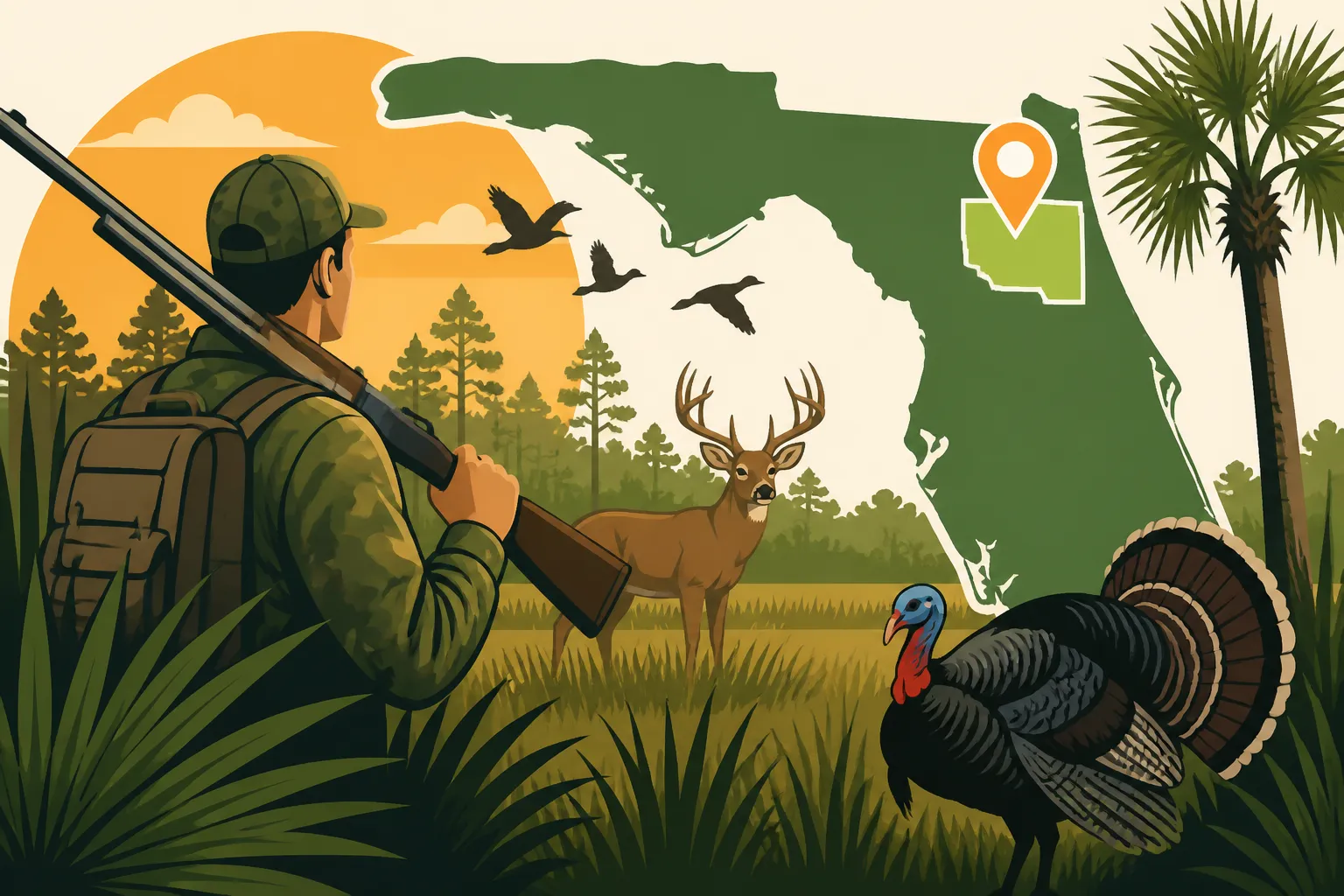
Baker County, nestled in Northeast Florida, offers a unique blend of pine flatwoods, cypress swamps, and sandhills that are quintessential Florida hunting habitats. While it might not always grab the headlines like some of the larger, more famous public hunting areas in the state, it holds significant potential for hunters willing to put in the effort. The key is understanding where to go and how to access these areas legally and effectively.
Key Public Land Areas in Baker County
When you look at a map of Baker County, one prominent name usually stands out: the Osceola National Forest. This vast tract of federal land is a cornerstone of public hunting opportunity in the region and offers some truly wild experiences. It's a place where you can still feel like you're miles from civilization, even if you're only a short drive from the highway. The forest is characterized by extensive pine plantations, interspersed with cypress and gum swamps, and numerous small ponds and sloughs. This diverse habitat supports a healthy population of game animals, making it a prime location for those seeking free-range opportunities.
Beyond the main body of the Osceola National Forest, there might be smaller, less obvious state lands or WMA units that offer specific hunting seasons or limited access opportunities. These can often be diamond-in-the-rough spots for local hunters, providing a more intimate hunting experience away from the larger crowds. Always double-check the FWC regulations and maps for any specific parcels within Baker County that might fall under different management rules. For instance, the Osceola National Forest itself functions largely as a WMA, but its rules can sometimes differ slightly from other state-managed WMAs. Understanding these nuances is crucial for a successful and legal hunt. If you're looking for broader information, a good place to start is Public Hunting Land in Florida, which covers the general landscape across the state.
General Rules and Regulations for Baker County Public Land
Hunting on public land, especially in a federal forest or WMA, comes with its own set of rules that often go beyond just having a valid hunting license. In Baker County, particularly within the Osceola National Forest, you'll need to be aware of several key requirements. First and foremost, a Florida hunting license is a must, along with a Florida WMA Management Area Permit if you're hunting within designated WMA portions of the forest. These permits help fund habitat management and enforcement efforts that keep these areas productive. You can find detailed information on these requirements in Florida Hunting Licenses and What They Cost and The Florida WMA Management Area Permit.
Season dates and bag limits are also paramount. While Baker County generally falls under Florida's Zone D for deer management, always verify the specific dates for the Osceola National Forest or any other public land you plan to hunt, as they can sometimes have special seasons or restrictions. For example, some areas might have quota hunts, requiring an application and successful draw to gain access. These limited-entry hunts are designed to control hunter pressure and maintain game populations, offering a higher quality hunting experience for those who draw a tag. Understanding Florida's Four Deer Management Zones Explained will give you a good foundation, but specific area regulations are always the final word. Always check the FWC's current regulations handbook for the specific area you intend to hunt, as rules can change annually.
Navigating Access Points and Terrain in Baker County
One of the biggest hurdles for any public land hunter, particularly in a place like Baker County, is simply getting in and knowing where you are. Florida's public lands can be a maze of sand roads, palmetto thickets, and swampy bottoms. Without a clear plan and the right tools, you can easily spend more time trying to find an access point than actually hunting.
Finding Entry Points and Understanding Boundaries
For public land in Baker County, particularly within the Osceola National Forest, access typically involves a network of unpaved forest roads. These roads are often well-maintained enough for two-wheel drive vehicles, but after heavy rains, they can become deeply rutted and challenging, requiring a four-wheel drive or at least good ground clearance. Identifying designated parking areas is important, as you often can't just pull off anywhere. Mapping applications are invaluable here. Tools like onX Hunt and GoHunt allow you to overlay public land boundaries with satellite imagery and topographic maps, showing you roads, trails, and land ownership in real time. This is a game-changer for navigating unfamiliar territory. You can pinpoint legal parking, identify potential walking trails, and most importantly, stay on public land.
The terrain in Baker County can be deceptively flat but surprisingly varied. You'll encounter vast stretches of mature longleaf pine, often with an understory of palmetto or wiregrass, which are perfect for still-hunting. Then, abruptly, you might drop into a cypress or titi swamp, which can be nearly impenetrable but are often overlooked sanctuaries for deer and hogs. Learning to read these transitions on your mapping app – looking for slight changes in elevation or vegetation – can help you identify natural travel corridors and bedding areas. The edges where pine flatwoods meet a cypress swamp, for instance, are classic funnel points. For more specific insights on navigating dense cover, check out Hunting a Palmetto Flatwoods Edge.
On-the-Ground Scouting and Strategy
No map, however detailed, can replace boots-on-the-ground scouting. While digital tools like onX Hunt are fantastic for initial planning, spending time in the woods before the season opens is critical for truly understanding deer and hog movements in Baker County. Look for fresh tracks along sand roads, rub lines on pine saplings, and active scrapes under oak trees. Pay close attention to areas where different habitat types converge, such as where a pine ridge meets a creek bottom or a dense palmetto head. These are often high-traffic zones. Reading Aerial Photos for Florida Deer can give you a significant head start in identifying these potential hot spots.
Given the density of some of the cover in Baker County, often due to thick palmetto or young pine regrowth, deer and hogs might not move great distances during daylight hours. This means focusing your efforts on bedding areas or staging points close to food sources, especially during the middle of the day. Setting up a ground blind or climbing stand in a transition zone, or along a subtle natural funnel between two distinct habitat types, can be highly effective. The vastness of areas like the Osceola National Forest also means less pressure in deeper areas, so don't be afraid to walk a little further than most hunters are willing to go.
Essential Permits and Planning for Baker County Hunts
Having your gear in order is only half the battle; knowing you have the right paperwork and a solid plan is just as crucial for a successful hunt in Baker County. Florida's system, while user-friendly once you understand it, does require some upfront thought.
Required Licenses and Management Area Permits
To hunt any game animal in Florida, whether on private or public land, you'll need a valid Florida hunting license. For public lands like the Osceola National Forest, which often operates under specific WMA regulations, an additional Florida Management Area Permit is typically required. Think of these as your entry tickets to play the game. You can usually purchase both your base hunting license and the WMA permit online through the FWC website or at any licensed agent, like a sporting goods store. It's always best to get these well in advance of your hunt.
It's also important to understand if your chosen area in Baker County operates under a quota hunt system for deer or turkey. Quota hunts allocate a limited number of hunters to a specific area for a set period, reducing crowding and improving the hunting experience. If you plan to hunt a quota area, you'll need to apply for a permit during the designated application windows. These draw odds can vary, so having a backup plan or flexibility in your hunting dates is always a good idea. Knowing when to apply and checking the Florida WMA Quota Permit Application Window is key. Also, remember that specific species like turkey may require additional permits or stamps, so always consult the FWC regulations for details specific to Eastern Turkeys in the Florida Panhandle if you're pursuing gobblers.
Utilizing Digital Tools for Planning
In today's hunting world, digital mapping applications are no longer just a luxury; they're a necessity, especially when navigating dense public land in Baker County. onX Hunt and GoHunt are two of the leading platforms that provide hunters with satellite imagery, public and private land ownership boundaries, topography, and GPS capabilities right on their phone or tablet. Before you even set foot in the woods, you can use these apps to:
- Scout from home: Identify potential bedding areas, travel corridors, water sources, and food plots (if applicable on private land adjacent to public).
- Mark waypoints: Pin parking spots, potential stand locations, rub lines, scrapes, and game camera sites.
- Navigate in the field: Follow your marked routes, track your movements, and ensure you stay within public land boundaries. This is especially useful in areas with thick cover or confusing terrain.
- Identify access points: Zoom in to find faint two-track roads or walking trails that might not be obvious on a regular paper map.
| Planning Tool Feature | Benefit for Baker County Hunting |
|---|---|
| Satellite Imagery | Pinpoint dense cover, clearings, water, and habitat transitions. Essential for remote scouting. |
| Public/Private Land Layers | Crucial for staying legal. Avoid trespassing and identify huntable public land. |
| Topographic Maps | Understand subtle elevation changes and drainages that funnel game movement. |
| GPS Tracking & Waypoints | Mark stands, tracks, sign, and ensure you can navigate back to your vehicle, especially in thick woods. |
| Offline Maps | Download maps for areas with no cell service, common in remote parts of the Osceola National Forest. |
Using the FWC's own app is also highly recommended, as it often contains real-time information on area closures or specific local rules. Scouting With the Florida FWC App is a great companion to commercial mapping tools. These tools empower you to plan more efficiently, navigate safely, and ultimately, increase your chances of success on challenging public lands.
Common Game Species and Hunting Opportunities in Baker County
Baker County, with its diverse blend of habitat types, is a hotspot for several popular game species. While deer and hogs tend to dominate the hunting scene, opportunities for turkey and small game are also present, making it a versatile destination for Florida hunters.
Deer and Hogs in Baker County
The white-tailed deer population in Baker County, largely concentrated within the Osceola National Forest and surrounding state and private timberlands, can be quite robust. While the deer here, like much of White-Tailed Deer Across Florida, might not consistently produce the colossal racks seen in some other states, they offer a challenging and rewarding pursuit. The dense pine flatwoods and swamps provide excellent cover, making them masters of evasion. Hunters often focus on transition zones, areas with recent prescribed burns that promote new growth, or travel corridors between bedding areas and traditional food sources like acorns during the fall. Deer drives are also a popular tactic in this region, especially during gun season, to push deer out of thick palmetto heads or cypress thickets. For individual hunters, effective strategies include still-hunting through pine stands, identifying natural funnels, and patiently sitting over food sources or heavy sign.
Feral hogs are perhaps the most ubiquitous game animal in Baker County, and throughout Year-Round Hog Hunting in Florida. They are prolific breeders and thrive in the varied habitats found here. The good news for hunters? There's virtually no closed season or bag limit on hogs on private land, and very liberal rules on public lands where they are often considered an invasive species. Hogs can be found rooting through pine forests, wallowing in muddy swamps, and tearing up agricultural fields if any are nearby. Hunting methods vary widely, from still-hunting and stalking to hunting over bait (where legal and permitted on specific public lands, always verify), using dogs, or even night hunting with lights (again, verify regulations for your specific public land area, as rules can be restrictive). Hog sign, such as rooted areas, rubs on trees, and tracks, is usually abundant, making them a consistent target for hunters who enjoy an active pursuit.
Turkey and Small Game Potential
For those seeking the thrill of a spring gobbler, Baker County can offer opportunities for Eastern Turkeys in the Florida Panhandle. While Osceola turkeys get a lot of attention further south, the Panhandle and North Florida, including Baker County, are home to Easterns. These birds often favor the mature pine forests and hardwood hammocks found throughout the Osceola National Forest. Spring turkey hunting involves classic calling and decoying tactics, trying to lure a dominant tom into range. Scouting for roosting sites before the season and understanding their daily patterns between roost, strutting zones, and feeding areas is key to success. Patience and realistic calling are paramount when pursuing these wary birds.
Beyond the big game, Baker County also offers excellent opportunities for Small Game and Predator Hunting in Florida. Squirrels, both gray and fox squirrels, are abundant in oak hammocks and pine stands, providing a fun and accessible hunt, often with a rimfire rifle or shotgun. Rabbit hunting is also popular in brushy areas and along field edges. For predator hunters, coyotes are widespread and can be called in, offering a challenging experience. These small game hunts are fantastic ways to introduce new hunters to the sport or to simply enjoy a day in the woods when deer and turkey seasons are closed or you're not specifically pursuing them.
Typical Game Species in Baker County Public Land
| Game Species | Primary Habitat | Common Hunting Methods | Seasonality / Rules |
|---|---|---|---|
| White-Tailed Deer | Pine Flatwoods, Oak Hammocks, Cypress Swamps, Burned Areas | Still-hunting, Stand Hunting, Drives, Spot-and-stalk | Zone D seasons apply, specific WMA dates/quotas |
| Feral Hogs | All habitats, especially swamps and thickets | Still-hunting, Stalking, Dogs, Baiting (check rules), Night Hunting (check rules) | Year-round, liberal limits, specific WMA rules apply |
| Eastern Turkey | Mature Pine Forests, Hardwood Hammocks | Calling, Decoying, Roosting, Spot-and-stalk | Spring season, specific WMA dates/quotas, permit required |
| Gray Squirrel | Oak Hammocks, Pine Stands | Still-hunting, Stalking, Small game dogs | Fall/Winter seasons, liberal limits |
| Fox Squirrel | Mature Pine Forests | Still-hunting, Stalking (less common) | Fall/Winter seasons, liberal limits |
| Rabbit | Brushy Areas, Field Edges | Still-hunting, Dogs | Fall/Winter seasons, liberal limits |
| Coyote | Open Pine Stands, Forest Edges, Ranch Land | Calling, Trapping | Year-round, no bag limit |
This diverse array of game ensures that Baker County can offer something for almost every type of hunter, whether you're after a trophy deer, a freezer full of wild hog, or a challenging turkey hunt. Just remember to always verify the most current FWC regulations for the specific public land you plan to visit, as rules and seasons can change.
Disclaimer
This article is for general informational purposes only and does not constitute professional advice. Laws, prices and regulations vary by location and change over time. Consult a qualified professional for guidance on your specific situation.