Bringing a Non-Hunting Spouse on a Lodge Stay
You've been dreaming of that Florida hunting trip, whether it's chasing an elusive Osceola gobbler in the spring or heading out for a monster hog in the palmettos. But there's a part of you that wishes you could share the experience, not just the stories, with your spouse. The problem is, your partner isn't a hunter, and the idea of them being stuck in a remote lodge while you're out in the woods at dawn can bring on a heavy dose of guilt. It's a common dilemma: how do you combine your passion with a trip that's genuinely enjoyable for everyone? This guide is here to walk you through how to make a Florida hunting lodge stay a truly shared adventure, even if only one of you is carrying a tag.
The Unique Appeal (and Potential Pitfalls) of a Florida Hunting Lodge for Non-Hunters
Let's be honest, the image of a hunting camp often conjures up rustic cabins, cold showers, and beans for dinner. For a non-hunting spouse, that's not exactly a vacation brochure. But modern Florida hunting lodges have evolved, offering a blend of wilderness access and unexpected comfort that can genuinely appeal to those not focused on the harvest.
Dispelling the "Roughing It" Myth: Modern Lodge Amenities
Forget the leaky tent or the rundown shack from your grandad's hunting stories. Many Florida hunting lodges today understand that comfort enhances the overall experience, not just for the hunters, but for their companions too. We're talking about private rooms, often with their own bathrooms, comfortable beds, and sometimes even air conditioning – a true blessing in Florida's warmer months.
You'll often find inviting common areas where a non-hunter can relax with a book, enjoy a cup of coffee, or even catch up on work if needed, thanks to Wi-Fi access that wasn't even a dream a couple of decades ago. These spaces can be beautifully decorated, reflecting the local outdoor theme but without sacrificing coziness. Imagine a screened-in porch overlooking a cypress pond, a fire pit area for evening relaxation, or a comfortable lounge with a big-screen TV for movies or sports. These aren't just places to crash after a long day; they're destinations in themselves, offering a serene escape. It really shifts the dynamic from a "hunt trip" to a "lodge getaway" where hunting is one of the activities, not the only activity.
The Hunter's Dilemma: Balancing Passion with Partnership
The desire to share your hunting passion with your spouse is completely natural. You want them to understand why you do what you do, why those early mornings are worth it, and why chasing that Osceola Turkeys in Peninsular Florida is so thrilling. But there's that nagging worry: will they be bored? Will they feel left out? Will they resent the time you spend in the field?
This internal struggle is real. You've invested time, money, and emotional energy into planning this trip, maybe even looking into Booking a Guided Florida Deer Hunt or a guided Florida hog hunt. You don't want to compromise your hunt, but you also don't want your partner to have a miserable time. It's about finding that delicate balance, acknowledging that their idea of a good time might not involve sitting in a blind for hours. The goal isn't necessarily to convert them into a hunter, but to provide an environment where they can enjoy the unique atmosphere of a hunting lodge and the beauty of Florida's outdoors on their own terms, while still being present for the camaraderie and stories when you return from the field.
Finding a Florida Hunting Lodge That Caters to Everyone
Choosing the right lodge is perhaps the most crucial step when planning a trip that includes a non-hunting spouse. It's not just about where the biggest bucks are or the most active gobbling; it's about the broader experience the facility offers.
Researching "Non-Hunting Friendly" Lodge Features
When you're sifting through potential lodges, go beyond the hunting reviews. Look for clues that suggest a more inclusive atmosphere. Does the lodge website showcase amenities beyond the hunting grounds? Are there pictures of comfortable common areas, dining rooms, or even recreation facilities like a pool, hot tub, or small gym? Some lodges even offer spa services or massage therapy, which can be a huge draw for a partner looking to relax.
Don't hesitate to pick up the phone and directly ask the outfitter about their provisions for non-hunting guests. Inquire about the type of meals served – are they communal and casual, or more formal and accommodating to dietary restrictions? Is there reliable cell service or Wi-Fi? Are there quiet areas for reading or working? You'd be surprised how many lodges have evolved to offer these comforts. When you're asking Questions to Ask a Florida Outfitter, make sure these lifestyle questions are high on your list, right alongside the hunting specifics. Websites like BookYourHunt or GoHunt sometimes allow you to filter or read detailed descriptions that highlight amenities beyond the hunt itself, which can be a great starting point. Remember, it's not just about the hunt; it's about the whole experience, and a good lodge often understands that.
Proximity to Non-Hunting Attractions and Activities
While some lodges are truly remote, many are situated within a reasonable drive of other attractions that could fill a non-hunter's day. Think about what your spouse enjoys. Is it shopping, exploring small towns, historical sites, nature walks, or perhaps even a beach day? Florida offers such a diverse landscape that even deep in the woods, you might not be far from something captivating.
For example, a lodge in Central Florida, perhaps near the Hunting Florida's Green Swamp or Hunting Florida's Central Ridge, might be an hour or two from Orlando's theme parks, natural springs perfect for swimming or kayaking, or even quaint downtown areas with antique shops and cafes. If you're in the Panhandle, perhaps near the Hunting Florida's Panhandle Pine Country or Apalachicola National Forest Hunting, you might be close to white-sand beaches, historic coastal towns, or even opportunities for bay fishing. Some lodges are even on working ranches where a spouse might enjoy bird watching, photography, or simply the peacefulness of the countryside. Knowing what's available nearby allows your spouse to plan their own independent adventures while you're focused on your hunt. This foresight shows you care about their experience as much as your own.
Crafting a Companion's Itinerary: Making Their Stay Enjoyable
The key to a successful dual-interest trip is empowerment. Your non-hunting spouse needs to feel like they have agency over their days, not just waiting for you to get back to camp. This means encouraging them to create their own itinerary.
Morning and Mid-Day: Solo Adventures and Relaxation
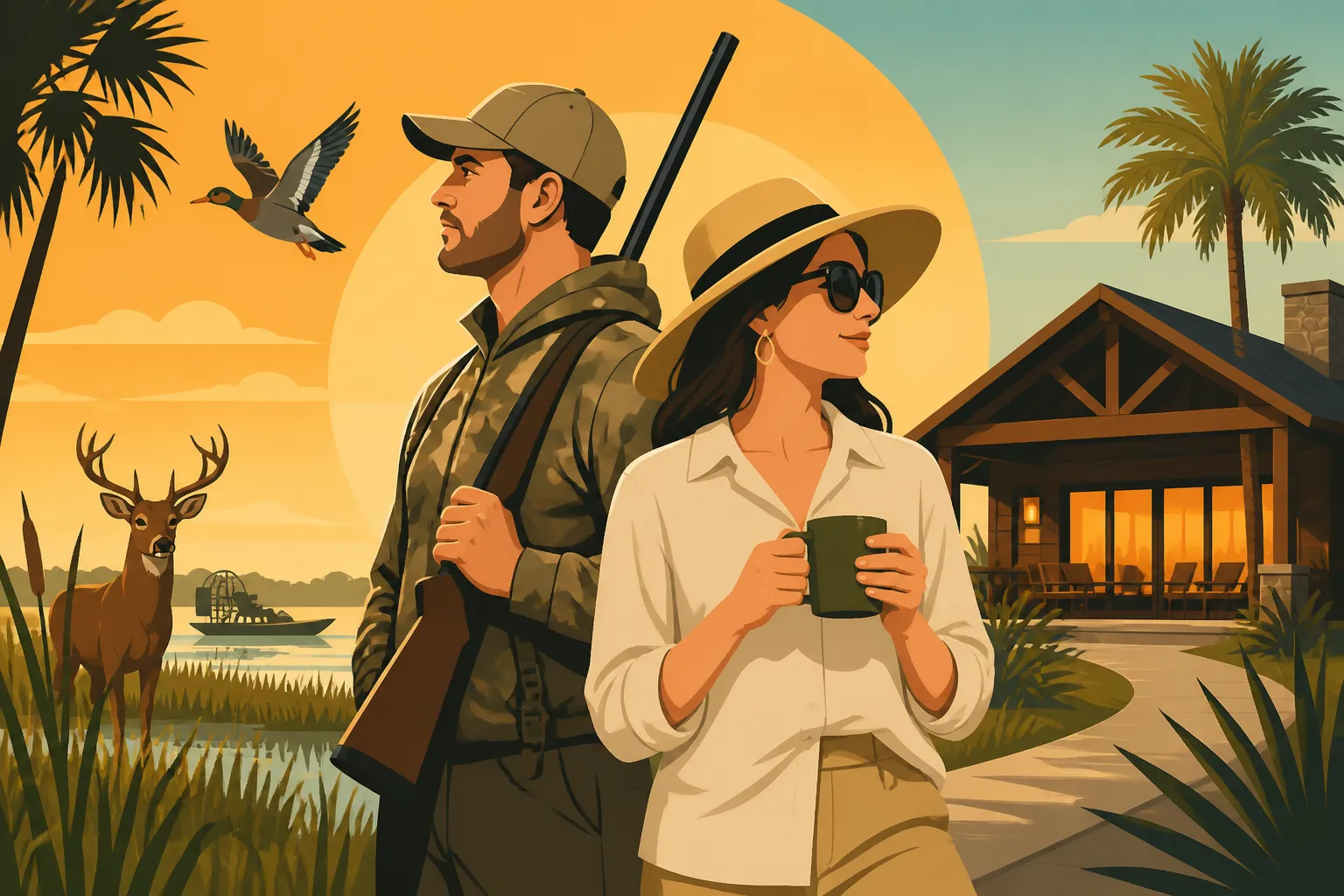
While you're slipping out the door before dawn, your spouse could be enjoying a leisurely morning, sipping coffee on a porch swing, reading a book, or maybe even taking a yoga class if the lodge offers one. During the mid-day, when you might be tracking a deer or waiting for the action to pick up, they could be embarking on their own solo adventures.
This might involve exploring the lodge property on a designated walking trail (after checking with the outfitter for safety and boundaries, of course). Photography, birdwatching, or simply enjoying the quiet can be incredibly refreshing. Many lodges offer amenities like a swimming pool, which can be a perfect way to beat the Florida heat. For those who crave more activity, research ahead of time for nearby attractions. Could they visit a local state park, check out a historical museum, or even treat themselves to a massage at a nearby town? Sometimes, a local guide can be arranged for an afternoon fishing trip or a scenic boat tour. The goal is to provide a rich array of options so their days feel full and enjoyable, rather than a void to be filled until you return.
Evening Gatherings: Reconnecting and Sharing Stories
The evenings are often where the two experiences truly merge. After a long day in the field, you'll return to the lodge, full of stories, whether triumphant or hilariously frustrating. This is a prime opportunity for reconnection. Most Florida Hunting Lodges and Packages include communal dinners, which can be a wonderful time to share the day's experiences. Your spouse can hear about your close call with a big buck or the antics of a flock of turkeys, and you can hear about their relaxing day by the pool or their outing to a local attraction.
These shared meals foster camaraderie not just between you and your spouse, but often with other hunters and their companions staying at the lodge. It's a chance to build friendships, swap tales, and enjoy some good food – often home-cooked and hearty, exactly what you need after a day outdoors. What Meals a Florida Lodge Package Includes can vary, but most pride themselves on satisfying fare. A campfire, a game of cards, or just quiet conversation under the stars can cap off the day perfectly. This balance of individual pursuit and shared experience is what makes a hunting lodge trip with a non-hunting spouse truly special.
Practical Considerations: Costs, Communication, and Expectations
Bringing a non-hunting guest isn't just about finding fun things for them to do; it also involves some practical planning around finances and interpersonal dynamics. A smooth trip starts with clear understanding on all fronts.
Understanding Lodge Pricing for Non-Hunters
One of the first things you'll need to clarify is the cost for a non-hunting companion. This can vary widely from one outfitter to another. Some lodges might charge a full daily rate, especially if they are all-inclusive or have limited guest capacity. Others might offer a reduced "non-hunter rate" that covers lodging, meals, and access to amenities, but not the guide fees or hunting services. Still others might have a simple per-night room rate, with meals as an optional add-on.
When you're looking into Florida Hunting Licenses and What They Cost for yourself, also factor in the companion fee. It's vital to get a clear, itemized quote upfront from any outfitter you consider. Don't assume anything; explicitly ask what is included in the non-hunter's fee, from meals and beverages to any on-site activities. This transparency will prevent any unpleasant surprises upon arrival and ensures you're both comfortable with the financial aspect of the trip. A solid outfitter, perhaps one you found through a platform like BookYourHunt, will be happy to provide this information clearly.
Open Communication is Key: Setting Realistic Expectations
Before you even book the trip, have a frank and open conversation with your spouse. This isn't just a vacation; it's a hunting trip that you're inviting them to share a part of. Explain what your typical hunting day will look like: the early mornings, the quiet periods, the potential for long hours in the field, and the fact that you won't always be available to chat or hang out.
Conversely, your spouse should communicate their expectations. Do they want complete solitude during the day? Do they hope for some specific activities? Are they comfortable being at the lodge by themselves? Setting realistic expectations for both parties is paramount. This isn't a typical "couples retreat," but it can be a deeply rewarding experience if both of you understand and respect the other's needs and desires for the trip. Think of it as a shared basecamp for individual adventures, culminating in shared evenings. Being upfront about these things will prevent misunderstandings and resentment later on. The goal is enjoyment for everyone, and that starts with understanding what that looks like for each of you.
Packing Smart for Different Types of Days
Packing for a hunting trip is one thing; packing for a hunting trip where a non-hunting spouse needs to be comfortable and entertained is another. Beyond your camo and gear, your spouse will need a wardrobe that supports both relaxation and potential excursions.
Think layers, as Florida weather can be unpredictable, even if usually warm. Comfortable casual wear for lounging, a swimsuit for the pool, and perhaps slightly dressier attire for evening meals (if the lodge atmosphere calls for it). Good walking shoes are a must if they plan on exploring. Don't forget essentials like a good book, e-reader, headphones, a journal, or even art supplies if they enjoy creative hobbies. Sunscreen, bug spray, and a wide-brimmed hat are crucial for anyone spending time outdoors in Florida, whether hunting or just relaxing. Packing for potential side trips, such as a visit to a nearby town or a nature trail, will also ensure they're prepared for whatever activities they choose. A comfortable and prepared companion is a happy companion, making the entire lodge stay a more pleasant experience for everyone.
Disclaimer
This article is for general informational purposes only and does not constitute professional advice. Laws, prices and regulations vary by location and change over time. Consult a qualified professional for guidance on your specific situation.