Hunting Florida’s Panhandle Pine Country
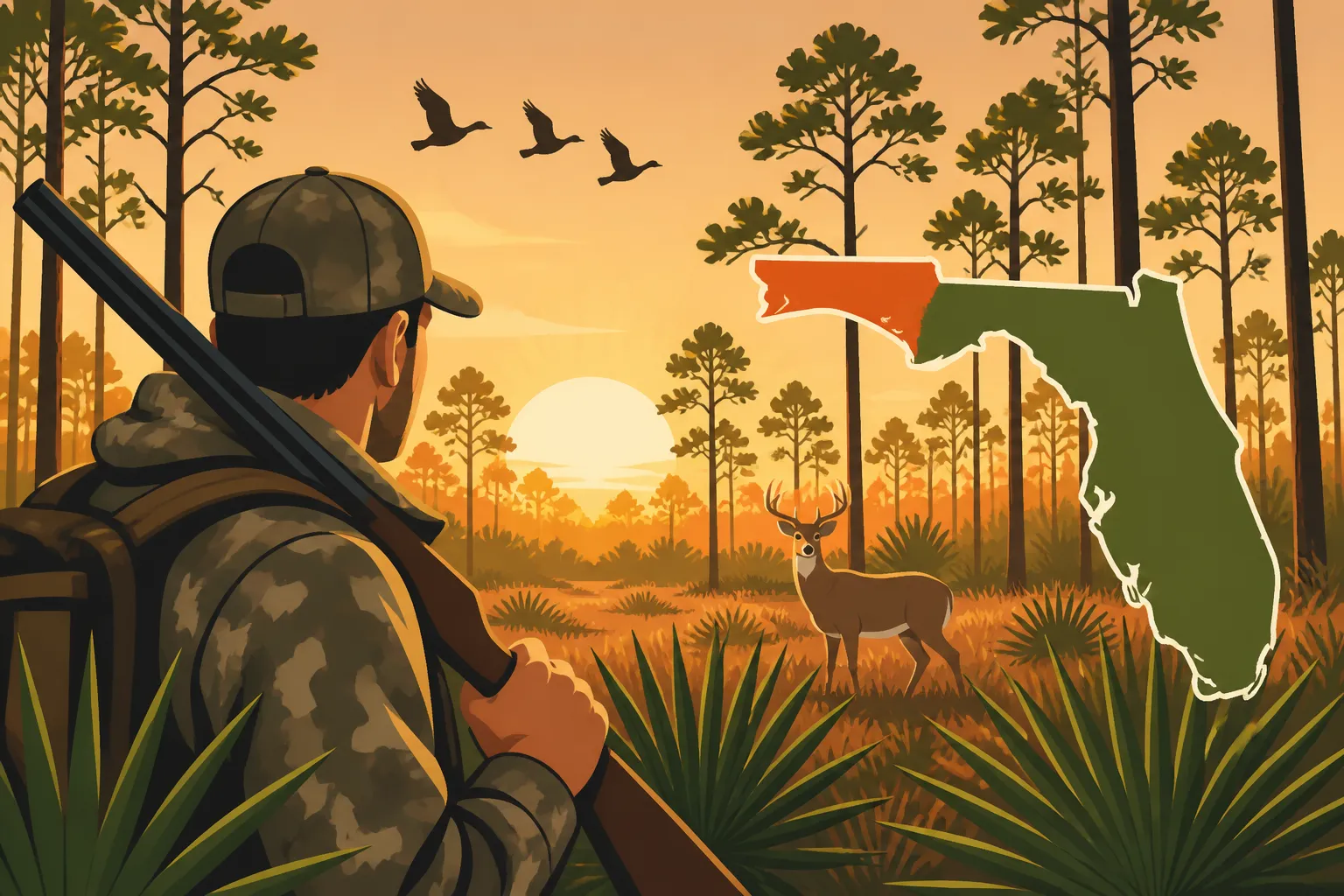
The deep, quiet expanse of Florida's Panhandle pine country can feel both incredibly inviting and utterly overwhelming for a hunter. Many of us are used to the idea of a "woods" having distinct features, but out here, the seemingly endless rows of longleaf, slash, and loblolly pines can make every acre look just like the last. It’s a unique challenge to unlock the secrets of this specialized habitat, to find where the deer bed, where the turkeys strut, or where the hogs root. This guide is designed to cut through that uniformity, helping you understand this distinct ecosystem, identify prime hunting spots, develop effective strategies, and gear up properly to succeed in the Panhandle’s vast pine forests.
Understanding the Panhandle Pine Ecosystem
The Florida Panhandle's pine country isn't just a collection of trees; it's a dynamic ecosystem shaped by centuries of natural processes and, more recently, by human management. To truly hunt effectively here, you need to understand the underlying environment.
Dominant Flora and Fauna
When you step into the Panhandle pines, the first thing you notice is the sheer dominance of various pine species. You'll primarily encounter towering longleaf pines, distinguished by their long needles and hardy resilience, alongside quicker-growing slash and loblolly pines. These trees often grow in neatly planted rows in managed forests, creating distinct aisles that can both aid and hinder hunters. Below the pines, the understory is typically defined by wiregrass, palmetto, gallberry, and various low-growing shrubs. This sparse, fire-adapted vegetation is a stark contrast to the dense, tangled hammocks you might find further south or in richer bottomlands. This open understory, maintained by frequent fires, is crucial for game movement and visibility.
While the pines might seem monotonous, this environment supports a surprising array of wildlife. Besides our target game species, you'll find small mammals like rabbits and squirrels, numerous bird species, and a healthy population of reptiles including various snakes and lizards. The frequent prescribed burns that characterize healthy pine ecosystems are vital for regenerating the understory, providing fresh forage and insect life that forms the base of the food chain. Understanding this cycle helps you predict where game might be feeding or traveling.
Topography and Water Features
Unlike the dramatic mountains or rolling hills of other hunting states, Florida's Panhandle pine country is generally flat. However, don't let the overall flatness fool you; subtle variations in elevation are incredibly important for deer and turkey movement. You'll often find slight rises, known as sandhills, which offer drier ground and different vegetation. These small changes in elevation, sometimes only a few feet, can create natural funnels or preferred bedding areas, especially during wet periods. Look for these barely perceptible contours as you scout, as they can be major game highways.
Water is another critical element, even in these relatively dry pine uplands. While the pine forests themselves might be dry, they are often interspersed with cypress sloughs, blackwater creeks, and low-lying swamps. These wet areas act as magnets for wildlife, providing crucial water sources, dense cover, and different food plants that aren't found in the drier pine stands. Deer and hogs will frequently use the edges of these water features as travel corridors, moving between bedding areas in the pines and feeding grounds. Pay close attention to these transitions between dry pine and wet bottomland; they are often where the action is.
Impact of Timber Management
Active timber management is a defining characteristic of Florida's Panhandle pine country, and it fundamentally shapes the hunting experience. Large tracts of land are privately owned by timber companies or managed by the state and federal government for timber production. This means you'll encounter a mosaic of habitats: recently clear-cut areas, young pine plantations (often called "dog hair thickets"), thinned stands of mid-aged pines, and mature timber. Each of these stages offers different opportunities and challenges for hunters.
Clear-cuts and young pine plantations, while incredibly thick and difficult to navigate, provide abundant browse for deer and excellent cover for both deer and hogs. Mid-aged, thinned stands can offer better visibility and easier movement, often with a more developed understory of palatable plants. Mature pine stands might provide some mast (pine cones or even acorns if interspersed with oaks), but their primary value might be for roosting turkeys or travel corridors. Understanding the timber rotation and how different management practices are applied can help you predict game movement and locate productive areas. For instance, areas recently subjected to prescribed burns often attract turkeys and deer seeking fresh growth and insects. Hunting Florida Panhandle Pine Plantations
Key Game Species in Panhandle Pines
The Panhandle pine country supports a robust population of several key game species, each presenting its own unique hunting opportunities and requiring specific strategies adapted to this environment.
Whitetail Deer Behavior in Pine Stands
Florida's Panhandle deer tend to be a bit larger-bodied than their South Florida counterparts, likely due to better nutrition and perhaps cooler temperatures. Why Panhandle Deer Grow Bigger Than South Florida Deer In the vast pine stands, deer behavior is heavily influenced by the uniformity of the habitat. They often bed in the thickest young pine regeneration, sometimes called "dog hair" thickets, where visibility is minimal, and they feel secure. When moving, they'll utilize the "rows" of pines, firebreaks, old logging roads, and especially the edges where pine stands transition into hardwood bottoms, swamps, or clear-cuts. These edges are like superhighways for deer in otherwise homogeneous terrain.
Scouting for deer sign in pine country requires a keen eye. Rubs might be found on small pines or saplings along travel corridors, and scrape lines can pop up along sand roads or where deer frequently cross. Deer trails in the sandy soil might be subtle, but consistent travel over time will create noticeable paths. Look for subtle changes in the environment that create bottlenecks or natural funnels, such as where two thickets come close to a creek crossing. Understanding their patterns in this specific habitat is key to success.
Eastern Turkeys and Their Roosts
The Florida Panhandle is prime territory for Eastern wild turkeys. These magnificent birds thrive in the pine forests, utilizing them for both feeding and roosting. They particularly favor open pine stands that have been recently burned, as these areas provide excellent visibility for strutting and offer easy access to insects, seeds, and fresh green shoots. The tall, straight pines provide ideal roosting sites, offering safety from ground predators. Turkeys will often fly down from these roosts at first light, landing in nearby open areas to begin their morning strut and feed. Eastern Turkeys in the Florida Panhandle
Hunting Eastern turkeys in this environment often involves locating roosts and setting up strategically to intercept gobblers as they fly down. Calling is a critical component, but the acoustics of pine forests can be tricky. Sounds tend to carry well but can also be muffled by the dense needles. A loud, clear call that projects through the timber is often more effective. Decoy placement is also crucial; you want your setup to draw the bird into an open lane of fire within the pines. Understanding the specific patterns of flocks in a particular area, whether they prefer higher ground or tend to stick to creek bottoms, will greatly aid your efforts. Hunting Florida's Eastern Panhandle Turkey
Feral Hogs: Opportunities and Challenges
Feral hogs are ubiquitous across Florida, and the Panhandle pine country is no exception. Feral Hogs Across Florida In fact, these areas, with their mix of thick cover, water sources, and often sandy, rootable soils, are ideal hog habitat. Hogs are incredibly opportunistic, feeding on roots, tubers, acorns, palmetto berries, and just about anything else they can find. Their destructive rooting behavior is a clear indicator of their presence and often creates visible "signposts" for hunters. You'll find extensive rooting in damp soils along creek bottoms, in oak hammocks interspersed within the pines, and sometimes even in the pine rows themselves.
Hunting hogs in the Panhandle is often a year-round affair, as they have no closed season on private lands and extended opportunities on many public lands. They offer a fantastic opportunity for hunters seeking action outside of traditional deer and turkey seasons. Still-hunting through prime hog habitat, especially along creek bottoms or where pines meet hardwoods, can be very productive. Stand hunting over bait (where legal) is another popular method. Due to their prolific breeding and destructive nature, bagging a hog is not just a thrilling hunt but also a valuable contribution to land management.
Accessing Hunting Lands in the Panhandle
The Panhandle is blessed with a significant amount of public land, making it an accessible destination for many hunters. However, knowing the nuances of different land types is crucial for a successful trip.
National Forests and State Forests
The largest swaths of public hunting land in the Panhandle are found within the national forests, primarily the Apalachicola National Forest, which is a massive expanse encompassing hundreds of thousands of acres. Osceola National Forest, while technically a bit east, shares many of the same pine-dominated characteristics and management strategies. These national forests offer vast, relatively unpressured hunting opportunities, allowing for deep woods exploration. Apalachicola National Forest Hunting Osceola National Forest Hunting Hunters typically need a Florida hunting license and a Wildlife Management Area (WMA) permit to hunt in these areas, but they often don't require specific quota permits unless noted for particular hunt types.
Florida's State Forests, while generally smaller in scope than the national forests, also provide excellent public hunting. These lands are managed for multiple uses, including timber production and recreation, but often include designated hunting seasons. Like national forests, they generally require a hunting license and WMA permit. The beauty of these large public areas is the opportunity for dispersed camping, allowing hunters to stay close to their hunting grounds for multi-day trips. However, it’s always vital to check the specific regulations for the individual forest or management unit you plan to hunt, as rules can vary regarding vehicle access, camping, and weapon types. Public Hunting Land in Florida
Wildlife Management Areas Specifics
Beyond the broad designations of National and State Forests, the Panhandle is home to numerous Wildlife Management Areas (WMAs). These areas are intensively managed by the Florida Fish and Wildlife Conservation Commission (FWC) with wildlife conservation and public hunting as primary goals. Many WMAs, especially those offering prime deer or turkey hunting, operate under a quota permit system. This means hunters must apply for and draw a limited number of permits to hunt during specific seasons. While the application process can be competitive, quota hunts often offer a higher quality hunting experience due to reduced pressure. The Florida WMA Management Area Permit
Even WMAs that don't require quota permits will have specific regulations that differ from general statewide rules or national forest guidelines. These can include restrictions on hunting days, weapon types, bag limits, and vehicle access. It's not uncommon to find areas with specific rules for archery, muzzleloader, or general gun seasons. Therefore, before heading out, it is absolutely essential to consult the FWC's website or their specific WMA brochure for the exact area you intend to hunt. Tools like the FWC Public Hunting Map or mapping apps such as onX Hunt can be invaluable for understanding boundaries and regulations. Using the FWC Public Hunting Map
| Public Land Type | Key Characteristics | Typical Game Species | Access & Regulations |
|---|---|---|---|
| National Forests | Vast tracts, timber management, diverse habitats, recreation | Deer, Hogs, Turkey, Small Game | Generally open, requires WMA permit, dispersed camping often allowed |
| State Forests | Timber management, conservation, often smaller than NF | Deer, Hogs, Turkey, Small Game | Similar to National Forests, check specific rules for each forest |
| Wildlife Management Areas (WMAs) | Varied habitat, intensive management for wildlife goals | Deer, Hogs, Turkey, Waterfowl, Small Game | Often quota hunts, stricter specific regulations, varied seasons |
Navigating Private Land Opportunities
While public lands abound, private land opportunities in the Panhandle are also significant, particularly through timber company leases or private ranch land. Much of the Panhandle is checkerboarded with large timber holdings, and these companies often lease out hunting rights to clubs or individuals. Securing a lease can provide exclusive access, lower hunting pressure, and the opportunity for habitat management to improve game populations. However, leases can be costly and competitive.
For individual hunters, gaining permission on smaller private tracts or local ranches often comes down to knocking on doors and building relationships with landowners. Respectful inquiries, offering to help with chores, and demonstrating a commitment to ethical hunting and property care can sometimes open doors. While a lot of land is leased, there are still opportunities for diligent, polite hunters to gain access to private parcels. When hunting on private land, ensure you have explicit, ideally written, permission to avoid any trespassing issues.
Essential Hunting Strategies for Pine Country
Hunting the Panhandle pine country requires a nuanced approach. The uniform nature of the environment means you'll need to develop strategies that account for subtle changes in terrain and game behavior.
Still-Hunting and Stand Placement
Still-hunting is a highly effective tactic in the Panhandle pines, particularly after a light rain when the pine needles are damp and quiet. Moving slowly, stopping frequently to scan the rows of trees and listen intently, allows you to pick out subtle movements or sounds. The key is patience; move just a few steps, then pause for several minutes, letting your eyes adjust to the patterns of light and shadow. Look for horizontal lines (like the back of a deer) in a world dominated by vertical tree trunks. The linear nature of planted pines can actually work in your favor, creating natural lanes of sight.
When considering stand placement, look for pinch points where natural features force game into a tighter area. This could be where two thickets narrow towards a creek crossing, or where a drain cuts through a large pine block. Edges are always prime locations; a stand set up where a dense pine plantation meets an oak hammock, a clear-cut, or a swamp edge can be incredibly productive. Ground blinds are also excellent options in the thick pine regeneration or along the edges of clearings, providing concealment in areas where setting a treestand might be difficult due to lack of suitable trees or thick canopy. Using a Ground Blind on Florida Public Land
Calling Tactics for Turkeys and Deer
Calling effectively in pine country demands an understanding of how sound travels through this specific environment. For turkeys, loud, crisp yelps and cutts often work best, carrying through the dense pines to reach distant gobblers. However, be mindful that the sound can also be somewhat directional. Set up with an open lane for the bird to approach, as they will typically try to pinpoint the sound. Sometimes, a more aggressive calling sequence is needed to pull a reluctant gobbler through the timber.
For deer, softer, more subtle calls can be highly effective. During the rut, a series of soft grunts or doe bleats can draw in a curious buck. Grunt Calls in a Florida Oak Hammock The challenge here is judging distance in the uniform pines, so be prepared for a close encounter. Rattling can also be productive, especially in thick cover where visual contact is limited. Use shorter, sharper rattling sequences that mimic a quick sparring match rather than a prolonged fight, as the sound doesn't carry as far as in more open hardwoods. Rattling Volume in Thick Florida Scrub Always be ready, as bucks can appear silently and quickly in these dense environments.
Scouting and Reading the Terrain
Effective scouting is the bedrock of success in the Panhandle pines. This isn't a place where you can just show up and expect to find game easily. Year-round scouting, even in the off-season, pays huge dividends. Look for old rubs, fresh scrapes (especially along sand roads or property lines), hog rooting activity, and turkey scratching in recently burned areas. Pay close attention to subtle changes in vegetation, as deer and turkeys will gravitate towards preferred food sources or denser cover for bedding. Scouting Florida Public Land Before Season
Digital mapping tools like onX Hunt or GoHunt are absolutely indispensable for hunting the Panhandle. They allow you to identify property lines, locate specific habitat types (like mature pines versus young regeneration), find water sources, and mark game sign. These apps can help you pinpoint those crucial funnels, transition zones, and potential bedding areas that might not be obvious on the ground. Reading Aerial Photos for Florida Deer Given the often-uniform terrain, these tools help you stay oriented and efficiently cover ground, even when cell service is spotty. Always augment your digital maps with a compass and the ability to read the terrain features for navigation.
Gear Considerations for Panhandle Pine Hunts
Having the right gear can make all the difference in the Florida Panhandle's challenging environment. From what you wear on your feet to how you find your way, thoughtful preparation is key.
Footwear and Clothing for Varied Conditions
When hunting in the Panhandle pines, your footwear is paramount. You'll be covering ground that can range from soft, dry sand to squishy, boggy creek bottoms, sometimes within a few hundred yards. Durable, waterproof boots with good ankle support are essential. Look for boots that can shed water but also offer breathability, as Florida heat and humidity are a constant factor. Rubber boots are a solid choice for navigating wet areas and keeping your scent down.
Clothing should be chosen with layering in mind. While mornings can be cool, especially in the fall and winter, midday temperatures can rise significantly. Opt for moisture-wicking base layers, insulating mid-layers, and a quiet, briar-resistant outer layer. You'll be pushing through palmetto, gallberry, and sometimes thorny patches, so tough fabrics are your friend. Remember Florida's blaze orange requirements during general gun seasons; wearing a vest and hat in the appropriate shade of orange or pink is not just a legal necessity but a critical safety measure. And, of course, never forget bug spray, especially in the warmer months – the mosquitoes and ticks can be relentless.
Navigation and Mapping Tools
Getting lost in a seemingly endless pine forest is a real concern, particularly for those unfamiliar with the terrain. As mentioned earlier, robust navigation tools are non-negotiable. A reliable GPS unit or a smartphone with a dedicated hunting app like onX Hunt or GoHunt loaded with offline maps is critical. These tools allow you to pinpoint your exact location, mark important features like game sign or your stand, and navigate back to your vehicle with confidence.
Even with advanced electronics, always carry a physical compass and a waterproof map as a backup. Batteries die, and signals drop. Knowing how to use these traditional tools could literally be a lifesaver. Furthermore, a portable power bank for your phone is a smart addition to your pack, ensuring your mapping device stays charged throughout a long day or multi-day hunt.
Weapon Choices for Pine Thickets
The dense nature of many pine stands in the Panhandle often dictates certain weapon choices. For rifle hunters, shorter, more maneuverable firearms like lever-action rifles or carbines are often preferred over long-barreled magnum rifles. Shots are often at closer ranges, and the ability to quickly shoulder and swing your weapon in tight cover is an advantage. Shotguns loaded with slugs are also highly effective, particularly in areas with strict regulations or in extremely thick cover where a quick, powerful shot is needed.
Archery hunters will find that compound bows or crossbows that are compact and easy to handle are best. Long recurves or longbows can be cumbersome to draw and maneuver in thick palmetto or young pines. Crossbow Hunting During Florida's Archery Season Whichever weapon you choose, practice shooting in conditions that mimic the woods. Set up targets behind light brush or between trees to simulate the limited shooting lanes you'll encounter. Knowing your weapon's effective range in these conditions is paramount to making clean, ethical shots.
Seasonal Considerations and Best Practices
Hunting in Florida's Panhandle is influenced by distinct seasons and weather patterns. Adapting your approach based on these factors is crucial for success.
Early Season vs. Late Season Approaches
The early season, typically opening in the fall (often September or October depending on the zone, like Hunting Florida's Zone D Fall Opener), presents unique challenges and opportunities. Temperatures can still be quite warm, meaning game animals will be most active during the cooler parts of the day – dawn, dusk, and even overnight. During this period, focus on primary food sources like acorns (if it's a good mast year) or agricultural fields bordering the pines. Deer will still be in their summer patterns to some extent, and turkey flocks might be less wary. Hunting near water sources can also be productive, as animals will be seeking relief from the heat.
As the season progresses into late fall and winter, temperatures drop, and game animals become more accustomed to hunting pressure. Food sources might shift from acorns to green browse or whatever is left after extensive rooting by hogs. Late-season deer hunts often require more patience and stealth, as deer are warier. Turkeys might be in larger, more scattered flocks. This is a time when understanding subtle travel corridors and bedding areas becomes even more critical. Animals will stick to the thickest cover for security, making still-hunting or carefully placed stands near dense regeneration a good strategy.
Weather's Influence on Game Movement
Weather is a significant driver of game movement in the Panhandle. A strong cold front can dramatically increase deer and turkey activity, making them more likely to be on their feet during daylight hours. Conversely, warm, humid weather often leads to animals becoming more nocturnal or simply moving less. Hunters should always pay close attention to the forecast and try to time their hunts around these shifts.
Rain can also be a double-edged sword. A light, steady rain can dampen the forest floor, making for incredibly quiet stalking conditions and washing away human scent. However, heavy downpours can push animals to seek immediate cover and make tracking difficult. Wind, even in flat terrain, plays a huge role. In dense pines, wind can swirl and carry your scent in unpredictable ways. Always try to hunt with the wind in your favor, especially when still-hunting, and remember that thermals will often carry scent upwards in the morning and downwards in the evening, even on seemingly flat ground. Wind and Thermals in Flat Florida Terrain
Respecting the Resource and Other Hunters
Hunting in Florida's Panhandle, particularly on public lands, requires a strong commitment to ethical practices and respect for fellow hunters. Always ensure you have a clean, ethical shot and are confident in your ability to make it. Diligent tracking is paramount, especially in sandy soil where blood trails can be sparse. Take the time to meticulously follow every sign, even after dark if necessary, to recover your game. Tracking a Deer in Sandy Florida Soil
On public lands, be aware of other hunters, especially during peak season openers. Maintain respectful distances, and avoid setting up too close to another hunter's vehicle or known stand. Sharing the resource responsibly ensures that everyone has a safe and enjoyable experience. Furthermore, always adhere to all FWC regulations, including bag limits, season dates, and reporting requirements. Your actions contribute to the overall perception of hunters and the continued availability of these incredible hunting opportunities for generations to come.
Disclaimer
This article is for general informational purposes only and does not constitute professional advice. Laws, prices and regulations vary by location and change over time. Consult a qualified professional for guidance on your specific situation.