Hunting South Florida Ranch Land
Hunting on vast tracts of private ranch land in South Florida can feel like a distant dream for many, often shrouded in myths of exclusivity or requiring deep pockets. But the truth is, while it certainly has its unique challenges, gaining access and successfully hunting these expansive properties is entirely possible for the dedicated hunter. This guide is going to walk you through the distinct characteristics of South Florida ranch lands and lay out practical strategies for securing access, adapting your hunting tactics, and ensuring a successful and respectful experience.
The Unique Landscape of South Florida Ranch Land
When you picture hunting land, you might envision rolling hills and dense deciduous forests, but South Florida ranches offer a vastly different, yet equally rich, experience. This is a landscape shaped by water, sun, and the persistent presence of agriculture.
Habitat and Terrain Challenges
South Florida's ranch lands are a tapestry of diverse, often dense, habitats. You're typically looking at a mix of palmetto flatwoods, where saw palmetto grows so thick it can feel like an impenetrable wall, interspersed with open pastures, pine islands, and cypress sloughs. Water is almost always a factor here, whether it’s a meandering creek, a drainage ditch, or standing water after a summer rain. The ground is often sandy, making tracking a different ballgame than in areas with rich topsoil.
Unlike the dramatic elevation changes found in other parts of the country, South Florida is famously flat. This lack of discernible topography means you won't be glassing across valleys or hunting ridgelines. Instead, successful hunting often comes down to identifying subtle changes in elevation, natural funnels formed by vegetation, or areas where different habitat types meet. Think about those slightly higher "islands" of pines within a sea of palmetto, or the narrow edges where a pasture meets a dense cypress swamp. These slight variations become critical travel corridors for game. Hunting this terrain requires a keen eye for subtle details and an understanding of how game uses these features for cover, food, and movement. It's less about finding a commanding view and more about reading the hidden pathways through the thick vegetation.
Primary Game Species Beyond Deer
While whitetail deer are certainly present on South Florida ranches, they often don't reach the large body or antler sizes seen in other parts of the state, particularly the Panhandle. That's not to say there aren't respectable bucks, but the sheer size and nutrition often lead to smaller deer. The real stars of South Florida ranch hunting, for many, are the feral hogs. These intelligent, prolific animals thrive in the diverse ranch environment, often congregating around water sources, feeding areas, and dense cover. They offer year-round hunting opportunities and are a fantastic source of wild game meat. Feral Hogs Across Florida are truly ubiquitous in these areas, and most landowners view them as a nuisance, making hog hunting a great way to gain access.
Beyond deer and hogs, you might find pockets of Osceola turkeys, especially in areas with mature pine flatwoods and oak hammocks, though their presence can be localized and permission to hunt them may be separate from deer or hog access. Small game like rabbits and squirrels are also common in certain habitats, offering additional opportunities. Understanding the primary game species and tailoring your request for access to target the animals the landowner views as problematic can often be the key to opening doors. If a rancher is struggling with hog damage to their crops or pastures, offering to help reduce those numbers is a compelling proposition.
The Role of Cattle Operations
It’s easy to forget, when you're focused on hunting, that these are active agricultural operations. The presence of cattle significantly shapes the landscape and, more importantly, your access and behavior. Miles of fences crisscross these properties, dividing pastures and containing herds. Gates are everywhere, and it is absolutely paramount to respect them – if you open one, close it immediately. If it was latched, latch it again. Never, ever leave a gate open unless explicitly instructed to do so by the landowner. Failure to do so can result in cattle escaping, causing massive headaches and financial losses for the rancher, and swiftly ending your hunting privileges.
Cattle also influence game movement. Deer and hogs will often use cattle trails to navigate dense vegetation, offering natural travel corridors that you can identify and set up on. Water troughs and feed stations for cattle can also attract game, though you must always be mindful of disturbing livestock. You’ll need to learn to share the land, understanding that the rancher's primary business is livestock, and your hunting activity is a secondary privilege. This also means you'll encounter working cowboys, vehicles, and perhaps even ranch dogs. Being courteous, respectful, and understanding of their operations is non-negotiable for maintaining good relations and ensuring future hunting opportunities.
Gaining Access to South Florida Ranches
Securing private land access is often the biggest hurdle for hunters. In South Florida, where large tracts of land are privately owned, it takes persistence, politeness, and a good reputation.
The Art of Networking and Asking Permission
The old adage "don't ask, don't get" rings especially true here. While it might feel intimidating, directly approaching landowners is often the most effective way to gain access. Start by identifying properties that look promising, perhaps using online mapping tools. Then, get creative about finding contact information. Local feed stores, co-ops, or even small-town diners can be invaluable places to meet people and get referrals. When you do make contact, be respectful, articulate, and clear about your intentions. Dress presentably – a clean shirt and jeans speak volumes over muddy hunting clothes on a first impression.
Always ask for permission in person if possible, or via a well-written letter or email if a direct meeting isn't feasible. Introduce yourself, explain your interest in hunting, and be specific about the game you'd like to pursue. Offer to help with chores, fix fences, or assist with hog control. Emphasize that you are a responsible, ethical hunter who will respect their property. Many landowners are wary of strangers, so building trust is key. Be prepared for a "no," but don't let it discourage you. A "no" today could be a "maybe" next year, or a referral to a different landowner. Persistence, coupled with a genuine desire to build a relationship, is your most valuable tool. For more detailed advice, check out Asking a Florida Landowner for Permission.
Leasing Land vs. Day Hunts
Once you've made contact, you'll encounter different models for private land access. Leasing a property, or a portion of it, is a common practice, particularly for groups of hunters. A lease provides exclusive hunting rights for a defined period, usually a year, giving you significant control over the land and your hunting schedule. This is often the preferred option for serious hunters who want to implement habitat improvements or long-term management strategies. However, leases come with a significant financial commitment, which can vary wildly depending on acreage, location, and game quality. It also means you take on more responsibility for managing the land, from maintaining roads to ensuring ethical hunting practices among your group. Florida Hunting Lease Costs can add up quickly, so be prepared for that investment.
On the other hand, day hunts offer more flexibility and a lower upfront cost. Some landowners or outfitters will allow hunters to pay a daily fee for access, often for a specific game animal like hogs. This is a great option for hunters who can't commit to a full lease or want to explore different properties. The downside is that you have less control over the property and are typically limited to specific dates and areas. You might also be sharing the property with other day hunters, which can increase pressure on game. Understanding your budget, time commitment, and hunting goals will help you decide which option is best for you.
Understanding Different Access Models
Beyond direct landowner permission and traditional leases, several other models exist for hunting South Florida ranch land. One popular route, especially for those new to the area or seeking a higher success rate, is to book a hunt through an outfitter or guide service. These operations often have established relationships with landowners and exclusive access to large ranches. They handle all the logistics, from securing permission to providing guides, blinds, and sometimes even accommodations. This can be a significant investment, but it offers a more streamlined, often guaranteed, hunting experience. For newcomers, it’s an excellent way to learn the local terrain and tactics before attempting to go it alone. Many outfitters specialize in hog hunting, which is a fantastic entry point.
Some online platforms and services, like GoHunt, also act as intermediaries, connecting hunters with landowners offering leases or guided trips. These can be valuable resources for finding available properties, but always do your due diligence when working with any third party. Verify the outfitter's reputation, ask for references, and understand exactly what's included in any package or lease agreement. Sometimes, landowners simply want a few hunters to help manage certain populations without the hassle of a full-blown commercial operation; these opportunities are often found through local word-of-mouth or by directly knocking on doors.
| Access Method | Pros | Cons | Ideal For |
|---|---|---|---|
| Direct Permission | Free/low cost, personal relationship, high satisfaction | Hardest to obtain, requires persistence, can be revoked easily | Patient, networking-savvy hunters, local residents, building long-term trust |
| Long-Term Lease | Exclusive access, more control, ability to manage habitat | High financial commitment, more responsibility, requires group often | Dedicated groups, those wanting consistency and full control |
| Day/Weekend Hunt | Lower upfront cost, flexible, good for specific species (hogs) | Less control, shared access possible, limited dates | Hunters with less time/budget, trying new areas, hog hunting focus |
| Guided/Outfitted Hunt | High success rates, all logistics handled, expert local knowledge | Most expensive, less "DIY" feel, less flexibility | Newcomers, those short on time, seeking specific trophies, guaranteed success |
Strategies for Hunting South Florida Ranches
Once you've secured access, the real fun begins: planning your hunt. South Florida ranches demand a unique approach compared to other hunting environments.
Scouting and Stand Placement on Flat Terrain
The flat nature of South Florida's ranch land makes traditional scouting challenging, but not impossible. Forget looking for high ground to glass from. Instead, focus on identifying natural funnels and subtle terrain features from aerial maps. Tools like onX Hunt are invaluable here, allowing you to study satellite imagery for changes in vegetation density, property lines, and water features. Look for areas where dense cover bottlenecks down, or where a narrow strip of oaks connects two larger hammocks. Deer and hogs will use these natural travel routes. Reading Aerial Photos for Florida Deer can give you a significant advantage.
When you're boots on the ground, pay close attention to subtle deer and hog sign: tracks in the sandy soil, rubs on palmettos or small pines, hog wallows near water sources, and rooting activity in pastures. Because of the dense cover, stand placement often involves setting up very close to these travel corridors, sometimes only 20-30 yards from where you expect game to appear. Elevated box blinds or ladder stands can help you see over the palmetto, while ground blinds brushed into thick edges offer excellent concealment. Remember, in this flat country, wind direction and thermals are still critical, but they often behave differently than in mountainous regions. The slightest breeze can carry scent a long way, so always play the wind.
Targeting Feral Hogs and Other Opportunistic Game
Feral hogs are often the most abundant and accessible game on South Florida ranches. They are opportunistic omnivores and their movements are heavily dictated by food and water. Look for their rooting sign in pastures, especially after rain, or along the edges of agricultural fields. Water sources, whether natural sloughs or cattle troughs, are also major attractants, particularly during dry periods. Hogs often create distinct trails through dense palmetto or brush, making them easier to pattern than deer in some instances. Year-Round Hog Hunting in Florida means you can pursue them whenever you have access.
Baiting is a widely accepted and often necessary tactic for targeting hogs in Florida, provided the landowner permits it and you understand the specific local regulations. Corn is the go-to bait, and strategically placed feeders or bait piles can concentrate hogs for a more reliable shot opportunity. Remember, hogs often move at night, so if allowed, night hunting with lights can be incredibly effective. For other opportunistic game like small game, identifying patches of mast-producing oaks or dense brushy areas near water will be key. Always discuss with the landowner what game you are permitted to hunt and what methods are acceptable on their property. Baiting Hogs Legally in Florida should always be understood before deploying bait.
Adapting to Weather and Environmental Factors
Hunting in South Florida means dealing with heat, humidity, and an abundance of biting insects, often all at once. Even during cooler "winter" months, temperatures can be mild, requiring lightweight, breathable clothing. The sun can be intense, so sun protection is crucial. Mosquitoes, no-see-ums, and ticks are a constant presence, especially near water or in dense cover, so a good insect repellent and permethrin-treated clothing are non-negotiable. Don't forget to stay hydrated, even on cooler days, as the humidity can be deceiving. Hot-Weather Sitting Strategy in Florida is not just about comfort, it's about safety.
Sudden, intense thunderstorms are also common, particularly during the rainy season. Be prepared for downpours and rapidly rising water levels. Waterproof gear, including boots that can handle standing water, is essential. The flat terrain can lead to flooded roads and trails quickly, so always be mindful of your ingress and egress routes. Wind in flat country can be tricky; while there might not be hills to create thermal currents, any breeze can carry your scent. Pay close attention to its direction, and adjust your approach or stand location accordingly. The environment here is dynamic, and adaptability is the name of the game.
Essential Gear and Considerations for Ranch Hunting
Your gear choices and adherence to ranch etiquette can make or break your South Florida hunting experience.
Vehicle and Navigation Needs
Forget your sedan; a reliable 4×4 truck, ATV, or UTV is almost a necessity on most South Florida ranches. Roads can be sandy, muddy, rutted, or simply non-existent. You'll likely encounter gates, shallow water crossings, and thick vegetation, all of which demand a capable vehicle. Ensure your vehicle is well-maintained, as breakdowns deep in a ranch can be a major headache. Consider having a winch, tow strap, and basic recovery gear on hand.
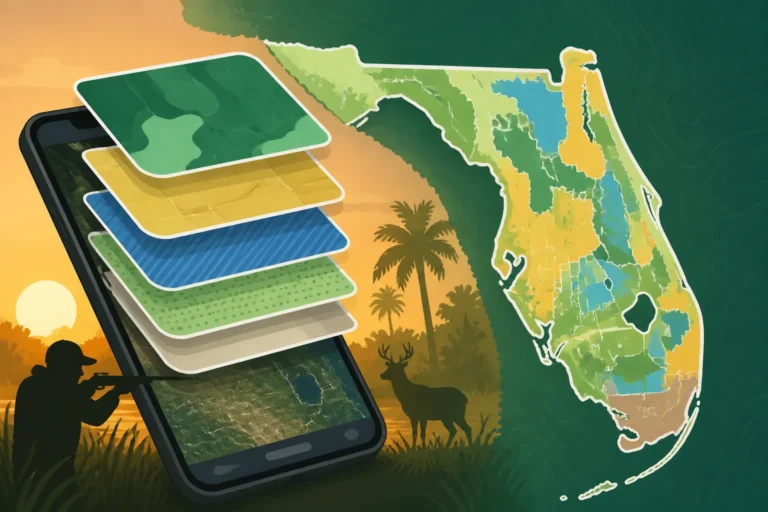
For navigation, while familiarizing yourself with the property visually is important, digital mapping tools are absolutely critical. Apps like onX Hunt allow you to download offline maps, mark waypoints for stands, game sign, and access points, and most importantly, clearly delineate property boundaries. This is especially vital on large ranches that may border other private land or even public tracts. Knowing exactly where you are and where the boundaries lie is not just helpful, it’s a legal necessity to avoid trespassing. onX Layers for Florida Land Status can save you from potential trouble. Always carry a physical map and compass as a backup, just in case your electronics fail.
Appropriate Weaponry and Shot Distances
The dense cover on many South Florida ranches, combined with the presence of larger pastures and clearings, means you'll need versatile weaponry. For deer, a powerful rifle with good optics is suitable for shots across fields, while a shotgun with slugs or a crossbow can be ideal for closer encounters in thick palmetto. Hogs can be taken with almost any legal hunting weapon, from archery equipment to high-powered rifles. Consider the typical distances you expect to shoot; in thick areas, shots might be under 50 yards, while across an open pasture, you could be looking at 150-200 yards or more.
It's crucial to confirm the landowner's specific rules regarding firearms. Some may have restrictions on caliber or type of weapon, especially if there are homes or livestock nearby. Always confirm safe shooting lanes and backstops, especially with the flat terrain. You're responsible for every bullet, so ensure your shot is ethical and safe. Understanding Minimum Bullet Diameter for Florida Rifles and other regulations is fundamental for legal hunting.
Respecting Landowner Rules and Property
This is arguably the most important aspect of hunting private ranch land. Your relationship with the landowner is built on trust, and a single act of disrespect can jeopardize not only your access but also future opportunities for other hunters. Always adhere strictly to any rules the landowner sets, whether it's about gate closure, vehicle use, hunting hours, or specific areas off-limits. Their property is their livelihood, and you are a guest.
Treat their land as if it were your own, or even better. Pack out all your trash, including spent shell casings. If you gut an animal, do so in a designated area or discreetly where it won't be a nuisance. Drive slowly and carefully on ranch roads to avoid creating dust or damaging infrastructure. If you encounter any issues, such as a downed fence or unexpected trespassers, report it to the landowner immediately. Maintaining open, polite communication is key. A small gesture of appreciation, like sharing some venison or offering to help with a task, can go a long way in solidifying a lasting relationship. This is not just about a single hunt; it's about demonstrating respect for the land and the people who steward it. It’s also important to remember that What Florida Trespass Law Requires applies to you and that you are an ambassador for all hunters.
Disclaimer
This article is for general informational purposes only and does not constitute professional advice. Laws, prices and regulations vary by location and change over time. Consult a qualified professional for guidance on your specific situation.