Hunting Near the Georgia Border
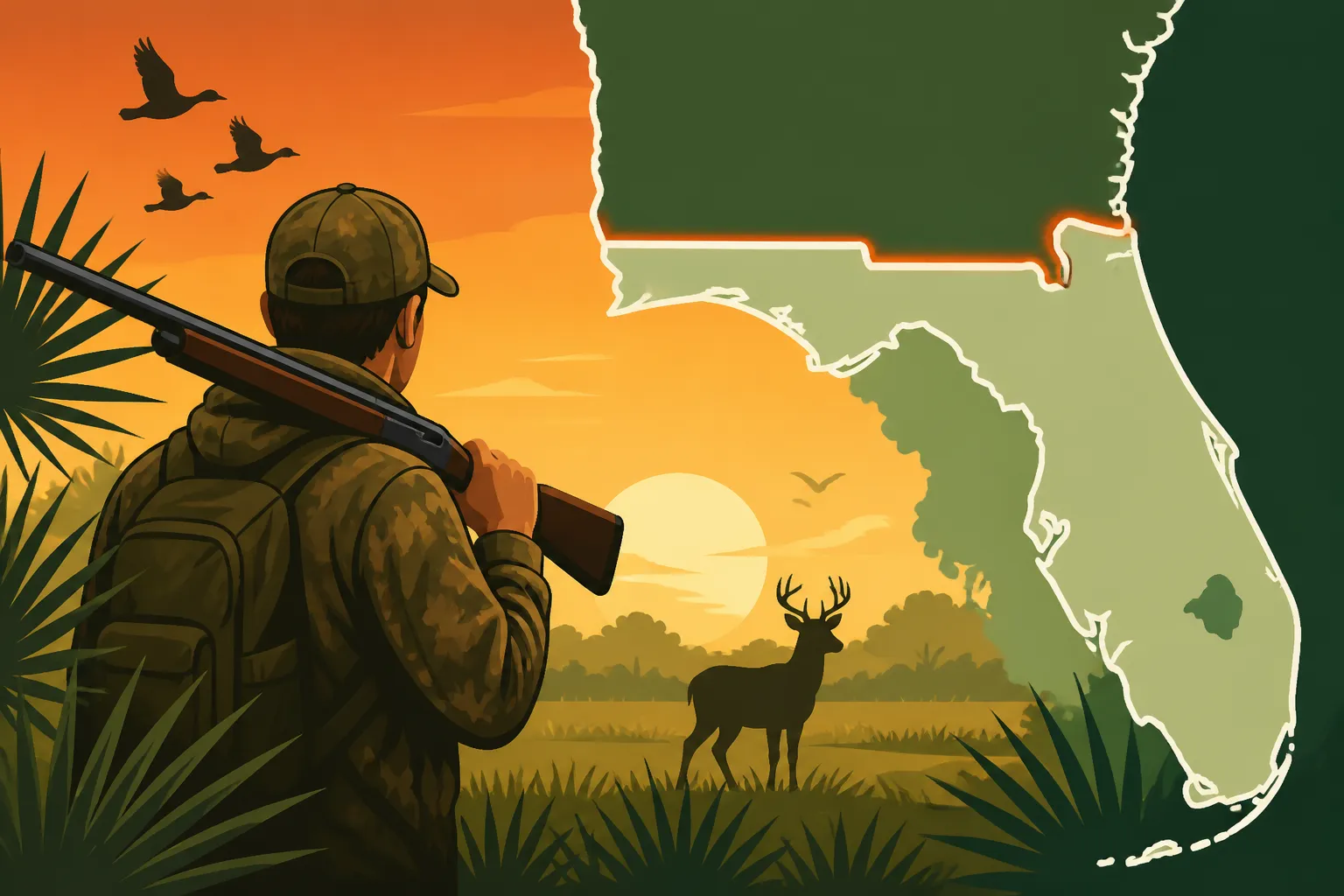
For many hunters in North Florida, the Georgia border isn't just a line on a map; it's a dynamic area offering unique hunting opportunities and, let's be honest, sometimes a bit of confusion. Understanding the specific habitats, regulations, and hunting culture in this transitional zone can be the difference between a frustrating season and a truly rewarding one. This guide will walk you through everything you need to know about hunting the lands that kiss the Georgia state line.
Understanding the Unique Border Region Habitat
Hunting near the Georgia border means you're often in a fascinating ecological transition zone. It’s not quite the deep pine flatwoods of Central Florida, nor the cypress swamps of the Everglades. Instead, you'll find a blend of landscapes heavily influenced by the shared geography with our northern neighbor, leading to some fantastic, often overlooked hunting grounds.
Transition Zones and Mixed Forests
As you move north in Florida, especially in counties like Gadsden, Jackson, Liberty, and Jefferson, the landscape starts to take on characteristics that feel more akin to South Georgia or Alabama. You'll encounter sprawling timberlands, often a mix of managed pine plantations and mature hardwood hammocks. These mixed forests provide a rich buffet for wildlife. The pine stands offer cover and bedding areas, while the scattered oaks, hickories, and other mast-producing hardwoods provide crucial food sources, especially during the fall and winter months.
This intermingling of pine and hardwood creates a mosaic effect, leading to diverse animal movement patterns. Deer, for example, might bed down deep in a dense pine thicket but travel significant distances to feed on acorns in a nearby hardwood bottom. Understanding these transitions is key. It’s not just about finding a big oak; it’s about finding the travel corridors between the pine bedding areas and those oak stands. You might also notice more rolling terrain in certain areas compared to the ultra-flat landscapes further south, which can influence wind and thermal behavior in ways that require a slightly different approach than Wind and Thermals in Flat Florida Terrain.
River Bottoms and Swamps
The North Florida border region is also defined by its numerous rivers and creeks that flow either into the Gulf of Mexico or south through the state. The Apalachicola River, the Suwannee, the Ochlockonee, and their many tributaries create extensive river bottoms and cypress swamps. These areas are often prime hunting grounds, acting as natural funnels and sanctuaries for wildlife, especially during periods of high hunting pressure on adjacent uplands.
These river bottoms are incredibly diverse, featuring sloughs, oxbow lakes, and dense canopies of cypress, tupelo, and various water oaks. While challenging to navigate – think thick mud, standing water, and biting insects – they are magnets for game. Feral hogs thrive in these wet, food-rich environments, and big deer often seek refuge in the dense cover. Turkeys also use these areas, especially along the edges, for roosting and feeding. Hunting these areas requires specialized gear, like knee boots or waders, and a willingness to get a little dirty, but the reward can be substantial. These unique wetlands are quite different from hunting areas like Hunting Florida Cypress Swamp Edges, which are more common further south.
Key Game Species in Border Counties
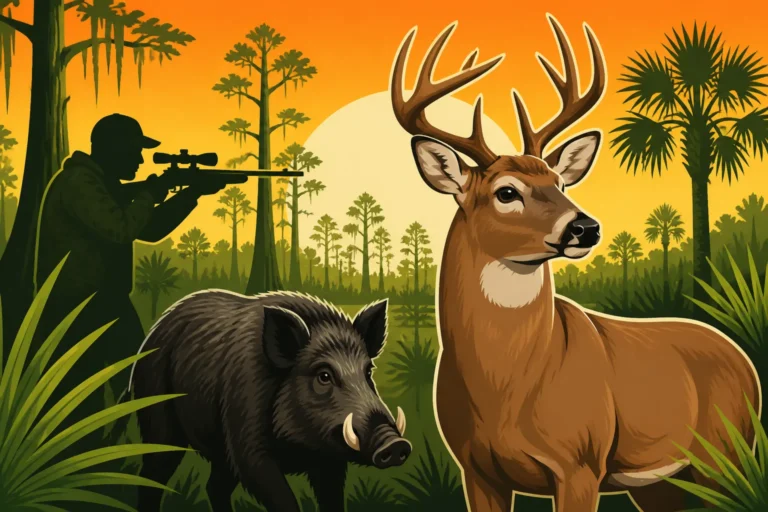
The border region of Florida offers a diverse array of game, with a strong emphasis on deer, turkey, and hogs, mirroring many of the hunting opportunities found just over the state line in Georgia.
Deer Hunting Opportunities
North Florida, particularly the Panhandle and Big Bend regions that hug the Georgia border, is renowned for offering some of the best deer hunting in the state. Unlike the smaller-bodied deer found in South Florida, the deer here tend to be larger, often showing characteristics influenced by their Georgia counterparts. These counties fall primarily within Florida's Zone D, which has a distinct rut timing compared to other zones, often peaking later in the fall. This means hunters can experience different phases of the rut depending on their exact location within the zone.
The mixed pine and hardwood forests, coupled with agriculture common in these border counties, provide excellent nutrition, contributing to larger body sizes and antler development. Many hunters specifically target these areas, both public and private, in hopes of finding that elusive mature buck. Knowing the nuances of Florida's Four Deer Management Zones Explained is paramount here, as the season dates and bag limits can shift slightly even within Zone D, influenced by local FWC management directives. Scouting for sign along old logging roads, creek crossings, and field edges is crucial for success, especially on heavily pressured public lands.
Turkey Hotbeds
For turkey hunters, the Georgia border area in Florida is a fantastic place to pursue Eastern wild turkeys. While the iconic Osceola turkey captures most of the attention in peninsular Florida, the Panhandle and North Florida counties along the border are home to healthy populations of the Eastern subspecies. These birds behave much like their counterparts in Georgia and Alabama, preferring the mature pine forests interspersed with hardwoods and agricultural fields.
The spring turkey season here can be vibrant, with gobblers echoing through the timber at dawn. Hunters often find success using traditional calling tactics, focusing on areas with good roost trees and accessible strutting zones. Public lands like the Apalachicola National Forest and various state forests offer good opportunities, but private land access, often through leases or landowner permission, can be exceptional. Understanding the habits of Eastern Turkeys in the Florida Panhandle is key to a successful hunt, as their patterns differ from their Osceola cousins.
Feral Hogs and Other Small Game
If you're looking for year-round action and a chance to fill the freezer, feral hogs are abundant throughout the border region. These hardy animals thrive in the mixed habitats, especially in the river bottoms and agricultural areas. Because they are considered a nuisance species and have no closed season or bag limit on private lands, they offer incredible hunting opportunities. Many hunters combine their deer or turkey hunts with hog hunting, often seeing them as a bonus.
Beyond hogs, the border counties also offer good prospects for small game. Squirrels, both gray and fox, are plentiful in the hardwood hammocks, especially during good mast years. Rabbits can be found in brushy areas and along field edges. While not as widely pursued as deer or turkey, small game hunting offers a more relaxed experience and a great way to introduce new hunters to the field. For comprehensive information on year-round hog hunting, check out Feral Hogs Across Florida.
Navigating Public Lands Near the Border
Public hunting land is a real treasure in Florida, and the areas near the Georgia border boast some fantastic options, from sprawling national forests to diverse wildlife management areas. However, understanding the specific regulations and access points for each can be a bit of a maze.
National Forests and Wildlife Management Areas
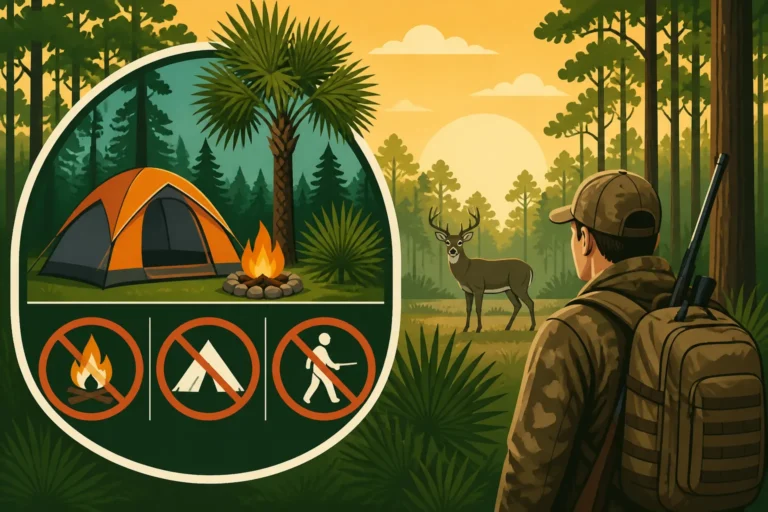
North Florida is home to significant tracts of national forest land, notably the Apalachicola and Osceola National Forests. These vast public properties offer hundreds of thousands of acres for hunting. The beauty of these national forests is their expansive nature, providing opportunities for hunters to get deep into the backcountry, far from road noise and other pressures. They often have different regulations than state-managed WMAs, sometimes allowing for more primitive camping and varied access rules. For example, specific areas within the Apalachicola National Forest Hunting might be walk-in only, while others have designated vehicle access.
In addition to national forests, the Florida Fish and Wildlife Conservation Commission (FWC) manages numerous Wildlife Management Areas (WMAs) in the border region. These WMAs are typically managed more intensively for specific game species and often have quota hunt systems, requiring hunters to apply for a limited number of permits. Even if it's an open-access WMA, you'll still need a Florida WMA Management Area Permit in addition to your base hunting license. Each WMA has its own set of rules, including specific season dates, bag limits, and allowed methods of take, so always check the FWC regulations handbook for the specific area you plan to hunt. Using mapping tools like onX Hunt can be invaluable for pinpointing WMA boundaries and understanding land ownership.
State Forests and Environmental Areas
Beyond the major national forests and WMAs, several Florida State Forests and other environmental areas provide crucial hunting opportunities along the Georgia border. These areas are often smaller than national forests but can be highly productive, especially for deer and hogs, and sometimes even turkey. State Forests are managed by the Florida Forest Service and often have multi-use mandates, balancing timber production with recreation, including hunting. Like WMAs, many State Forests operate under specific FWC regulations, which might include quota hunts or special season dates.
For instance, the Blackwater River State Forest in the western Panhandle or the Tate's Hell State Forest in the Apalachicola River basin are prime examples. These areas often feature excellent habitat and can be less pressured than some of the more well-known WMAs, particularly if you're willing to walk a bit further. Always consult the FWC's interactive public lands map or apps like onX Hunt to verify boundaries, access points, and specific regulations before heading out. Sometimes, these areas are broken into smaller units or have different rules for different sections, so a thorough review of the current regulations is a must.
Licenses, Permits, and Regulations
Hunting near a state line introduces a layer of complexity to regulations that you might not encounter elsewhere in Florida. It's not just about knowing Florida's rules; it's about being acutely aware of where those rules apply and understanding the nuances of the border.
Florida Hunting Licenses and What They Cost
Before you even think about setting foot in the woods near the Georgia border, you need to make sure your licensing is in order. Florida requires all hunters to possess a valid Florida hunting license. For residents, there are various options, from annual licenses to lifetime permits. Non-residents also have options, including annual or short-term licenses. The cost structure varies, so it's essential to understand Florida Hunting Licenses and What They Cost based on your residency and the game you intend to pursue.
In addition to the base hunting license, certain game species or hunting areas require additional permits. For example, hunting migratory birds like ducks or doves requires a Florida Migratory Bird Permit and a federal duck stamp if you're targeting waterfowl. If you plan to hunt on any of Florida's Wildlife Management Areas, you'll also need a WMA Management Area Permit. It's crucial to purchase and carry proof of all necessary licenses and permits. Digital copies on your phone are often accepted, but always ensure your device is charged, especially when hunting in remote areas where cell service might be spotty.
Zone D Specific Regulations
As mentioned, most of Florida's border with Georgia falls within Deer Management Zone D. This zone has its own unique season dates for archery, muzzleloader, and general gun seasons, which are different from Zones A, B, and C. It's critical to know these specific dates because misinterpreting them could lead to a violation. For instance, the general gun season in Zone D might open or close on different dates than in, say, Zone A in South Florida.
Furthermore, bag limits and legal methods of take can also have specific nuances within Zone D. Always consult the most current FWC hunting regulations handbook, which is updated annually. This handbook details antler point restrictions (if any), deer bag limits (often two antlered deer per season across all methods), and any special provisions for youth hunts or antlerless deer days. These regulations are designed to manage the deer population effectively for the specific ecological conditions and hunter pressure in Zone D, which can differ greatly from other parts of the state.
Reciprocity and Border Crossing Considerations
One of the biggest pitfalls for hunters near a state line is inadvertently crossing into the neighboring state without proper licensing. Florida and Georgia are distinct states with distinct hunting regulations. There is no reciprocity for hunting licenses across state lines; a Florida hunting license is only valid in Florida, and a Georgia license is only valid in Georgia.
This means if you're hunting right on the border, perhaps along a shared river or a property that straddles the line, you need to be absolutely certain of your location. Using a GPS mapping app like onX Hunt or GoHunt with property boundary and state line overlays is not just a convenience, it's a necessity. Imagine tracking a wounded deer only to realize it crossed into Georgia, and you don't have a valid Georgia license or landowner permission there. That's a headache no one wants. Also, be mindful of firearms transportation laws if you regularly cross the border with hunting equipment. Ensure your firearms are transported legally in both states, even if you're just driving through. Reading Aerial Photos for Florida Deer can help with pre-hunt planning to avoid such issues.
| Public Land Area | Counties Bordered by Georgia | Primary Game Species | Typical Habitat Types | Permit Requirements |
|---|---|---|---|---|
| Apalachicola National Forest | Liberty, Gadsden, Leon, Wakulla | Deer, Hog, Turkey, Small Game | Pine Flatwoods, Hardwood Bottoms, Swamps | Florida hunting license, WMA permit (for specific units) |
| Osceola National Forest | Columbia, Baker, Hamilton | Deer, Hog, Turkey, Small Game | Pine Flatwoods, Cypress Swamps, Wet Prairies | Florida hunting license, WMA permit (for specific units) |
| Blackwater River State Forest | Santa Rosa, Okaloosa, Walton | Deer, Hog, Turkey, Small Game | Longleaf Pine Forests, River Bottoms | Florida hunting license, WMA permit (for specific units) |
| Jennings State Forest | Clay | Deer, Hog, Turkey, Small Game | Flatwoods, Swamps, Uplands | Florida hunting license, WMA permit |
Strategic Approaches for Border Hunting
Hunting near the Georgia border offers unique challenges and rewards. The proximity to another state, coupled with diverse habitats, means that a well-thought-out strategy is crucial for consistent success.
Scouting and E-Scouting Tools
Effective scouting is always vital, but when you're hunting near a state border, it takes on an added layer of importance. You're not just looking for game sign; you're also confirming boundaries and understanding how hunting pressure from both Florida and Georgia might influence animal movement. Start with extensive e-scouting from home. Utilize aerial imagery and topographic maps to identify potential bedding areas, food sources, and travel corridors. Look for natural funnels, pinch points, and cover that might attract or hold game.
This is where premium mapping applications like onX Hunt and GoHunt truly shine. Their ability to overlay property lines, public land boundaries, and even state lines directly on your map is incredibly powerful. You can mark potential stand locations, plan your routes, and identify areas that might receive less pressure because they're harder to access or near a less-obvious border. During your physical scouting trips, pay close attention to recent tracks, rubs, scrapes, and droppings. Identify mast crop availability, especially acorn production, which can dictate where deer and turkeys will concentrate. Don't forget to check out Scouting Florida Public Land Before Season for general tips, but add the border-specific considerations to your checklist.
Adapting to Local Pressure
It's no secret that public lands can experience significant hunting pressure, and areas near a state border can sometimes feel it from two directions. Hunters from both Florida and Georgia might converge on these areas, especially during peak seasons like the rut or the opening weekend of turkey season. This pressure can make game animals more nocturnal, push them into thicker cover, or alter their movement patterns entirely.
To counter this, consider focusing your efforts on weekdays if possible, or seek out areas that require more effort to access. This might mean walking deeper into the woods, utilizing a small boat or kayak to reach isolated river sections, or targeting overlooked pockets of habitat that other hunters pass by. Think about what makes a spot uncomfortable or difficult for the average hunter, and that's often where the more mature animals will seek refuge. Observing how local pressure might be driving deer into a particular Hunting a Funnel Between Two Palmetto Heads or how turkeys respond to calling near heavily used trails can provide valuable insights.
Seasonal Considerations
The timing of your hunt in the border region is crucial, especially when you consider the varied rut timings and migratory patterns. For deer, Zone D's rut can occur later than other parts of Florida, meaning that traditional early-season rut tactics might need to be adjusted. Pay attention to local reports and scout for signs of pre-rut and rutting activity in your specific area.
For Eastern turkeys, the spring season in the Panhandle and border counties typically runs from mid-March through late April. Understanding the gobbling intensity and breeding phases throughout this window can help you time your hunts for maximum success. Early season might see more aggressive gobblers, while later in the season, hens might be nesting, making gobblers harder to call in. Waterfowl hunting also has specific seasons, often with split dates, so staying informed about those windows is vital. Always cross-reference your planned hunting dates with the FWC's current season calendars to ensure you're hunting legally and at the most opportune times for the species you're pursuing.
Disclaimer
This article is for general informational purposes only and does not constitute professional advice. Laws, prices and regulations vary by location and change over time. Consult a qualified professional for guidance on your specific situation.