How Florida’s Bear Population Rebounded Since the 1970s
It’s sometimes hard to imagine a time when Florida’s black bears were on the brink, mere decades ago. Today, hearing about a bear wandering through a suburban neighborhood or seeing one cross a forest road isn’t entirely uncommon, especially in certain parts of our state. But if you'd been around in the 1970s, the sight would have been a true rarity, a sad testament to how much these magnificent animals had dwindled. This guide will take a deep dive into the incredible comeback story of Florida’s black bear population, explaining the challenges they faced and the dedicated efforts that brought them back from the edge.
The Precarious State of Florida Bears in the 1970s
Back in the 1970s, Florida's black bear population was in serious trouble. Habitat loss was rampant, hunting regulations were either nonexistent or poorly enforced, and public perception often leaned towards fear rather than conservation. It was a really bleak time for these incredible animals, and many feared they might vanish from our landscape forever.
Declining Numbers and Disappearing Habitat
By the early 1970s, biologists estimated there were only around 300-500 black bears left in Florida, scattered in isolated pockets of wilderness. This wasn't just a slight dip; it was a catastrophic decline from historical numbers. The primary culprit was relentless habitat destruction. As Florida's human population boomed, forests were cleared for agriculture, housing developments, and roads at an alarming rate. Bears, needing vast tracts of undisturbed land to thrive, found their homes shrinking and fragmenting.
Think about it: a bear needs hundreds, sometimes thousands, of acres for its territory, especially a sow trying to raise cubs. When you carve up those large, contiguous natural spaces with highways and subdivisions, you not only reduce the amount of usable land but also cut off crucial travel corridors. Bears struggled to find enough food, mates, and safe denning sites. This forced them into smaller, more vulnerable areas, increasing their chances of conflict with humans or being hit by vehicles. It was a vicious cycle of displacement and isolation that pushed them closer to extinction.
Limited Protection and Public Misunderstanding
Compounding the habitat issue was a lack of effective protection. For a long time, black bears weren't seen as a species in need of special conservation. They were often viewed as pests, or worse, as dangerous threats to livestock and people. Regulated hunting, where it existed, wasn't always based on sound science, and poaching was an ongoing problem in many rural areas. The Florida Game and Fresh Water Fish Commission (the precursor to today's Florida Fish and Wildlife Conservation Commission, or FWC) had limited resources and public support to implement widespread conservation programs.
Public understanding of bear ecology was also quite low. People didn't fully grasp the bears' role in the ecosystem or how their behavior was influenced by habitat and food availability. This made it difficult to rally support for their protection. It wasn't until the late 1970s and early 1980s that a significant shift began, driven by a growing environmental awareness and the dedicated work of a few passionate individuals and nascent conservation groups who recognized the urgent need to act before it was too late.
Pivotal Conservation Efforts That Turned the Tide
The story of the Florida black bear is a testament to what focused, science-based conservation can achieve. Faced with dwindling numbers, the state's wildlife agencies, alongside conservation partners, implemented a series of critical measures that truly pulled the species back from the brink. It wasn't a quick fix, but a sustained, multi-faceted approach.
Enhanced Legal Protections and Management
A major turning point came in 1974 when the Florida Game and Fresh Water Fish Commission officially listed the Florida black bear as a threatened species. This designation was crucial because it provided legal protection, outlawing hunting and establishing stricter penalties for harming bears. It finally gave these animals the recognition they needed as a species in peril. Following this, the FWC developed a comprehensive bear management plan, which focused on habitat preservation, reducing human-bear conflicts, and thorough scientific research.
One of the cornerstones of this plan was the creation of Bear Management Units (BMUs). These units defined distinct geographic areas for monitoring and managing bear populations, recognizing that bears in the Ocala National Forest, for instance, faced different challenges than those in the Everglades. Regular surveys and scientific studies became paramount to understanding population dynamics, reproductive rates, and causes of mortality. Tools like radio telemetry allowed biologists to track individual bears, gaining invaluable insight into their movements and habitat use. You can read more about how the FWC monitors populations in articles like "Florida Bear Den Study Findings", which delves into some of these research efforts.
Strategic Land Acquisition and Habitat Restoration
While legal protections were vital, they wouldn't have mattered much without a place for bears to live. This is where strategic land acquisition became a game-changer. Programs like Florida Forever and the Preservation 2000 Act allowed the state to purchase vast tracts of environmentally sensitive lands, particularly large, undeveloped forest systems that could serve as core bear habitat or critical corridors connecting existing populations. These initiatives aimed to counteract the rampant habitat fragmentation that had plagued bears for decades.
For example, the expansion and protection of areas like the Ocala National Forest, Apalachicola National Forest, and the vast Big Cypress National Preserve were instrumental. These areas offered not only space but diverse ecosystems—pine flatwoods, oak hammocks, cypress swamps—that provide the varied diet bears need throughout the year. Beyond acquisition, restoration efforts focused on improving the quality of existing habitats through prescribed burning, invasive species removal, and reforestation. These efforts ensured that the protected lands weren't just empty spaces but thriving ecosystems capable of supporting a healthy bear population. This long-term commitment to habitat conservation truly laid the foundation for the bear's remarkable comeback, providing the secure strongholds they needed to rebound.
Florida's Bear Management Zones and Population Growth
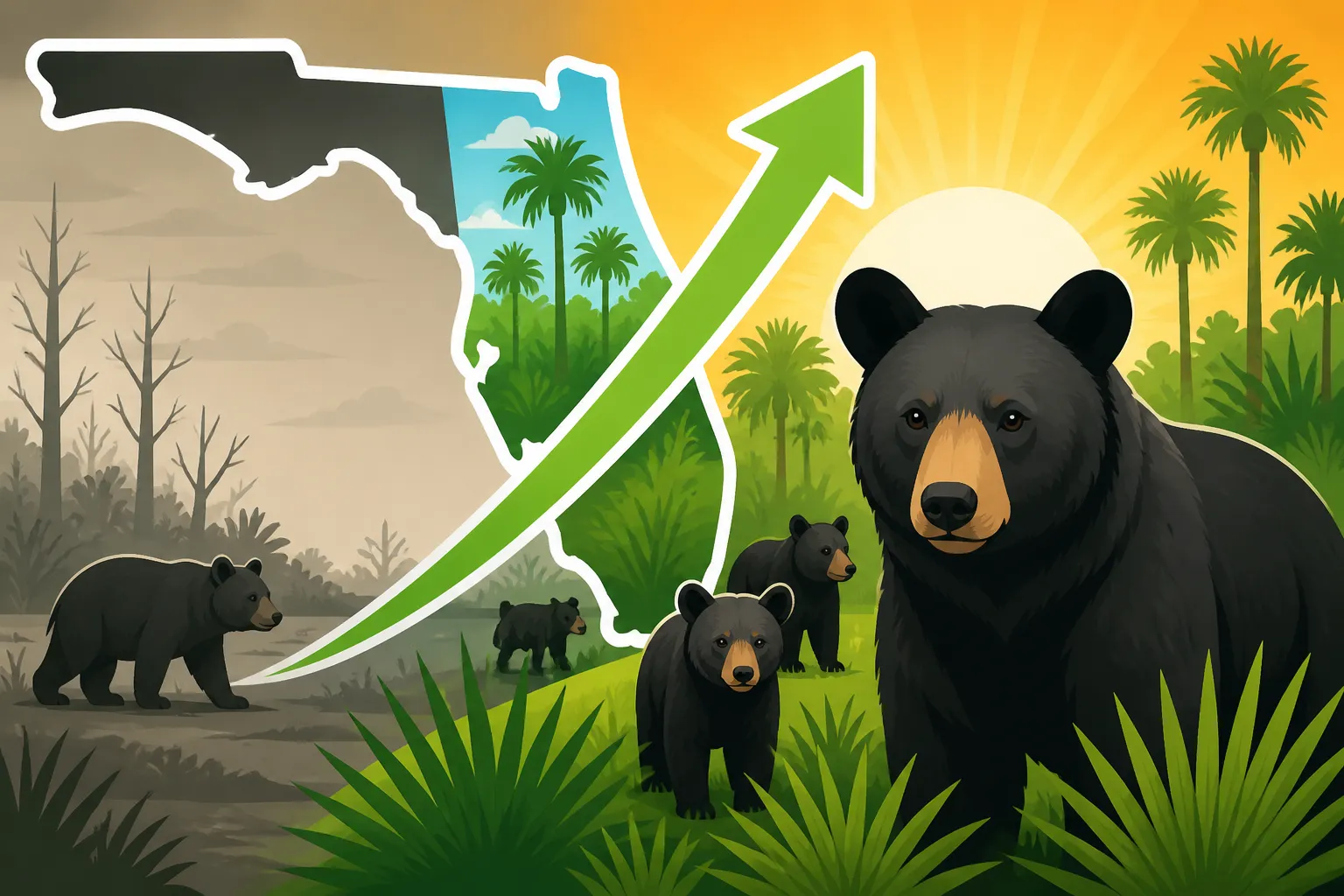
As conservation efforts gained traction, Florida's black bear population began its slow but steady ascent. The FWC's strategic approach, dividing the state into Bear Management Units (BMUs), proved incredibly effective in monitoring and understanding the localized dynamics of these recovering populations. This focused management allowed for tailored strategies that accounted for regional differences in habitat and human development.
Tracking the Comeback Across BMUs
The FWC currently manages Florida's black bear population through seven designated Bear Management Units: Apalachicola, Eglin, North, Central, South, East Panhandle, and West Panhandle. Each of these zones has seen its own trajectory of recovery, though all contribute to the overall success story. By the early 2000s, the statewide population estimate had soared to over 2,000 bears, a dramatic improvement from the 1970s lows. This continued to climb, reaching over 4,000 bears by the 2010s, and current estimates place the population upwards of 4,000 individuals statewide. This remarkable increase is a testament to decades of consistent conservation.
For instance, the Central BMU, encompassing areas like the Ocala National Forest, consistently holds one of the largest and densest bear populations in the state. Historically, this area served as a crucial stronghold, and sustained protection and habitat management here allowed bears to expand into surrounding territories. Similarly, the Apalachicola BMU in the Panhandle saw strong recovery, benefiting from vast stretches of national forest and state lands. Understanding these regional population estimates is critical for the FWC to make informed decisions about bear management, including setting guidelines for any future hunting seasons, which you can learn more about in "Florida's Reinstated Bear Hunting Season".
Factors Fueling the Population Boom
Several key factors contributed to this impressive population rebound. Foremost was the sustained protection from hunting, which allowed bears to reproduce and mature without added pressure. Black bears are relatively long-lived and have a decent reproductive rate when conditions are favorable, with sows typically having litters of 2-3 cubs every two years. With increased protection, more cubs survived to adulthood, boosting the overall numbers.
Beyond protection, the availability of quality habitat, especially large, interconnected patches of forest, provided the necessary resources. Bears are omnivores, and Florida offers a diverse array of food sources from acorns and palmetto berries to insects and even small mammals. The FWC's ongoing efforts to maintain habitat quality, through prescribed burns and forest management, ensured a reliable food supply. Furthermore, public education campaigns slowly but surely shifted public perception, fostering greater tolerance and understanding of bears. While challenges remain, the combination of legal protection, habitat conservation, and public awareness created an environment where Florida's black bears could not only survive but truly thrive once again.
The Role of Habitat Restoration and Land Acquisition
The black bear’s comeback isn't just about protection; it's deeply rooted in providing them with actual places to live, thrive, and expand. Without ample, connected habitat, even the most robust protections would ultimately fail. This is where Florida's forward-thinking land conservation programs played an absolutely vital role.
Connecting Fragmented Landscapes
One of the biggest hurdles facing Florida's wildlife, and bears in particular, was habitat fragmentation. Imagine a bear trying to find food or a mate, only to be cut off by a six-lane highway or a sprawling housing development. It’s incredibly dangerous and often leads to higher mortality rates. Recognizing this, the state embarked on ambitious programs like Florida Forever, the nation’s largest conservation land acquisition program. These initiatives actively sought out and purchased lands that were critical for wildlife, focusing not just on large preserves but also on smaller parcels that could serve as vital corridors.
The goal was to create a network of connected natural lands, allowing bears and other wildlife to move safely between larger wilderness areas. This "connectivity" is paramount for genetic diversity and the natural expansion of populations. Projects focused on acquiring land adjacent to existing national forests, state parks, and Wildlife Management Areas (WMAs). For instance, linking sections of the Wekiva-Ocala Greenway helps bears move between the Ocala National Forest and other protected areas, reducing their encounters with human development. When you look at a detailed map using tools like GoHunt, you can really see how these protected corridors stitch together the natural fabric of Florida, offering vital pathways for animals.
Sustaining and Enhancing Wild Spaces
It's not enough to simply buy land; it must also be actively managed to be good bear habitat. This involves a range of restoration efforts. Prescribed burning, for instance, is a critical tool in Florida's fire-adapted ecosystems. Regular, controlled fires prevent the buildup of fuel, reduce the risk of catastrophic wildfires, and stimulate the growth of new, nutritious vegetation like berries and grasses that bears feast on. Without fire, the understory can become too dense, reducing food sources and making it harder for bears to move.
Beyond fire, efforts include removing invasive plant species that choke out native food sources and planting native vegetation in areas that were previously disturbed. The FWC, along with partners, works tirelessly on these habitat enhancements within Wildlife Management Areas and other state lands. This continuous work ensures that the lands acquired aren't just protected on paper but are actively managed to provide the best possible conditions for bears and the myriad other species that share their home. These long-term commitments to both acquisition and hands-on restoration are the unsung heroes of the Florida black bear's remarkable return.
Navigating Coexistence with a Growing Bear Population
The success of bear conservation brings a new set of challenges: how do humans and bears safely coexist when their paths increasingly cross? As the bear population rebounds and expands, especially into areas near human development, conflicts become more frequent, requiring thoughtful strategies for managing interactions.
The Rise of Human-Bear Conflicts
With more bears roaming Florida, and urban areas continually expanding, it's almost inevitable that human-bear conflicts have increased. These often manifest as bears raiding garbage cans, breaking into screen porches, or even entering homes in search of food. While often just a nuisance, these incidents can escalate, and a "habituated" bear—one that has lost its natural fear of humans due to easy food access—can become a serious safety concern. Road mortality also remains a significant issue, with hundreds of bears killed by vehicles each year, particularly in areas where busy highways dissect bear habitat.
These conflicts aren't just frustrating for residents; they're also dangerous for the bears. Bears that become too comfortable around humans are often deemed "nuisance bears" and may have to be relocated or, in severe cases, euthanized for public safety. This is a heartbreaking outcome for everyone involved, highlighting the critical need for proactive prevention. The FWC monitors these incidents closely, collecting data to identify hotspots and inform management strategies. You can sometimes even track specific incidents if you know what to look for, a process that can be aided by mapping technologies or reports available to users of platforms like GoHunt that integrate FWC data.
Public Education and Bear-Wise Practices
The cornerstone of successful coexistence lies in public education. The FWC's "BearWise" program is an excellent example of a concerted effort to teach Floridians how to live responsibly alongside bears. The core message is simple: secure attractants. This means using bear-resistant garbage cans, bringing pet food indoors, cleaning barbecue grills, and harvesting ripe fruit from trees. Even seemingly small actions can make a huge difference in preventing a bear from associating human homes with an easy meal.
Beyond securing food, the program emphasizes reporting bear sightings and conflicts to the FWC, allowing wildlife officers to intervene before problems escalate. It also advises on what to do if you encounter a bear – never approach it, make noise to scare it away, and back away slowly. These simple, actionable steps empower residents to be part of the solution rather than inadvertently contributing to the problem. Because ultimately, the future of Florida's black bears hinges not just on their ability to thrive in the wild, but on our collective ability to live respectfully and safely in their shared landscape.
The Future of Florida's Black Bears
Florida's black bear population has come a long way, but their future isn't guaranteed. It requires ongoing vigilance, adaptive management strategies, and continued public support to ensure these majestic animals continue to thrive in our rapidly developing state.
Adaptive Management and Research
The FWC's approach to bear management is dynamic, constantly adapting to new challenges and information. This means continuing critical research to understand population trends, disease, and the impacts of habitat changes. For example, knowing the "Florida Bear Population Estimate" and where populations are densest helps determine where conservation efforts or conflict mitigation measures are most needed. The FWC routinely conducts population surveys using various methods, from hair snares for DNA analysis to den visits for cub counts, as detailed in discussions around topics like "Florida Bear Den Study Findings." This scientific foundation is crucial for making informed decisions.
Adaptive management also includes considering various tools, including a limited hunting season, when populations reach sustainable levels. While controversial, regulated hunting, like the season discussed in "Florida's Reinstated Bear Hunting Season" (which was last held in 2015), can be used as a management tool to stabilize populations in certain areas, particularly when conflicts with humans become unmanageable. The decision to hold such a season is always based on extensive scientific data and public input, aiming for long-term health of the bear population and reduced human-bear conflicts, rather than a return to the unsustainable practices of the past.
Confronting New Development and Connectivity Needs
Florida's population continues to grow, and with it, the pressure on natural habitats. The greatest threat to the black bear's future remains habitat loss and fragmentation. While significant strides have been made in acquiring conservation lands and creating corridors, the need is ongoing. Safeguarding existing habitat and ensuring connectivity between key wilderness areas will be paramount. This means smart growth strategies, supporting land conservation initiatives, and mitigating the impacts of new infrastructure like roads.
The development of wildlife crossings over and under major highways, for instance, has proven effective in reducing road mortality for bears and other wildlife, demonstrating how human engineering can work with nature. Initiatives like the Florida Wildlife Corridor are vital for this long-term vision, aiming to protect and connect the remaining natural lands. Ultimately, the future success of Florida's black bear hinges on a delicate balance: our ability to manage their populations effectively, protect and expand their habitat, and, perhaps most importantly, continue to educate and engage the public in responsible coexistence. It's a continuous journey, but one that is well worth taking for these iconic Florida residents.
| Bear Management Unit (BMU) | Primary Geographic Area | Status in 1970s | Current Status (Post-2010s) | Key Habitat |
|---|---|---|---|---|
| Apalachicola | Northwest Panhandle | Critically Low | Healthy, Expanding | Apalachicola National Forest, Eglin AFB |
| Eglin | Western Panhandle | Critically Low | Healthy | Eglin Air Force Base |
| North | Northeast Florida | Critically Low | Growing, Connected | Osceola National Forest, PFL Lands |
| Central | Central Florida | Stronghold | Largest, Expanding | Ocala National Forest, Wekiva-Ocala Greenway |
| South | Southwest Florida | Isolated Pockets | Growing, Everglades Fringe | Big Cypress National Preserve, Everglades |
| East Panhandle | Big Bend Coastline | Critically Low | Recovering, Developing | Coastal Forests, Aucilla WMA |
| West Panhandle | Escambia/Santa Rosa | Critically Low | Recovering, Fragmented | Conecuh National Forest (AL edge) |
Disclaimer
The information provided in this article is for general guidance and informational purposes only. Hunting regulations, population estimates, and conservation efforts are subject to change. Always consult the official Florida Fish and Wildlife Conservation Commission (FWC) regulations and resources before planning any hunting trip or engaging with wildlife.