Florida Sandhill Crane Population
When you think of Florida wildlife, often the first images that come to mind are alligators lurking in murky waters or perhaps a majestic whitetail deer darting through pine flatwoods. But there's another truly iconic, yet often misunderstood, species that graces our landscapes with its elegant presence and distinctive call: the Florida sandhill crane. Many folks, especially those new to the state or just getting into enjoying our natural spaces, might not realize the unique status and history of these magnificent birds. This guide aims to shed light on the Florida sandhill crane population, their journey through conservation, and what makes them such an integral part of our state's rich ecological tapestry.
Understanding the Sandhill Crane: A Florida Icon
The sandhill crane is a bird of striking beauty and an unmistakable voice, a true emblem of Florida's wild spaces. Their presence is often announced by a loud, rattling bugle call that carries far across the open wetlands and fields they frequent. For many of us who've spent a lifetime enjoying Florida's outdoors, seeing a pair of sandhills gracefully striding through a marsh or a harvested field is a common, cherished sight, reminding us of the wild heart that still beats strong in our rapidly developing state.
The Greater Sandhill Crane in Florida
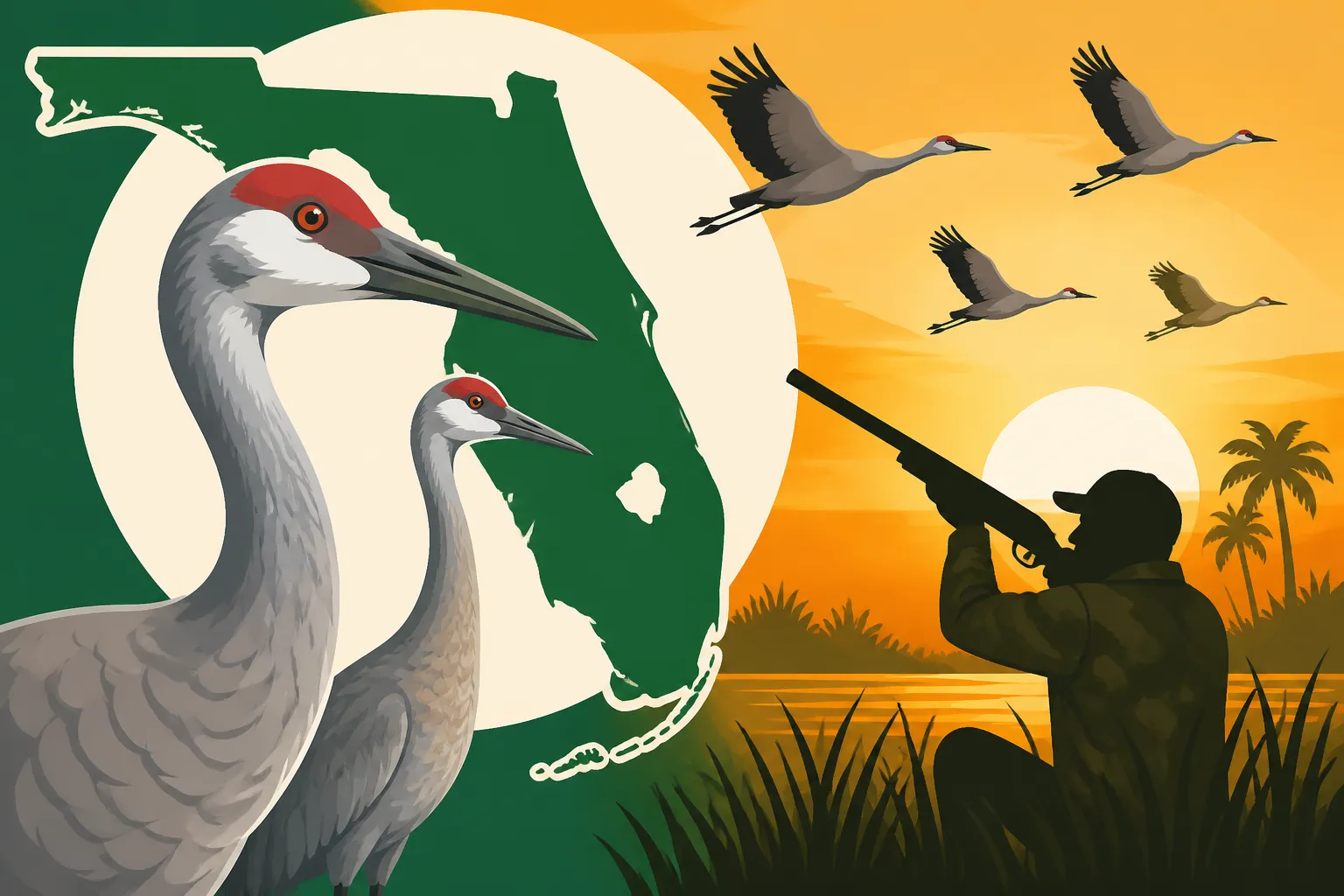
While sandhill cranes are found across North America, Florida is home to a unique subspecies: the Florida sandhill crane (Grus canadensis pratensis). Unlike their migratory cousins to the north, our Florida sandhills are non-migratory residents, meaning they spend their entire lives right here in the Sunshine State. This makes them particularly vulnerable to changes in local habitat, as they don't have the option to pick up and move hundreds or thousands of miles if their home grounds become unsuitable. You'll primarily find them in central and south Florida, favoring freshwater marshes, wet prairies, and agricultural lands that offer both foraging opportunities and safe nesting sites. They are truly adapted to the unique, often water-logged, landscapes that define so much of our state.
These birds are quite large, standing nearly four feet tall with a wingspan that can reach up to six feet. Their plumage is generally gray, often stained with rust or brown from iron-rich soils where they preen. The most distinctive feature, besides their size and elegant gait, is the patch of bare, reddish skin on the crown of their head. This red patch becomes even more vibrant during breeding season, adding to their dramatic appearance. Observing them interact, perform their elaborate courtship dances, or simply forage with their long legs and probing bills is a true privilege for any nature enthusiast.
Why They're So Recognizable
Even if you've never formally identified a sandhill crane, chances are you've seen or heard one. Their sheer size sets them apart from most other wading birds like herons or egrets. While many people confuse them with the much rarer whooping crane, sandhills lack the whooping crane's pure white plumage and black wingtips. The sandhill's gray body and red head patch are key identifiers. Their call, a deep, resonant trill often described as a "rattle," is unlike any other bird sound in Florida, echoing across the landscape and signaling their presence long before you see them.
Beyond their physical traits, it’s their behavior that makes them so endearing and recognizable. They often forage in open areas, sometimes even venturing into suburban retention ponds or golf courses, much to the delight or occasional consternation of residents. They walk with a deliberate, almost stately pace, using their long bills to probe for insects, seeds, grains, and small vertebrates. In flight, their long legs trail behind them, and their powerful wing beats carry them high above, often in small family groups or larger flocks, especially outside the nesting season. For anyone exploring Florida's wilder parts, from the vast expanses of the Everglades to smaller local wetlands, the sight and sound of these cranes are an iconic part of the experience.
Tracking Florida's Sandhill Crane Population Trends
Understanding how many sandhill cranes call Florida home, and whether that number is growing or shrinking, is crucial for their long-term survival. Like many wildlife species, their population has seen its ups and downs, directly influenced by changes in their habitat and human interactions. It's a continuous balancing act to ensure these magnificent birds have the space and resources they need.
Historical Status and Recovery
Historically, Florida's sandhill crane population faced significant challenges. Habitat loss due to widespread agricultural development and urbanization, particularly the draining of wetlands, took a heavy toll throughout the 19th and early 20th centuries. These birds rely on large, undisturbed freshwater wetlands for nesting and open fields for foraging, and as Florida grew, these crucial areas diminished. Their numbers declined considerably, leading to serious concerns about their future in the state.
Thankfully, increased awareness and conservation efforts, coupled with legal protections, helped turn the tide. The Endangered Species Act and subsequent state regulations provided a much-needed shield, prohibiting harm to the birds and their nests. Efforts to restore and preserve wetland habitats, such as those found within many of our Florida Wildlife Management Areas, also played a vital role in their recovery. These initiatives have allowed the population to stabilize and, in some areas, even begin to expand, offering a hopeful glimpse into what dedicated conservation can achieve.
Current Population Estimates and Distribution
Pinpointing an exact number for Florida's sandhill crane population is always a challenge, but wildlife agencies diligently conduct surveys and monitoring programs to get the best possible estimates. These estimates fluctuate based on survey methods and environmental conditions, but generally, the Florida sandhill crane population is considered stable, with estimates often ranging in the tens of thousands. This is a testament to the decades of hard work put into their conservation.
You'll find these non-migratory residents primarily concentrated in the central and southern portions of the peninsula. Key strongholds include the vast wetland complexes of the Everglades and Big Cypress, as well as the Kissimmee River basin and the sprawling agricultural lands of the Lake Okeechobee region. While they are most common in these areas, smaller populations can be found scattered throughout suitable habitats as far north as Jacksonville and as far west as the Panhandle, wherever suitable freshwater marshes and open foraging grounds persist. Their adaptability to suburban environments, though sometimes problematic, also showcases their resilience in a changing landscape. If you're looking for them, places like Paynes Prairie Preserve State Park near Gainesville or areas within Hunting the Everglades and Big Cypress are often excellent spots to observe them.
Here's a generalized look at population distribution:
| Region | Primary Habitat Types | Population Status | Key Considerations |
|---|---|---|---|
| Central Florida | Freshwater marshes, wet prairies, cattle pastures | Stable, widespread | High interaction with suburban areas, vehicle strikes |
| South Florida | Everglades, Big Cypress, agricultural fields | Stable, strongholds | Habitat fragmentation, water management |
| North Florida | Scattered wetlands, agricultural pockets | Less common, localized | Limited suitable habitat, smaller populations |
| Panhandle | Sparse, transient sightings | Rare resident | Most sightings are migratory individuals |
Challenges and Conservation Efforts for Sandhill Cranes
Even with a relatively stable population, sandhill cranes in Florida still face an array of challenges. Our state is growing at an incredible pace, and that growth inevitably encroaches upon the natural spaces these birds call home. Conservation isn't just about protecting them from direct harm; it's about managing their environment so they can continue to thrive alongside us.
Habitat Loss and Other Threats
The most significant threat to Florida sandhill cranes remains habitat loss and fragmentation. As wetlands are drained for development, pastures are converted to housing, and natural areas are carved up by roads, the cranes lose critical nesting, foraging, and roosting sites. This isn't just about losing space; it's about losing connected space, making it harder for cranes to move safely between feeding and nesting areas. When these areas become isolated, populations can become genetically cut off and more vulnerable to local disturbances.
Beyond habitat, collisions with vehicles are a major concern, particularly in areas where their habitats intersect with busy roads. Cranes are large birds that can be slow to take flight, making them susceptible to cars, especially around dawn and dusk. Predation, both natural from bobcats and alligators, and sometimes from introduced species, also impacts their nesting success. Contaminants in water sources can also pose a threat, affecting their health and reproductive capabilities. It's a complex web of challenges that requires multifaceted solutions.
Conservation Strategies and Management
To combat these threats, a comprehensive approach to conservation is in place. Land acquisition and protection are paramount, ensuring that critical wetland and prairie habitats are preserved from development. State and federal agencies work tirelessly to manage these lands, often through controlled burns to maintain open habitats, and by regulating water levels to benefit wetland species. Habitat Work on Florida Wildlife Management Areas is a prime example of where these strategies are implemented, benefiting not just cranes but countless other species.
Another vital strategy involves public education. Raising awareness about the unique status of Florida sandhill cranes, their legal protections, and how residents can coexist with them helps reduce human-wildlife conflicts. This includes encouraging drivers to be cautious in known crane crossings and advising against feeding wild cranes, which can lead to unnatural reliance on humans and increase risks of vehicle strikes. Through continued monitoring, research into their ecology, and strategic land management, the hope is to ensure that future generations can continue to enjoy the distinctive calls and graceful presence of these magnificent birds.
Living Alongside Florida's Majestic Cranes
For many Floridians, living near sandhill cranes is a point of pride, a connection to the wild Florida that makes our state so special. However, like all wildlife interactions, it comes with responsibilities and an understanding of their needs and our role in their survival.
Legal Protections and Human Impact
It’s crucial to remember that Florida sandhill cranes are protected by both state and federal laws. They are listed as a Federally Threatened species by the U.S. Fish and Wildlife Service and as a State-designated Threatened species by the Florida Fish and Wildlife Conservation Commission (FWC). This means it is illegal to harm, harass, capture, or kill a sandhill crane, or to disturb their nests, eggs, or young. Game You Cannot Hunt in Florida is a good resource to understand which species fall under these protections. The penalties for violating these protections can be severe, so it’s always best to give them their space and admire them from a distance.
Our actions as humans have a profound impact on these birds. While conservation efforts have been successful, continued development puts pressure on their remaining habitats. Even seemingly small actions, like improper waste disposal or altering wetlands on private property without proper permits, can cumulatively affect crane populations. Being a responsible steward of the land, whether you're a landowner, a hunter, or just a nature lover, contributes to their well-being. This also extends to reporting injured birds to the FWC or local wildlife rehabilitation centers, playing a direct role in individual crane welfare.
Where to See Sandhill Cranes
Florida offers numerous opportunities to observe sandhill cranes in their natural habitat, and it's a truly rewarding experience. Many state parks, national wildlife refuges, and Florida Wildlife Management Areas are excellent places to spot them. Paynes Prairie Preserve State Park, Kissimmee Prairie Preserve State Park, and Three Lakes Wildlife Management Area are particularly well-known for their healthy crane populations. You might also encounter them in less wild settings, like large open fields, golf courses, or even suburban neighborhoods, especially in central Florida where their range often overlaps with human development.
When seeking them out, look for open areas with shallow water or short grasses. Dawn and dusk are often the best times for viewing, as they are most active during these periods. Patience is key, as is a good pair of binoculars. Listen for their distinctive call; it's often the first clue to their presence. If you're lucky, you might even witness their famous courtship dance, an elaborate display of jumping, bowing, and wing flapping that is truly a sight to behold. Observing them in the wild offers a wonderful connection to Florida's natural heritage and reinforces why we work so hard to protect them. You can learn more about specific breeding grounds by looking into resources about Florida Sandhill Crane Nesting Sites.
Disclaimer
This article is for general informational purposes only and does not constitute professional advice. Laws, prices and regulations vary by location and change over time. Consult a qualified professional for guidance on your specific situation.