Florida Alligator Nesting Season Timing
For many who spend time near Florida's beautiful, wild waterways, whether you're fishing, paddling, or simply enjoying the scenery, there's often a natural curiosity – and sometimes a healthy dose of caution – about our resident alligators. Knowing when these ancient reptiles are most focused on reproduction can really change how you approach their habitat, impacting everything from your personal safety to understanding their life cycle. This guide will walk you through the specific timing and fascinating details of the Florida alligator nesting season, helping you better appreciate and safely navigate their world.
The Rhythmic Cycle of Florida Alligators: Understanding Their Year
Just like any wild creature, Florida's alligators operate on an annual calendar, dictated by instincts, temperature, and food availability. Their lives aren't a static existence; they move through distinct phases, and understanding these can provide incredible insight into their behavior. The nesting season is arguably one of the most critical and often misunderstood periods in this cycle.
When Love is in the Air: Alligator Mating Season
Before we even get to nests, we have to talk about romance, alligator style! Springtime in Florida, typically from April through May, is when the alligator world turns to courtship. You'll start noticing a lot more activity on the water, with males bellowing those deep, resonant growls that vibrate right through you – a sound that’s unmistakable and primal. They're establishing dominance and attracting mates. Females will respond with their own calls and subtle behaviors. This is when you might see impressive displays of head-slapping on the water's surface, a male's way of showing off his size and strength. It's a truly wild spectacle to witness, but it also signals a period of heightened activity as they prepare for the next vital stage: nesting. During this time, the reptiles are highly focused on each other, which means they might be less shy than usual.
The Transition to Nesting Behavior
Once mating is complete, usually by late May or early June, the females' focus shifts entirely to finding an ideal location and constructing a nest. This isn't a quick affair; it requires careful selection and a good deal of effort. The internal biological clock of the female, coupled with environmental cues like increasing temperatures and seasonal rainfall, triggers this monumental task. She's looking for a spot that's not only hidden and secure from predators but also has the right moisture content and sun exposure to ensure her eggs have the best chance of survival. This transition marks a noticeable change in their routine – less active pursuit of mates, more deliberate movement towards nest-building sites.
Unpacking Florida's Alligator Nesting Season: Timing and Environmental Factors
The nesting season isn't a single "day" but a window of time, heavily influenced by the subtropical climate of Florida. It's a remarkable example of how nature adapts to its surroundings.
Peak Nesting Periods
For most of Florida, the peak alligator nesting period generally falls from late May into early July. This timing ensures that the eggs are laid when temperatures are consistently warm, providing the necessary heat for incubation. However, it's not a hard and fast rule set by a calendar. Depending on how warm and wet the spring has been, nesting activity can begin a little earlier or extend slightly later. It's a beautiful, intricate dance with nature, where the specific conditions of the year can nudge the timeline. Hunters applying for permits through the Florida Alligator Season Opening Date usually keep these cycles in mind, understanding how nesting impacts population dynamics.
The Role of Weather and Water Levels
Florida's weather plays a monumental role in alligator nesting success. Think about it: an alligator nest isn't just a pile of dirt; it's a carefully constructed incubator.
- Rainfall: Ample rainfall in the weeks leading up to and during the nesting period is crucial. It keeps the vegetation lush, providing cover, and more importantly, it helps maintain the moisture content within the nest mound. Too dry, and the eggs can desiccate; too wet, and they can drown or suffer fungal infections. Heavy, sustained downpours can even flood nests, leading to significant egg loss.
- Temperature: Consistent warm temperatures are non-negotiable for incubation. The decomposition of the vegetation within the nest, combined with solar radiation, generates the heat needed for the eggs to develop. If temperatures are too low, development slows or fails; too high, and it can also be detrimental.
- Water Levels: Water levels in swamps, lakes, and rivers also dictate where females choose to nest. They need to be close enough to water for easy access but not so close that a sudden rise in water could inundate the nest. This delicate balance means that in drought years, suitable nesting sites might be scarce, while in very wet years, many nests could be washed out. This environmental sensitivity is why tools like GoHunt's mapping software can be invaluable for observing potential nesting areas or understanding habitat dynamics, letting you see historical water lines and vegetation density.
Ideal Nesting Locations
Alligator mothers are meticulous engineers when it comes to nest placement. They're looking for that perfect blend of camouflage, structural integrity, and environmental control.
- Dense Vegetation: Think thick marsh grasses, dense palmetto thickets, or areas with abundant cattails and sawgrass. These natural barriers not only hide the nest from predators like raccoons, opossums, and even larger alligators but also help insulate the mound, maintaining a more stable internal temperature. You'll rarely find an alligator nest out in the open, exposed to the elements.
- Proximity to Water: While they don't want the nest in the water, being close to a water source is essential. It provides easy escape routes for the mother if threatened and, eventually, a ready environment for the hatchlings once they emerge. Often, nests are built on slightly elevated ground right at the edge of a swamp, lake, or slow-moving river.
- Elevation and Drainage: The chosen spot needs enough elevation to prevent flooding during typical summer rains, yet also needs to retain enough moisture to keep the organic material in the nest decomposing and generating heat. This means well-drained but not parched ground, often just above the normal high-water mark. When you're Hunting a Florida Cypress Swamp Edges, you might unknowingly be near these prime nesting spots.
The Alligator Nest: Architecture, Incubation, and Hatching
The alligator nest is a true marvel of natural engineering, a testament to the mother's instincts and the intricate biology of reptile reproduction.
Building the Mound
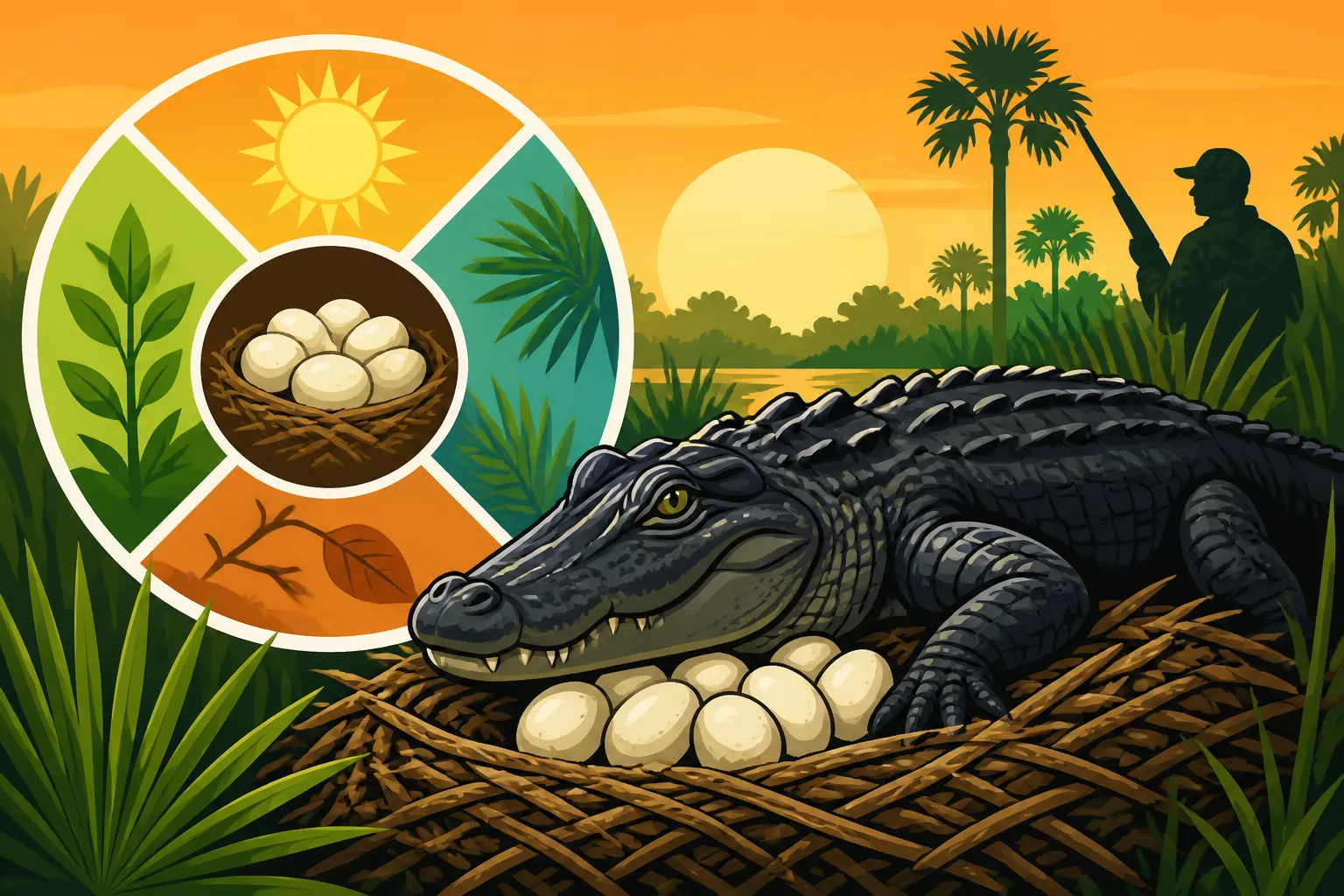
Unlike birds that weave delicate cups, a female alligator constructs a formidable mound, often two to three feet high and several feet in diameter. She uses whatever organic material is readily available in her immediate surroundings: mud, leaves, sticks, grasses, and other decaying vegetation. She gathers these materials using her powerful jaws and front legs, piling them into a substantial heap. The process is laborious and can take several days. Once the mound is complete, she digs a central cavity where she carefully deposits her clutch of eggs, usually between 20 to 50, though sometimes more. After laying, she meticulously covers the eggs with more vegetation, sealing them within their earthen incubator. This protective layer is vital for both camouflage and temperature regulation.
Incubation and Temperature-Dependent Sex Determination
This is where things get really wild! Alligator eggs don't have their sex genetically determined at conception like mammals do. Instead, the temperature inside the nest during a critical period of incubation dictates whether the hatchlings will be male or female.
- Warm Temperatures: Generally, sustained temperatures around 90-93 degrees Fahrenheit (32-34 degrees Celsius) tend to produce male alligators.
- Cooler Temperatures: Temperatures around 82-86 degrees Fahrenheit (28-30 degrees Celsius) typically result in females.
- Fluctuating Temperatures: Nests with varying temperatures can produce a mix of sexes, often with a higher proportion of females or males at the top or bottom of the clutch, depending on the microclimates within the mound.
This phenomenon, known as Temperature-Dependent Sex Determination (TSD), makes the Florida alligator population particularly vulnerable to extreme weather events like prolonged heatwaves or cold snaps, which could skew the sex ratio of an entire generation. Incubation typically lasts around 60 to 70 days, varying with temperature.
The Arrival of New Life: Hatching and Parental Care
By late August or early September, the hatchlings are ready to emerge. You might not realize it, but baby alligators actually "chirp" from inside their eggs when they're ready to hatch. This vocalization cues the mother, who will then carefully dig open the nest mound to release her offspring. It’s a moment of pure instinct, as she gently carries them in her mouth, sometimes several at a time, to the safety of the water.
Once in the water, these tiny, adorable (but still wild!) hatchlings, usually about 8-10 inches long, stay together in a "pod" under the watchful eye of their mother. This maternal care is crucial for their survival, as they are incredibly vulnerable to predators like large fish, wading birds, otters, and even larger alligators. The mother will protect her brood for several months, sometimes up to a year, teaching them to hunt and navigate their environment. This period is a critical stage in the life cycle of American Alligators in Florida.
Implications of Nesting Season for Florida's Ecosystem and Observers
Understanding the alligator nesting season isn't just for academic interest; it has real-world implications for anyone living in or visiting Florida's wild spaces.
Increased Protective Behavior
Perhaps the most important takeaway for anyone spending time near alligator habitat is this: female alligators are incredibly protective of their nests and, later, their hatchlings. While alligators are generally shy and will avoid human contact, a mother alligator with a nest or a pod of babies is a different story. Her maternal instincts override her natural caution. If you unknowingly get too close, she might perceive you as a threat, leading to defensive behavior. This isn't aggression for aggression's sake; it's a desperate attempt to protect her future. This is a critical time to give alligators a wide berth, especially if you see a territorial female or hear hatchling chirps. Ignoring these cues can lead to dangerous encounters, a lesson learned by many through unfortunate circumstances.
Observing Alligators Responsibly
For those who enjoy wildlife viewing, the nesting and hatching seasons offer unique opportunities to witness alligator behavior up close – but from a safe distance.
- Stay Back: Always maintain a considerable distance from any alligator, especially during these sensitive times. A good rule of thumb is to stay at least 50-60 feet away, and even more if you suspect a nest or see hatchlings. Zoom lenses on cameras are your friend!
- Use Binoculars: Binoculars or spotting scopes allow you to observe their fascinating behaviors without intruding on their space or causing them stress.
- Never Feed Alligators: This cannot be stressed enough. Feeding alligators makes them lose their natural fear of humans, leading them to associate people with food. This is incredibly dangerous and often leads to the alligator being deemed a nuisance and removed, usually resulting in its death. It's also illegal. GoHunt offers resources on ethical wildlife observation practices that align with state regulations.
- Be Aware of Your Surroundings: If you're on a hike, keep an eye on the edges of water bodies and dense vegetation. If you hear hissing or a low growl, or see a large alligator remaining in place rather than retreating, you might be too close to a nest or a territorial animal. Consider turning around and finding another route. This awareness is also crucial for those participating in Florida's Statewide Alligator Permit Lottery during the hunting season, as understanding their movements and sensitive areas is part of responsible hunting.
Ecological Importance
Beyond their fascinating life cycle, alligators play a vital role in Florida's freshwater ecosystems. They are apex predators, helping to control populations of fish, rodents, and other reptiles. During dry spells, the "gator holes" they excavate provide essential water sources for countless other species, effectively acting as keystone species in their wetland habitats. The success of each nesting season contributes directly to the overall health and balance of Florida’s intricate wetland systems. A healthy alligator population is often a strong indicator of a healthy ecosystem. The ongoing efforts by the state to monitor the population, as detailed in reports like the Florida Alligator Population Estimate, ensure these ancient creatures continue to thrive.
Florida Alligator Annual Cycle Overview
To help you visualize the yearly cycle of these magnificent reptiles, here's a general overview of the timing for each major phase. Remember, these are approximate and can vary based on specific weather conditions and geographic location within Florida.
| Activity | Typical Timing in Florida | Key Behaviors / Notes | Safety Considerations |
|---|---|---|---|
| Basking & Feeding | Year-round, intensified in warmer months | Alligators regulate body temperature, actively hunt. | Maintain distance, especially near water. |
| Courtship & Mating | April – May | Males bellow, head-slap, compete for mates. Increased activity. | Alligators more visible and active. Avoid disturbing. |
| Nest Building | Late May – Early July | Females construct large mounds of vegetation and mud. | Highest caution: Mothers are extremely protective of nests. Stay clear. |
| Egg Incubation | June – August | Eggs develop within the nest mound. Sex determined by nest temperature. | Mother often nearby, remains highly protective. |
| Hatching | Late August – Early September | Hatchlings chirp from eggs; mother digs out nest. Young stay in a "pod." | Mother intensely protective of hatchlings. Give wide berth. |
| Juvenile Care | September – Spring (next year) | Mother defends hatchlings from predators. Young learn to hunt. | Mother may still be protective of her young. |
| Winter Torpor | November – March (cooler periods) | Alligators become less active, may enter burrows (dens) during cold snaps. Reduced feeding. | Still capable of quick movements if disturbed, even when sluggish. |
Navigating Florida's natural landscapes is an incredible privilege, and understanding the wild creatures that call it home is part of responsible enjoyment. By respecting the alligator's nesting season and exercising caution, we can ensure both our safety and the continued thriving of these iconic reptiles.
Disclaimer
This article is for general informational purposes only and does not constitute professional advice. Laws, prices and regulations vary by location and change over time. Consult a qualified professional for guidance on your specific situation.