Florida Waterfowl Banding Programs
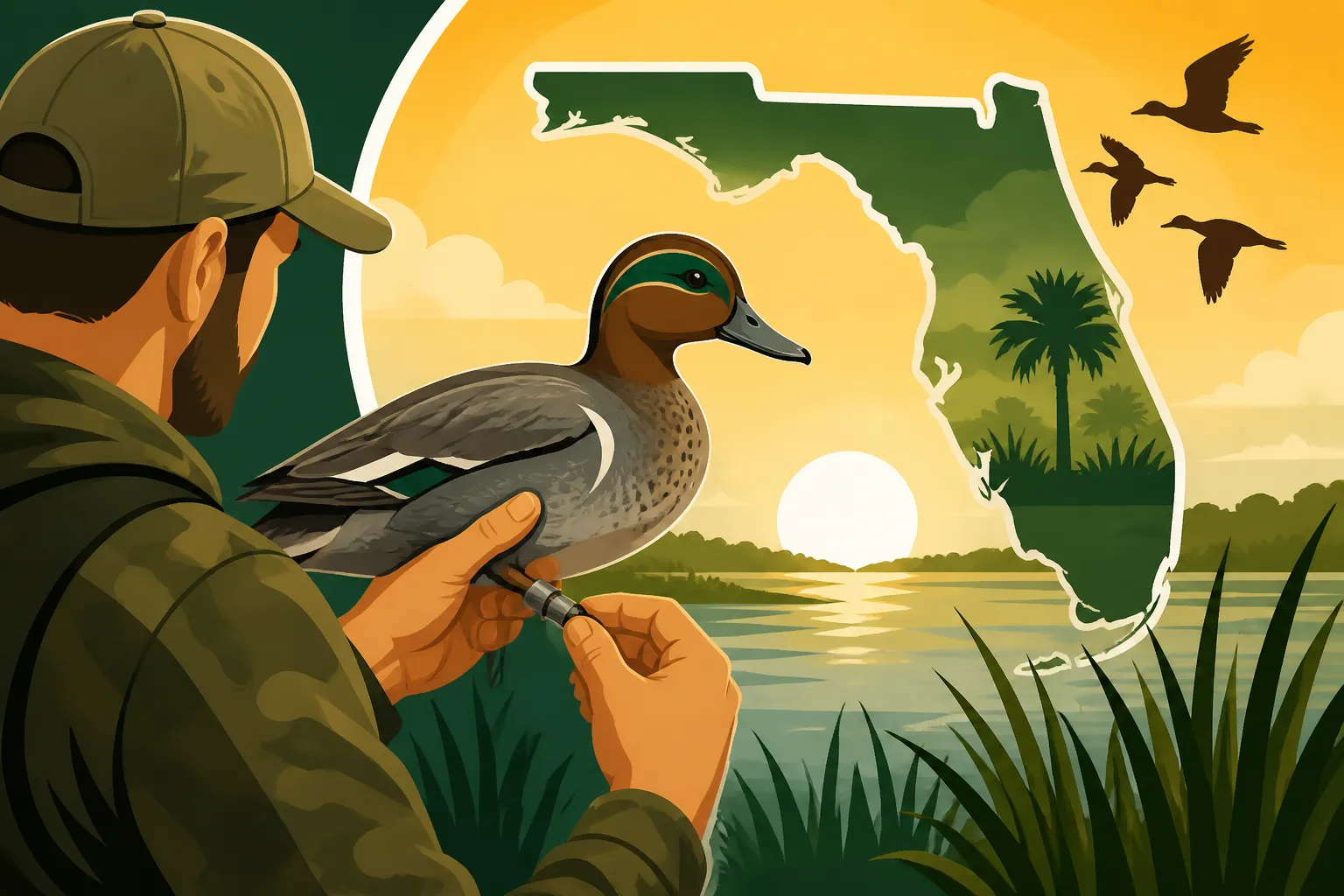
For many of us who chase ducks and geese through Florida's marshes and cypress sloughs, there's a certain thrill in the flight, the call, and the anticipation. But sometimes, you harvest a bird, and tucked around its leg is a small, shiny metal band – a tiny piece of aluminum that holds a world of information. Suddenly, that bird isn't just part of a flock; it's a silent messenger from a vast scientific effort. This guide will take you through the incredible work of waterfowl banding programs in Florida, explaining why they matter, how they work, and most importantly, how your actions as a hunter directly contribute to the future of our feathered friends.
What Exactly Are Waterfowl Banding Programs?
Waterfowl banding programs might seem like a simple concept – put a band on a bird – but they are, in fact, incredibly sophisticated, long-running scientific endeavors. These programs are the backbone of waterfowl management, providing data that no other method can consistently deliver.
A Vital Tool for Conservation and Management
Imagine trying to manage a population of birds that might spend its summer in Canada, its winter in Florida, and stop at a dozen states in between. Without a way to track individual birds or groups, it would be an impossible task. That's where banding comes in. Wildlife biologists and researchers band waterfowl to collect crucial data on several fronts:
- Survival Rates: How long do ducks and geese live in the wild? Banding helps determine annual survival rates, which can fluctuate based on habitat quality, predation, and hunting pressure. A drop in survival rates can signal a need for management changes.
- Migration Routes and Stopovers: Ever wondered exactly where those pintails you saw in January came from, or where the mottled ducks nesting near your home might travel? Bands reveal the intricate migration pathways, identifying critical breeding grounds, wintering areas, and crucial staging points where birds rest and refuel. This information is vital for protecting habitats along the entire flyway.
- Population Dynamics: How many birds are out there? While banding doesn't provide a direct census, the data, when combined with other surveys, helps estimate populations and track trends over time. Are populations increasing, decreasing, or stable?
- Harvest Impacts: Hunting is a traditional and vital part of waterfowl management. Band returns help biologists understand the proportion of a population that is harvested by hunters. This allows them to set appropriate Florida Duck and Goose Bag Limits and adjust Florida Waterfowl Season and Zones to ensure sustainable hunting opportunities for generations to come.
Without this granular data, managing our beloved ducks and geese would be little more than guesswork, and that's not a position anyone who cares about wildlife wants to be in.
The Science Behind the Band
The actual "band" is usually a small, lightweight aluminum or stainless steel ring, often with a unique alpha-numeric code stamped on it. Each band tells a story. When a bird is banded, a host of information is meticulously recorded by trained professionals:
- Species: Is it a mallard, a green-winged teal, or a Florida mottled duck?
- Age: Is it a juvenile (hatched this year) or an adult?
- Sex: Is it a male or a female?
- Location and Date: Precisely where and when the bird was captured and banded.
- Health Metrics: Sometimes, additional data like weight and wing chord length are taken to assess the bird's overall condition.
This information is then entered into a central database, maintained in the U.S. by the Bird Banding Laboratory, a partnership between the U.S. Geological Survey (USGS) and the Canadian Wildlife Service (CWS). Every single band has a unique identity, allowing researchers to track individual birds should they be encountered again, whether it's by another banding team or, most commonly, by a hunter.
How Waterfowl Get Banded in Florida's Unique Ecosystems
Banding waterfowl in Florida isn't like banding songbirds in a backyard. Our state's diverse and often challenging wetlands require specialized techniques and a deep understanding of waterfowl behavior.
Capturing Birds Safely and Ethically
The safety and well-being of the birds are always the top priority. Trained biologists and technicians employ various methods to capture waterfowl, chosen based on the species, habitat, and time of year. Some common techniques you might hear about include:
- Rocket Nets: These are often used in larger, open areas. Bait (like corn) is spread to attract birds, and then a net propelled by small rockets is deployed over the feeding flock. The nets are carefully designed to minimize injury, and the birds are quickly extracted.
- Mist Nets: More commonly used for smaller birds, but sometimes adapted for certain waterfowl species in specific habitats. These are fine mesh nets that birds fly into and become entangled in, held safely until researchers arrive.
- Airboat Drives: Particularly effective in large, shallow marshes during the non-flight capable period for ducks (when they're molting their flight feathers). Biologists on airboats can herd flightless birds into capture pens. This is a common method for banding our resident Florida mottled ducks in vast areas like the Everglades.
- Bait Traps: Various trap designs, from large walk-in traps to smaller funnel traps, are used to lure birds with bait.
Each method is meticulously planned and executed by experienced personnel who hold federal and state permits. They're not just grabbing birds; they're handling them with the utmost care, minimizing stress, and ensuring a quick release once banded and data is recorded.
Florida's Key Banding Locations and Species Focus
Florida is a critical wintering ground for a huge array of migratory waterfowl, and also home to several resident species. Because of this, banding efforts are strategically focused across the state:
- Everglades and South Florida Marshes: These vast wetlands are crucial for wintering ducks and for our unique resident Florida mottled duck population. Efforts here often involve airboat drives and large bait traps to capture species like mottled ducks, ring-necked ducks, and blue-winged teal. Understanding the movements and survival of Mottled Ducks in Florida Marshes is particularly important given their non-migratory nature.
- Panhandle and North Florida Wetlands: The northern parts of the state see a greater influx of species that winter further north, but still offer vital habitat. Wood ducks are a common target here, often banded around forested wetlands and beaver ponds. Researchers focus on understanding their local populations and migratory patterns. Wood Ducks in Florida Cypress Swamps are often subjects of specific banding studies.
- Managed Waterfowl Areas (WMAs): State-managed areas often have dedicated resources for banding. These sites, such as those found across various Florida Wildlife Management Areas, are prime locations because they are specifically managed to attract waterfowl, making capture efforts more efficient. Biologists might focus on early season migrants like green-winged and blue-winged teal in these areas, gathering data important for Early Teal Season Tactics in Florida.
The variety of habitats across Florida means that banding programs must be adaptable and species-specific, ensuring accurate data collection that reflects the complex lives of Florida's waterfowl.
Your Role: Finding and Reporting a Banded Bird
This is where you, the hunter, become an indispensable part of the scientific process. Without hunter reports, much of the effort and expense of banding would be lost. Every band you find and report is a piece of the puzzle.
The Hunter's Crucial Contribution
Think about it: a biologist bands a duck in Manitoba. Without a hunter harvesting that duck in Florida and reporting the band, that band becomes a dead end. Hunter reports are the "recovery" data, linking the banding event to the bird's ultimate fate and travel path. Each reported band provides critical information that helps wildlife agencies make informed decisions. It's a direct way for hunters to contribute to the conservation and sustainable management of the very resource they enjoy.
When you're out there Reading a Marsh for a Morning Flight or Decoying Wood Ducks in a Cypress Slough, remember that every bird has a story, and some carry a unique identifier that needs to be heard. Modern hunters, committed to the long-term health of the resource, understand that engagement goes beyond the harvest. They often use advanced tools, and while GoHunt doesn't track individual banded birds, platforms like it can help you understand general species distribution and habitat, which, when combined with your personal experience finding bands, gives a fuller picture of waterfowl ecology.
The Simple Process of Reporting a Band
Finding a band is exciting! It's like winning a small, educational lottery. But what do you do with it? The process is straightforward:
- Retrieve the Band: Carefully remove the band from the bird's leg. It's usually made of soft metal and can be easily opened or cut with small pliers if necessary.
- Note the Information: Write down the entire series of numbers and letters on the band. Take a photo if you can, just to be sure.
- Report Online: The most common and easiest way to report a band is through the USGS Bird Banding Laboratory website. Simply search for "report bird band" online, and you'll find the official portal.
- Report by Phone: If you prefer, there's often a toll-free number printed directly on the band or available on the website for reporting.
- Provide Details: You'll be asked for the band number, the species of bird, and the exact location (county, nearest landmark, or GPS coordinates if possible) and date you recovered it. The more precise you are with the location, the more valuable the data.
It literally takes only a few minutes, but those few minutes provide data points that contribute to decades of research.
What You Get Back for Your Effort
Reporting a band isn't a thankless task. After you submit your information, you'll typically receive a certificate of appreciation by mail or email. This certificate isn't just a "thank you"; it's a personalized scientific record. It will tell you:
- The species of bird.
- Where and when the bird was originally banded.
- Its age and sex at the time of banding.
- The name of the bander or banding station.
Imagine finding a band on a pintail you harvested in a marsh near Lake Okeechobee, and your certificate tells you that same bird was banded as an adult male two years ago near a wildlife refuge in Saskatchewan! That's the kind of direct connection to the greater waterfowl world that banding provides, making your hunting experience even richer. It’s a tangible link to Florida's Place on the Atlantic Flyway and beyond.
The Impact of Banding Data on Florida Waterfowl Hunting
The data collected through banding programs isn't just for dusty scientific papers; it has very real, tangible effects on how Florida's waterfowl seasons are set and how habitats are managed.
Shaping Seasons and Bag Limits
Wildlife agencies, including Florida's FWC, rely heavily on banding data when making decisions about hunting regulations. Here’s how:
- Survival and Harvest Rates: By knowing how many banded birds are harvested each year and how many survive, biologists can estimate the overall health of a population and the impact of hunting pressure. If harvest rates become too high for a particular species, adjustments might be made to bag limits or season lengths to ensure long-term sustainability.
- Adaptive Harvest Management: This is a sophisticated framework used in North America for setting duck hunting regulations. It uses models that incorporate banding data, breeding population surveys, and habitat conditions to predict population responses to different harvest strategies. This allows for more flexible and responsive regulations. For example, if a key species shows strong breeding success and high survival rates, the framework might allow for more liberal hunting seasons. Conversely, declining populations would trigger more conservative measures. This directly affects what hunters see in the Florida Waterfowl Season and Zones and Florida Duck and Goose Bag Limits each year.
The decisions that lead to your legal hunting opportunities are deeply rooted in the data gathered from these banding programs.
Unveiling Florida's Place on the Flyway
Florida sits at the southern end of the Atlantic Flyway, making it a critical wintering destination. Banding data from Florida birds, and from birds recovered in Florida but banded elsewhere, has been instrumental in mapping out these vast avian highways.
- Specific Migration Paths: We learn not just that birds migrate, but where specific populations come from. Banding might show that a certain percentage of the ring-necked ducks wintering in Florida breed in the Great Lakes region, while another segment comes from the Canadian prairies. This information helps coordinate conservation efforts across state and international borders.
- Resident vs. Migratory Birds: For a species like the Florida mottled duck, banding helps distinguish between resident birds and any migratory mottled ducks that might come down from other states along the Gulf Coast. This is crucial for managing our unique, non-migratory populations effectively.
- Stopover Importance: Banding studies also highlight the importance of various stopover sites along the flyway, not just the ultimate breeding or wintering grounds. Protecting these intermediate habitats is just as vital to successful migrations. The data reinforces Florida's undeniable importance as a winter haven for countless waterfowl.
Informing Habitat Restoration and Conservation Efforts
Beyond hunting regulations, banding data drives habitat management and restoration, ensuring there's a healthy environment for ducks and geese throughout their life cycles.
- Identifying Critical Habitats: By understanding where birds are banded, where they travel, and where they are recovered, biologists can pinpoint crucial breeding, migrating, and wintering habitats. This knowledge directs conservation funding and efforts towards the most impactful areas. For example, if a high number of banded wood ducks are recovered from a particular region, it might highlight the importance of preserving or restoring wooded wetlands in that area for Wood Ducks in Florida Cypress Swamps.
- Evaluating Habitat Projects: When a new wetland restoration project is undertaken, banding can help evaluate its success. Are more birds using the restored habitat? Do they have better survival rates? This feedback loop is essential for effective conservation.
- Addressing Localized Issues: Banding can sometimes reveal localized problems, such as a particular population segment experiencing lower survival, which might prompt investigations into specific environmental stressors or changes in land use that could be impacting those birds. This level of detail helps guide efforts to protect Mottled Ducks in Florida Marshes and other species that call Florida home.
A Snapshot of Banding Data Use
| Data Point Collected | Why It's Important | Impact on Management |
|---|---|---|
| Unique Band Number | Identifies individual bird | Allows tracking of migration, survival, and harvest for that specific bird. |
| Species, Age, Sex | Understands demographic structure of populations | Helps set age/sex-specific bag limits, identifies vulnerable population segments. |
| Banding Location & Date | Reveals origins and timing of movements | Maps migration routes (Florida's Place on the Atlantic Flyway), informs habitat protection. |
| Recovery Location & Date | Tracks where and when birds are harvested/found | Calculates harvest rates, assesses hunting pressure, informs season dates. |
| Survival Data | Estimates overall population health | Determines sustainability of hunting, identifies environmental stressors. |
| Movement Patterns | Shows connectivity between regions | Guides coordinated conservation efforts across states and countries. |
Participating and Supporting Florida's Waterfowl Future
Banding programs are a testament to collaborative conservation, relying on the dedication of biologists, volunteers, and, most importantly, hunters. Your contribution goes far beyond just reporting a band.
Beyond Reporting: Other Ways to Contribute
Being a responsible and engaged waterfowl hunter in Florida means understanding that your role extends past the immediate thrill of the hunt.
- Ethical Hunting Practices: Adhering to all hunting regulations, practicing good sportsmanship, and making ethical shots ensures that every bird harvested is done so responsibly. This aligns with the conservation goals that banding programs support. Don't forget the importance of fulfilling Florida Hunter Education Requirements and holding your Florida Migratory Bird Certification.
- Habitat Stewardship: Many conservation organizations, like Ducks Unlimited or the National Wild Turkey Federation (which also works on wetlands beneficial to waterfowl), have local chapters in Florida. Volunteering for habitat restoration projects, even small ones, can make a significant difference. From planting native vegetation to helping clean up waterways, every little bit helps.
- Financial Support: Purchasing your hunting licenses, federal duck stamps, and Florida Migratory Bird Permits directly funds state and federal conservation efforts, including some aspects of banding and habitat work. Consider donating to organizations dedicated to waterfowl conservation.
- Advocacy: Stay informed about wildlife policy and speak up for conservation when the opportunity arises. Educate others on the importance of science-based wildlife management and the role hunters play.
The future of Florida's waterfowl depends on a collective effort, and hunters are, and always have been, at the forefront of that effort.
The Long-Term Vision for Florida's Waterfowl
Waterfowl banding programs, alongside breeding surveys, habitat assessments, and hunter harvest surveys, form a comprehensive picture of waterfowl health and dynamics. This ongoing research is not just about today's hunting season; it's about a multi-generational commitment to ensuring that the skies over Florida's marshes and wetlands continue to be filled with the sights and sounds of migrating and resident waterfowl.
The vision is simple yet profound: sustainable waterfowl populations that can withstand environmental changes, provide robust hunting opportunities, and thrive within healthy, diverse ecosystems. Every band that's put on a duck's leg, and every band that's reported by a hunter, moves us closer to that enduring vision. It's a partnership between humans and nature, driven by science and a shared passion for these incredible birds.
Disclaimer
This article is for general informational purposes only and does not constitute professional advice. Laws, prices and regulations vary by location and change over time. Consult a qualified professional for guidance on your specific situation.