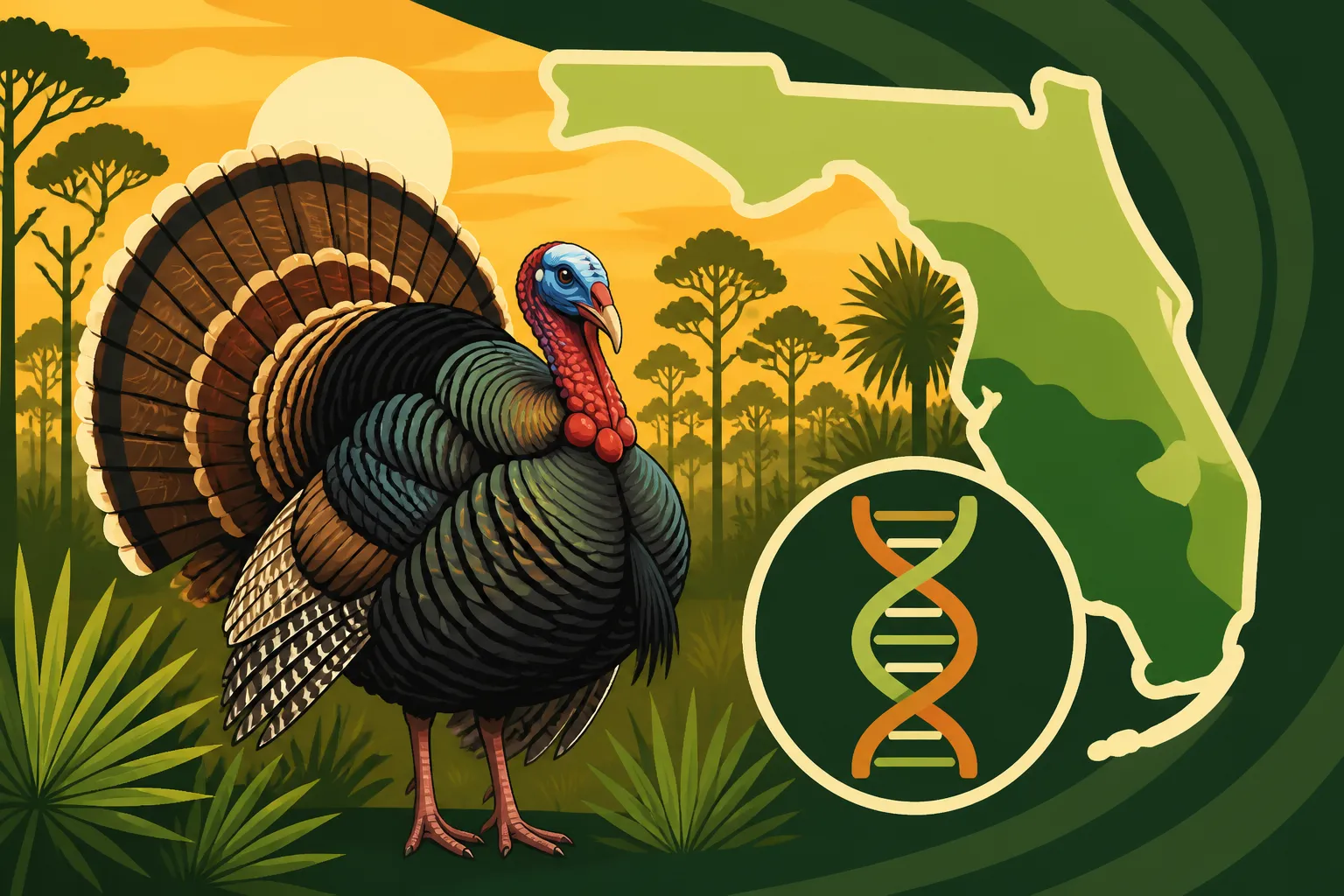
Osceola Turkey Range and Genetics
For many passionate turkey hunters, the pursuit of a Grand Slam can feel like chasing a ghost, especially when it comes to the elusive Osceola turkey in Florida. There's so much chatter about whether a bird truly counts as an Osceola, where their range truly begins and ends, and what makes them so unique. This guide is here to unravel those mysteries, delving deep into the specific range, genetic markers, and habitat that define Florida's most iconic turkey subspecies.
Understanding the Osceola Turkey's Unique Identity
The Osceola turkey, also known as the Florida turkey, is truly a distinct bird, and not just because it's the last piece of the Grand Slam puzzle for many. It's a subspecies of the wild turkey found exclusively within the Florida peninsula, making it a truly native Floridian. Its unique characteristics are a direct result of thousands of years of adaptation to our state's specific environment, from the palmetto flatwoods to the cypress swamps.
Distinct Physical Characteristics
When you're out in the field, trying to identify an Osceola, it's not always as straightforward as you might think. While they share many similarities with their Eastern turkey cousins, there are subtle yet important differences that set them apart. The most striking visual cues typically involve their feather coloration, particularly in the wings and tail. Osceolas generally exhibit less white barring on their primary and secondary wing feathers compared to Easterns. Instead, you'll often see more prominent black barring, creating a darker overall wing appearance.
Their tail feathers also tend to have a narrower, often brownish-black band at the tip, contrasting with the more pronounced white or buff tips you might observe on an Eastern turkey's tail. Moreover, an Osceola's body feathers, especially on the back and rump, can appear more iridescent, shimmering with greens and purples in the sunlight, a trait that seems to be accentuated by the bright Florida sun. These aren't always hard and fast rules, as individual variations exist, but they are strong indicators that distinguish this unique subspecies. It’s these subtle differences that make harvesting a true Osceola such a point of pride.
Behavioral Adaptations to Florida's Climate
Living in Florida means adapting to heat, humidity, and a landscape that often lacks the dramatic elevation changes found in other turkey habitats. Osceola turkeys have developed some fascinating behavioral adaptations that allow them to thrive here. Unlike turkeys in more temperate climates that might gather in large winter flocks for warmth and security, Osceolas in Florida tend to exhibit more dispersed patterns throughout the year. While they still form social groups, particularly hens with poults, the massive, tightly packed winter flocks are less common due to the consistently milder temperatures.
Their roosting habits also reflect their environment. You'll often find Osceolas roosting in tall pine trees or cypress trees along water bodies, using these elevated perches not only for protection from predators like bobcats and coyotes but also to catch any hint of a breeze on a warm evening. Their foraging behavior is also adapted, focusing heavily on the abundant palmetto berries, acorns, and various insects that are prevalent in Florida's sandy soils and scrublands. They are remarkably adept at navigating dense palmetto thickets, often moving through areas that would seem impenetrable to a human, giving them a significant advantage when evading hunters.
The Osceola's Exclusive Geographic Range
The defining characteristic of the Osceola turkey is its truly exclusive home. It’s not just a turkey in Florida; it’s the turkey of peninsular Florida. Understanding this geographic boundary is absolutely critical for any hunter looking to correctly identify and pursue this subspecies, whether for a Grand Slam or just the sheer challenge of it.
The Imaginary Line: Separating Osceola and Eastern Zones
The boundary between the Osceola and Eastern turkey ranges in Florida is often discussed with a certain reverence among turkey hunters, like an invisible line on the map that holds immense significance. Officially, the Florida Fish and Wildlife Conservation Commission (FWC) designates this separation point, and it’s generally understood to be State Road 70 (SR-70). This major east-west highway roughly bisects the state, running from near Fort Pierce on the Atlantic coast, west through Okeechobee and Arcadia, to the Gulf Coast south of Sarasota.
Any wild turkey harvested south of SR-70 is generally considered an Osceola, while birds north of this line are classified as Eastern turkeys. This delineation, while practical for management and hunting regulations, is a simplification of a more complex natural transition. In reality, genetics don’t follow a perfect highway line. There’s likely a gradual hybridization zone, often referred to as a "blend zone," where the genetic traits of both subspecies overlap. However, for all practical and official hunting purposes, SR-70 serves as the accepted dividing line. This is a critical distinction when planning your hunt and understanding Florida's Osceola and Eastern Turkey Zones.
Key Counties and Prime Habitat
When you look at a map of Florida, the counties south of SR-70 are where you'll find the core Osceola range. These include areas like Collier, Hendry, Glades, Okeechobee, Highlands, Polk, Hardee, Manatee, Sarasota, Desoto, Charlotte, and Lee counties, extending up into parts of Hillsborough, Sumter, Citrus, Levy, Marion, and Putnam. Each of these counties offers variations in prime habitat, but they all share the fundamental characteristics that Osceolas thrive in.
These areas are typically characterized by vast expanses of pine flatwoods, often interspersed with saw palmetto undergrowth, creating dense, low-lying cover. You'll also find extensive oak hammocks, particularly near water sources, which provide crucial mast crops like acorns, a vital food source. Cypress swamps and sloughs are common, offering not only water but also important roosting cover and insect foraging opportunities. Large cattle ranches, citrus groves, and public lands like the Green Swamp Wilderness Preserve or Babcock Ranch Preserve often hold significant Osceola populations. Understanding the specific habitat types in these areas is key to successfully locating and calling in an Osceola. Tools like the GoHunt mapping system can be incredibly useful for pinpointing these habitat types within specific counties.
The Genetic Purity Debate
The concept of "genetic purity" when it comes to Osceola turkeys is a topic that can spark lively debates around any Florida hunting camp. With various subspecies across North America, identifying a "true" Osceola, distinct from an Eastern turkey, becomes paramount for those aiming for the Grand Slam or simply appreciating the unique biology of these birds.
DNA Studies and Subspecies Verification
Modern science has given us incredible tools to understand the natural world, and DNA analysis has played a significant role in confirming the distinctiveness of the Osceola turkey. Early morphological studies, which focused on physical characteristics like feather patterns and body size, first suggested the Osceola as a separate subspecies. However, genetic research has since provided stronger evidence, tracing the lineage of these birds and confirming their unique genetic markers. These studies have shown that while interbreeding with Eastern turkeys can occur, especially in transitional zones, the core Osceola population in peninsular Florida maintains a distinct genetic signature. This research helps us understand Which Counties Hold True Osceola Genetics and where the likelihood of encountering a genetically pure Osceola is highest. The results of these DNA analyses are crucial for wildlife management agencies to ensure the conservation of this unique Florida game bird.
Hybridization and Management Challenges
Despite their distinct genetic identity, the boundary between Osceola and Eastern turkey ranges isn't always a hard, impermeable wall. As mentioned, the areas around State Road 70 and slightly north can sometimes see hybridization, where Osceolas and Easterns interbreed. This occurs where their ranges naturally overlap or where human activity has altered habitats, bringing the populations into closer contact. For hunters, this means that a bird taken in a supposed "Osceola" county might, on rare occasions, exhibit some Eastern characteristics, or vice versa in a northern county.
This presents a unique challenge for wildlife managers. While the FWC's current management zones rely on geographical lines like SR-70, understanding the nuances of hybridization is important for long-term conservation strategies. Maintaining the genetic integrity of the Osceola subspecies is a priority, and ongoing monitoring of turkey populations, including genetic sampling, helps ensure that these iconic birds continue to thrive in their native range. Hunters who are particular about the "purity" of their trophy often choose to hunt deep within the established Osceola range, far from the potential blend zones, to maximize their chances of encountering a truly representative specimen.
Osceola Turkey Habitat and Population Dynamics
Understanding the specific habitats Osceola turkeys prefer and the factors influencing their population dynamics is key to both successful hunting and responsible conservation. Florida's unique ecosystems provide a backdrop unlike anywhere else in the nation, and Osceolas have adapted perfectly to them.
Preferred Ecosystems and Foraging
Osceola turkeys are masters of their environment, thriving in a mosaic of Florida's natural landscapes. Their prime real estate includes expansive pine flatwoods, which are characterized by open stands of longleaf or slash pine with an understory dominated by saw palmetto, gallberry, and wiregrass. These areas offer excellent cover from predators, abundant insect life, and nesting opportunities. They also heavily utilize oak hammocks, especially during the fall and winter months when acorns provide a rich, high-energy food source. These hammocks, often found along creek bottoms or slightly higher ground, also offer valuable shade in Florida's intense heat.
Beyond these, cypress swamps and sloughs are surprisingly important. While not typically thought of as primary turkey habitat, these wetlands provide crucial water sources, especially during dry seasons, and their towering cypress trees offer secure roosting sites. Turkeys will also venture into improved pastures and agricultural fields bordering these wilder areas, especially to feed on seeds, waste grains, and insects. Their diet is incredibly varied, encompassing palmetto berries, acorns, pine seeds, various grasses, insects like grasshoppers and beetles, and even small reptiles. This diverse diet allows them to adapt to seasonal availability, making them resilient in Florida's varied landscape. Many hunters utilize mapping tools like GoHunt to identify these prime habitat types when scouting.
Factors Influencing Population Trends
Like all wild game populations, Osceola turkey numbers fluctuate based on a variety of environmental and human-influenced factors. Weather patterns play a significant role, particularly during nesting and brood-rearing seasons. Prolonged periods of heavy rain during spring can reduce nesting success and lead to higher poult mortality due to drowning or hypothermia. Conversely, severe droughts can limit food and water availability.
Predation pressure from a healthy suite of Florida predators—including coyotes, bobcats, raccoons, opossums, and even alligators near water bodies—also impacts poult and hen survival. While healthy adult turkeys are generally adept at evading predators, nests and young poults are vulnerable. Habitat loss and fragmentation due to human development pose a long-term threat, reducing the contiguous wild spaces Osceolas need to thrive. However, proactive land management, including prescribed burning, is crucial. Prescribed burns, frequently conducted by the FWC and private landowners, help maintain the open understory of pine flatwoods, reducing wildfire risk and promoting the growth of palatable forage and insect populations critical for turkeys. These efforts contribute to maintaining Florida Turkey Population Trends in the face of ongoing environmental changes.
Hunting the Osceola: Range-Specific Tactics
Hunting Osceola turkeys presents a unique set of challenges and rewards. While many turkey hunting fundamentals apply, there are specific nuances dictated by their range and the Florida environment that can make or break a hunt.
The Art of Calling in Flat Terrain
Unlike mountainous regions where topography can funnel sound and movement, Florida's largely flat terrain means your calling strategy needs to be adaptable and often more subtle. Sound travels differently here, and it’s less likely to be blocked by hills or ridges. This means turkeys can pinpoint your location from a greater distance, and they’re often more hesitant to commit if they feel something is off. Instead of loud, aggressive calling right off the bat, a more measured approach often yields better results. Start with soft tree yelps or fly-down cackles at first light, then transition to more intermittent clucks and purrs.
When you do get a response, pay close attention to the gobbler's demeanor. Is he hot and closing the distance quickly, or is he hung up, trying to get you to come to him? Often, Osceola gobblers are notoriously stubborn and will hold up just out of sight, expecting the "hen" to come to them. This is where patience and soft, realistic calling become your best friends. Sometimes, backing off a bit and circling to get a different angle can convince a hung-up bird to move. This specific challenge is what makes Calling an Osceola Off the Roost such a refined skill.
Scouting and Setup in Dense Scrub
Florida's dense palmetto scrub and flatwoods can be incredibly challenging to navigate, both for you and for the turkey. This cover is a double-edged sword: it offers turkeys excellent hiding places, but it can also make it difficult for you to get a clear shot or even see a bird approaching. Effective scouting, sometimes aided by satellite imagery available on platforms like GoHunt, is paramount. Look for open patches within the scrub, fire lanes, logging roads, or the edges of pastures where turkeys might feel more comfortable strutting and where you might get a clean shot.
When setting up, positioning yourself with clear lanes of sight and fire is crucial. Often, sitting with your back against a large pine tree or in the shade of an oak hammock that overlooks a more open area is ideal. Using a ground blind can also be highly effective in these dense environments, especially if you're Brushing In a Blind on a Field Edge to break up your silhouette. Decoy placement is another critical consideration. In thick cover, a single hen decoy placed where it’s highly visible from the direction you expect the gobbler to approach can be incredibly effective at drawing his attention away from your exact position and giving him something to focus on. Ensure your decoys are in an area where an approaching gobbler has a clear path and won't get hung up in impenetrable brush.
| Characteristic | Osceola Turkey | Eastern Turkey |
|---|---|---|
| Primary Range | Florida Peninsula (South of SR-70) | Eastern U.S. (including Florida Panhandle) |
| Wing Barring | Predominantly black with narrower white bars | Broader, more prominent white bars |
| Tail Band | Narrow, brownish-black terminal band | Wider, more distinct white or buff terminal band |
| Body Iridescence | Often pronounced green/purple sheen | More bronze/copper sheen |
| Average Size | Generally smaller (average 16-20 lbs for gobbler) | Larger (average 18-24 lbs for gobbler) |
| Vocalizations | Known for sharp, distinctive gobble; often more responsive to calls | Varied vocalizations; can be very responsive or very wary |
| Preferred Habitat | Pine flatwoods, palmetto scrub, oak hammocks, cypress swamps | Hardwood forests, agricultural interfaces, mixed woodlands |
Conservation and Management Efforts
The FWC, alongside other conservation organizations and private landowners, plays a vital role in ensuring the long-term health and sustainability of Florida's wild turkey populations, including the prized Osceola subspecies. Their efforts encompass a broad range of activities, from habitat management to research and regulation.
FWC's Role in Population Health
The Florida Fish and Wildlife Conservation Commission is the primary agency responsible for the management of all wildlife in the state, and Osceola turkeys are a significant focus. They conduct extensive research to monitor turkey populations, track nesting success, poult survival, and harvest rates. This data helps them make informed decisions about hunting seasons, bag limits, and specific regulations designed to ensure healthy and thriving populations. The FWC also actively manages public lands, including many Wildlife Management Areas (WMAs), through prescribed burning programs, timber management, and food plot plantings, all designed to enhance turkey habitat.
Beyond direct management, the FWC educates hunters and the public on responsible hunting practices and the importance of conservation. They work to mitigate threats such as habitat loss and disease, like Chronic Wasting Disease (CWD), which fortunately has only been detected in a single isolated case in Florida, far from the Osceola range. Through careful scientific management and adaptive strategies, the FWC strives to ensure that future generations of hunters will continue to have the opportunity to pursue Osceola Turkeys in Peninsular Florida.
The Impact of Private Land Management
While public lands are crucial, a significant portion of prime Osceola turkey habitat in Florida lies on private lands, particularly large cattle ranches, timber operations, and private hunting preserves. The management practices on these private holdings have an immense impact on the overall health and distribution of the Osceola population. Many private landowners are active conservationists, implementing their own prescribed burn regimes, creating and maintaining food plots, and managing timber in ways that benefit wild turkeys.
Collaborations between private landowners and organizations like the National Wild Turkey Federation (NWTF) are also vital. The NWTF, for instance, provides resources, expertise, and funding to assist landowners in enhancing turkey habitat. These partnerships help connect fragmented habitats, creating larger, more resilient areas for turkeys to roam, breed, and flourish. The commitment of private individuals and organizations to habitat stewardship is indispensable for the continued success of the Osceola turkey, demonstrating that conservation is truly a shared responsibility across the entire state.
Disclaimer
Please remember that hunting regulations, season dates, and specific rules for public and private lands in Florida can change. Always consult the latest Florida Fish and Wildlife Conservation Commission (FWC) regulations guide before planning any hunting trip. This content is for informational purposes only and does not constitute legal advice or an endorsement of specific hunting practices.