Why Osceolas Only Live in Florida
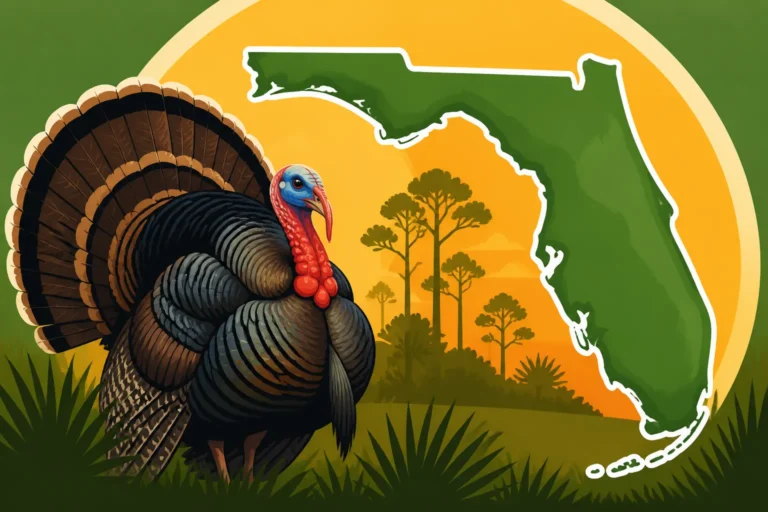
It’s a question that perplexes hunters far and wide: why do Osceola turkeys, one of the most sought-after subspecies for a Grand Slam, call only Florida home? Many folks scratch their heads, wondering what makes this corner of the world so special for these distinct birds. This guide will dive deep into the unique blend of geography, history, and biology that has confined the stunning Osceola turkey exclusively to the Sunshine State.
The Allure of the Osceola Turkey
For dedicated turkey hunters, the Osceola isn't just another bird; it's a coveted trophy, a piece of a grand puzzle, and a testament to unique wildlife. The pursuit of an Osceola often involves traveling to Florida, navigating its distinct landscapes, and mastering tactics specific to this bird. This singular location for an entire turkey subspecies creates a mystique that draws hunters from across the globe.
A Grand Slam Pursuit
The National Wild Turkey Federation (NWTF) Grand Slam is perhaps the most well-known pursuit in turkey hunting, challenging hunters to harvest all four (or sometimes five, depending on the definition) recognized subspecies of wild turkey across North America. These typically include the Eastern, Merriam's, Rio Grande, and the Osceola. For many, completing the Grand Slam feels incomplete without an Osceola. This distinction alone elevates the Osceola from just another turkey to a unique, bucket-list animal. It's not uncommon for hunters to plan their entire spring around a Florida trip, dedicating significant resources to bag an Osceola and check that crucial box off their list.
Beyond the NWTF Slam, there are also the Royal Slam (adding the Gould's turkey) and the World Slam (including the Ocellated turkey of Central America). Each of these requires the Osceola, solidifying its status as an indispensable part of any serious turkey hunter's journey. The challenge of hunting this particular bird, often in dense palmetto scrub or cypress swamps, adds to its appeal. There's a certain satisfaction that comes from deciphering the subtle cues of an Osceola gobbler, which can be notoriously tight-lipped compared to their Eastern cousins.
The Elusive Nature of the Species
Osceola turkeys, while sharing many behavioral traits with other wild turkeys, have developed a reputation for being particularly challenging to hunt. Their habitat, which often consists of vast, dense tracts of palmetto and pine flatwoods, allows them to vanish with incredible stealth. Unlike the more open hardwood forests of the Midwest where Easterns roam, Florida's thick cover can make visual confirmation difficult, even when a bird is gobbling close by. This requires hunters to adopt specific strategies, like often calling an Osceola Off the Roost or understanding their movement patterns in the unique terrain.
The pressure from relentless hunters, especially during the early weeks of spring season, also contributes to their elusiveness. Gobblers can become henned-up quickly, and those mature birds that survive a few seasons learn quickly to be wary. This makes pattern recognition and careful scouting paramount. Tools like the GoHunt app can be invaluable for pinpointing potential roosting sites or identifying areas with minimal hunting pressure, helping hunters decipher the birds' movements in a habitat where visibility is often limited.
Geographical Isolation and Peninsular Evolution
The most fundamental reason Osceola turkeys are found only in Florida ties back to the state's unique geological history and its physical separation from the rest of the continent. Florida's peninsula wasn't always as prominent as it is today, and its formation and changes over millennia played a crucial role in isolating populations and allowing for distinct evolutionary pathways.
The Historical Land Bridge
During various ice ages, global sea levels fluctuated dramatically. When ice sheets expanded, sea levels dropped, exposing vast areas of land that are now submerged. Florida, being a relatively low-lying peninsula, experienced significant changes during these periods. At times, its landmass was much larger, forming a wider connection to the mainland. At other times, especially during interglacial periods when sea levels were higher, Florida was effectively an island, or at least a much narrower peninsula. It was during these periods of geographic isolation that ancestral turkey populations in Florida began to diverge.
Imagine a group of early turkeys, perhaps more akin to what we now call Easterns, migrating south. As sea levels rose, they became cut off from their northern counterparts. This isolation meant there was no longer a genetic exchange between the northern and southern populations. Over thousands of years, these isolated populations in what would become peninsular Florida began to adapt to their specific environment, leading to the genetic and physical characteristics we now associate with the Osceola. This concept of geographic isolation leading to new species or subspecies is a well-established principle in evolutionary biology.
Physical Barriers and Genetic Drift
Even when Florida was connected by a wider land bridge, certain environmental factors acted as further barriers. The northern neck of Florida, particularly where it narrows considerably, featured different habitat types and river systems that could have limited the movement of certain wildlife, including turkeys. The Suwannee River, for instance, has long been considered a significant natural boundary, influencing everything from wildlife movement to human settlement.
Moreover, processes like genetic drift – the random fluctuation of gene frequencies in a population – played a role. Without the constant influx of new genetic material from a larger, continuous population, the smaller, isolated group in Florida developed unique genetic markers. These genetic differences accumulated over time, resulting in a distinct subspecies. Today, the Osceola Turkey Range and Genetics article often discusses these genetic distinctions and how they define the birds we hunt south of Florida's Panhandle. This long period of relatively undisturbed isolation allowed the Osceola to become genetically unique, making the Florida Osceola Zone Turkey Permit Rules so important for their management.
Habitat Specificity: Florida's Unique Ecosystems
While geographical isolation kickstarted the Osceola's evolution, it's the unique blend of Florida's ecosystems that truly allowed them to thrive and adapt into the subspecies we recognize today. These specific habitats provide everything the Osceola needs, from food and water to nesting and roosting cover, in a way that differs significantly from other turkey ranges.
Palmetto Prairies and Pine Flatwoods
The vast expanses of palmetto prairies and pine flatwoods are quintessential Osceola territory. These habitats, characterized by dense saw palmetto understories and scattered longleaf or slash pines, offer incredible security cover. A gobbler can be just fifty yards away, and you might not see him through the thick palmetto fans. This density provides excellent protection from predators, both terrestrial and avian, and offers abundant nesting sites for hens. Hunters who are Hunting an Osceola Gobbler in Palmetto Scrub know just how challenging this cover can be.
The pine overstory provides crucial roosting habitat. Mature pines offer tall, sturdy branches for turkeys to escape to at night, safe from coyotes, bobcats, and even panthers. These open-understory pines also allow for easier movement compared to denser hardwood forests. The periodic prescribed fires, a common management practice in these areas, play a vital role in maintaining the health of these ecosystems, clearing out excessive undergrowth, and promoting the growth of native forage.
Cypress Swamps and Hammocks
Interspersed within the pine flatwoods are cypress swamps and hardwood hammocks, which are equally critical to the Osceola's survival. Cypress swamps, especially during drier periods or along their edges, provide rich foraging grounds for insects, seeds, and acorns. The water in these areas is also a lifeline during Florida's often dry spring months. Hammocks, which are slightly elevated islands of hardwood trees within wetter environments, are invaluable for their mast crops, like acorns, and provide denser shade during the heat of the day.
These wetter areas also act as corridors and refuge. Turkeys will often use the edges of swamps and hammocks to travel, moving between feeding and roosting areas. The varied topography and vegetation found in these micro-habitats ensure a consistent supply of diverse food sources and reliable water, regardless of the seasonal fluctuations in Florida's weather. Understanding these patterns is key to success, whether you're Hunting a Cypress Head at Last Light or trying to locate a gobbler during the middle of the day.
Food Sources and Climate Advantages
Florida's unique climate, characterized by mild winters and long growing seasons, ensures a year-round abundance of food for Osceola turkeys. Unlike colder northern states where turkeys face harsh winters and scarce food, Osceolas rarely experience prolonged periods of food stress. They feed on a wide variety of items, including acorns from various oak species found in hammocks, seeds from pine and palmetto, insects like grasshoppers and beetles, and various berries and fruits. This dietary diversity contributes to their overall health and robust population numbers.
The warm climate also impacts their breeding cycle. Osceolas often start their gobbling and breeding activities earlier than their northern counterparts, sometimes as early as late February, peaking in March and April. The mild weather means hens can nest and raise poults without the threat of late-season freezes or extreme cold, contributing to higher poult survival rates. This ecological advantage, combined with their specific habitat, creates a perfect niche that has allowed the Osceola subspecies to flourish exclusively within Florida's borders.
Genetic Distinction and Subspecies Status
The scientific classification of the Osceola turkey as a distinct subspecies isn't merely an arbitrary decision; it's based on observable genetic and morphological differences that separate them from their closest relatives, the Eastern wild turkey. Understanding these distinctions helps clarify why they are considered unique to Florida.
Scientific Naming and Criteria
The Osceola turkey is scientifically known as Meleagris gallopavo osceola. The designation "osceola" distinguishes it from the nominate subspecies, Meleagris gallopavo silvestris (the Eastern wild turkey), and others like Meleagris gallopavo intermedia (Rio Grande) or Meleagris gallopavo merriami (Merriam's). This subspecific classification is typically granted when a population exhibits consistent genetic, morphological, or behavioral differences from other populations within the same species, and these differences are maintained through limited or no interbreeding. In the case of the Osceola, these differences are evident in their appearance, especially when compared directly to an Eastern turkey.
Genetic studies have reinforced the idea that Osceolas are indeed distinct. While sharing a common ancestor with Easterns, their long period of geographic isolation has led to unique genetic markers. These markers confirm that the population in peninsular Florida has evolved along its own trajectory, adapting specifically to the Florida environment, rather than being simply a southern extension of the Eastern turkey range. This distinct genetic heritage is what makes them so fascinating to researchers and hunters alike.
Distinguishing Features from Eastern Turkeys
While to the untrained eye, an Osceola might look much like a smaller Eastern, there are several key physical differences that set them apart. The most notable differences include their size, coloration, and markings. Osceolas are generally smaller and more slender than Easterns, which makes sense given their habitat preferences and energy requirements in a warmer climate. Adult gobblers typically weigh between 16-20 pounds, while large Easterns can easily exceed 20 pounds.
Coloration is another critical identifier. Osceola turkeys tend to have iridescent green and red feathers on their body, compared to the more copper and bronze hues found on Easterns. Their wing feathers are also distinct: the primary wing feathers on an Osceola are predominantly black with much narrower white barring, or sometimes even mottled black and brown without the stark white bands characteristic of an Eastern. This difference is often used by experienced hunters and wildlife biologists to confirm a bird's subspecies. Additionally, the tail feathers of an Osceola often have a buff or yellowish-brown band near the tip, as opposed to the chestnut brown on an Eastern. These subtle yet consistent differences are what makes the Osceola Turkey Range and Genetics a precise science, clearly delineating Where the Osceola and Eastern Turkey Zones Divide.
| Feature | Osceola Turkey (Meleagris gallopavo osceola) | Eastern Turkey (Meleagris gallopavo silvestris) |
|---|---|---|
| Range | Peninsular Florida Only | Eastern U.S. and Canada |
| Size | Generally smaller, more slender (16-20 lbs) | Larger, stockier (20-25+ lbs) |
| Iridescent Body | More prominent green/red sheen | More bronze/copper sheen |
| Primary Wing Feathers | Predominantly black with narrow white barring or mottled | Distinct black with wide, crisp white barring |
| Tail Fan Band | Buff or yellowish-brown sub-terminal band | Chestnut brown sub-terminal band |
| Legs | Often darker, sometimes purplish-black | Typically pinkish-red |
| Vocalizations | Generally softer, less aggressive gobble (anecdotal) | Louder, more resonant gobble |
Conservation Efforts and Management Implications
Because the Osceola turkey is endemic to Florida, conservation and management efforts are acutely focused on the health and sustainability of this subspecies within the state's borders. The Florida Fish and Wildlife Conservation Commission (FWC) plays a pivotal role in ensuring that this unique bird continues to thrive for future generations.
FWC's Role in Osceola Management
The FWC's approach to managing the Osceola turkey population is comprehensive, involving habitat preservation, population monitoring, and regulated hunting seasons. They conduct annual Florida Osceola Population Estimate surveys, often working with landowners and hunters, to track numbers and assess reproductive success. This data is crucial for making informed decisions about bag limits and season dates. The FWC recognizes the Osceola's unique status and manages it carefully to prevent overharvesting, while also providing hunting opportunities that are a significant draw for the state.
A key aspect of FWC's management is the use of hunting zones. Peninsular Florida falls under the Osceola Turkey Zone, which has distinct season dates and regulations compared to the Eastern Turkey Zone in the Panhandle. These zones reflect the geographic distribution and ecological needs of each subspecies. The FWC also promotes responsible hunting practices and requires hunters to purchase specific permits, ensuring that harvest numbers are closely monitored. Their enforcement efforts help combat poaching and ensure that the turkeys are harvested legally and ethically, contributing to the long-term health of the population. You can often find details about this on the FWC website or through informational tools like GoHunt, which aggregates hunting regulations.
Preserving Critical Habitat
Habitat loss and fragmentation are ongoing threats to all wildlife, and the Osceola turkey is no exception. Florida's rapid human population growth and development put continuous pressure on wild spaces. Therefore, a major focus of Osceola conservation is the acquisition and protection of large tracts of suitable habitat. This includes state and national forests, wildlife management areas (WMAs), and private land conservation easements. Organizations like the NWTF often partner with the FWC and private landowners to fund habitat restoration projects, such as prescribed burning programs that maintain healthy pine flatwoods and palmetto prairies.
Maintaining contiguous blocks of habitat is essential, as turkeys require large areas for foraging, breeding, and dispersal. When habitats become fragmented by roads or development, it can isolate turkey populations, making them more vulnerable to disease and reducing genetic diversity. Protecting areas like the Green Swamp Wilderness Preserve Hunting and J.W. Corbett Wildlife Management Area is vital. Educating private landowners on best management practices for turkey habitat is also a crucial component, as a significant portion of Osceola range is on private property. By safeguarding these unique Florida ecosystems, the future of the Osceola turkey is better secured.
The Future of Florida's Osceola Population
While Florida's Osceola turkey population is currently stable and healthy, it faces a number of challenges that conservationists and wildlife managers are constantly addressing. Understanding these potential threats is crucial for ensuring the long-term survival of this unique subspecies.
Habitat Loss and Fragmentation
As Florida continues to experience rapid development and population growth, the loss and fragmentation of vital Osceola habitat remains a primary concern. The expansive pine flatwoods, palmetto prairies, and cypress swamps that these birds depend on are continually being converted for agriculture, residential housing, and commercial infrastructure. This isn't just about losing acres; it's about breaking up existing, healthy ecosystems into smaller, isolated parcels. When habitats become fragmented, turkey populations can become isolated, making it harder for them to find mates, access diverse food sources, and avoid predators.
Moreover, smaller, isolated populations are more susceptible to the impacts of disease and inbreeding, which can reduce genetic diversity and overall resilience. This is a complex issue because Florida's economy and growth are strong, but the balance between development and conservation is a constant tightrope walk. Efforts by the FWC, along with land trusts and conservation groups like the National Wild Turkey Federation, are critical in identifying and protecting key corridors and large tracts of land. Hunters can also contribute by supporting conservation initiatives and being mindful of the pressure they put on accessible public lands. Finding ground that sees fewer hunters is increasingly a challenge that requires diligent scouting, sometimes using tools like GoHunt to analyze property boundaries and public access points.
Climate Change and Disease Threats
Beyond direct habitat loss, broader environmental changes pose a long-term risk. Climate change, for example, could alter rainfall patterns, leading to more frequent or intense droughts or floods, which would directly impact food availability, nesting success, and poult survival. Altered weather patterns might also affect the timing of insect hatches, which are crucial protein sources for young turkeys. While Florida's turkeys are adapted to a warm climate, extreme shifts could push them beyond their adaptive capacity.
Disease is another looming threat. Avian diseases, like Lymphoproliferative Disease Virus (LPDV) or Avian Pox, can impact turkey populations. While current surveillance programs by the FWC aim to monitor and respond to disease outbreaks, fragmented habitats can make populations more vulnerable once a disease takes hold, especially if birds are stressed by other environmental factors. The single confirmed CWD case in Florida, while not directly affecting turkeys, highlights the importance of vigilant wildlife disease monitoring across all species. Continued research, habitat improvements to bolster bird health, and careful management of human-wildlife interactions are essential to safeguard the Osceola turkey against these evolving threats.
Disclaimer
Please remember that hunting regulations and wildlife populations are dynamic. Always consult the latest Florida Fish and Wildlife Conservation Commission (FWC) regulations before planning any hunt. This guide is for informational purposes only and does not replace official FWC guidelines.