Where Florida Bobcats Are Most Common
A lot of Florida hunters are curious about bobcats, those elusive, beautiful wild cats that seem to appear and disappear like ghosts in the palmetto. You might hear their distinctive scream at night or catch a fleeting glimpse of one crossing a logging road, leaving you wondering exactly where these secretive predators prefer to roam. Pinpointing where Florida bobcats are most common isn't always straightforward, but understanding their preferred habitats and behaviors can significantly increase your chances of encountering them and appreciate their role in the ecosystem. This guide will walk you through their prime territories and the factors that draw them in.
Understanding Florida's Elusive Bobcats
Bobcats are truly one of Florida's hidden gems, often present in healthy numbers even in areas where you rarely see them. Their secretive nature and nocturnal tendencies make them incredibly challenging to spot, but that doesn't mean they aren't out there. Before we dive into specific locations, let's get a feel for what makes these cats tick.
Bobcat Ecology and Behavior
Florida bobcats (Lynx rufus floridanus) are smaller than their northern counterparts, but they still pack a punch. They typically weigh between 15 and 30 pounds, stand about 20-24 inches at the shoulder, and boast that unmistakable stubby "bobbed" tail. Their fur varies, often tan to reddish-brown with distinctive dark spots or streaks, providing perfect camouflage in the Florida landscape. They are solitary creatures, generally only coming together to breed, and are fiercely territorial, marking their home range with urine, scat, and claw marks on trees.
While they are adept hunters, bobcats are also incredibly shy. They avoid human confrontation whenever possible, which is why most sightings are fleeting glimpses at dawn, dusk, or under the cloak of night. Their ability to move silently through dense cover makes them phantom-like, able to materialize and vanish without a trace. This elusiveness is part of their charm but also what makes finding their favored haunts so intriguing.
Despite their nocturnal reputation, don't be surprised if you see a bobcat during the day, especially in remote areas or during cooler months when they might extend their hunting hours. Females with kittens, in particular, may adjust their schedules to find enough food for their growing litter. They are opportunistic and will hunt whenever the conditions are right, relying on their keen eyesight and hearing to detect prey.
Diet and Prey Preferences
Bobcats are obligate carnivores, meaning meat makes up the vast majority of their diet. Their primary menu items consist of smaller fare: rabbits, rats, mice, squirrels, and various birds are staples. If you're in an area with a healthy population of Florida Squirrel and Rabbit Populations, you're likely in a good area for bobcats. They are excellent ambush predators, often patiently waiting along game trails or in dense cover before pouncing on unsuspecting prey.
While small game forms the bulk of their diet, bobcats are also opportunistic and won't shy away from larger meals when the opportunity arises. This can include young or weakened deer fawns, especially during the spring birthing season. They are not known for taking down healthy, adult deer, but a sick, injured, or very young animal can certainly become a target. This role in predation is a natural part of the ecosystem, helping to maintain healthy deer herds by culling weaker individuals.
Their varied diet showcases their adaptability. They can thrive in a wide range of habitats because they aren't overly specialized in what they eat, as long as there's a consistent food source available. This also means that local bobcat populations can fluctuate with the abundance of their prey. A good year for rabbits or rodents often means a good year for bobcats.
Population Trends and Conservation Status
Good news for those fascinated by these wild cats: Florida's bobcat population is generally considered healthy and stable. They are not listed as endangered or threatened at either the state or federal level. This robust population is a testament to the diverse and resilient ecosystems found across much of Florida, which provide ample habitat and food sources for these adaptable predators.
In Florida, bobcats are classified as a furbearer, and they can be hunted or trapped during specific seasons, typically with proper licensing. Trapping Florida Furbearers is one method, and specific regulations govern these activities, including bag limits and methods of take. These regulations are designed to ensure that bobcat populations remain sustainable while allowing for recreational harvest.
Their ability to thrive despite increasing human development is remarkable. While they naturally prefer vast, undisturbed wild areas, bobcats have shown a surprising capacity to adapt to suburban fringes, as long as there are sufficient pockets of dense cover and prey. This resilience is a key factor in why they remain a common, though often unseen, resident throughout much of the state.
Prime Florida Regions for Bobcat Activity
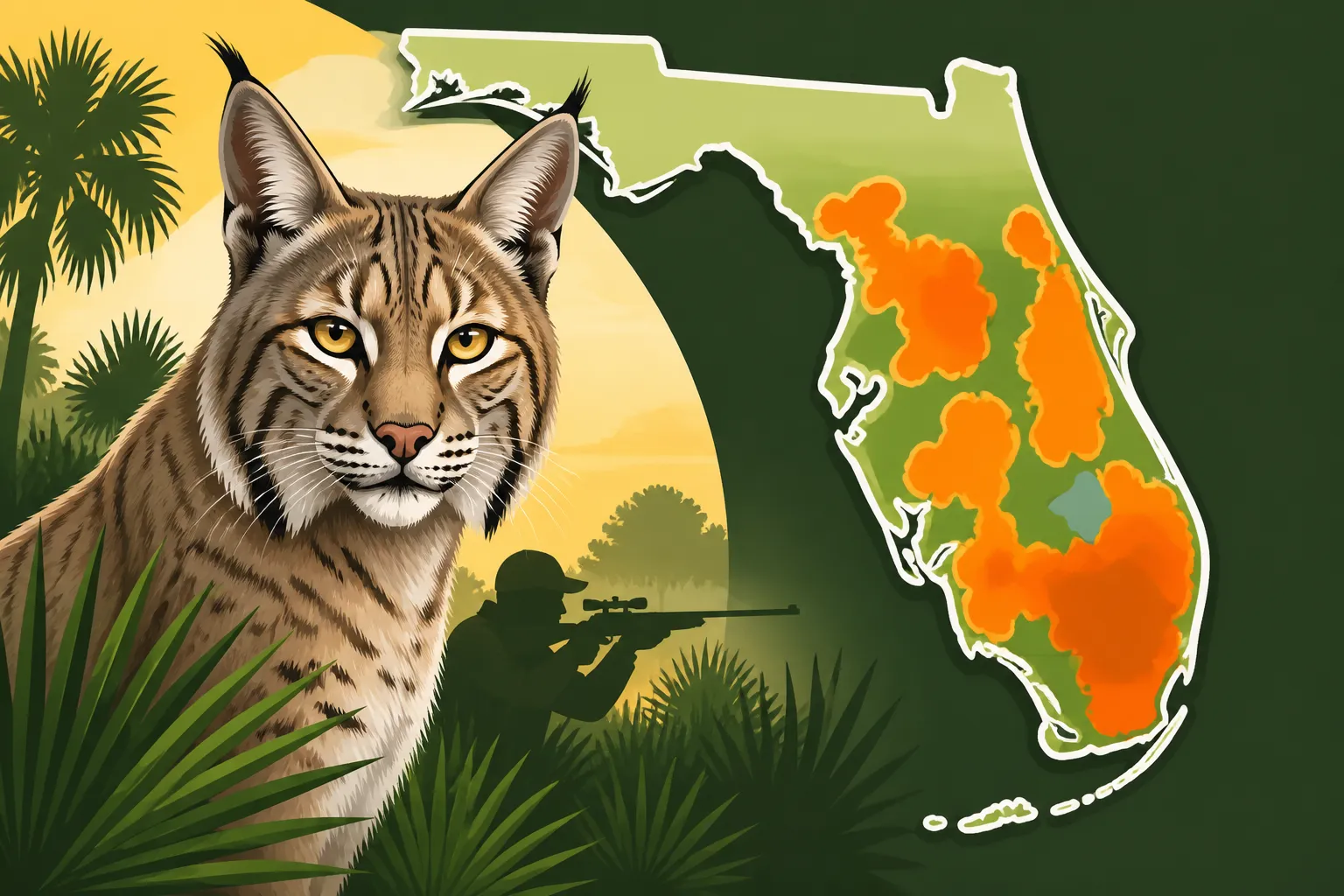
When you're trying to figure out where Florida bobcats are most common, it's less about a single "best" county and more about understanding the types of habitats they prefer. Florida's diverse landscapes offer plenty of ideal territory, from the northern pine forests to the southern swamps.
Panhandle Forests and Wetlands
Northern Florida, particularly the Panhandle, stands out as a hotbed for bobcat activity. This region boasts vast, unbroken tracts of undeveloped land, including sprawling National Forests like the Apalachicola and Osceola, along with large military reservations like Eglin Air Force Base. These areas offer the perfect combination of extensive cover and abundant prey species. When you're Apalachicola National Forest Hunting, for instance, you're constantly in prime bobcat country.
The habitat here is a mosaic of pine flatwoods, mixed hardwood hammocks, dense cypress swamps, and rich river bottoms. These varied ecosystems provide diverse hunting grounds for bobcats, from open pine stands where rodents might scurry to thick palmetto and sawgrass for excellent concealment. The sheer scale of these wilderness areas means less human disturbance, allowing bobcats to live out their lives with minimal interference, a critical factor for these shy animals.
Imagine still-hunting through a vast section of public land in Liberty County or Franklin County. You might not see a bobcat, but the tracks on a sandy logging road, the quick rustle in the palmettos, or even the scent marking on a downed log are all signs that these elusive predators are close by. Hunters often report seeing them while on the lookout for other game, particularly deer or Year-Round Hog Hunting in Florida, as their habitats often overlap.
Central Florida's Ranchlands and Agricultural Areas
While the Panhandle often gets the spotlight for its wildness, don't overlook the surprisingly good bobcat habitat found in Central Florida, particularly within its sprawling cattle ranches and agricultural lands. These areas, though managed by humans, often provide miles of brushy fencerows, isolated hammocks, and dense patches of woods that act as perfect sanctuaries for bobcats. The edges of large citrus groves or vast cattle pastures are often overlooked but can be highly productive.
The appeal of these landscapes lies in their edges and transitions. Agricultural fields are magnets for rodents and rabbits, providing an easy and concentrated food source. The dense brush along property lines, canals, and creek bottoms offers critical cover for stalking, resting, and raising young. Bobcats can effectively utilize these linear corridors to travel and hunt without venturing into the more open, exposed areas. Think of the wilder parts of Polk, Okeechobee, or Hardee counties, where ranching is still a dominant land use.
A common scenario might involve a bobcat patrolling a treeline bordering a pasture, waiting for a rabbit to emerge or a rat to dart from the tall grass. Landowners might occasionally report nuisance bobcats preying on small livestock or poultry, which is a strong indicator of a healthy local population. These areas often have less recreational hunting pressure than public lands, providing a quieter environment for bobcats to flourish.
South Florida's Cypress Swamps and Remote Scrub
As you move further south into Florida, the landscape transforms into expansive cypress swamps, vast stretches of remote scrub, and the iconic Everglades. These unique ecosystems, while challenging for humans to navigate, are absolutely ideal for bobcats. Areas like the Big Cypress National Preserve, the Everglades Wildlife Management Area, and other large, undeveloped tracts in Collier, Hendry, and Glades counties offer incredible habitat. Hunting the Everglades and Big Cypress puts you right in the heart of some of Florida's wildest country, and consequently, some of its best bobcat territory.
The defining characteristic here is the extremely dense cover. Cypress strands, sawgrass prairies, and thick palmetto hammocks provide unparalleled concealment, allowing bobcats to hunt and move unseen. While access can be difficult, often requiring airboats or specialized vehicles, this remoteness is precisely why bobcats thrive there. The lack of human presence offers a level of sanctuary rarely found elsewhere.
Picture yourself on an airboat, gliding through the Everglades at dawn, and spotting a bobcat perched on a small island of higher ground, or moving along a cypress strand where the water is shallower. The challenges of these environments for hunters mean fewer disturbances for the wildlife. Bobcats here are often incredibly healthy, feeding on marsh rabbits, rodents, and other creatures adapted to wetland environments, making these some of the most concentrated areas for them in the state.
| Region Type | Primary Habitat | Key Characteristics | Common Prey |
|---|---|---|---|
| Panhandle Forests | Pine flatwoods, mixed hammocks, river bottoms | Vast, unbroken tracts of timber and wetlands, low human density | Rabbits, squirrels, rodents, birds, fawns |
| Central Florida Ranchlands | Pastures, citrus groves, brushy fencerows | Edges of agriculture, good rodent populations, thick linear cover | Rodents, rabbits, birds, some fawns |
| South Florida Swamps | Cypress swamps, remote scrub, Everglades | Extremely dense, inaccessible cover, high water levels, isolated uplands | Marsh rabbits, rodents, birds, snakes, fawns |
| Transitional Zones | Powerline cuts, old clear-cuts, creek bottoms, field edges | Edge habitat, quick access to dense cover and open feeding areas | Varied small game, opportunistic larger prey |
Factors Shaping Bobcat Distribution
Knowing where bobcats are common is one thing, but understanding why they're common in those places gives you a deeper insight into their behavior and helps you identify prime habitat on your own. It's all about a combination of resources and safety.
Prey Abundance
At the top of the list for any predator is food. Bobcats will always gravitate towards areas where their preferred prey is abundant and relatively easy to find. If an area consistently supports healthy populations of rabbits, rats, mice, and ground-nesting birds, it's a safe bet that bobcats will be present. Think of it from their perspective: why work harder than you have to?
Seasonal variations in prey availability can also influence local bobcat movements. For instance, after a good mast crop year, squirrel and rodent populations might boom, leading to a temporary increase in bobcat activity in those areas. Conversely, a poor year for certain prey species might see bobcats expanding their hunting range or becoming more reliant on alternative food sources.
Beyond small game, the presence of vulnerable larger prey, such as Florida Fawn Survival Rates in the spring, is a significant draw. While fawns represent a seasonal opportunity, they are a valuable one, providing a substantial meal. Areas with high deer densities and ample fawning cover can therefore also be prime bobcat territory during those critical months.
Habitat Cover and Seclusion
Bobcats are masters of camouflage and demand dense cover for virtually every aspect of their lives: hunting, resting, raising kittens, and escaping potential threats. Palmetto thickets, dense brush piles, heavy undergrowth, and stands of impenetrable woods are not just preferred, they are essential. These areas allow them to move unseen, launch ambushes, and feel secure from larger predators (like alligators or even large raptors for kittens) and human disturbance.
The concept of "edge habitat" is particularly important for bobcats. These are the transitional zones where two different habitat types meet, such as the border between a dense woods and an open field, or a cypress swamp transitioning into drier uplands. These edges offer the best of both worlds: immediate access to thick cover for safety and concealment, combined with proximity to more open areas where prey might be foraging. This allows for efficient hunting with a quick escape route always available.
The relentless urban sprawl across parts of Florida unfortunately impacts bobcat habitat by fragmenting these critical cover areas. While bobcats can sometimes adapt to the fringes of development, the truly common populations are found where large, undisturbed tracts of dense cover are plentiful. These are places where a bobcat can live out its life rarely, if ever, encountering a human.
Water Availability and Natural Features
Just like all wildlife, bobcats need access to water. Areas with consistent water sources, whether it's a network of creeks, scattered ponds, or seasonal wetlands, are naturally more attractive and can sustain higher populations. In Florida's often hot and humid climate, proximity to water isn't just for drinking; it also supports lush vegetation that provides cover and attracts prey.
Beyond water, natural landscape features often dictate bobcat movement patterns. Old logging roads, well-used game trails, drainage ditches, and river bottoms act as natural travel corridors, guiding their movements through the terrain. They will use the path of least resistance, especially if it's lined with good cover. Understanding these natural highways can be a huge asset in predicting where a bobcat might appear.
Even in Florida's relatively flat terrain, subtle topographical changes can influence bobcat distribution. A slight rise in elevation forming a "hammock" in a vast flatwoods, or a change in soil type supporting different vegetation, can create micro-habitats that attract prey and, in turn, bobcats. Recognizing these subtle shifts, much like understanding Wind and Thermals in Flat Florida Terrain for deer, can provide clues to where these elusive predators spend their time.
Scouting for Bobcats
Finding bobcats isn't about luck; it's about understanding their habits, recognizing their sign, and using the right tools to narrow down their haunts. Patience and persistence are your greatest allies when trying to locate these shy felines.
Reading Sign and Identifying Tracks
One of the most reliable ways to confirm bobcat presence is by learning to identify their sign. Their tracks are distinct: typically rounded, symmetrical, and about 1.5 to 2 inches wide. Unlike dog tracks, you usually won't see claw marks, as bobcats have retractable claws they keep sheathed to maintain sharpness for hunting. Look for tracks that show four toes on both the front and hind feet, with a leading toe on the front. On soft ground, like the sandy roads common in Florida, you might even see the subtle imprint of the heel pad.
Bobcat scat can also be a tell-tale sign. It's often segmented, about 0.5 to 0.75 inches in diameter, and can frequently contain visible fur or bone fragments from their prey. Bobcats, like domestic cats, often try to bury or cover their scat, especially in exposed areas. Beyond tracks and scat, keep an eye out for "scratching posts" – trees or logs where they've left claw marks, often to mark their territory or sharpen their claws. These can be tough to distinguish from deer rubs, but with practice, you'll see the difference.
The best places to look for sign are along sandy roads, game trails, riverbanks, edges of fields, and around water sources. Anywhere the ground is soft enough to record an imprint, and where animals naturally travel, is a good place to start. Pay particular attention to natural funnels or pinch points where animals are channeled into a narrower area. Finding Sign in a Florida Oak Hammock can lead you to more than just deer, as bobcats frequent similar areas for prey.
Utilizing Trail Cameras
Trail cameras are an absolute game-changer for surveying nocturnal and elusive animals like bobcats. They allow you to gather intel 24/7 without needing to be physically present, providing invaluable insights into their movement patterns and activity times. Setting up a few well-placed cameras can dramatically increase your chances of confirming bobcat presence in an area you suspect they inhabit.
When placing your trail cameras, think strategically. Focus on funnel points, well-used game trails, old logging roads, and natural pinch points where animals are likely to travel. Edge habitats, where dense cover meets more open ground, are also excellent choices. While not always legal for hunting, in areas where baiting is permitted for other species, a baited site can also draw in opportunistic bobcats. Always check local regulations regarding baiting and trail camera use on public or private lands.
Analyzing the data from your trail cameras provides a wealth of information. You'll start to see patterns: what time of day they are most active, which trails they prefer, and even how many individuals might be using a particular area. A robust mapping and data management tool, like those offered by GoHunt, can help you process and map these observations, allowing you to visualize consistent movement corridors and core activity zones over time. If you're looking for patterns across various species, GoHunt's mapping features can be a real asset. Consider a GoHunt subscription for enhanced mapping and scouting data to find these patterns.
Understanding Landscape Features and Cover
To consistently find bobcats, you need to develop an eye for their preferred landscape features and types of cover. This means focusing on areas that offer a critical mix of dense concealment and accessible hunting grounds. Think of classic Florida habitats like palmetto thickets bordering a marsh, or dense pine stands adjacent to clear-cuts or agricultural fields. Hunting a Palmetto Flatwoods Edge is often exactly where a bobcat will be lying in wait.
Utilizing aerial photos or advanced mapping applications can significantly aid this process. Platforms like GoHunt allow you to scrutinize satellite imagery to identify these crucial transition zones, natural funnels, isolated islands of cover, and potential travel corridors. GoHunt can highlight different vegetation types and topographical features (even subtle ones) that might attract bobcats. Being able to virtually scout an area for these elements before you even set foot on the ground is a powerful advantage.
It's also important not to completely discount even smaller patches of dense woods, especially near suburban or agricultural areas. While not prime wilderness, if there's sufficient dense cover and a good food source nearby (like a thriving rabbit population), a bobcat might establish a territory in these "micro-habitats." They are incredibly adaptable, and sometimes, the spots others walk past are precisely where these intelligent predators make their home.
Disclaimer
This article is for general informational purposes only and does not constitute professional advice. Laws, prices and regulations vary by location and change over time. Consult a qualified professional for guidance on your specific situation.