Ground Blind Rules on Florida WMAs
One of the most common headaches for hunters exploring Florida's vast Wildlife Management Areas (WMAs) is navigating the intricate web of regulations, especially when it comes to setting up a ground blind. It can feel like you need a law degree just to figure out what's allowed and what's not, leading to confusion, frustration, and sometimes even unintentional violations. This guide is here to untangle those rules, giving you a clear understanding of what you need to know to hunt safely, legally, and effectively from a ground blind on Florida's public lands.
Understanding the Basics of Ground Blind Use on Florida WMAs
Hunting on Florida's Wildlife Management Areas offers incredible opportunities, but it comes with the responsibility of understanding and adhering to a very specific set of rules. These regulations are designed to manage hunting pressure, protect natural resources, ensure hunter safety, and maintain fair chase principles across diverse ecosystems. When it comes to ground blinds, many hunters mistakenly assume a simple pop-up blind is universally accepted, but the reality is far more nuanced.
Why Florida's WMAs Have Specific Blind Regulations
Imagine hundreds of hunters descending on a WMA, each leaving behind a permanent structure, cutting down vegetation willy-nilly, or simply abandoning their equipment. It wouldn't take long for these areas to become an ecological mess, not to mention a safety hazard. Florida's WMAs are managed by the FWC (Florida Fish and Wildlife Conservation Commission) with the goal of providing sustainable hunting experiences while conserving wildlife habitats. The rules around ground blinds, much like the broader Florida WMA Management Area Permit system, are a direct reflection of this commitment. They prevent habitat degradation, minimize visual impact for other users, and ensure that public land remains accessible and enjoyable for everyone. These rules also help prevent "claim staking" – where hunters might try to permanently reserve a spot, undermining the public access ethos of WMAs.
Distinguishing Between Temporary and Permanent Blinds
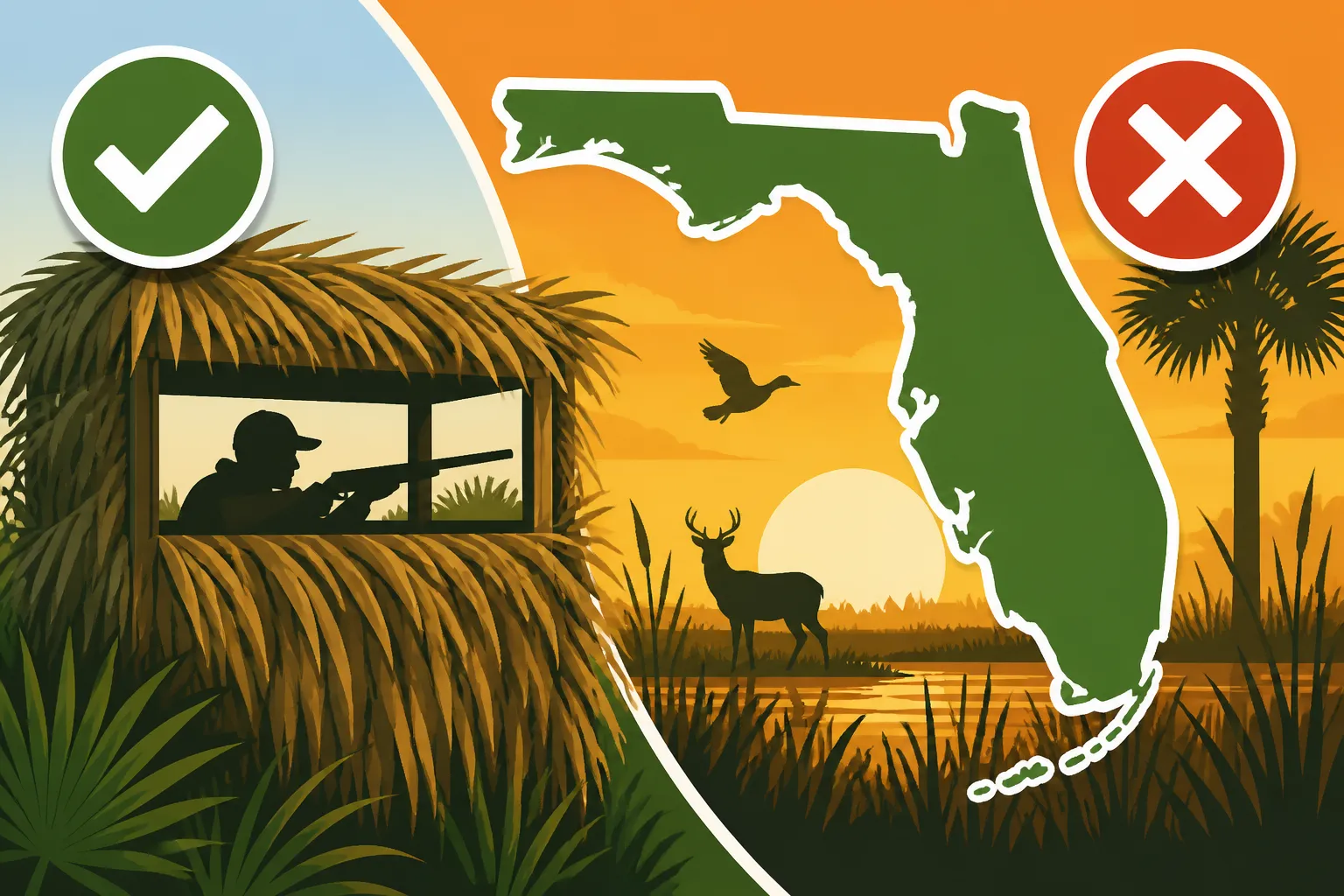
This is where a lot of the confusion really starts. The FWC generally categorizes blinds into temporary and permanent structures, and the rules differ significantly for each. A temporary blind is typically defined as something that is easily movable, doesn't damage vegetation, and is removed at the end of each hunt or within a very short, specified timeframe. Think your standard pop-up blind, camouflage netting draped over natural brush, or a simple chair and a ghillie suit. These are usually much more permissive.
A permanent blind, on the other hand, implies a structure that is erected with the intent of staying in place for an extended period, or one that involves modifying the environment in a substantial way. This could be anything from a wooden platform, a box blind, or even a very elaborate brush blind that requires cutting down live trees or using tools to construct. On most WMAs, permanent blinds are strictly prohibited without specific, often hard-to-obtain, authorization, if at all. The key is whether the structure integrates with the land in a way that suggests permanence or requires significant effort to remove, or if it causes any lasting alteration to the habitat. Understanding this distinction is crucial to staying on the right side of the rules, and it's a good idea to consult the Florida Wildlife Management Areas guide for an overview.
The Importance of Checking Specific WMA Regulations
Here’s the kicker: while there are general statewide WMA rules, every single WMA can have its own additional, site-specific regulations. What's perfectly fine on one WMA might be a violation on another, even if they're just a county apart. This means that simply knowing the general FWC rules isn't enough; you absolutely must check the specific regulations for the WMA you plan to hunt. These are usually available on the FWC website, often in downloadable PDFs for each individual WMA. It's a bit of a chore, I know, but it’s non-negotiable.
Many experienced hunters rely on tools like onX Hunt, which can often overlay WMA boundaries and sometimes even provide quick access to specific WMA regulations or points of contact within the app itself, making this research a little less painful. But always cross-reference with the official FWC site. Failing to do so can lead to fines, loss of hunting privileges, and even confiscation of your equipment. It's a tough lesson to learn when you've invested time and effort into a hunt. This diligence is part of being a responsible hunter on Public Hunting Land in Florida.
Permitted Materials, Construction, and Marking Your Blind
Once you understand the basic distinction between temporary and permanent, the next step is to consider what you're actually allowed to use and how you're allowed to build or set up your blind. This covers everything from the fabric of your pop-up blind to the natural branches you might use for cover.
Natural Materials Versus Manufactured Blinds
Generally speaking, temporary blinds constructed purely from natural, dead, or downed vegetation found on-site are often the most permissive option. This means if you're piling up palmetto fronds, dead branches, or Spanish moss that you find on the ground, you're usually in the clear. However, there's a critical caveat: you are almost universally not allowed to cut down live trees, hack branches off standing vegetation, or damage any natural flora to construct a blind. This is a big no-no and a surefire way to get a citation. If you want to use natural materials, make sure they are already detached from living plants and ideally found in abundance, so you're not impacting limited resources.
Manufactured blinds, such as pop-up ground blinds or camouflage netting kits, are often permitted, but they come with their own set of rules. These usually revolve around their temporary nature, how they're identified, and their impact on the environment. The expectation is that you carry them in, set them up for your hunt, and carry them out. Leaving a manufactured blind unattended for days, even if it's packed down, can fall into a gray area of abandonment, which is often prohibited.
Requirements for Attaching Identification Tags
This is a rule many hunters overlook, often to their detriment. If you leave any type of blind, even a seemingly temporary one (like a pop-up blind you set up in the morning and plan to retrieve in the evening, or a blind you build from dead branches), it often needs to be clearly marked with your FWC customer ID number. This rule is put in place so that law enforcement can identify the owner of the blind. It also helps them track potentially abandoned equipment and ensures accountability.
Imagine walking up on an unmarked blind; how would a WMA officer know if it was legally placed, abandoned, or even a permanent structure in the making? They wouldn't, and it might be removed. The exact requirements for the tag (size, material, placement) can vary by WMA, so again, checking those specific regulations is vital. Typically, it needs to be durable, weatherproof, and clearly visible from the outside of the blind. Think a laminated card or a metal tag. This is different from the rules for Treestand Rules on Florida Public Land, where tags are also often required but the setup is vertical.
Prohibited Items and Practices
Beyond not cutting live vegetation, there are several other common prohibitions to be aware of. The use of nails, screws, wires, or any other fasteners that damage trees or vegetation is almost always forbidden. This extends to things like screwing in steps for a tree stand or using wire to hold brush in place for a blind. The idea is to leave no trace. Additionally, blinds built with treated lumber, metal, or other non-degradable materials are usually considered permanent and prohibited.
Also, be mindful of where you place your blind. It's not just about the type of blind, but its proximity to roads, trails, or other designated areas. Some WMAs have setbacks from property lines, main roads, or even other hunters' established spots. You don't want to inadvertently set up in a restricted zone or too close to another hunter's setup, which can lead to conflicts, especially if you're trying to integrate Rattling and Grunting Florida Bucks into your strategy and disturb someone else. Always be aware of your surroundings and consider how your setup impacts other hunters and wildlife.
| Ground Blind Type | Permitted Materials | Identification Tag Required? | Removal Timeline | Common Prohibitions |
|---|---|---|---|---|
| Pop-Up Blind | Fabric, metal frame | Often, if left unattended | Daily (usually) | Leaving for extended periods, no ID |
| Natural Brush Blind | Dead/downed veg. | Often, if left unattended | Varies by WMA | Cutting live vegetation, damaging trees |
| Permanent Structure | Lumber, metal | No (generally illegal) | Not applicable | Any construction meant to be permanent, damaging soil |
| Camouflage Netting | Fabric | Often, if left unattended | Daily (usually) | Leaving for extended periods, no ID |
Placement, Duration, and Retrieval of Your Ground Blind
Beyond what your blind is made of, where you put it and how long it stays there are critical components of WMA regulations. These rules directly address the impact of hunter presence on the landscape and other users.
Strategic Placement for Safety and Ethical Hunting
When choosing a spot for your ground blind, safety should be paramount. Always consider your shooting lanes and what lies beyond your target. Remember, on WMAs, you're sharing the land with other hunters, hikers, and even equestrians. Positioning your blind away from popular trails, roads, or known non-hunting activity areas is just good practice. While not always explicitly stated in ground blind rules, the FWC's general safety guidelines regarding target backstops and identifying your target apply regardless of your hunting setup.
Ethically, placing your blind too close to another hunter's setup, or in a way that blocks off a known game trail others might use, can be problematic. While specific WMA rules don't often dictate "personal space" between hunters, common courtesy and respect go a long way. Using mapping tools like GoHunt, which can show WMA boundaries, topography, and even identify common access points, can help you pick a spot that's both productive and considerate of others. Think about wind direction, sun position, and visibility, but always prioritize safety first. Strategic placement also plays a huge role in successful hunting, whether you're Hunting a Cypress Head at Last Light or trying to intercept deer moving through a specific bottleneck.
Time Limits for Blind Placement and Removal
This is perhaps the most frequently violated rule regarding ground blinds. Many WMAs have strict rules about how long a blind can be in place. For manufactured blinds, the general rule of thumb is "carry in, carry out" on a daily basis. You set it up for your morning hunt and take it down before you leave. Leaving a pop-up blind overnight, even if you intend to hunt the same spot the next day, can be a violation on many WMAs because it's considered an unattended or abandoned structure.
For blinds constructed from natural materials, the rules can vary more widely. Some WMAs might allow these to remain for the duration of a season, provided they are clearly tagged with your FWC ID. Others might require them to be removed daily, just like manufactured blinds. It's crucial to consult the specific WMA regulations here. The underlying principle is to prevent hunters from essentially "owning" a piece of public land by leaving structures up indefinitely. This also applies to things like Trail Camera Rules on Florida Public Land, where devices also have strict placement and retrieval timelines.
Consequences of Abandoned Blinds on Public Land
The FWC takes abandoned property on WMAs very seriously. If a blind is found unattended beyond the permitted timeframe, or if it's not properly marked, it can be considered abandoned property. The consequences for this vary but can include:
- Confiscation: The blind and any associated equipment (chairs, decoys, etc.) can be seized by FWC officers.
- Fines: You could face significant monetary penalties.
- Restitution: You might be charged for the cost of removal and disposal of the abandoned property.
- Loss of Hunting Privileges: Repeated or severe violations could lead to the suspension or revocation of your hunting license.
Furthermore, abandoned blinds contribute to litter and detract from the natural beauty of the WMAs. They can also create hazards for wildlife, which might become entangled in netting or ingesting foreign materials. Being a responsible hunter means taking pride in leaving the land cleaner than you found it, not adding to its burdens. Think about how this impacts the overall experience for everyone who visits the Ocala National Forest Hunting grounds or any other public area.
Navigating WMA Rules and Avoiding Common Pitfalls
Staying compliant with WMA ground blind rules doesn't have to be a monumental task, but it does require diligence and the right approach. Knowing how to access information and what resources are available will save you a lot of grief in the long run.
Utilizing Digital Tools for WMA Maps and Regulations
In today's world, there's no excuse for being unaware of boundaries or specific rules, especially with the array of digital tools available. Apps like onX Hunt are invaluable for overlaying public and private land boundaries, identifying specific WMA borders, and even showing terrain features that can help with blind placement. Many of these apps also have features that can link directly to WMA regulations or provide contact information for the area manager, making it easier to confirm rules on the fly.
Another excellent resource is the FWC's own website and app. They provide detailed maps, regulation handbooks for each WMA, and often have updates on closures or special conditions. Before you even leave home, spend some time scouting digitally. Look at aerial photos to identify potential spots, understand access points, and pinpoint where you absolutely cannot hunt or place a blind. This proactive approach will help you avoid accidental trespass or setting up in a prohibited zone. This is a crucial step in Scouting Florida Public Land Before Season.
The Role of the Florida WMA Management Area Permit
While the WMA Management Area Permit isn't directly related to ground blind construction, it's absolutely essential for hunting on most WMAs. This permit, which is typically purchased in addition to your regular Florida hunting license, provides access to these public lands. Without it, even if your blind is perfectly legal, your presence on the WMA is not. So, before you even consider setting up a blind, make sure you have all the necessary licenses and permits for the specific WMA and species you're pursuing. You can find more information about the various permit options, including nonresident options, in Florida Resident License Options and Florida Nonresident License Options.
Remember, these permits help fund the management and conservation efforts on these lands, ensuring that future generations can also enjoy the privilege of hunting. It's a small investment for the immense value these public lands offer.
Reporting Violations and Promoting Responsible Use
If you encounter a violation, whether it's an illegally constructed blind, an abandoned structure, or any other rule-breaking activity on a WMA, it's important to report it to the FWC. They have a Wildlife Alert program that allows you to anonymously report violations. This helps law enforcement address issues and maintain the integrity of our public hunting lands. While it might feel uncomfortable to report another hunter, it's about protecting the resource and ensuring fair and ethical hunting opportunities for everyone.
Promoting responsible use goes beyond just following the rules yourself. It means educating new hunters, sharing knowledge (like this guide!), and setting a good example. When we all adhere to the regulations and practice ethical hunting, we help ensure that WMAs remain open and viable hunting grounds for years to come. This collective effort is what maintains the future of hunting on public lands, especially when considering factors like Hunting Pressure on Florida Public Land. Remember, these areas are a privilege, not a right, and their continued availability depends on our stewardship.
Disclaimer
This article is for general informational purposes only and does not constitute professional advice. Laws, prices and regulations vary by location and change over time. Consult a qualified professional for guidance on your specific situation.