Warning Signs of an Unlicensed Florida Outfitter
Planning a hunting trip to Florida is exciting, whether you're dreaming of an Osceola gobbler or a trophy gator. You spend months anticipating, saving, and getting all your gear in order. The last thing you want is for that dream trip to turn into a nightmare because you unknowingly booked with an unlicensed outfitter. It's a frustrating situation that can cost you a lot more than just money – it can jeopardize your safety, ruin your experience, and even land you in legal trouble. This guide will help you spot the warning signs of an unlicensed Florida outfitter so you can protect your investment and ensure your hunt is not only successful but also legitimate.
The Foundation of Trust: Why Licensing Matters
When you choose to book a hunt with a guide or outfitter, you're placing a huge amount of trust in them. You're trusting them with your safety, your time, and your hard-earned money. In Florida, like many states, hunting outfitters and guides operate under specific regulations designed to protect both the wildlife and the hunter. These regulations ensure that the person leading your trip has met certain professional standards, understands local laws, and carries the proper insurance. Cutting corners here isn't just a minor oversight; it can have significant repercussions.
Think about it this way: when you go to a restaurant, you expect them to have health permits. When you hire a contractor, you want them to be licensed and insured. Hunting is no different. A licensed outfitter has proven they understand the intricate rules of Florida Hunting Licenses and What They Cost, that they prioritize safety, and that they are accountable to a governing body. This isn't just about paperwork; it's about a commitment to ethical practices and client well-being. Without that license, you're essentially entering into an agreement with someone who has not demonstrated this baseline level of accountability.
Understanding Florida's Requirements for Guides
Florida's regulations for hunting guides and outfitters might not be as widely publicized as, say, a fishing charter captain's license, but they are absolutely critical. Generally, anyone who charges a fee to take someone hunting on land where they don't hold personal ownership or a clear lease agreement, and who provides guiding services, needs to adhere to specific state and federal requirements. This often includes things like having a commercial license, carrying adequate liability insurance, and ensuring all clients possess the correct Florida Hunter Education Requirements and hunting permits for the species being pursued. It’s a complex web, and a legitimate outfitter navigates it seamlessly.
An unlicensed individual might not bother with these details, putting you at risk. For example, if an incident occurs during the hunt – perhaps an accidental injury or property damage – an unlicensed guide might not have the insurance to cover it, leaving you holding the bag, both financially and potentially legally. Furthermore, they might operate on lands without proper access rights, which could lead to trespassing charges for you and your hunting party. The implications extend far beyond just whether you bag an animal; they touch on personal liability, ethical considerations, and the very legality of your hunt. You definitely want to avoid situations where you're asking What Florida Trespass Law Requires.
The Dangers of Unregulated Hunts
Beyond the legal and financial aspects, safety is paramount. An unregulated hunt often means an unregulated guide. This person may not have the first aid training, safety protocols, or even the basic experience necessary to handle emergencies in the remote Florida wilderness. Imagine being miles deep in a swamp Hunting Florida Cypress Swamp Edges or palmetto flatwoods Still-Hunting Florida Palmetto Flatwoods when something goes wrong. A legitimate guide knows how to use communication devices, has emergency plans, and understands the terrain. An unlicensed individual might be improvising, and improvisation in a dangerous environment can have dire consequences.
The risk isn't just physical. There's the emotional toll of a ruined trip and the financial strain of losing your deposit or even the entire cost of the hunt. Many hunters save for years for a special trip, like Booking a Guided Osceola Turkey Hunt or Booking a Guided Florida Alligator Hunt. To have that dream shattered by a scam or an incompetent operator is heartbreaking. It also damages the reputation of the many honest, hardworking outfitters who truly care about providing a quality experience. Knowing what to look for can help you avoid these pitfalls and ensure your hunting adventure is memorable for all the right reasons.
Red Flags During the Research Phase
The investigative work you do before ever picking up the phone or sending an email is crucial. This is where most of the warning signs will first appear. If an outfitter seems too good to be true, they often are. Taking the time to properly vet them can save you a world of trouble down the line. Many reputable outfitters list their services on platforms like BookYourHunt, which can be a good starting point, but always dig deeper.
Vague Information and Lack of Transparency
One of the biggest red flags is a general lack of clear, specific information. If an outfitter's website is sparse, or if they're hesitant to provide detailed answers to your questions, that should raise an eyebrow. Legitimate outfitters are proud of their services and will openly share details about their operations, including their success rates, hunting methods, accommodation, and exactly what's included in their packages. They'll also be transparent about the type of terrain you'll be hunting, whether it's Hunting Florida Panhandle Pine Plantations or deep swamp.
- No physical address or only a PO Box: A real business has a physical location. While some may use a PO Box for mail, they should still be able to provide a street address for their base of operations or lodge.
- Generic photos or stock images: Look for photos that actually feature their clients, guides, and specific hunting areas. If all the pictures look like they were pulled from a generic hunting magazine or are suspiciously professional without showing actual hunt conditions, be wary.
- Lack of specific pricing: While prices can fluctuate, a reputable outfitter will have clear package deals and pricing structures. If they're vague about costs and seem to make prices up on the fly, it's a huge red flag. Remember that specific price amounts are not listed here, but you should always check the outfitter's current pricing.
- Website appears hastily put together or unprofessional: In today's digital age, even small businesses have a decent online presence. A poorly designed website, rife with typos, broken links, or generic content, suggests a lack of professionalism that might extend to their guiding services.
Unwillingness to Provide References or Proof of Licensing
This is perhaps the most critical warning sign. A legitimate outfitter will be happy to provide references from past clients. They understand that their reputation is everything. If they hem and haw, or give you excuses about privacy, that's a serious problem. Take the time to actually call those references and ask detailed questions about their experience.
| Characteristic | Legitimate Outfitter | Unlicensed Operator Red Flag |
|---|---|---|
| Contact Information | Clear physical address, professional email/phone | Only a P.O. Box, burner phone, generic email, hard to reach |
| Transparency | Detailed website, clear pricing, open about services | Vague information, no specific costs, promises the moon |
| References | Readily provides multiple past client contacts | Hesitant to provide references, or offers only one or two sketchy ones |
| Proof of License/Insurance | Provides license numbers, insurance certificates | Avoids the question, claims it's "not necessary" or "in process" |
| Contract | Detailed written contract outlining terms, deposits, etc. | No contract, verbal agreements only, or a very basic, vague document |
| Payment Methods | Accepts standard payment (cards, checks, bank transfers) | Demands cash only, wire transfers to personal accounts |
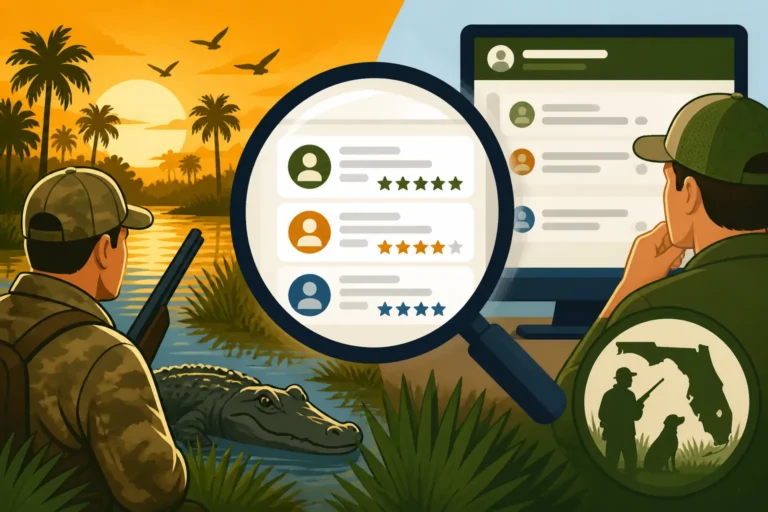
| Online Reviews | Consistent positive reviews across multiple platforms | Few or no reviews, or only overly glowing (and potentially fake) ones |
Beyond client references, a truly professional outfitter will be able to provide proof of their Florida licensing and insurance. This isn't usually something they'll post publicly for security reasons, but they should absolutely be able to send you copies or give you specific license numbers that you can verify with the relevant state agencies. Don't be shy about asking Checking an Outfitter's Florida License. If they balk at this, consider it a deal-breaker. No reputable outfitter has anything to hide regarding their legal operating status.
Prices That Seem Too Low or Too Good to Be True
Everyone loves a good deal, but when it comes to guided hunts, a price that's significantly lower than the market average should set off alarm bells. Operating a professional guiding service is expensive. There are costs associated with leases, equipment, insurance, licenses, maintenance, fuel, and guide salaries, not to mention the time and effort invested in scouting and preparing for hunts.
- Undercutting the competition significantly: If an outfitter's price is a fraction of what everyone else is charging for a similar What a Guided Osceola Hunt Costs or Average Cost of a Guided Florida Deer Hunt, ask yourself how they can afford to do it. Often, the answer is by cutting corners, usually in areas like licensing, insurance, quality of gear, or even access to prime hunting land.
- "Last minute deals" that feel pressured: While legitimate outfitters sometimes offer discounts for last-minute cancellations, be wary of those who constantly pressure you with "today only" deals that seem suspiciously cheap, especially if they haven't been transparent about their operations otherwise.
- Cash-only demands: While some smaller operations might prefer cash for certain transactions, an exclusive demand for cash, especially for large deposits or the entire hunt fee, is a major red flag. This can be a tactic to avoid taxes and leave no paper trail, making it incredibly difficult to get your money back if things go south. This often goes hand-in-hand with a lack of a formal written contract.
Remember, a cheap hunt often turns out to be the most expensive in the long run, whether through a lost deposit, a wasted trip, or worse, legal complications.
Warning Signs Once You've Engaged
Even after initial contact, keep your radar up. Some red flags might not become apparent until you've started the booking process or even until you arrive for the hunt. Your interaction with the outfitter in the weeks leading up to your trip can tell you a lot.
Lack of Professionalism in Communication and Contracts
The way an outfitter communicates and handles paperwork is a strong indicator of their professionalism and legitimacy. A well-run operation will have clear, consistent communication and formal procedures.
- Sporadic or evasive communication: Do they take days to reply to emails or calls? Do they avoid answering direct questions about the hunt details or logistics? This can signal disorganization or an unwillingness to be accountable. A good outfitter is responsive and wants to ensure you're well-informed and prepared, especially for something as complex as Hunting the Everglades and Big Cypress.
- No formal written contract: This is a non-negotiable for a legitimate hunt. A written contract protects both you and the outfitter. It should clearly outline the services provided, dates, costs, deposit and payment schedules, cancellation policy, what happens if you don't tag out, and any specific rules or expectations. If an outfitter insists on a verbal agreement, walk away. You need to understand Florida Outfitter Liability Waivers Explained and other terms in writing.
- Unusual payment demands: Beyond cash-only requests, be wary of demands for wire transfers to personal accounts, payments through unofficial apps, or requests for the full payment far in advance with no clear refund policy. Reputable outfitters usually have business accounts and accept standard payment methods. Always verify Paying a Florida Outfitter by Deposit and Balance.
Shady Tactics or Unrealistic Promises
Be cautious of outfitters who make promises that seem too good to be true, especially if they are vague on the specifics of how they'll deliver.
- Guaranteed success rates: No hunt is 100% guaranteed, especially when dealing with wild animals in challenging environments. Florida hunting can be tough, and even the best guides can't control every variable. While What Success Rates Actually Mean for Alligators or deer can be high, promising a definite kill is a major red flag. Legitimate outfitters will talk about their average success rates and the effort they put in, not guarantees.
- Promising access to areas they don't explicitly control: An outfitter might claim they have access to "secret spots" on public land or to private properties without actually holding legal leases or permits. Always verify Verifying an Outfitter's Land Access Claims. If they're vague about where you'll be hunting beyond a general region, push for specifics. Tools like GoHunt can help you research areas, but always confirm access directly with the outfitter and cross-reference with public land maps.
- Suggesting illegal or unethical practices: This is the biggest warning sign of all. If an outfitter suggests anything that sounds illegal or unethical – such as baiting in a prohibited area, hunting outside legal hours Florida Public Land Hunting Hours, exceeding bag limits Florida Buck Bag Limit, or using prohibited weapons – terminate contact immediately. You risk fines, license revocation, and even jail time. Your ethics and the law should always come first.
Unpreparedness or Poor Equipment on Arrival
Even if you've booked and arrived, keep an eye out for signs once you're on the ground. The initial impression of the operation itself can speak volumes.
- Disorganized camp or meeting place: If the designated meeting point is chaotic, the vehicles are in disrepair, or the camp is unsanitary, it's a reflection of the outfitter's overall professionalism and attention to detail.
- Lack of appropriate gear or safety equipment: Does the guide seem unprepared? Are they missing essential safety gear, or is their equipment old, broken, or inappropriate for the conditions? For instance, if you're Hunting Florida Cypress Swamp Edges, you'd expect specific gear for that environment. This could range from basic first aid kits to proper navigation tools.
- Unfamiliarity with local regulations: A legitimate guide lives and breathes the local hunting laws. If your guide seems unsure about bag limits, season dates, or specific rules for the area you're hunting, it's a huge problem. You are ultimately responsible for knowing and adhering to the law, but a professional guide should be an expert. Asking about specific regulations, like Florida Deer Reporting Requirements, can quickly gauge their knowledge.
Taking Action: What to Do If You Suspect an Unlicensed Outfitter
If you encounter any of these warning signs, it's essential to act decisively. Your safety, your finances, and your reputation as an ethical hunter are all on the line.
Document Everything
If you suspect you're dealing with an unlicensed or fraudulent outfitter, start gathering evidence immediately. This will be crucial if you need to report them or pursue legal action to recover funds.
- Save all communications: Keep emails, text messages, voicemails, and any written correspondence.
- Record dates and times of interactions: Note down when you spoke, what was discussed, and who you spoke with.
- Keep copies of all financial transactions: Bank statements, credit card receipts, or any proof of payment. If you paid cash, recount the circumstances (who, when, where) in detail.
- Take screenshots of their website or social media: If they have an online presence, capture it, especially if it contains misleading claims or information.
- Photograph the operation (if applicable and safe to do so): If you've arrived and observed issues with equipment, safety, or conditions, discreetly take photos or videos.
The more comprehensive your documentation, the stronger your case will be, whether you're asking Getting a Refund From a Florida Outfitter or assisting law enforcement.
Report to the Authorities
Once you have your documentation, it's time to report the suspected unlicensed activity. This protects other hunters and helps maintain the integrity of Florida's hunting community.
- Florida Fish and Wildlife Conservation Commission (FWC): The FWC is the primary authority for hunting regulations in Florida. They have a dedicated number for reporting wildlife violations. Provide them with all your documented evidence. They can investigate the outfitter's licensing status and take appropriate action. You can learn more about how they enforce regulations in topics like Florida Wildlife Violation Penalties.
- Local Law Enforcement: If you suspect fraudulent activity (like outright theft or misrepresentation that constitutes a crime), you should also contact your local sheriff's office or police department.
- Consumer Protection Agencies: For financial fraud or misleading business practices, consider contacting the Florida Department of Agriculture and Consumer Services or the Better Business Bureau. While they might not have direct enforcement power over hunting licenses, they can document patterns of fraudulent behavior.
Remember, reporting is not just about you; it's about preventing future incidents and supporting the legitimate outfitters who operate above board.
Seek Alternatives and Plan for the Future
If you've had to cancel a trip or if a hunt has gone south due to an unlicensed outfitter, it's disheartening. But don't let one bad apple spoil the entire experience of Florida hunting. There are many reputable, ethical outfitters and guides in Florida who can provide an incredible experience.
- Research thoroughly: Use online resources, forums, and reputable booking platforms like BookYourHunt. While these platforms can be a good starting point, always do your independent verification. Double-check references, confirm licenses, and read reviews across multiple sources.
- Ask detailed questions: Don't be afraid to grill potential outfitters. A good guide will appreciate your diligence. Ask about their experience, success rates, specific hunting techniques (e.g., Rattling and Grunting Florida Bucks), safety protocols, and what to expect daily.
- Consider self-guided options: If the experience has made you wary of outfitters, Florida offers extensive public lands through its Florida Wildlife Management Areas and National Forests. Learning to navigate these on your own can be incredibly rewarding, though it requires significant scouting and preparation, as detailed in guides like Scouting Florida Public Land Before Season.
- Learn from the experience: Every setback is a lesson. Use what you've learned about identifying red flags to become a more informed and savvy hunter. Your next Florida adventure is waiting, and with proper vetting, it can be everything you dreamed of.
Disclaimer
This article is for general informational purposes only and does not constitute professional advice. Laws, prices and regulations vary by location and change over time. Consult a qualified professional for guidance on your specific situation.