Booking a Guided Osceola Turkey Hunt
The dream of completing a Grand Slam is real for many turkey hunters, but often, that final bird – the elusive Osceola – feels like an insurmountable challenge, especially if you're not a Florida native. The thought of navigating unfamiliar palmetto swamps, battling the heat, and deciphering complex regulations can be daunting, leading many to wonder if they'll ever hear that unique gobble in person. This comprehensive guide is here to walk you through everything you need to know about successfully booking a guided Osceola turkey hunt in Florida, ensuring your pursuit of this iconic bird is as smooth and successful as possible.
Why a Guided Osceola Hunt is a Game Changer for Your Florida Turkey Grand Slam
Let's be honest, hunting an Osceola turkey isn't like strolling through a Midwest cornfield looking for an Eastern. Florida presents a whole different set of challenges, and for many hunters, especially those traveling from out of state, tackling it solo can feel like trying to solve a Rubik's Cube blindfolded. That's precisely where a guided hunt becomes not just a convenience, but often, the key to success.
The Unique Challenges of the Osceola and its Limited Range
The Osceola turkey, often considered the crown jewel of the turkey Grand Slam, truly is a special bird. Its range is incredibly specific, confined almost entirely to peninsular Florida, roughly south of Jacksonville and west of the Apalachicola River. Osceola Turkeys in Peninsular Florida can be found in pockets of suitable habitat, but these aren't always sprawling, easily accessible public lands. These birds have adapted to environments vastly different from the hardwood forests or pine plantations where many of us cut our teeth chasing gobblers. Their behavior can be a bit more reserved, sometimes less vocal than their Eastern counterparts, making them tricky to locate and even trickier to coax into range.
The population density can vary wildly, and finding a consistent, huntable population on public ground requires an immense amount of scouting, time, and local knowledge. You might have all the right calls and the latest gear, but if you're not in the right zip code, or more accurately, the right palmetto head, it won't matter. Why Osceolas Only Live in Florida has to do with generations of adaptation to this unique subtropical environment, shaping them into a subspecies that thrives here, but often frustrates outsiders.
Navigating Florida's Terrain, Weather, and Regulations
Florida's landscape is, shall we say, distinct. Forget wide-open fields or gentle rolling hills. Here, you're looking at dense palmetto thickets that feel like concrete walls, cypress swamps that can swallow you whole, and pine flatwoods that offer surprising challenges. The ground can be anything from dry, crunchy sand to ankle-deep mud, sometimes within a few hundred yards. This isn't just a physical challenge; it's a strategic one. Finding clear lines of sight, setting up effectively, and even just moving quietly through this cover demands specific skills and experience.
Then there's the weather. Florida turkey season often coincides with warm, sometimes downright hot, weather. High humidity is a constant companion, and afternoon thunderstorms can roll in quickly. This isn't just uncomfortable; it can affect bird behavior, your scent, and your ability to stay hydrated and focused. A local guide understands these dynamics – where birds will roost in different conditions, how to approach a setup with the prevailing breeze, and how to stay safe and effective when the mercury climbs. The regulations, too, can be a labyrinth, especially for non-residents. Understanding season dates, specific zone rules like Florida's Four Deer Management Zones Explained (which can also indirectly influence general hunting pressure), and the nuances of Florida Osceola Zone Turkey Permit Rules is crucial.
The Invaluable Advantage of Local Guide Expertise
This is perhaps the single biggest reason to consider a guided Osceola hunt. A good guide isn't just someone who walks with you; they are an encyclopedia of local knowledge. They know the land intimately – where the birds roost, their preferred travel corridors, the feeding areas, and escape routes. They've spent countless hours scouting, listening, and observing, building up a mental map of turkey activity that would take an out-of-state hunter years to acquire.
Think about it: they know the subtle changes in gobbling activity when a cold front pushes through or when the hens start nesting. They can interpret faint tracks in the sand, tell you which palmetto thicket is worth a closer look, and where to set up for the best shot angle based on prevailing winds and expected bird movement. They handle the calling, often with a lifetime of experience matching the local birds' cadence and language, which can be critical for closing the distance on a wary Osceola. This expertise dramatically increases your odds of not just encountering a bird, but of successfully bringing one home, making your investment of time and money far more likely to pay off.
Deciphering Guided Osceola Hunt Packages and Their Inclusions
Once you decide that a guided hunt is the way to go, the next step is understanding what you're actually paying for. Guided hunts come in all shapes and sizes, from basic day hunts to luxurious, all-inclusive multi-day experiences. Knowing what each package typically entails will help you choose the best fit for your budget and expectations.
Typical Package Offerings: What to Expect from a Basic to All-Inclusive Hunt
Most guided Osceola turkey hunts will be structured around a set number of days, commonly two or three, designed to give you ample opportunity to bag a bird. A basic package often includes the guide's services for the specified duration, access to private hunting land, and sometimes a specific limit, like one gobbler per hunter. These more economical options might require you to arrange your own lodging, meals, and transportation to a designated meeting point each day.
Moving up the scale, you'll find packages that include comfortable lodging, often at a rustic but well-appointed camp or lodge. These frequently come with home-cooked meals, ensuring you're well-fed and rested for those early morning starts. Some higher-end operations even offer transportation from a nearby airport, and all necessary hunting equipment like decoys, blinds, and even calls. It's crucial to thoroughly read the package details or, better yet, ask the outfitter directly for a comprehensive list of what's included versus what's considered an extra cost. Don't assume anything, especially when it comes to the number of birds or the type of lodging.
Essential Pre-Hunt Requirements: Licenses, Permits, and Tags
This is one area where hunters often get tripped up, and it's almost universally your responsibility, not the guide's, to have these in order. To hunt wild turkey in Florida, you'll need a Florida hunting license. For non-residents, this will be a specific non-resident license. On top of that, you'll need a Florida Turkey Permit. Depending on whether you're a resident or non-resident, and the duration of your stay, the cost and process can vary. Florida Hunting Licenses and What They Cost details the various options, but for an Osceola hunt, the general hunting license and the turkey permit are non-negotiable.
Always double-check the specific requirements for the year you plan to hunt, as regulations can change. Pay close attention to the special rules for the Osceola zone. Some areas might have specific quota hunts, while others are more general. Your guide can certainly advise you on the specific permits needed for their area of operation, but ultimately, obtaining them is up to you. Don't wait until the last minute! Purchase your licenses and permits well in advance to avoid any last-minute stress or, worse, missing out on your hunt. Florida Osceola Zone Turkey Permit Rules will clarify the exact requirements you'll face.
Your Packing List: What the Outfitter Provides Versus What You Bring
While many outfitters will provide crucial gear like turkey decoys, pop-up blinds, and even calls, there's a good chunk of equipment that's always on you. Your firearm is number one: a reliable shotgun (12-gauge or 20-gauge are common choices) with an appropriate choke for turkey hunting is essential. Don't forget plenty of turkey loads! Camouflage clothing is a must, and in Florida's typically warm season, lightweight, breathable camo is far more comfortable than heavy layers. Think early morning chill giving way to midday heat.
Snake boots or snake gaiters are highly recommended, as Florida is home to several venomous snake species. Hydration is key, so a good water bottle or hydration pack is a wise addition. Bug spray, particularly with DEET, will be your best friend against mosquitoes, ticks, and no-see-ums. Other items like a rangefinder, binoculars, a small pack for essentials, a headlamp, and any personal medications should also be on your list. Always ask your outfitter for their specific recommendations; they know their terrain and conditions best. A detailed packing list from them can save you a lot of grief.
Your Roadmap to Finding and Vetting Top-Tier Osceola Outfitters
Booking a guided hunt is a significant investment, both financially and in terms of your time and dreams. You wouldn't buy a car without doing some research, and the same goes for choosing an outfitter. It's about finding someone reliable, knowledgeable, and genuinely committed to giving you the best chance at success.
Kickstarting Your Search: Online Resources, Forums, and Referrals
The first step is simply gathering potential candidates. The internet is a treasure trove of information. A simple search for "Florida Osceola turkey hunt" or "guided Osceola hunt Florida" will yield a long list of outfitters. Websites dedicated to booking hunts, such as BookYourHunt, can be excellent starting points, as they often aggregate multiple outfitters and provide reviews. Similarly, GoHunt also lists a variety of hunting opportunities, and sometimes you can filter by species and location. These platforms can give you an initial overview of what's available and generally what to expect in terms of package types and price points.
Beyond these booking sites, delve into online hunting forums and social media groups dedicated to turkey hunting or Florida outdoor pursuits. Real-world experiences from other hunters are incredibly valuable. Ask for recommendations, read trip reports, and pay attention to who gets consistently positive mentions. Word-of-mouth referrals from trusted friends or fellow hunters are often the most reliable way to find a quality operation. Don't just pick the first name you see; create a shortlist of 3-5 potential outfitters to investigate further.
Crucial Questions to Ask Every Prospective Guide Before Booking
Once you have your shortlist, it's time to start making calls. Don't be shy; a reputable outfitter will welcome your questions and be transparent. Here are some critical inquiries you absolutely need to make:
- Success Rates: Ask about their realistic success rates over the past few seasons, not just their "best" year. Ask how many hunters fill their tag versus how many have opportunities. Understand that "success" might mean opportunities presented, not necessarily a guaranteed kill.
- Land Access: What kind of land do they hunt? Is it private land, leases, or public land with special permits? How many acres do they have access to? Is it exclusive, or do multiple guides/hunters use the same ground?
- Guide Experience: How long has the specific guide you'd be hunting with been guiding Osceolas? Are they full-time professionals, or part-timers?
- References: Always, always ask for recent hunter references – ideally, two or three from the past year or two. Contact these individuals and ask about their experience, the guide's professionalism, the quality of the hunt, and if anything didn't meet their expectations.
- What Happens If: What's their policy if you don't tag out? Do they offer a discounted second attempt or future hunt? What if they need to cancel due to unforeseen circumstances?
- Physical Demands: Be honest about your physical capabilities. Ask about the average amount of walking, the terrain, and what a typical day looks like physically.
- Maximum Group Size: How many hunters will be in camp at one time? What's the guide-to-hunter ratio? Do you have one-on-one guiding, or are you part of a larger group with one guide?
Spotting Red Flags: Ensuring You Book with a Reputable and Licensed Operation
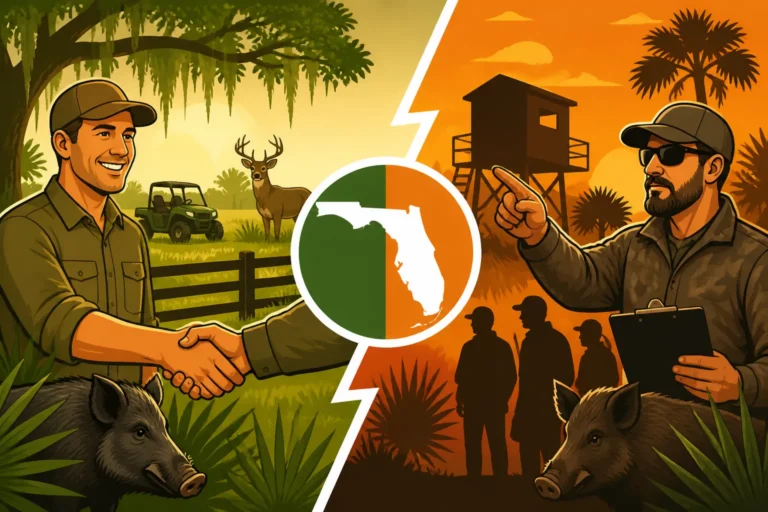
While most outfitters are legitimate, it's essential to be vigilant. Several red flags should make you pause. Be wary of operations that are overly aggressive in their sales pitch, promise a "guaranteed kill," or offer prices significantly lower than the market average for a similar package. While a good deal is great, sometimes an impossibly low price indicates cutting corners.
Another major red flag is an unwillingness or inability to provide references, or evasiveness when answering questions about their success rates or land access. If they can't clearly articulate what's included in the price or seem to constantly add hidden fees, that's a problem. Crucially, always ensure your outfitter and guides are properly licensed according to Florida law. Vetting a Florida Hunting Outfitter details this process, but a quick call to the Florida Fish and Wildlife Conservation Commission (FWC) can often verify a guide's standing. An unlicensed guide is not only operating illegally but may also compromise your safety and the legality of your hunt. Trust your gut; if something feels off, it probably is.
| Feature / Question | Reputable Outfitter | Red Flag Outfitter |
|---|---|---|
| Success Rates | Provides realistic, recent figures; discusses "opportunities" | "Guaranteed kill" or vague, inflated numbers; no data |
| References | Readily provides multiple recent hunter contacts | Hesitates, provides old contacts, or none at all |
| Licensing | Confirms FWC licensing; provides license number if asked | No mention of licensing; cannot provide verification |
| Pricing | Clear breakdown of inclusions and exclusions; fair market | Unusually low prices; hidden fees; vague cost structure |
| Communication | Responsive, transparent, patient with questions | Slow to respond; evasive answers; pressured sales tactics |
| Land Access | Clearly explains hunting grounds (private/public) | Vague about where you'll be hunting; implies vast areas |
| Cancellation Policy | Written, clear, and fair policy shared upfront | No written policy; unclear terms; unfavorable to hunter |
Understanding the Investment: Costs and Booking Logistics
Booking a guided hunt is an investment, plain and simple. It’s an investment in an experience, in local knowledge, and in maximizing your chances for a once-in-a-lifetime trophy. Understanding the financial commitment and the booking process upfront will save you headaches down the road.
Breaking Down the Price Tag of a Guided Osceola Hunt
The cost of a guided Osceola turkey hunt can vary widely depending on several factors: the duration of the hunt (one-day vs. multi-day), what's included (lodging, meals, transportation, number of birds), the reputation of the outfitter, and the exclusivity of their hunting grounds. Generally, you can expect a guided Osceola hunt to be among the more expensive turkey hunts due to the limited range of the bird and the specialized knowledge required.
A basic one-day guided hunt might cost significantly less than a three-day all-inclusive package. When comparing prices, always make sure you're comparing apples to apples. Does one outfitter's price include your meals and a cozy cabin, while another's is just the guide fee for the day? Factor in potential additional costs like gratuities for your guide, meat processing, and taxidermy. While it might seem like a lot, remember you're paying for expertise and access that would be incredibly difficult and time-consuming to secure on your own.
Navigating Deposits, Payment Schedules, and Cancellation Policies
Outfitters typically require a deposit to secure your hunt dates. This deposit is usually a percentage of the total hunt cost, and it's almost always non-refundable. The remaining balance is often due a certain number of days or weeks before the hunt, or sometimes upon arrival at camp. Make sure you understand the payment schedule and what forms of payment are accepted.
Crucially, review the cancellation policy with a fine-tooth comb. Life happens, and sometimes plans change. What if you have to cancel? What if the outfitter has to cancel (e.g., due to severe weather, unforeseen access issues, or personal emergency)? Will your deposit be transferred to a future date, or is it forfeited? Some outfitters offer travel insurance options, or it might be wise to purchase your own, especially if you're traveling a long distance or have a significant investment in the trip. Knowing these policies upfront will protect you and your investment, minimizing stress if the unexpected occurs. For instance, Florida Osceola Spring Season Dates are fixed, so if you miss your window, understanding the outfitter's rebooking policy is vital.
Planning Your Journey: Travel, Accommodations, and Extra Expenses
For many hunters, booking an Osceola hunt means traveling to Florida. This introduces additional costs and logistical considerations. You'll need to factor in the cost of airfare or fuel for driving, car rental if flying, and any overnight stays before or after your hunt if they aren't included in your package. Many hunters will fly into major hubs like Orlando (MCO), Tampa (TPA), or sometimes smaller regional airports depending on the outfitter's location.
Beyond the hunt package itself, budget for meals while traveling, snacks for the blind, and any souvenirs you might want. Don't forget a generous tip for your guide – this is customary and a great way to show appreciation for their hard work and expertise. This is often an overlooked expense, but it's a vital part of acknowledging a good guide's efforts. A realistic financial plan that accounts for all these variables will ensure you enjoy your trip without any unpleasant surprises.
Gearing Up and Getting Ready for Your Osceola Encounter
You've booked the hunt, you've got your permits, now it's time to prepare yourself and your gear. Being physically and mentally ready, and having the right equipment, can make all the difference in your comfort and success in the Florida woods.
Physical Conditioning and Mental Preparedness for Florida's Wilds
Florida turkey hunting, especially for Osceolas, can be deceptively demanding. While you might not be climbing mountains, you'll likely be slogging through soft sand, pushing through thick palmetto, or navigating uneven swamp edges. The heat and humidity are constant factors, draining your energy much faster than in cooler climates. Being in reasonably good physical shape will enhance your experience, allowing you to walk further, sit longer, and react more quickly when an opportunity arises. Focus on cardiovascular fitness and lower body strength in the months leading up to your hunt.
Mental preparedness is just as crucial. Turkey hunting often involves long periods of waiting, followed by intense, high-pressure moments. Staying focused, being patient, and maintaining a positive attitude even when birds are quiet or uncooperative is vital. The Florida woods have their own rhythm, and sometimes patience is the best call. Be prepared for early mornings and potentially long days, and remember that hunting is full of variables. Enjoy the process, not just the outcome.
The Ultimate Gear Checklist for Hot Weather Turkey Hunting
Your gear choices for Florida need to reflect the unique environment. Lightweight, breathable camouflage is paramount. Fabrics that wick moisture away from your skin will keep you much more comfortable. Consider wearing a base layer to help with sweat management. Snake boots or snake gaiters are non-negotiable for safety. Florida is home to venomous snakes like rattlesnakes and cottonmouths, and stepping blindly into thick cover without protection is a risk you don't want to take.
- Clothing: Lightweight, breathable camo (pants, long-sleeve shirt, vest), wide-brimmed hat, gloves, face mask.
- Footwear: Snake boots or comfortable, waterproof hiking boots.
- Protection: High-quality insect repellent (containing DEET), sunscreen.
- Hydration: Hydration pack or large water bottles (at least 2-3 liters for a day hunt).
- Optics: Binoculars, rangefinder.
- Firearm: Your preferred turkey shotgun, appropriate choke, and plenty of quality turkey loads.
- Miscellaneous: Small backpack, headlamp, knife, small first-aid kit, comfortable hunting seat/cushion.
Double-check your shotgun's pattern with your chosen loads and choke well before your trip. Knowing your effective range is crucial for a clean harvest.
Quick Primer on Osceola Behavior and Effective Calling Tactics
While your guide will handle most of the calling, having a basic understanding of Osceola behavior and common calling tactics can help you anticipate moves and feel more engaged in the hunt. Osceolas can sometimes be a bit more "coy" than other subspecies, responding to calls but perhaps not committing as readily. They can also be incredibly vocal on the roost but go silent once on the ground, making the initial setup critical. Your guide will interpret their moods and adjust calling strategies accordingly.
They might use soft hen yelps and clucks to entice a bird, or aggressive cutting to challenge a dominant gobbler. Decoy placement is also key, and your guide will know whether to set up a single hen, a jake and a hen, or even multiple birds, depending on the situation and pressure. Decoy Placement for Pressured Osceola Birds is an art form, and guides have honed their skills over years. Listen intently to your guide, follow their instructions, and be ready to move swiftly and quietly if they decide to reposition. Sometimes, a subtle shift can be the difference between a miss and a successful harvest. Understanding the basics will make you a better partner in the hunt.
On the Ground: What Your Guided Hunt Day Will Look Like
The alarm clock will go off early, often well before the first hint of twilight paints the eastern sky. This is where the rubber meets the road, and your guided Osceola hunt truly begins. Knowing what to expect during a typical day will help you stay focused and make the most of every moment.
A Typical Day in the Life of a Guided Osceola Hunter
Your day will usually begin in the pre-dawn darkness. After a quick breakfast, you'll meet your guide and head out to the hunting grounds. The initial strategy often involves listening for roosted birds. As the woods begin to awaken, your guide will listen intently for the tell-tale gobble that signifies a bird on the limb. Once a bird is located, a silent, stealthy approach to get into an optimal setup position before he flies down is critical. This could mean a hike through thick cover or a quiet ride to a strategic location.
Your guide will select a spot, often with good back cover, a clear shooting lane, and perhaps a decoy strategically placed. Then, the waiting game begins. Your guide will use various calls, mimicking hen sounds to entice the gobbler to come looking. This can involve periods of intense calling followed by long stretches of silence. If the bird commits, it can be a fast and furious exchange. If not, the guide may try to move, stalk, or set up in another location throughout the morning. Midday might involve a break, a strategic repositioning, or continuing to scout for fresh sign. Afternoon hunts often involve targeting known travel routes or feeding areas, or trying to roost a bird for the next morning. It's a dynamic process, full of strategy and patience.
Forging a Successful Partnership: Guide-Hunter Communication
Your guide is your partner in this endeavor, and clear communication is paramount for success. Before you even get into the woods, discuss your expectations, your preferred shooting style, and any physical limitations. Once the hunt begins, trust your guide's judgment implicitly. They know the land, the birds, and the intricacies of the hunt far better than you do.
Pay close attention to their non-verbal cues. A subtle hand signal might mean "freeze," "ready your gun," or "slowly turn your head." If you have a question or need to adjust your position, do so quietly and discreetly, preferably when the bird isn't actively looking or listening. Speak in whispers or hand signals. Remember, the guide is calling the shots (pun intended) on strategy and movement. Your role is to be a quiet, attentive, and prepared hunter, ready to make the shot when the opportunity presents itself.
Embracing the Hunt: Success, Setbacks, and Sportsmanship
The moment a strutting Osceola steps into range, fanning and gobbling, is absolutely electrifying. If you're fortunate enough to make a clean shot and bag your bird, it's a feeling of accomplishment that few other hunting experiences can match. Celebrate the moment, take photos, and follow your guide's instructions for tagging and handling the bird. Florida Turkey Checking Requirements will ensure your harvest is properly recorded.
However, hunting is hunting, and sometimes things don't go as planned. Birds might hang up, spot a decoy, or simply go silent. You might miss a shot, or conditions might be unfavorable. It's crucial to embrace the entire experience, not just the harvest. Appreciate the beauty of the Florida wilderness, the expert calling of your guide, and the thrill of the chase. A true sportsman understands that success isn't guaranteed, and that every hunt, successful or not, offers valuable lessons and unforgettable memories. Maintain a positive attitude, thank your guide for their efforts, and look forward to the next opportunity.
Beyond the Shot: Trophy Care, Memories, and Future Hunts
Congratulations, you've tagged an Osceola turkey! Or perhaps you had an incredible hunt filled with close calls and unforgettable moments, even without a bird. Either way, the experience doesn't end when the shot rings out (or when the sun sets on your last day). There are important steps to take to preserve your trophy and your memories.
Post-Harvest Care: From Field to Freezer in Florida's Climate
Once your bird is down and tagged, the clock starts ticking, especially in Florida's warm climate. Rapid field care is essential to preserve the meat and any feathers you might want for taxidermy. Your guide will typically help you with this, but understanding the basics is important. The bird needs to be cooled down as quickly as possible. This usually means removing the entrails to allow heat to escape. If you're planning to mount the bird, extra care needs to be taken not to damage the feathers, especially on the head, neck, and tail.
Many outfitters will have facilities to temporarily store your bird in a cooler or freezer. If not, you'll need to make arrangements for ice and transport to keep the bird cool. Discuss with your guide whether meat processing is included in your package or if they can recommend a local processor. Cooking a Wild Turkey Breast is a fantastic way to enjoy the fruits of your labor, but proper handling from the field ensures the best quality meat.
Preserving Your Trophy: Taxidermy Options and Preparation
If you plan to have your Osceola mounted, communicate this to your guide immediately after the harvest. They can provide specific instructions on how to handle the bird to minimize damage for the taxidermist. Common mounts include a full strut, a gobbling pose, or a fan and beard plaque. For a full mount, special care is needed to avoid bending or damaging the tail fan and to keep the feathers clean. The head and neck are also delicate.
You'll need to decide whether to use a local Florida taxidermist recommended by your guide (often a good option for freshness and local expertise) or to transport the bird to your preferred taxidermist back home. If transporting, the bird will need to be properly frozen and packed. Some hunters ship the entire bird, while others will have the skin and fan removed, prepped, and shipped. Make sure to understand the CITES tag requirements for transporting migratory birds if applicable, though typically not an issue for wild turkeys within the US. Your guide should be able to offer specific advice based on their experience and local resources.
Cherishing the Experience and Building Lasting Hunting Relationships
Beyond the tangible trophy or the delicious meat, the true value of a guided Osceola hunt lies in the experience itself. Take plenty of photos and videos to document your adventure. Consider keeping a hunting journal to jot down the details of each day – the calls you heard, the strategies employed, the incredible wildlife you encountered. These memories will last a lifetime and provide rich stories to share around the campfire.
If you had a great experience with your guide and outfitter, don't hesitate to tell them! Leave a positive review on their website or booking platforms like BookYourHunt or GoHunt. Positive feedback helps them, and it helps other hunters find reputable services. Building a relationship with a good guide can also lead to future opportunities, special discounts, or early booking access for popular dates. They often become more than just a service provider; they become a friend and a trusted partner in your hunting journey. You've earned a unique badge of honor by pursuing this special bird, and those memories are yours to keep.
Ethical Hunting and Conservation in Florida
Every time we step into the woods, whether with a guide or solo, we carry a responsibility. This responsibility extends beyond just following the rules; it's about being a good steward of the land and the wildlife that calls it home. A guided Osceola hunt is not just about personal achievement, but also about supporting the broader framework of ethical hunting and conservation.
Respecting the Resource and Fair Chase Principles
Ethical hunting is the cornerstone of our tradition. It means respecting the game we pursue, the land we hunt on, and our fellow hunters. For a guided Osceola hunt, this translates to strictly adhering to legal shooting hours, bag limits, and methods of take. Your guide will ensure you're always within the bounds of the law, but it's your personal commitment to fair chase that truly defines an ethical hunter.
Fair chase means pursuing an animal under conditions that do not confer an unfair advantage to the hunter. This includes avoiding tactics that are illegal or unethical, such as shooting a bird on the roost (illegal in most places, including Florida) or hunting without proper identification. It means giving the animal a reasonable chance to escape. It's about the challenge, the pursuit, and the respect for the wild creature, not simply the act of killing. Upholding these principles ensures that hunting remains a respected and sustainable activity for generations to come.
Supporting Conservation Through Your Hunt
Every time you purchase a hunting license and a turkey permit in Florida, a portion of those funds goes directly to wildlife conservation. This revenue is vital for the Florida Fish and Wildlife Conservation Commission (FWC) to conduct research, manage habitats, enforce regulations, and protect Florida's diverse wildlife populations, including the Osceola turkey. When you book a guided hunt, you're also supporting local businesses and economies, indirectly contributing to the value placed on wild lands and healthy game populations.
Outfitters often lease land or pay for access, which provides landowners with an incentive to maintain and improve habitat rather than developing it. This economic engine is a powerful force for conservation, demonstrating that wild places and thriving wildlife have tangible value. Your guided hunt isn't just a personal quest; it's a small but significant part of a much larger conservation effort that benefits all Floridians and the state's natural heritage.
Contributing to the Future of Florida Turkey Hunting
As hunters, we are the original conservationists. Looking to the future, it's our responsibility to ensure that the tradition of turkey hunting, and the opportunities to pursue birds like the Osceola, remain strong. This means being a good ambassador for hunting, sharing your passion responsibly, and helping to educate others about the vital role hunters play in conservation.
Consider mentoring a new hunter, especially a youth, on the ins and outs of turkey hunting. While a guided Osceola hunt might be an advanced step, passing on the values of ethical hunting, respect for nature, and the importance of conservation starts with the basics. Supporting organizations dedicated to wild turkey conservation and habitat preservation is another way to ensure that the distinctive gobble of the Osceola continues to echo through the palmetto flats and pine woods for generations to come. Your guided hunt is not just an end in itself; it's a link in the chain of a proud and vital tradition.
Disclaimer
This article is for general informational purposes only and does not constitute professional advice. Laws, prices and regulations vary by location and change over time. Consult a qualified professional for guidance on your specific situation.