Verifying an Outfitter’s Land Access Claims
Booking a guided hunt in Florida is an exciting prospect, promising the thrill of the chase in our unique landscapes. But I've heard too many stories from fellow hunters who arrive only to find the "vast private land" they were promised is actually a sliver next to a highway, or public land they could have accessed themselves. It’s a frustrating and costly experience, both in time and money, to feel misled. This guide is all about empowering you with the knowledge to thoroughly verify an outfitter's land access claims before you ever pack your bags, ensuring your Florida hunting adventure starts on solid ground.
Why Verifying Land Access is Crucial for Your Florida Hunt
When you invest in a guided hunt, whether it's for a prized Osceola turkey or a monster Florida hog, you're not just paying for the guide's expertise; you're also paying for access to prime hunting ground. Florida's diverse habitats, from vast pine flatwoods to dense cypress swamps and agricultural fields, all offer different hunting experiences, and access to these areas is often the most valuable part of a guided package. Without proper verification, you could find yourself in a less-than-ideal situation, far from the experience you envisioned.
The Heartbreak of Misrepresentation
Imagine driving hours, perhaps flying across the country, full of anticipation, only to arrive and discover that the sprawling ranch you saw in photos is actually a small, overhunted parcel. Or that the "exclusive access" promised is really just a permit for a crowded Wildlife Management Area (WMA) that you could have applied for yourself. This isn't just about losing money; it's about losing precious hunting time, the excitement of a long-planned trip, and trust in the hunting community. It's a disappointment that can sour an entire season, and frankly, it's preventable with a little due diligence on your part. No one wants to spend their hard-earned money and vacation time on a wild goose chase because an outfitter was less than transparent about their hunting grounds.
Understanding Florida's Land Landscape
Florida has a complex mix of land ownership and hunting regulations. We have huge tracts of public land, like the Ocala National Forest or various WMAs, which are accessible with proper permits but often come with more hunting pressure and specific rules. Then there's the vast amount of private land, from cattle ranches and timber operations to smaller family parcels. Access to private land is highly sought after and can significantly impact the quality of your hunt. Some outfitters own their land, others lease it, and a few might even guide on specific public land tracts under special permits. Understanding these distinctions is vital. A guide operating on a short-term lease might not have the same long-term habitat management practices as one who owns their property or has a long-standing, stable lease agreement. You also want to ensure that any "private" land isn't actually a public access point disguised as exclusive hunting grounds. Always remember that Florida's Four Deer Management Zones Explained covers vast and varied terrain, so what works in one zone might not apply in another.
Key Questions to Ask Your Florida Outfitter
Before you put down a deposit, open a clear line of communication with any potential outfitter. Don't be shy about asking direct, specific questions about their hunting grounds. A reputable outfitter will be happy to provide detailed answers and evidence. If they're vague or get defensive, consider that a major red flag.
Asking About Ownership vs. Lease Agreements
It's absolutely critical to understand the legal status of the land an outfitter uses. Ask them directly: "Do you own the land we will be hunting, or do you lease it? If it's leased, what kind of agreement do you have? Is it a short-term annual lease, or a longer-term arrangement?"
- Owned Land: If they own it, that often means they have more control over habitat management, herd quality, and hunting pressure. They're typically more invested in the long-term health of the property and its wildlife.
- Leased Land: Many fantastic outfitters operate on leased land. This isn't inherently bad, but the nature of the lease matters. A multi-year lease shows stability, while a month-to-month or annual lease might mean less consistency year-to-year. Ask if they have a written lease agreement they can provide proof of (not necessarily the full document with financial details, but perhaps a copy of the first page or a letter from the landowner).
- WMA Permits/Special Use: For public land hunts, clarify that they are operating legally within the regulations. Are they just guiding you onto a WMA you could hunt yourself, or do they have a special permit for commercial guiding on that specific area? Be sure to understand The Florida WMA Management Area Permit requirements, as some WMAs have strict quota hunt systems.
| Question to Ask | Why It Matters | What a Good Answer Looks Like |
|---|---|---|
| "Do you own or lease the land?" | Determines control over habitat and long-term investment. | "We own XYZ acres outright," or "We have a 5-year lease on ABC Ranch." |
| "What's the total acreage of huntable land?" | Gives an idea of the scope and potential hunting pressure. | "We hunt roughly 2,000 acres, divided into several parcels." |
| "Can you show me a map of the hunting property?" | Provides visual proof of boundaries and size. | Provides a satellite image with property lines or a detailed hand-drawn map. |
| "How many hunters do you typically have on the property at one time?" | Indicates hunting pressure. | "We only book two groups at a time to ensure a quality experience," or "Our property is large enough to spread hunters out." |
| "What are the exact boundaries of the land?" | Prevents misunderstandings about hunting areas. | "Our land is bordered by County Road 52 to the north, the river to the west, and private timberland to the south and east." |
| "Can I speak to previous clients who hunted this specific property?" | Offers unbiased insight into the actual hunting experience. | Provides contact info for 2-3 recent clients who hunted on the property. |
Inquiring About Acreage and Boundaries
Don't just ask, "How big is your property?" Ask for specifics: "What's the approximate acreage of the huntable land you have access to? Can you provide specific property names or identifiers, like county parcel numbers? Can you show me a map, even a screenshot from a mapping app, with the exact boundaries outlined?"
A good outfitter should be able to tell you the precise number of acres they hunt and point out geographical features that define the property lines, such as major roads, rivers, or power lines. If they mention hunting several different tracts, ask for details on each: location, size, and what species you might target there. This level of detail helps prevent the surprise of showing up to a much smaller or less diverse property than advertised. It's especially helpful when thinking about Hunting a Funnel Between Two Palmetto Heads or understanding how deer might move within a specific property.
Clarifying Public Land Access Claims
Some outfitters legally guide on public lands, such as national forests or WMAs. If this is the case, they should be upfront about it. Ask: "Are these hunts on public land or private land? If public, which specific WMA or national forest are we talking about? Do you have special permits or concessions to guide on that public land, or are you just providing guidance within the general public access rules?"
It's perfectly fine to pay a guide for their knowledge and experience on public land, especially if you're new to an area like Ocala National Forest Hunting or Hunting the Everglades and Big Cypress. However, you need to know exactly what you're paying for. You can often access these areas yourself with the right licenses and permits, so ensure the outfitter is providing value beyond simple access. Ask about the specific challenges of hunting that public land, like Hunting Pressure on Florida Public Land, and how they plan to mitigate them.
Tools and Tactics for Independent Verification
You don't have to rely solely on an outfitter's word. There are powerful tools and methods available to every hunter to do their own research and cross-reference claims. Being proactive can save you a lot of grief and ensure you get the hunt you paid for.
Leveraging Online Mapping Tools
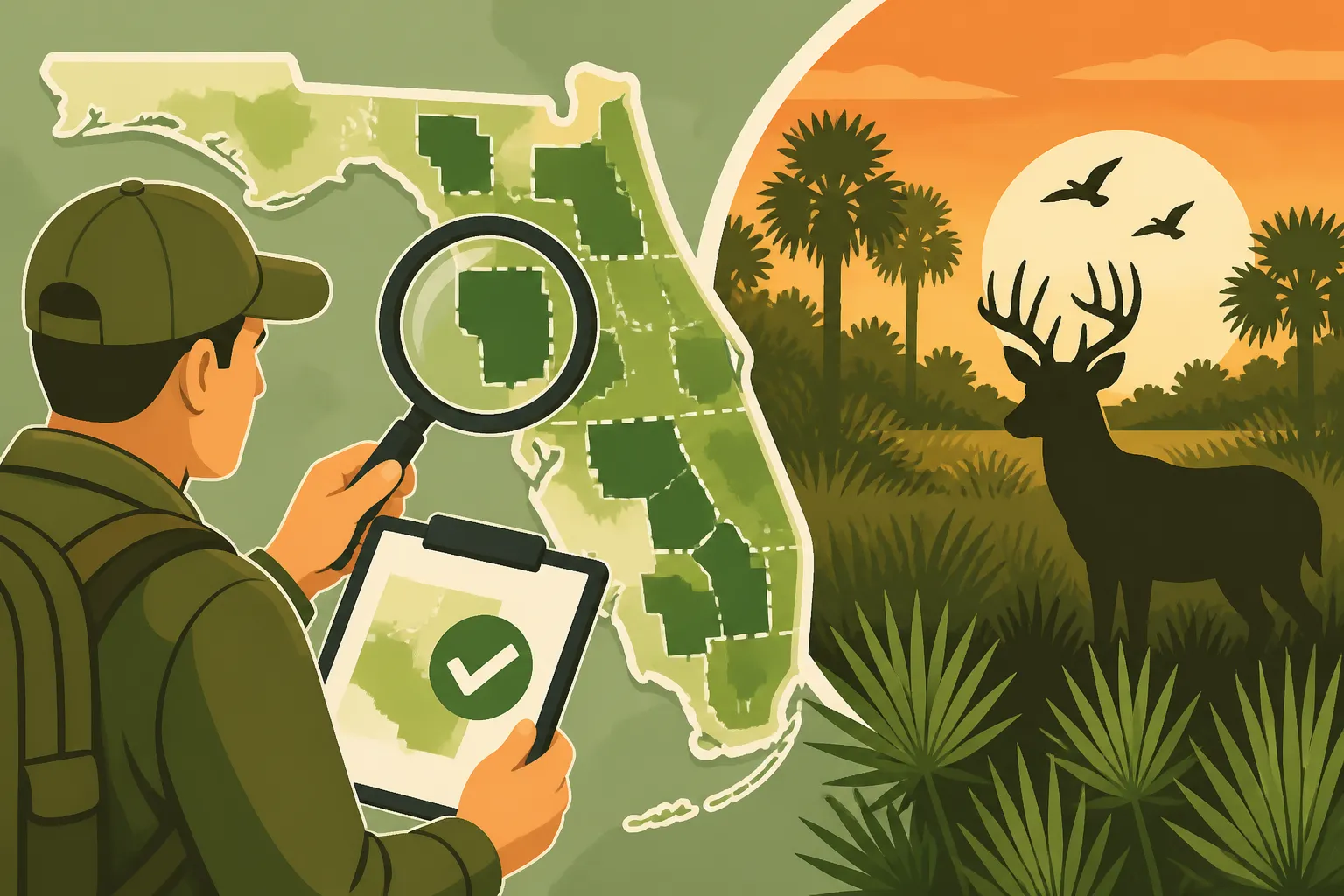
In this digital age, mapping technology is your best friend for verifying land claims. Apps like onX Hunt have revolutionized how hunters understand land boundaries. If an outfitter provides property names or parcel numbers, you can often cross-reference these with county property appraiser websites, which are public records.
- Satellite Imagery: Look at the satellite view of the claimed property. Does it match the photos on the outfitter's website? Does it show the kind of habitat they describe (e.g., dense palmetto, open pines, cypress swamps)?
- Property Lines: Many mapping apps will overlay property lines. If an outfitter gives you an address or coordinates, plug them in. See the actual size and shape of the parcels. Does it match the acreage claimed?
- Public/Private Layers: Most advanced hunting apps include layers that distinguish public from private land. This is critical if an outfitter is claiming private land access. Make sure what they're calling "private" truly is. If they mention hunting a specific WMA, use the Scouting Florida Public Land Before Season features on the FWC app to confirm boundaries and access points.
- Topography and Access: Even in flat Florida, topography matters. Look for access roads, natural funnels, or water features that align with the outfitter's descriptions of how they hunt the property.
Cross-Referencing Public Records
This might sound like detective work, but it's easier than you think. Most Florida county property appraiser websites are publicly accessible. With a parcel number or even an owner's name, you can often find:
- Owner Information: Who legally owns the land. If it's not the outfitter's name or business entity, verify their lease or permission.
- Acreage: The exact legal acreage of the property.
- Property Maps: Official county maps showing boundaries.
If an outfitter tells you they hunt on "John Doe's Ranch in Marion County," a quick search on the Marion County Property Appraiser's website can often confirm if John Doe owns a ranch of the stated size and location. This level of due diligence can immediately flag discrepancies. It’s also wise to research Florida Trespass and Permission Law to understand what legally constitutes permission to hunt on private property.
Seeking Out References and Reviews
One of the most valuable resources for vetting an outfitter is feedback from other hunters. Don't underestimate the power of word-of-mouth and online reviews.
- Ask for References: A trustworthy outfitter should be able to provide contact information for several recent clients. When you call these references, ask not just about their hunting success, but specifically about the land. "Did the property match the description? Were the boundaries clear? Did you feel like you had ample space to hunt without crowding?"
- Online Reviews and Forums: Websites like BookYourHunt and GoHunt are popular platforms where hunters share their experiences with outfitters. Read these reviews carefully. Look for consistent themes, both positive and negative, regarding the land, the guide's knowledge, and overall experience. Are people consistently raving about huge, private tracts, or are there murmurs about small, pressured areas?
- Social Media: Check the outfitter's social media. Do they regularly post photos and videos from hunts? Do these images look consistent with the land they claim to hunt? Are there geotags that confirm locations? Be wary of generic landscape shots that could be from anywhere.
- Direct Community Outreach: Don't be afraid to post in online hunting forums specific to Florida. Ask if anyone has experience with the particular outfitter you're considering. Hunters are generally a tight-knit community and are often willing to share their honest experiences, good or bad. You might even find insights on specific areas, like Hunting Small Private Tracts in Florida, that could prove invaluable.
Red Flags and What to Do If Something Feels Off
Even with all your research, sometimes your gut will tell you something isn't quite right. Learning to recognize these red flags and knowing how to act on them can save you significant disappointment and financial loss.
Vague Answers and Lack of Transparency
This is probably the biggest red flag of all. If an outfitter is hesitant to provide clear answers to your questions about their land, or if their responses are consistently vague and evasive, take it as a serious warning. You're asking legitimate questions about a significant investment, and a professional business person should be prepared to provide detailed, verifiable information.
- "We hunt hundreds of thousands of acres across the state." This sounds impressive but is often a smokescreen for not having specific, consistent access. Ask for specific locations for your hunt.
- "Our land is extremely private, so we don't share maps." While some outfitters protect their intellectual property, a refusal to offer any verifiable information (like a general location, county, or an agreement to show a map upon arrival before a deposit) is suspicious.
- "We rotate properties all the time, so it varies." Again, this can be legitimate, but it also makes verification incredibly difficult. If this is the case, ask how they ensure quality control across varying properties and what their process is for assigning hunters to specific locations.
Unrealistic Promises and "Too Good to Be True" Scenarios
Beware of any outfitter that makes promises that sound too good to be true, especially concerning trophy animals or guaranteed success. Florida hunting, while often fruitful, still involves wild animals and unpredictable conditions.
- Guaranteed Trophy Animals: No ethical outfitter can guarantee you'll harvest a 150-inch buck or a 20-pound gobbler. They can promise access to land known to hold such animals, and a high-quality effort, but never a guarantee of harvest. This often extends to land claims. If they promise exclusive access to "untouched, giant-filled" land that no one else knows about, yet their prices are suspiciously low, proceed with extreme caution.
- Unusual Season Dates or Methods: Ensure the hunting methods and seasons they offer align with Florida FWC regulations. For instance, Florida Zone C Early Archery has specific dates, and a guide offering hunts outside those dates should raise immediate concern.
- Massive Discounts or Last-Minute Deals: While sometimes legitimate, be wary of outfitters pushing last-minute, deeply discounted trips that seem to come out of nowhere, especially if they are vague about why the spot opened up or where exactly you'll be hunting. It could be a sign they're trying to fill a bad spot or don't have consistent bookings.
Protecting Your Investment Before You Go
If you encounter red flags or feel uneasy, it's always better to walk away. Your hunting experience and peace of mind are worth more than a potentially cheaper, but ultimately disappointing, trip.
- Get Everything in Writing: Any agreements, promises about land, services included, and cancellation policies should be in a written contract. Read it thoroughly.
- Payment Schedule: Be wary of outfitters demanding full payment upfront, especially far in advance. A reasonable deposit followed by a balance payment closer to the hunt date is standard.
- Trust Your Gut: If something feels off, it probably is. Don't let the excitement of a potential hunt override your good judgment. There are many reputable Florida hunting guides out there who operate with integrity and transparency.
Always prioritize clear communication, thorough research, and a healthy dose of skepticism when vetting any hunting outfitter. Your dream hunt starts long before you ever step foot in the woods, with the confidence that your guide is operating exactly as advertised.
Disclaimer
This article is for general informational purposes only and does not constitute professional advice. Laws, prices and regulations vary by location and change over time. Consult a qualified professional for guidance on your specific situation.