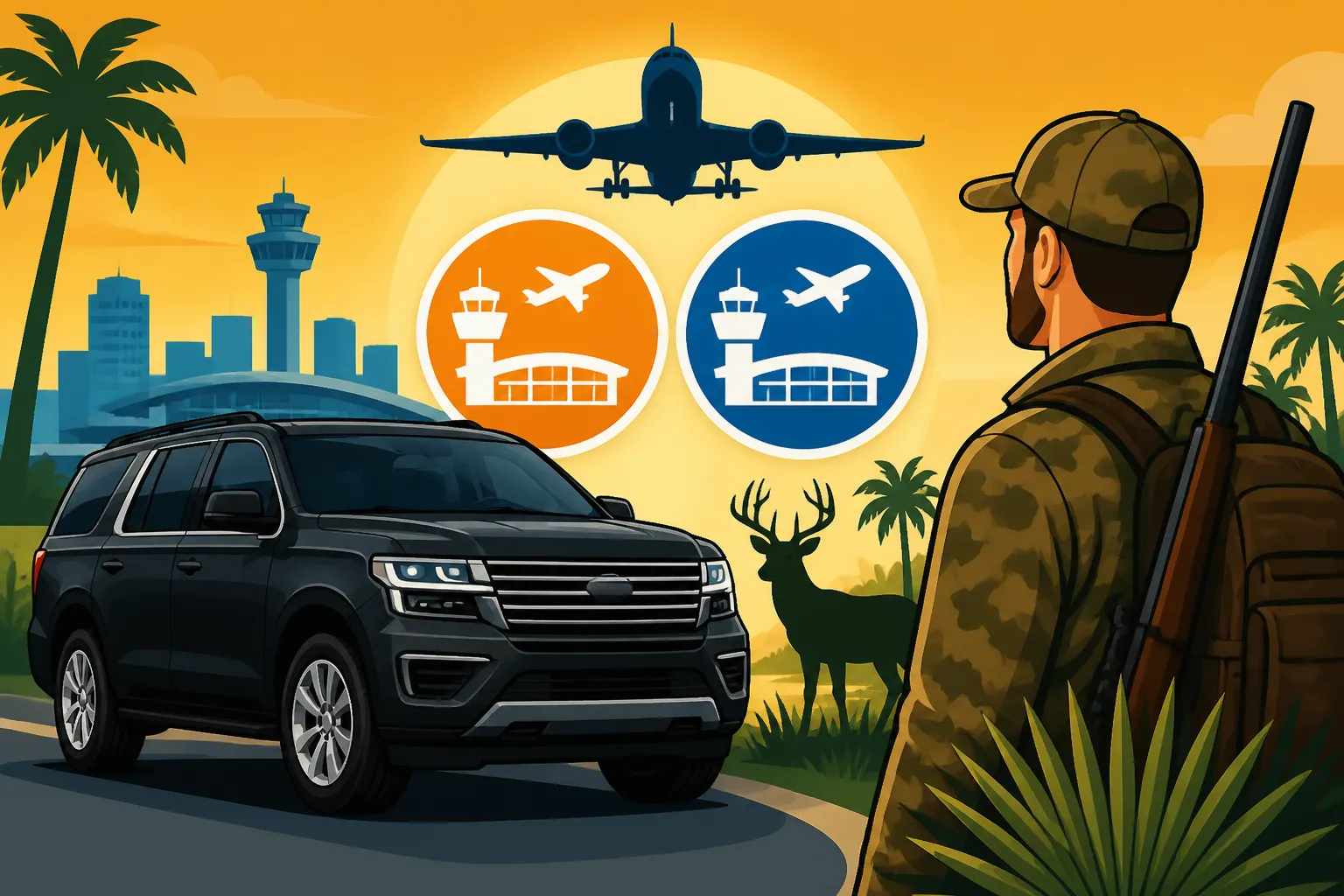
Airport Pickup From Orlando or Tampa
Landing in a bustling hub like Orlando International Airport (MCO) or Tampa International Airport (TPA) is a world away from the quiet palmetto flats or cypress swamps where you're headed for your Florida hunting adventure. That initial transition can be a real headache, especially when you’re lugging hunting gear, firearms cases, and a sense of eager anticipation. This guide is all about navigating that crucial first step – getting reliably from the airport to your hunting destination, and back again, ensuring your trip starts and ends as smoothly as possible.
The Logistical Maze: Why Airport Pickup is Critical for Florida Hunters
Let’s be honest, Florida is a big state, and while its major airports are fantastic for getting you into the state, they often leave you hundreds of miles from where the real action is. Public land access, private ranches, and even many hunting lodges are almost universally located in rural areas that aren't served by direct bus routes or convenient ride-share options. This geographical disconnect presents a unique challenge for hunters flying into the Sunshine State, especially if you’re not planning to rent a car for your entire trip.
The Reality of Rural Florida Travel
Imagine stepping out of MCO, after a long flight, and realizing your hunting camp is tucked away near Okeechobee, or deep in the Panhandle, a good 3-4 hour drive through areas where cellular service can be spotty. It’s not like trying to get from the airport to a hotel in downtown Miami. The roads can be small, winding, and sometimes unpaved as you get closer to your destination. This isn't just about distance; it's about the type of infrastructure, or lack thereof, that defines many of Florida's prime hunting territories. You're heading to places where deer roam and turkeys gobble, not where Ubers are waiting on every corner. Understanding this reality upfront will save you a lot of stress. Many first-timers underestimate this, thinking they can just "figure it out" when they land, only to find themselves stranded or paying an exorbitant last-minute fare.
Hauling Gear: A Hunter's Burden
Another major factor is your equipment. While a backpack might fit in any vehicle, hunters often travel with substantial gear: rifle cases, bow cases, coolers for meat, treestands, ground blinds, and more. A standard taxi or ride-share sedan might not cut it. Even a larger SUV or van from a rental agency might struggle if you’re part of a group with multiple weapon cases and personal bags. The sheer volume and awkward dimensions of hunting equipment demand specific consideration. You don't want to arrive at the airport only to discover your carefully packed gear won't fit into your pre-arranged transport, forcing a frantic, expensive scramble for an alternative. This is where a little forethought about your specific gear, especially your Florida Legal Firearms for Deer Hunting or Florida Crossbow Equipment Requirements, goes a long way.
Time and Convenience: Maximizing Your Hunt
Your hunting trip is precious time off, often saved up for months. The last thing you want is to waste half a day dealing with transportation mishaps. A smooth airport pickup means you can hit the ground running, or at least get to your lodge, unpack, and prepare for your hunt without unnecessary delays. Conversely, a poor plan can eat into your hunting schedule, adding frustration and fatigue before you even step into the woods. Consider that some outfitters are managing multiple hunters arriving on different flights, so clear communication about your pickup is not just for your benefit but helps their entire operation run smoothly.
Evaluating Your Transportation Options to the Field
Once you've accepted that Florida's airports and hunting grounds exist in different logistical universes, it's time to consider how you bridge that gap. There are several common methods, each with its own set of pros and cons.
1. Booking an Outfitter with Included Pickup Services
Many full-service Florida hunting outfitters understand the challenges of getting hunters to their remote locations. This is often why they offer airport pickup and drop-off as part of their package, or as an add-on service. This is hands down one of the most convenient options, especially for nonresident hunters unfamiliar with the local terrain. The guide knows the route, has the right vehicle for your gear, and can often provide valuable last-minute insights about conditions or regulations on the drive. When you're researching potential guided hunts, whether for a guided Florida hog hunt or Booking a Guided Osceola Turkey Hunt, always ask explicitly about their transportation arrangements.
Some outfitters even have relationships with shuttle services or larger vans specifically equipped to handle hunting parties and their bulky equipment. This can take all the guesswork out of your travel. When browsing platforms like BookYourHunt or GoHunt for Florida outfitters, be sure to filter or specifically inquire about this service. It’s a huge bonus to have a familiar face waiting for you, ready to whisk you away to your adventure.
2. Renting a Vehicle: Freedom and Flexibility
For many hunters, a rental car offers the ultimate in flexibility and independence. You can pick it up directly at the airport and drive yourself to your destination. This is particularly appealing if you plan to extend your trip beyond the hunt, or if your hunting arrangements are self-guided, perhaps on public lands like Ocala National Forest.
However, consider the type of vehicle. A compact sedan might save money, but it won't hold all your gear, especially if you're traveling with companions. An SUV or a truck, while more expensive, will provide the space and often the ground clearance needed for those final miles to camp. You'll also need to factor in gas costs, which can add up on longer drives, and any potential fees for out-of-state drivers if you are a nonresident. Be sure to check with your chosen outfitter or hunting club if they have any restrictions on personal vehicles or if the roads leading to their property require 4×4.
Pros of Rental:
- Complete schedule control
- Ability to run errands, explore, or pivot plans
- Often more cost-effective for groups
- Can be a necessity for self-guided hunts on public land like the Florida Wildlife Management Areas
Cons of Rental:
- Can be expensive, especially larger vehicles
- Navigation challenges in unfamiliar, rural areas
- Responsibility for vehicle care and insurance
- Dealing with airport rental car facilities can add time
3. Dedicated Shuttle Services or Private Car Hire
While not as common for individual hunters, some specialized shuttle services exist that cater to specific regions or hunting lodges. These are typically arranged in advance directly with a local transportation company. They often use larger vans or SUVs, capable of accommodating gear. This option falls somewhere between a guided outfitter pickup and a rental car in terms of convenience and cost. It offers less flexibility than a rental but more tailored service than a standard airport taxi.
You might also consider a private car service, especially if you're looking for a higher level of comfort or are traveling with particularly valuable equipment. While pricier, these services often boast professional drivers and high-capacity vehicles. The key here is to find a local service that understands the unique needs of hunters and the geographical challenges of rural Florida. Don’t just pick the first one you see; inquire about their experience with hunters and their ability to transport large cases.
4. Ride-Shares (Uber/Lyft) and Taxis: Use with Caution
For short distances or urban travel, ride-share services and taxis are fantastic. However, for getting from Orlando or Tampa to a remote hunting lodge, they can be problematic.
Challenges with Ride-Shares/Taxis for Hunting Trips:
- Availability: As you venture further from major population centers, the number of available drivers dwindles rapidly. You might get a ride to your destination, but finding one from a remote location for your return trip could be impossible.
- Vehicle Size: Most ride-share vehicles are standard sedans, not equipped for multiple large gear cases. Even if you request an SUV option, you can’t guarantee the driver will have ample cargo space or be willing to transport bulky, potentially muddy, hunting equipment.
- Driver Familiarity: Drivers may be unfamiliar with the precise, often unpaved, routes to remote hunting properties, leading to delays or getting lost.
- Cost: Long-distance ride-share fares can quickly escalate, potentially exceeding the cost of a rental car, especially when surge pricing is in effect.
While it might be tempting to use these services, they are generally not recommended for the primary airport-to-hunting-area leg of your journey in Florida due to the unique logistical demands of hunting travel.
| Transportation Option | Convenience | Flexibility | Gear Suitability | Cost (Relative) | Best For |
|---|---|---|---|---|---|
| Outfitter Pickup | High | Low | High | Varies | Fully guided hunts, first-time nonresidents |
| Rental Car (SUV/Truck) | Medium | High | High | Medium-High | Self-guided hunts, extended trips, groups |
| Dedicated Shuttle/Private Car | Medium-High | Medium | Medium-High | High | Hunters prioritizing comfort/service |
| Ride-Share/Taxi (Long Distance) | Low | Low | Low | High | Not recommended for remote hunting |
Tips for Arranging Airport Pickup for Your Hunt
Okay, so you know the options. Now, how do you make sure your chosen method goes off without a hitch? Planning is everything when it comes to travel logistics, especially when hunting is involved.
Communicate Clearly and Early with Your Outfitter
If you’re relying on an outfitter for pickup, proactive and precise communication is paramount. As soon as your flights are booked, share your full itinerary with them: airline, flight numbers, arrival/departure times, and the specific airport (MCO, TPA, or even a smaller regional airport if applicable). Confirm who will be picking you up, what they’ll be driving, and where you should meet them (e.g., baggage claim, specific terminal exit).
Don't assume anything. Ask about luggage limits, especially for firearm cases. Discuss potential flight delays and how to communicate with them if your schedule changes. A good outfitter will have a system in place for this, but it's your responsibility to be part of that communication chain. For example, if you're booking an Alligator Hunting Florida's Lakes and Rivers trip, confirm if the outfitter can accommodate your specific CITES tags and the large cooler you might need for your harvest.
Factor in Airport Layout and Travel Time
Both Orlando and Tampa airports are large and busy. It takes time to deplane, navigate to baggage claim, collect your gear (especially oversized items like gun cases), and then make your way to the designated pickup area. Don't schedule a tight pickup time if you’re collecting checked firearms; this process can add significant delays. Plan for at least 1-2 hours from the time your plane lands until you are ready for pickup.
Also, be realistic about the drive time to your hunting destination. Florida traffic, particularly around Orlando and Tampa, can be heavy. A 100-mile drive could easily take over two hours during peak times. Allow ample buffer time in your schedule, especially on your departure day, to avoid missing your flight home. This is particularly crucial if you’re dealing with things like CWD Testing for Florida Hunters before heading back, which might involve an extra stop.
Prepare Your Gear for Travel
Ensure all your hunting gear, especially firearms, is packed according to TSA and airline regulations. Hard-sided, locked cases are mandatory for firearms. Label everything clearly with your contact information. If you're using a rental car, make sure your cases will fit in the trunk or cargo area with all your other luggage. Sometimes, consolidating smaller bags into one larger, soft-sided duffel can free up space for rigid gun or bow cases.
Consider investing in quality, durable cases that can withstand the rigors of airline travel and being loaded into various vehicles. Muddy boots or hunting clothes should be in sealed bags to protect the vehicle's interior, whether it's an outfitter's truck or a rental. This thoughtful packing not only protects your gear but also makes you a considerate passenger.
Emergency Contact Information
Always have your outfitter’s or driver’s phone number readily available, not just in your phone, but perhaps written down on a piece of paper in case your phone battery dies. Have a backup plan in mind, even if it’s just the number for a trusted local taxi service that operates in the general vicinity of your hunting camp. Unexpected things happen – flight delays, lost luggage, or even a vehicle breakdown. Being prepared with contact information and a contingency plan can turn a potential disaster into a minor inconvenience.
Making the Most of Your Arrival and Departure Days
These bookend days of your trip are often overlooked, but careful planning here can significantly enhance your overall hunting experience and reduce stress.
Pre-Arrival Checklist: Getting Ready
Before you even leave home, double-check everything. Confirm your flight details, rental car reservation, or outfitter pickup arrangements one last time. Make sure your hunting license and any necessary permits (like the Florida WMA Management Area Permit if you're hunting public lands) are printed or accessible on your phone, as some rural areas might not have reliable cell service to pull them up. If you're a nonresident, ensure you understand Florida Nonresident License Options and have all the correct tags.
Consider packing a small "day bag" with essentials you might need immediately upon arrival – toiletries, a change of clothes, any medications, and maybe a snack. This is especially helpful if you anticipate arriving late at camp or if there’s a chance your main luggage could be delayed. Having crucial items at hand allows you to settle in comfortably without immediately digging through your main bags.
Post-Hunt Departure: The Logistics of Leaving
The drive back to the airport after a successful hunt can be bittersweet, but it's another logistical hurdle. If you've harvested game, particularly something large like a deer or an alligator, you'll need to consider how to transport the meat and/or trophy. Discuss this with your outfitter well in advance. Many will offer game processing and shipping services, or they can direct you to local processors. If you plan to fly with meat, it needs to be properly packaged and frozen in approved coolers. Ensure your chosen transportation from the lodge to the airport can accommodate these additional items. Don't forget your Florida Deer Reporting Requirements for any deer taken.
Likewise, ensure your firearms are again properly secured, unloaded, and ready for airline check-in according to TSA regulations. Give yourself plenty of time at the airport for check-in, especially if you have oversized baggage or firearms, as these often require extra screening steps. Trying to rush this process can lead to significant stress or even missed flights.
The journey to your hunting destination is more than just a drive; it's the first and last impression of your adventure. By carefully considering your airport pickup options and planning every detail, you can ensure that your Florida hunting trip starts with excitement and ends with satisfaction, not logistical headaches.
Disclaimer
This article is for general informational purposes only and does not constitute professional advice. Laws, prices and regulations vary by location and change over time. Consult a qualified professional for guidance on your specific situation.