What Happens If Weather Cancels Your Hunt
There's nothing quite like the heartbreak of meticulously planning a Florida hunting trip, getting your gear dialed in, marking those dates on the calendar, only for Mother Nature to throw a wrench in the works. Whether it’s a sudden tropical storm rolling in, a week of relentless downpours, or even an unexpected cold snap, dealing with a weather-canceled hunt can be incredibly frustrating. This guide will walk you through what typically happens when weather derails your carefully laid plans, covering everything from outfitter policies to navigating public land closures, and how you can best prepare for Florida's often unpredictable climate.
The Harsh Reality of Florida Weather and Hunting
Florida's climate, while often beautiful, is also famously capricious. When you're planning a hunt, especially for specific seasons, understanding the potential weather challenges isn't just a good idea—it's essential for managing expectations and preparing for the worst.
Common Weather Challenges in Florida Hunting
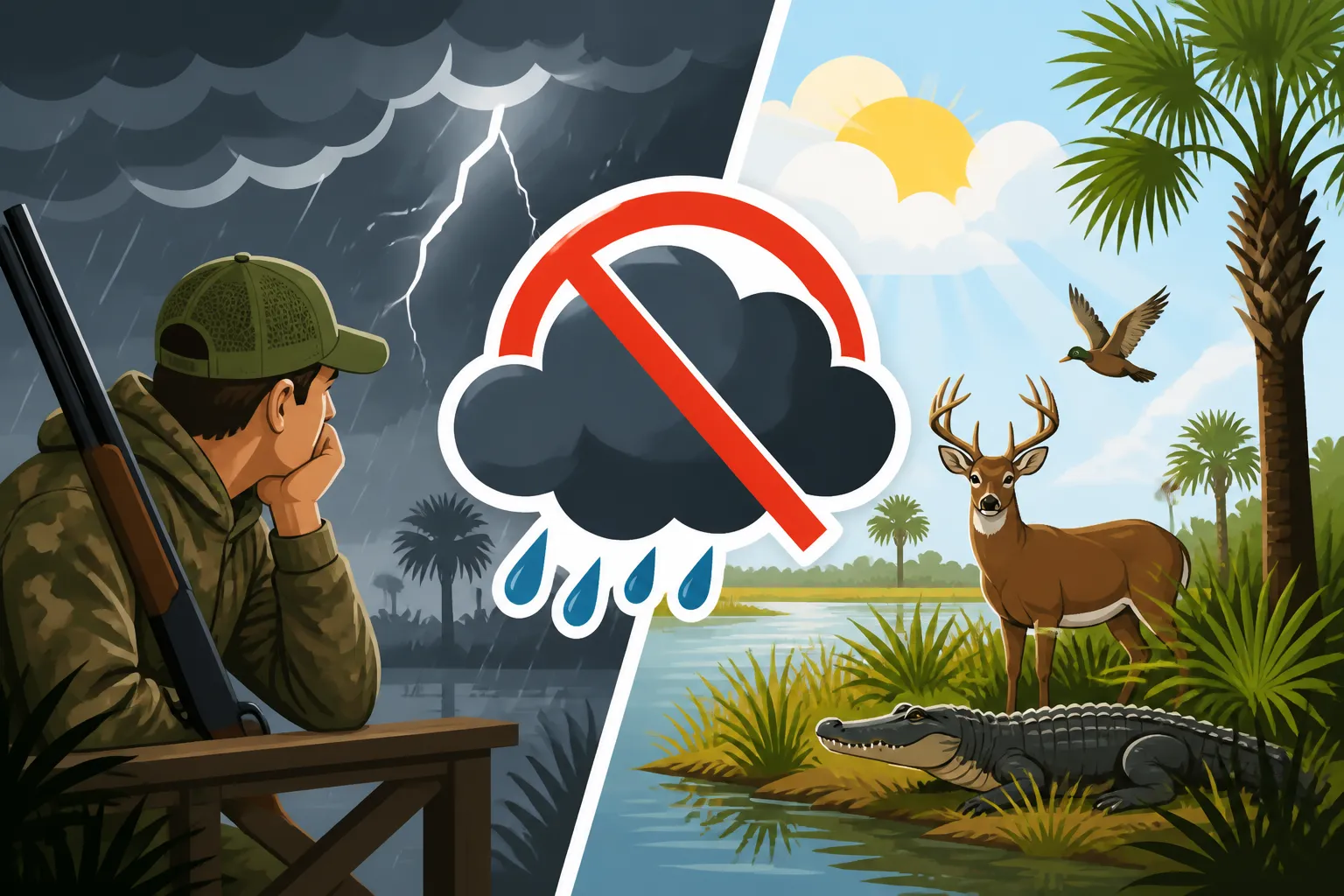
Our state is known for sunshine, but it’s also a hotspot for some pretty dramatic weather events that can absolutely shut down a hunt. Think about it: we're practically surrounded by water, which means humidity and heat are almost constant companions for a good chunk of the year. This feeds into our most frequent issue: afternoon thunderstorms. These aren't just little drizzles; they can be violent, with torrential rain, strong winds, and dangerous lightning. They might roll in daily during the summer and early fall, turning a pleasant morning hunt into a perilous trek through a flooded palmetto flat by afternoon.
Then there are the big ones: tropical storms and hurricanes. While they don't hit every year, the threat looms large, especially during our prime deer and alligator seasons. A named storm hundreds of miles away can still bring days of heavy rain, high winds, and significant flooding to your hunting area, making access impossible or, frankly, just plain unsafe. Imagine driving hours to a remote camp only to find the forest roads are underwater, or worse, your treestand is swaying in a gale. It's a real buzzkill. Hunting Florida's Zone A Split Gun Season or Florida Waterfowl Season and Zones can often coincide with these volatile weather windows. Even unexpected cold snaps, while rare, can freeze equipment, make traversing wetlands treacherous, and send game into hiding, completely altering their patterns.
How Weather Affects Different Hunt Types
The impact of weather isn't uniform; it can drastically change depending on what you're chasing. For deer hunters, prolonged heavy rain can turn sandy trails into muddy bogs, making tracking a blood trail almost impossible. High winds during a gun season can make accurate shots difficult, and deer movement often slows to a crawl, as they hunker down in thick cover. If you're planning to use a ground blind on Florida public land, heavy rain can quickly make it a swampy hideout.
Turkey hunting in the spring is often a race against the clock. Rain dampens gobbling activity, making it much harder to locate birds. A wet, foggy morning means reduced visibility, making it tough to spot a strutting gobbler at a distance. For those pursuing alligators, severe thunderstorms or high winds can make navigating a lake or river downright dangerous. Visibility for spotting eyes at night or stalking during the day can be severely compromised. Nobody wants to be on a small airboat in the middle of a lightning storm. Even waterfowl hunters, who are often out in less-than-ideal conditions by nature, face challenges with extreme winds scattering birds or making decoy spreads ineffective. Stalking an Alligator on a Freshwater Lake becomes a whole different ballgame in rough weather.
Understanding Outfitter Policies for Weather Cancellations
Booking a guided hunt is a significant investment, and the thought of losing that money due or opportunity due to weather is enough to keep anyone up at night. That's why understanding your outfitter's stance on weather-related cancellations is absolutely paramount before you ever sign on the dotted line or send a deposit.
Deposit and Refund Policies: Reading the Fine Print
Most reputable Florida hunting outfitters have a clearly defined policy for weather cancellations, and it’s usually buried in the terms and conditions or the contract you receive. This isn't boilerplate language; it's there to protect both you and them. Typically, you won't get a full cash refund simply because it rained or the wind blew harder than you liked.
Common scenarios you might encounter include:
- Credit for a Future Hunt: This is perhaps the most frequent outcome. If the outfitter cancels due to unsafe conditions (e.g., hurricane warning, extreme flooding making their property inaccessible, dangerous lightning), they will often offer you a credit for a future hunt, usually within a year or two. This allows them to retain your business and you to reschedule your experience.
- Partial Refund: In rarer cases, or if you've already paid a substantial amount and rescheduling isn't feasible for either party, some outfitters might offer a partial refund, minus any non-recoverable costs they incurred.
- Rebooking Fee: Sometimes, especially if the weather is borderline but you decide to cancel, or if the outfitter allows you to reschedule under certain conditions, there might be a rebooking fee.
- No Refund, Reschedule Only: Many outfitters operate on a strict "no refunds, reschedule only" policy for weather events, particularly if the cancellation is on their end. They're often operating on thin margins and can't afford to issue full refunds, but they want to ensure you still get your hunt.
The key takeaway here is to ask questions and read everything carefully before you book. Don't assume anything. A good outfitter will be transparent and happy to explain their policy. Platforms like BookYourHunt or GoHunt sometimes allow you to filter or compare outfitters based on their cancellation policies, which can be a real time-saver. Consider what's included in an Osceola package; does it mention weather contingencies?
Rebooking Options and Flexibility
If your hunt is canceled due to weather, your outfitter will typically work with you on rebooking. Their goal is to get you out in the field. However, "rebooking" often comes with its own set of considerations. You might not be able to simply pick the exact same dates next year. Popular outfitters, especially for high-demand species like Osceola turkeys or prime deer dates, book out far in advance.
Here’s what you might find:
- Availability: You might need to be flexible with your new dates. Weekdays, off-peak times, or even a different season might be your best bet for getting back on the schedule.
- Species Change: In some rare instances, if the specific hunt you booked (e.g., early season alligator) is heavily impacted and future slots are scarce, an outfitter might offer to switch you to a different species they guide for (e.g., hogs) as a way to fulfill their commitment, though this is less common.
- Pricing Adjustments: Be aware that if you rebook far in the future, especially a year or more out, the outfitter's pricing may have changed. Clarify if your original payment fully covers the new hunt or if you'll owe a difference.
Your flexibility as a hunter can be a huge asset here. If you can move dates around, hunt during the week, or even consider a different time of year, you'll likely have a smoother rebooking experience. It's always best to be polite and understanding, even though the situation is frustrating. Outfitters are often just as disappointed as you are when Mother Nature ruins a trip. When asking an outfitter for references, consider asking past clients about their experiences with rebooking due to weather.
Your Options When a Self-Guided Public Land Hunt is Affected
For many of us, the allure of hunting Florida’s vast public lands is the freedom and lower cost. However, this also means that when weather hits, you're often on your own to navigate the consequences. There's no outfitter to call for a rebooking.
FWC Regulations and Public Land Closures
Unlike a guided hunt, where the outfitter makes the call, on public land, the Florida Fish and Wildlife Conservation Commission (FWC) is the authority. During periods of severe weather—think tropical storms, hurricanes, or even prolonged heavy rainfall that causes widespread flooding—FWC has the power to close Wildlife Management Areas (WMAs) or other public hunting lands for safety reasons. This isn't just about hunter safety; it's also about protecting sensitive ecosystems and preventing damage to infrastructure.
It's absolutely crucial to stay informed. Before heading out, especially if there's any questionable weather in the forecast, check the FWC website for advisories, closures, or emergency orders specific to your intended WMA or Ocala National Forest Hunting area. Many hunters use the FWC app, which is a great tool for scouting, but also for checking on real-time closure notifications. These closures can be sudden and may last for days or even weeks until conditions improve and damage can be assessed. If you’ve drawn a specific Florida WMA Quota Permit System for a certain period and the area closes, it's a gut-punch. Unfortunately, these permits are typically for a specific window, and while FWC sometimes offers refunds or reapplication opportunities in extreme circumstances, it's not guaranteed, and you won't get that lost hunting time back.
Safety First: Making the Call to Cancel or Reschedule
Even if the FWC hasn't officially closed an area, the decision to proceed with your hunt is ultimately yours, and safety should always be your top priority. Florida weather, particularly in its wilder corners like the Green Swamp or the Everglades, can become genuinely dangerous very quickly.
Consider these hazards:
- Lightning: Florida is the lightning capital of the U.S. Standing under a tall pine tree in a flat palmetto prairie during a thunderstorm is an invitation to disaster.
- Flash Floods: Heavy rains can turn dry trails into raging torrents and low-lying areas into impassable swamps. Getting stranded or having your vehicle submerged is a real risk. Recovering a Deer From a Cypress Slough becomes infinitely more dangerous in high water.
- Falling Limbs: Strong winds, even from distant storms, can bring down deadfall or even large live limbs, especially in older timber stands. This is a massive risk when you’re walking or sitting in a stand.
- Heat Stroke/Dehydration: While not directly a "cancellation" event, extreme heat and humidity can make a difficult hunt dangerous. If you're slogging through high water in sweltering conditions, you can quickly become incapacitated.
Making the call to cancel or reschedule, even when you're itching to hunt, shows good judgment. It’s not a sign of weakness; it’s a sign of a responsible hunter. Always check the localized weather forecast for your specific hunting area, not just the general regional forecast. If your gut tells you it's too risky, listen to it. No deer or turkey is worth risking your life or limb. Remember your Florida Hunter Education Requirements likely covered safety in the field for a reason.
Mitigating the Risk and Preparing for the Unexpected
While you can't control the weather, you can absolutely control how you prepare for it. Taking proactive steps can save you heartache, money, and potentially keep your hunting dreams alive even when the skies open up.
Researching Weather Patterns and Timing Your Hunt
One of the smartest things you can do is understand the typical weather patterns for your chosen hunting period and location. Florida's seasons are distinct, but each comes with its own weather quirks.
- Hurricane Season (June 1 – November 30): This overlaps directly with prime deer and alligator seasons. If you're booking an early fall hunt, especially in August or September, you're rolling the dice with tropical activity. While the odds of a direct hit on your specific hunt location are low, the disruption from feeder bands, heavy rain, and high winds can be significant. If you’re dead set on an early hunt, just be aware of the increased risk.
- Summer Heat & Thunderstorms (May – September): Extremely hot and humid conditions are the norm, often coupled with daily afternoon thunderstorms. This impacts not just comfort but also game movement. Hot-Weather Sitting Strategy in Florida becomes critical.
- Winter Cold Fronts (November – March): While generally mild, Florida does experience cold fronts that can drop temperatures dramatically. These are usually welcomed by hunters as they often kickstart deer movement, but extreme cold can also bring ice and other unexpected challenges, particularly in the northern parts of the state.
By understanding these patterns, you can make more informed decisions about when to plan your hunt. If flexibility allows, sometimes shifting your dates by even a week or two can push you out of a statistically riskier weather window.
Considering Trip Insurance and Flexible Booking
For those investing in a costly guided hunt, especially if it involves travel from out of state, trip insurance can be a game-changer. This isn't just for lost luggage anymore; many policies offer coverage for trip cancellations due to severe weather events, natural disasters, or even government-issued travel warnings. It’s an extra cost, but if you've spent thousands on an Average Cost of a Guided Osceola Hunt and paid for flights and lodging, that small percentage for insurance could protect your entire investment.
When looking at policies, be sure to understand:
- What constitutes a "covered event": Does it cover named storms, general heavy rain, or only official state-of-emergency declarations?
- Reimbursement vs. credit: Will it pay you back directly or offer credit?
- Cancellation window: How close to the trip can you cancel and still be covered?
Also, as mentioned earlier, leverage resources like BookYourHunt or GoHunt. These platforms often provide detailed information on outfitter cancellation policies, and some might even partner with insurance providers, making it easier to arrange coverage. Look for outfitters that explicitly mention flexible booking options in their terms, as this indicates they are prepared to work with hunters when weather strikes. Don't be shy to ask about Travel Insurance for a Nonresident Hunting Trip.
Communication is Key: Before, During, and After
Good communication can smooth over a lot of potential headaches.
- Before Booking: This is where you lay the groundwork. Ask direct questions about the outfitter's weather policy. "What happens if a hurricane forces a cancellation?" "What are my options if there's prolonged heavy rain and conditions are miserable but not officially closed?" Get their answers in writing if possible.
- During the Lead-Up: If you see adverse weather developing, reach out to your outfitter. They'll have the most up-to-date local information and can advise you. Don't wait until the last minute. This early communication can also help them make adjustments and potentially offer alternative dates if needed.
- After a Cancellation: If your hunt is canceled, remain calm and professional. You're both in a tough spot. Work with the outfitter to find a suitable rebooking option. The better your relationship, the more likely they are to go the extra mile to accommodate you.
By being proactive, understanding the risks, and communicating effectively, you can minimize the sting of a weather-canceled hunt and increase your chances of getting back into the Florida woods or swamps when conditions are right.
| Scenario | Typical Outfitter Response (Guided Hunt) | Hunter's Best Action (Guided Hunt) | Hunter's Best Action (Self-Guided Public Land) |
|---|---|---|---|
| Severe Storm/Hurricane Warning (Outfitter Initiated Cancellation) | Offer full credit for future hunt, no cash refund. May suggest alternative dates. | Review contract, accept credit, be flexible with rebooking dates. Consider trip insurance for cash recovery. | Check FWC website/app for WMA closures; prioritize safety. Look for alternative public land if available. |
| Prolonged Heavy Rain/Flooding (Outfitter Initiated Cancellation) | Offer full credit for future hunt. May suggest different species or later dates. | Work with outfitter on rebooking. Inquire about pricing changes if rebooking far out. | Check FWC for WMA access issues (e.g., road closures). Scout alternative higher ground. Safety first. |
| Marginal Weather (Hunter Initiated Cancellation) | Often no refund/credit unless policy explicitly allows. May charge rebooking fee. | Refer to contract. If covered by trip insurance, file a claim. Be prepared to lose deposit if no coverage. | Assess personal safety risks (lightning, high water). If conditions are too risky, don't go. No refund for license/permit. |
| Unexpected Cold Snap/Freeze (Conditions Persist) | May offer suggestions for adapting hunt (e.g., different tactics). Rarely a cancellation unless truly unsafe. | Adapt tactics. Discuss with guide if any changes in approach are warranted. | Dress appropriately, ensure gear is cold-weather ready. Check water levels for ice/hazards. |
Disclaimer
This article is for general informational purposes only and does not constitute professional advice. Laws, prices and regulations vary by location and change over time. Consult a qualified professional for guidance on your specific situation.