Reading a Marsh for a Morning Flight
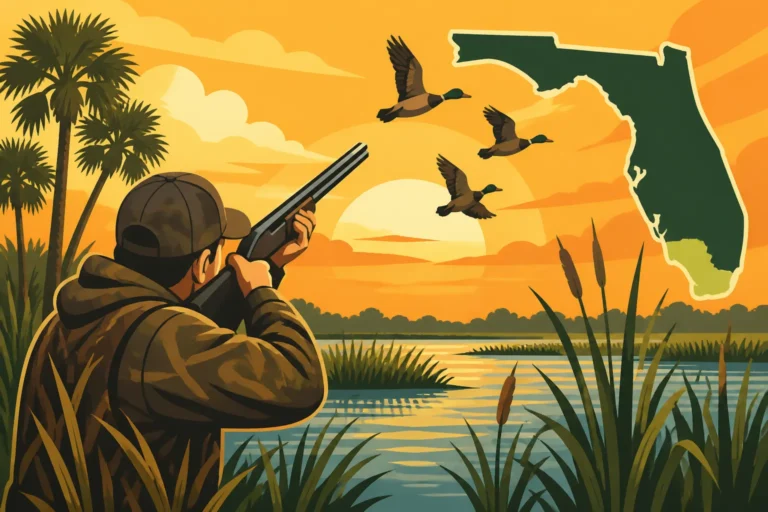
Florida's vast, intricate marshes can feel overwhelming when you're trying to figure out where a morning flight of ducks might be heading. It's not like hunting a small pond where birds are obvious; these expansive wetlands demand a keen eye and an understanding of duck behavior. This guide will walk you through how to "read" a marsh, identifying the subtle cues that will put you in the right spot when the birds start flying at dawn.
Decoding Florida's Diverse Marsh Habitats
Before you can anticipate where ducks will fly, you need to understand the stage they're performing on. Florida's marshes aren't monolithic; they range from freshwater sloughs choked with lilies to brackish tidal flats with sparse grasses. Each habitat type offers different appeal to various duck species, and knowing what you're looking at is the first step in successful scouting.
Types of Marsh Vegetation and Water Levels
Florida's marshes are defined by their unique mix of vegetation and fluctuating water levels. You might encounter dense stands of cattails, broad expanses of sawgrass, or open water dotted with hydrilla and coontail. The specific plant life and the depth of the water are huge indicators of what kinds of ducks will be there and, more importantly, why. For instance, shallow, muddy flats often host dabbling ducks like teal and pintails, which tip up to feed on submerged vegetation and invertebrates. Deeper pools or sloughs with emergent vegetation might attract wood ducks, especially if there are cypress trees nearby for roosting.
Understanding these micro-habitats within the larger marsh is critical. A change in water level by even a few inches can completely change a duck's preferred feeding spot. After heavy rains, new areas might become accessible, spreading birds out. During dry spells, birds concentrate in the remaining deeper pockets. Always observe the historical water levels and how current conditions deviate. This is where apps like GoHunt can be invaluable, offering topographical maps and satellite imagery that help you visualize these differences, even when you can't be boots on the ground.
Identifying Key Food Sources
Ducks, much like us, are always looking for a good meal, and their preferred buffet changes with the season and species. In a Florida marsh, these food sources can be incredibly diverse. You'll find dabbling ducks, such as northern shovelers and gadwall, sifting through shallow water for seeds, small invertebrates, and plant detritus. Look for areas with wild millet, smartweed, or submerged aquatic vegetation (SAV) like widgeongrass and sago pondweed. These are prime feeding grounds. Mottled ducks, which are year-round residents, often favor edges of marshes with exposed mud flats where they can pick through seeds and insects.
Diving ducks, like ring-necked ducks and lesser scaup, prefer deeper water, where they can dive for mollusks, crustaceans, and roots of plants like wild celery. Identifying these underwater groceries requires a bit more reconnaissance. Sometimes, you can spot them by observing the ducks themselves, but often, it comes down to knowing the local botany and aquatic life. Understanding what Florida Mottled Duck Population Trends look like can also give you insights into local foraging habits and success rates. Pay attention to any signs of recent feeding, such as disturbed mud or clipped vegetation. This tells you not only what they're eating but also where they're eating right now.
Reading the Landscape for Duck Movement
Ducks are creatures of habit, especially when it comes to their daily routine of roosting, feeding, and loafing. Learning to "read" the landscape means understanding these patterns and predicting the flight paths they'll take from one spot to another, particularly during those crucial morning hours.
Predicting Roost to Feed Flight Paths
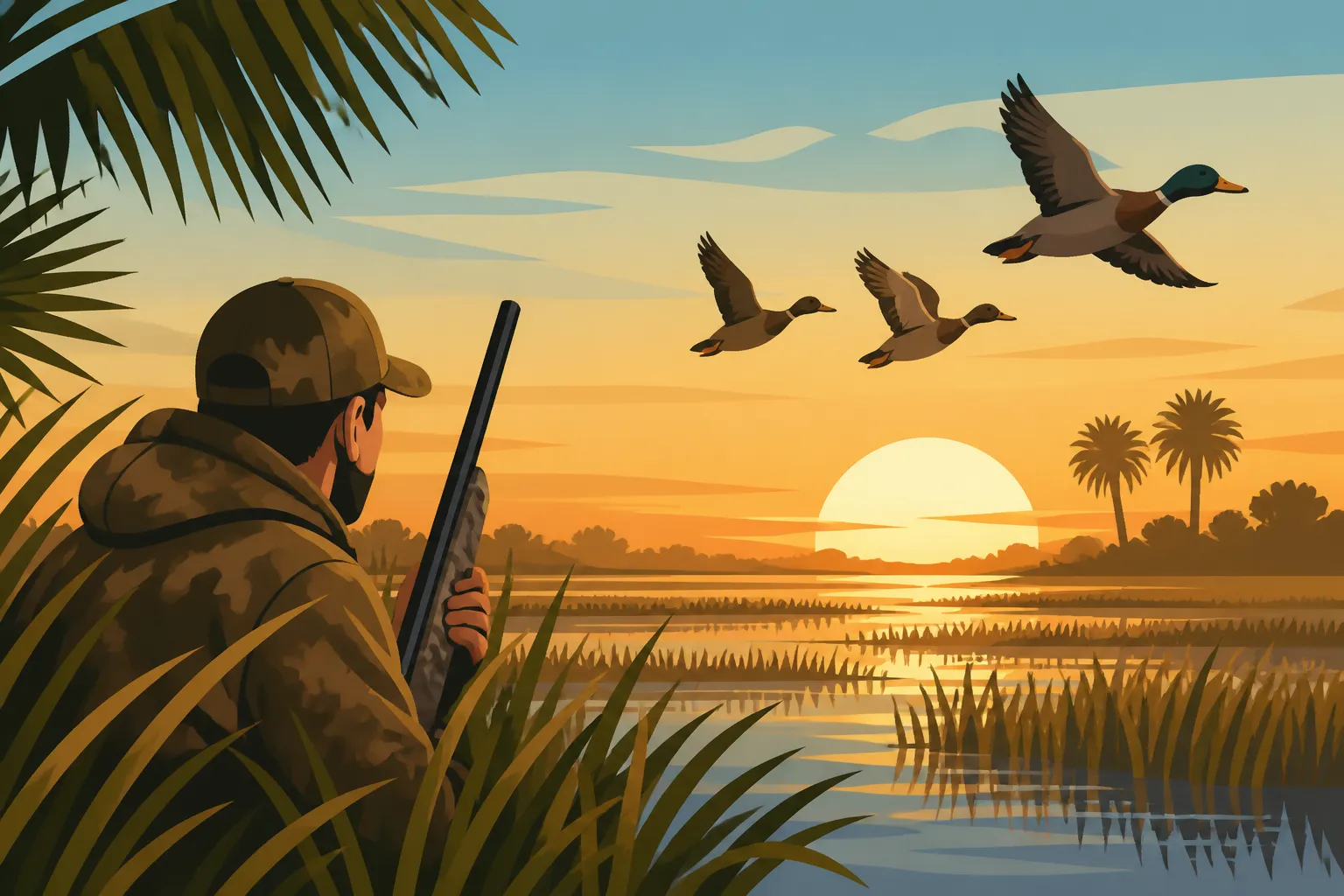
A morning flight typically involves ducks moving from their secure nighttime roosting areas to their chosen feeding grounds. Roosts are often in protected, quiet sections of the marsh, sometimes in thicker cover or on open water where they feel safe from predators. As the sun begins to lighten the sky, these birds will begin to stir, lifting off and heading directly to where they plan to eat. Your job is to intercept them. Look for clues like major travel corridors – natural breaks in vegetation, large waterways, or even patterns they might follow along tree lines if the marsh is bordered by hardwoods.
Wind plays a massive role in flight paths; ducks almost always take off and land into the wind. So, on a windy morning, anticipate them adjusting their approach accordingly. If you've been doing your homework and Scouting Florida Public Land Before Season, you might have observed these patterns during the off-season or even on non-hunting days. Knowing where they prefer to roost, and where their primary food sources are, allows you to position yourself in the flight line between these two points. It's a game of connecting the dots, and the more observations you have, the clearer the picture becomes.
The Influence of Wind and Weather on Flights
Weather conditions are arguably the most significant factor influencing duck behavior on any given morning. A cold front sweeping through Florida, especially one that follows a period of warm weather, can ignite an incredible migration, bringing new birds into your hunting area. Ducks become more active and less cautious in colder, windier conditions, often flying lower and more predictably. Conversely, warm, calm mornings can make for sluggish flights and more wary birds that fly high and avoid decoy spreads.
Wind direction is paramount. Ducks land and take off into the wind. This means if you're set up on a pond and the wind is blowing from the north, ducks will approach from the south and cup their wings to land directly into the wind, landing right in front of your spread. If the wind shifts, so will their approach. Heavy overcast conditions can extend morning flights, keeping birds moving later into the day, while bright, sunny days often see birds settling down earlier. Always check the forecast – not just temperature, but wind speed and direction, as well as cloud cover. Apps like GoHunt can give you real-time weather overlays and forecasts for your specific hunting location, which is a game-changer for predicting flight patterns.
Identifying Loafing and Sanctuary Areas
Beyond roosting and feeding, ducks need places to "loaf"—areas where they can rest, preen, and feel secure during the midday hours, especially after a morning of feeding. These loafing areas are typically quiet, undisturbed parts of the marsh, often with shallow water, small islands, or dense stands of cover where they can sit safely. They might be small pockets of open water surrounded by thick reeds, or a sunny bank where they can bask. While you might not be hunting these specific spots during a morning flight, knowing where these sanctuaries are is vital for two reasons.
Firstly, disturbing a loafing area can send ducks packing for good, so it's best to avoid them entirely. Secondly, birds often stage or gather near these loafing areas before heading to their final feeding destinations or after leaving their roosts. Observing these intermediary spots can give you another crucial piece of the puzzle for predicting flight paths. For example, if ducks consistently gather in a specific hidden pond before heading to a larger feeding marsh, that pond's flight path becomes another potential intercept point.
Practical Scouting Techniques for Marsh Hunters
Effective marsh hunting isn't just about showing up on opening morning; it's about preparation and continuous observation. Learning to read a marsh involves a blend of pre-season work, real-time observation, and leveraging modern tools. This systematic approach greatly increases your chances of being where the birds want to be.
Pre-Season Reconnaissance and Map Study
The real work of Waterfowl Hunting Florida's Marshes begins long before the season opener. Spending time in the marsh during the off-season is invaluable. Walk the edges, paddle through sloughs, and simply observe. Look for natural funnels, pinch points, and areas of dense feed. Pay attention to how water flows, where deeper pockets exist, and what types of vegetation are dominant. This is where Using the FWC Public Hunting Map and aerial photography become your best friends. High-resolution satellite imagery from platforms like GoHunt can reveal hidden ponds, old creek channels, and subtle changes in vegetation that aren't visible from the ground.
Mark potential roosting areas (thick, undisturbed cover), feeding grounds (patches of desirable aquatic plants), and travel corridors on your map. Note any specific features like old beaver dams, cypress heads, or even isolated clumps of trees that could serve as reference points. Understanding the lay of the land in dry conditions can be a huge advantage when the marsh fills with water, as familiar landmarks might become submerged. Remember, the goal is to build a mental, or physical, map of where ducks might want to be, well in advance of your hunt.
Interpreting Fresh Sign on Hunt Day
Even with all your pre-season scouting, conditions can change, and ducks can be fickle. On hunt day, or the day before, you need to be a detective, looking for fresh sign. The most obvious sign is actual ducks. If you're able to sneak in before shooting light, listen for calls and wing beats. Note where they are lifting off from and where they are heading. Even a quick drive-by scan with binoculars from a distant road can reveal where birds are congregating.
Once you're in the marsh, look for physical evidence:
- Feathers: Piles of small downy feathers indicate a loafing or preening spot. Larger flight feathers might suggest a flight path or a recent roost.
- Droppings: Fresh duck droppings on logs, stumps, or along mud banks indicate recent use.
- Footprints: While often difficult to distinguish in soft mud, clear duck tracks confirm birds are wading in shallow areas.
- Muddied water: Discolored or churned-up water in shallow areas can be a sign of dabblers actively feeding, particularly in calm conditions.
- "Cut" vegetation: Dabbling ducks will clip off submerged vegetation. Look for clean cuts on grasses or other aquatic plants, indicating a fresh meal.
This real-time intelligence is crucial for making last-minute adjustments to your setup. Never just assume birds will be in your chosen spot; always look for confirmation of recent activity.
Leveraging Technology for Advanced Scouting
Modern technology has revolutionized waterfowl scouting, turning it from guesswork into a data-driven art. Gone are the days of relying solely on paper maps and word-of-mouth. Today, apps like GoHunt offer unparalleled detail. You can zoom in on high-resolution satellite imagery to identify specific vegetation types, subtle changes in water depth, and even the smallest pockets of open water. This is especially useful for Early Teal Season Tactics in Florida where birds often prefer these smaller, shallower areas.
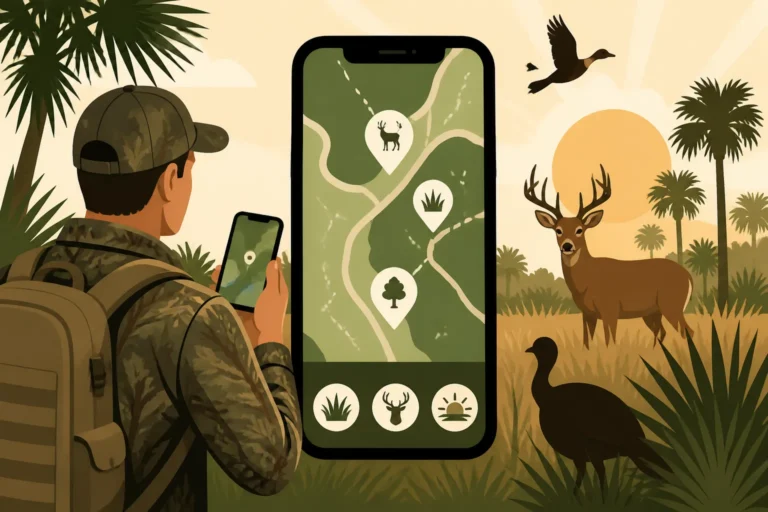
Beyond just maps, many apps provide weather overlays, showing wind direction, speed, and precipitation forecasts. Some even have public land boundaries clearly marked, helping you stay legal and avoid trespassing. You can drop waypoints for potential blind locations, observed food sources, and travel corridors, building a detailed digital scouting map. This data can be analyzed and shared with hunting partners, ensuring everyone is on the same page. Using a GPS-enabled device or app allows you to navigate the marsh confidently in the dark, directly to your chosen setup spot without spooking birds. This precision mapping takes the guesswork out of locating those prime spots, like a specific cypress head for Decoying Wood Ducks in a Cypress Slough.
Setting Your Spread and Blind for the Morning Flight
Once you've done your homework and "read" the marsh, it's time to put that knowledge into action. Your decoy spread and blind placement are the final pieces of the puzzle, designed to capitalize on the ducks' anticipated flight path and feeding habits.
Strategic Decoy Spreads for Marsh Hunting
The goal of your decoy spread in a marsh is to mimic a natural, comfortable group of ducks, drawing in flying birds to land within shooting range. Unlike open water hunting, marsh spreads often benefit from realism over sheer numbers. Consider the specific species you're targeting. For dabblers, like Florida Mottled Ducks, a spread that simulates feeding activity is highly effective. Use a mix of active feeder decoys (heads down) and sentry decoys (heads up) to create a natural scene. If you're in a deeper slough targeting divers, a more tightly grouped pod of decoys might be appropriate.
Placement relative to the wind is critical. Ducks will almost always land into the wind, so ensure your "landing strip" in the spread is directly into the prevailing breeze, bringing them right into your face. Create a landing hole or "kill hole" within your spread, leaving an open water area where the ducks feel safe to set down. This can be shaped like a "J," "U," or even a simple gap in a larger spread. Vary your decoy species if you expect a mix of ducks, but don't overdo it. A dozen well-placed decoys in the right spot will always outperform 50 randomly scattered ones. Remember to keep it realistic; a lone duck in a vast marsh often means something is off.
Optimal Blind Placement and Concealment
Your blind is essentially your ambush point, and its placement is as important as your decoys. The primary rule is concealment. Ducks have incredible eyesight, and anything unnatural will send them flaring. In a marsh, this often means utilizing existing natural cover. Dense cattails, sawgrass stands, or a low-lying island can provide excellent natural concealment. If you're building a temporary blind, ensure it blends seamlessly with the surroundings. Use native vegetation to brush it in, paying attention to overhead cover as well as side visibility. A common mistake is not brushing in the top of the blind, leaving you silhouetted against the sky.
Your blind should be positioned downwind of your decoy spread, allowing ducks to approach into the wind over your decoys, presenting an ideal shot. However, consider the sun's position. A blind with the sun at your back will put the sun in the duck's eyes, making it harder for them to spot you. Also, think about your shooting lanes. Can you swing your shotgun freely? Is there enough clear space to take a safe shot? If you're considering Layout Blind Hunting a Flooded Rice Field, ensure it's completely brushed in and matches the texture and color of the surrounding field. Always think from a duck's perspective: If it looks out of place, they'll avoid it.
Wading Depths and Boat Access Considerations
Florida marshes, by their very nature, are wet, and how you access and navigate them is a crucial part of your morning flight strategy. Consider your wading depths carefully. Many excellent marsh hunting spots might be only a foot or two deep, perfect for hip waders or chest waders. However, some areas might have unexpected deep holes or soft, mucky bottoms that can be dangerous or difficult to traverse. Always scout these areas beforehand if possible, paying attention to bottom composition. A good wading staff can be a lifesaver.
For larger, more expansive marshes, or those with significant deepwater channels, a boat might be necessary. Jon boats, canoes, kayaks, or even airboats (where permitted) can provide access to otherwise unreachable areas. If using a boat, plan your route to minimize disturbance to potential duck hot spots. Motor quietly or paddle in, and secure your boat well before shooting light, hiding it within dense vegetation. The less disturbance you create getting to your spot, the more natural the environment will feel to the ducks, increasing your chances of a productive morning flight.
| Marsh Type | Primary Vegetation | Typical Water Depth | Common Duck Species (Florida) | Ideal Food Sources | Scouting Tip |
|---|---|---|---|---|---|
| Freshwater Slough | Cattails, Sawgrass, Water Lilies, Hydrilla | 1-3 feet | Wood Ducks, Green-winged Teal, Mottled | Aquatic invertebrates, submerged vegetation seeds | Look for cypress trees for roosts, open water pockets. |
| Brackish Tidal Flat | Saltmarsh Cordgrass, Glasswort, Mangroves (edges) | 0-2 feet (tide dependent) | Pintail, Wigeon, Gadwall, Blue-winged Teal | Seeds, small fish, crustaceans, marine invertebrates | Check tide charts; focus on exposed mud flats at low tide. |
| Cypress Swamp Edge | Cypress Trees, Water Tupelo, Buttonbush | 2-5 feet | Wood Ducks, Ring-necked Ducks | Acorns, cypress seeds, aquatic insects | Identify areas with abundant mast crop; look for natural funnels. |
| Open Water Lake Margin | Pondweed, Coontail, Watergrass | 3-6 feet | Scaup, Ring-necked Ducks, Canvasback | Mollusks, roots of plants, small fish | Focus on edges of open water near dense vegetation for security. |
Disclaimer
Please ensure you are familiar with and adhere to all Florida Fish and Wildlife Conservation Commission (FWC) regulations and requirements for waterfowl hunting. This includes obtaining the necessary licenses, permits, and stamps, such as your Florida Waterfowl Season and Zones and Florida Duck Daily Bag Limit. Always prioritize safety and ethical hunting practices. Conditions in Florida's marshes can change rapidly, so stay aware of your surroundings and weather forecasts.