Florida HIP Certification for Bird Hunters
It's easy to get tangled up in the red tape when you're just itching to get out into the marsh or a cut field for some bird hunting. Between your licenses, stamps, and special permits, it often feels like you need a law degree just to figure out what paperwork you actually need. One piece of the puzzle that often causes confusion for bird hunters in Florida is the Harvest Information Program, or HIP, certification. This guide is here to clear up that confusion, explaining exactly what HIP certification is, why it's mandatory, and how to make sure you're properly certified so you can focus on the hunt, not the fear of a citation.
What Exactly is HIP Certification and Why Do You Need It?
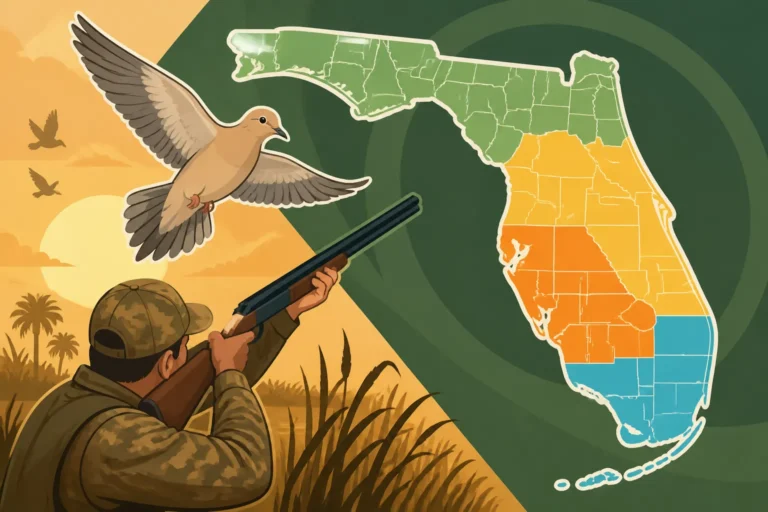
Let's cut through the jargon. HIP certification isn't some obscure Florida-specific rule designed to make your life harder; it's a nationwide program managed by the U.S. Fish and Wildlife Service (USFWS) in cooperation with state wildlife agencies like the Florida Fish and Wildlife Conservation Commission (FWC). If you plan to hunt any migratory game birds in Florida, or anywhere else in the U.S. for that matter, you must be HIP certified. This includes everything from doves and ducks to rails and snipe. Forget about it, and you're technically hunting illegally, regardless of whether you have your state hunting license and federal duck stamp in order.
The "Why" Behind the Program
You might be thinking, "Another piece of paper? What's the point?" And that's a fair question. The core purpose of HIP is to gather crucial data on migratory bird harvests. Imagine trying to manage populations of birds that fly across states, international borders, and entire continents without knowing how many are being harvested. It would be impossible! When you register for HIP, you'll be asked a series of questions about your hunting success from the previous season. This isn't a test; it's a survey designed to estimate harvest numbers for various species.
This data is then used by wildlife biologists to set season dates, bag limits, and conservation strategies to ensure sustainable populations for future generations of hunters. Without accurate harvest data, biologists would essentially be flying blind, making it difficult to protect vulnerable species or provide ample hunting opportunities for healthy populations. So, while it might feel like a minor bureaucratic hurdle, your HIP certification actually plays a vital role in the long-term health and management of migratory bird hunting. It's a small contribution that helps maintain the tradition we all cherish.
Who Needs to Be Certified
The rule is pretty straightforward: if you're hunting any migratory game birds, you need to be HIP certified. This is where many hunters, especially those new to bird hunting or crossing over from solely deer or hog hunting, can get tripped up. It's not just for duck hunters! Are you planning on heading out for opening day of dove season? You need HIP certification. Thinking about hunting snipe in a wet field or rails in the marsh? Yep, HIP certified. Even if you're just tagging along with a friend and plan to shoot a couple of doves, you need it.
This requirement applies to all hunters, regardless of age, residency status, or whether you have a lifetime license. Even youth hunters, who might be exempt from needing a full state hunting license, still need to be HIP certified if they are actively hunting migratory birds. It's a federal requirement, separate from your state's licensing structure. The only exception might be if you're hunting only resident game birds like quail, which do not fall under migratory bird regulations. However, many hunters pursue both, so it's always safer to just get it if there's any chance you'll be after migratory species.
The Process of Getting HIP Certified in Florida
Thankfully, the process of getting HIP certified in Florida is pretty streamlined these days. The Florida Fish and Wildlife Conservation Commission (FWC) has integrated it directly into their licensing system, making it relatively easy to complete. There's no separate fee for HIP certification itself, though you will, of course, need a valid Florida hunting license and often a Florida Migratory Bird Stamp Cost and Florida Federal Duck Stamp Requirement if you're chasing waterfowl.
Online vs. In-Person Options
For most folks, getting HIP certified online is the easiest and quickest route. You can do it right from your computer or even your smartphone. When you purchase or renew your Florida hunting license through the FWC's GoOutdoorsFlorida website – which is the official FWC licensing platform – you'll automatically be prompted with the HIP survey questions if you indicate you plan to hunt migratory birds. It's usually a series of yes/no questions about what types of migratory birds you hunted last year and how many you harvested. Don't stress about being exact; these are estimates.
If you prefer the old-school way or are already at a vendor, you can also get HIP certified in person. Most license agents, such as those at Walmart, sporting goods stores, or county tax collector offices, are equipped to process your HIP certification when you purchase your hunting license. Just make sure to tell them explicitly that you need the HIP certification added to your license. Sometimes, if you don't specifically ask, they might assume you're only deer hunting and skip that part, leading to an issue down the road. It's always a good idea to double-check your license printout to ensure "HIP Certified" is clearly stated.
What Information You'll Need
The beauty of the HIP certification is that it doesn't require a stack of documents or complicated personal information. Since it's linked directly to your hunting license, the system already has most of what it needs. When prompted, you'll mainly be providing simple survey data.
Here's generally what you'll be asked:
- Did you hunt migratory game birds last season? (Yes/No)
- If yes, which categories of birds did you hunt? (e.g., doves, ducks, geese, woodcock, snipe, rails, coots). You'll check off all that apply.
- For each category you hunted, an estimate of how many you harvested. This is typically given in ranges (e.g., 0, 1-10, 11-20, 21-50, 50+). Again, don't worry about exact numbers; rough estimates are perfectly fine. They understand it's difficult to remember every single bird from the previous season.
That's usually it! The process is designed to be quick and unobtrusive. The key is to be honest with your best estimates, as this is the data that helps shape future migratory bird hunting regulations and ensures the health of species like those you'd find during Florida Waterfowl Season and Zones or Florida Dove Season Zones. If you're using a platform like GoHunt to manage your licenses and permits, they'll usually integrate this seamlessly into their user experience, reminding you to complete your HIP certification as part of your overall license purchase.
Common Questions and Pitfalls for Florida Bird Hunters
Even with a straightforward process, there are always unique situations and common mistakes that hunters encounter. Understanding these nuances can save you a headache later when you're in the field.
Migratory Birds Versus Resident Game Birds
This is probably the biggest source of confusion. Not all game birds are migratory, and therefore, not all require HIP certification. For instance, if your sole focus is Bobwhite Quail in Florida, which are resident birds, you do not need HIP certification. However, if you plan to hunt any species that migrates, even if you only hunt them in Florida, the HIP requirement kicks in.
Let's look at some examples:
| Bird Type | HIP Required? | Notes |
|---|---|---|
| Doves (Mourning, White-winged) | Yes | These are classic migratory game birds. |
| Ducks (Mallards, Wood Ducks, Mottled Ducks, etc.) | Yes | All duck species are migratory game birds. You'll also need a Federal Duck Stamp. |
| Geese (Canada Geese) | Yes | All goose species are migratory game birds. |
| Rails, Coots, Snipe, Woodcock | Yes | These are lesser-known but still migratory game birds. |
| Quail (Bobwhite) | No | Resident game bird, no HIP needed. |
| Turkeys (Osceola, Eastern) | No | While they roam, they're considered resident game birds, no HIP needed. |
It’s crucial to know the difference, especially if you're planning a multi-species hunt. If you're going after Florida Duck and Goose Bag Limits and quail, you'll need HIP. If it's just quail, you're in the clear. When in doubt, it’s best to just get the HIP certification; it costs nothing extra and provides peace of mind.
Checking Your Certification Status
So you think you got it, but you want to be sure. That's smart! There are a couple of ways to confirm your HIP certification status. The easiest is to check your actual hunting license. Whether it's a physical paper copy or a digital version on your phone via the FWC's GoOutdoorsFlorida app (or a third-party app like GoHunt), it should clearly state "HIP Certified" or "Migratory Bird Permit" somewhere on it. If it doesn't, you need to revisit the process.
You can also log into your FWC GoOutdoorsFlorida account online. Navigate to your license history, and it should show all active and past licenses and permits, including your HIP certification. If for some reason you went through the process but it's not showing up, contact FWC licensing support immediately. Don't wait until you're out in the field and an FWC officer asks for your credentials. That's the absolute last place you want to discover a missing certification.
Consequences of Not Being Certified
This isn't just a suggestion; it's a mandatory federal requirement. If you are caught hunting migratory birds without being HIP certified, you are in violation of federal law. This can lead to a citation, significant fines, and potentially even the loss of your hunting privileges. FWC officers regularly check for HIP certification, especially in popular bird hunting areas during peak seasons like the Florida Early Teal Season Dates or the opening day of dove season.
Imagine spending all that time and money scouting, buying gear, purchasing your licenses and stamps, only to receive a hefty fine because you forgot to check a box online. It's a frustrating, completely avoidable situation. It's also worth remembering that ignorance of the law is no excuse. Always make it a habit to confirm your HIP certification alongside your other licenses and permits before you head out, especially for species like those found while Decoying Wood Ducks in a Cypress Slough or when Pass-Shooting Doves on a September Field.
HIP Certification in the Field and Beyond
Getting the certification is one thing, but understanding its practical implications for your hunting season is another. It's an annual requirement, and how you carry proof of it matters.
How to Prove Your Certification
Just like your hunting license and other permits, you need to have proof of your HIP certification on your person while hunting migratory birds.
- Physical Copy: If you purchased your license from a vendor, you'll likely have a paper copy of your hunting license that explicitly states "HIP Certified." Keep this with you, perhaps laminated or in a waterproof holder.
- Digital Copy: The FWC GoOutdoorsFlorida app is an excellent tool for this. Once you've purchased your licenses and HIP certified, they'll show up in the app. This is perfectly legal as proof in Florida. Many hunters also use third-party apps like GoHunt that integrate with state licensing systems, offering a convenient way to display all your credentials. Just make sure your phone is charged!
- Screenshot: While the app is generally preferred, a clear screenshot of your digital license with "HIP Certified" visible on your phone can often suffice, especially if you're in an area with spotty cell service. Still, the official app is the most reliable digital proof.
Regardless of how you carry it, the key is that an FWC officer can quickly verify your status. Don't make them dig for it; be ready to present it. This also applies to other important documents like proof of your Florida Hunter Education Requirements if you were born after May 31, 1975.
Why Annual Renewal is Crucial
Here's another point that trips up even seasoned hunters: HIP certification is not a one-and-done deal. It's an annual requirement. Even if you hold a lifetime Florida hunting license, you still need to complete the HIP survey and get certified every single year you plan to hunt migratory birds. Why? Because the data collection is annual. The USFWS and FWC need up-to-date harvest information from year to year to manage populations effectively.
This annual renewal usually aligns with the state's license year, which typically begins in July. So, even if you bought your license last December, you'll need to re-certify after July 1st for the upcoming fall seasons if you plan to hunt migratory birds again. It's a good practice to simply renew your HIP certification whenever you renew your general hunting license for the new season. This small step ensures you're always compliant and ready for opportunities like Early Teal Season Tactics in Florida as soon as they open.
Disclaimer
Please remember that hunting regulations can change. Always consult the official Florida Fish and Wildlife Conservation Commission (FWC) website and the latest hunting regulations guide before heading into the field. This article is for informational purposes only and should not be considered legal advice.