Everglades WMA Airboat Access
Hunting the vast, intricate expanse of the Everglades Wildlife Management Area (WMA) presents a unique challenge for even the most seasoned Florida outdoors enthusiast. You might pore over maps, dreaming of untouched pockets of cypress and sawgrass teeming with game, only to realize that much of this incredible landscape is virtually impenetrable by conventional means. Foot travel is slow and exhausting through mucky sloughs and dense vegetation, and even ATVs quickly become bogged down in the endless waterways. This guide is here to shed light on one of the most effective, and often necessary, ways to truly unlock the heart of the Everglades WMA for hunting: airboat access. We'll delve into the regulations, preparation, and practicalities of navigating this wild frontier on an airboat.
Understanding the Everglades WMA Terrain and Why Airboats Are Essential
The Everglades is unlike any other hunting ground in Florida, or perhaps even the world. It’s a dynamic, watery wilderness, and understanding its unique character is the first step to a successful hunt.
The Unique Challenges of the Everglades Landscape
Imagine endless horizons of waving sawgrass, punctuated by cypress heads and hammocks that rise like islands from the water. Beneath the surface, the "river of grass" flows slowly southward, creating a mosaic of shallow flats, deeper sloughs, and tangled mangrove estuaries towards the coast. This isn't your typical pine flatwoods or oak hammock hunting. The ground, where it exists, is often soft, muddy, and riddled with cypress knees or submerged obstacles. Water levels fluctuate seasonally, turning a barely damp trail into a navigable waterway, or vice-versa.
For a hunter, this presents immense logistical hurdles. Trying to reach prime hunting areas on foot can be an exercise in futility, draining your energy before you even get close to where you want to be. The dense sawgrass can be taller than a person, making visibility minimal and navigation a constant battle against friction and unseen holes. Even rugged swamp buggies or specialized ATVs struggle in many parts of the Everglades WMA, either getting stuck in deep mud or unable to traverse the wide, shallow water bodies efficiently. The sheer scale of the WMA means that what looks like a short trek on a map can turn into an all-day ordeal in the field. This is where the airboat truly shines. For more on navigating this unique terrain, take a look at Hunting the Everglades and Big Cypress.
The Role of Airboats in Navigating the 'Glades
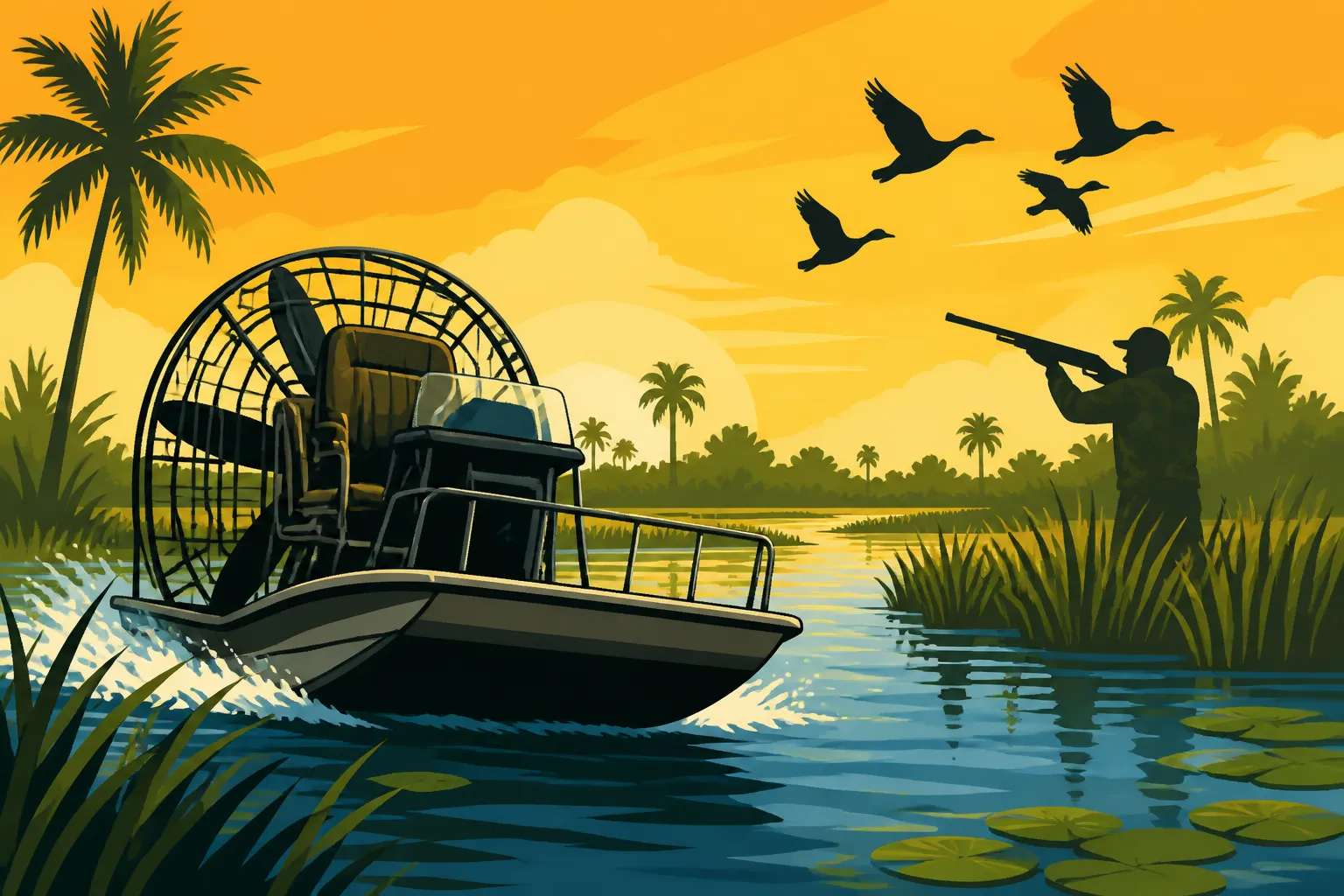
Airboats are purpose-built machines for this very environment. Their flat bottoms and powerful, aircraft-style propellers allow them to glide effortlessly over inches of water, thick vegetation, and even dry ground for short distances. This unique propulsion system means no submerged props to get tangled in weeds or damaged by rocks, making them the ultimate tool for navigating the often-treacherous and ever-changing landscape of the Everglades.
With an airboat, you can cover vast distances in a fraction of the time it would take by any other method, allowing you to access remote areas that rarely see human pressure. This speed and versatility aren't just about convenience; they're about maximizing your hunting time and minimizing the physically exhausting aspects of simply getting to your spot. Instead of slogging through miles of knee-deep water and sawgrass, you can be dropped off at the edge of a promising hammock, fresh and ready to hunt. They transform an otherwise inaccessible wilderness into a hunting paradise, but they come with their own set of rules and responsibilities.
FWC Regulations and Requirements for Airboat Hunting Access
Operating an airboat in the Everglades WMA, or any Florida Wildlife Management Area for that matter, isn't something you can just do on a whim. The Florida Fish and Wildlife Conservation Commission (FWC) has specific rules in place to manage these unique vehicles and protect the delicate Everglades ecosystem. It’s absolutely critical to understand these before you even think about firing up the engine.
Permitting and Registration for Airboats in WMAs
First and foremost, your airboat itself must be properly registered with the state of Florida, just like any other vessel. Beyond that, many WMAs, especially those with sensitive ecosystems or high traffic, require additional permits for airboat operation. It’s not uncommon for specific airboat operator permits or annual passes to be necessary, on top of your standard hunting license and WMA stamp. These permits often come with specific stipulations about when and where you can operate.
Always check the most current FWC regulations for the specific Everglades WMA section you plan to hunt. These rules can vary, and failing to adhere to them can result in hefty fines and the termination of your hunt. Think of it like a specialized driver's license for a specialized vehicle in a specialized area. You wouldn't drive a semi-truck without the right license, and you shouldn't run an airboat in a WMA without verifying all necessary permits and understanding all regulations. Sometimes, the WMA will require a specific decal to be displayed on your airboat. This visual cue tells law enforcement that you're compliant.
Navigational Rules and Restricted Areas
The Everglades WMA isn't an airboat free-for-all. To protect sensitive habitats, maintain peace for other users, and ensure safety, there are strict navigational rules and designated restricted areas. You’ll often find marked airboat trails, similar to roads, that you are expected to follow. Veering off these trails can damage fragile vegetation, disrupt wildlife, and is often prohibited. These trails are especially important in areas with varying water depths or known submerged hazards.
Beyond designated trails, certain parts of the WMA may be entirely off-limits to airboats, especially during specific seasons or in critical nesting or refuge areas. It’s imperative to consult current FWC maps and signage, both online and at WMA entrances, to understand these boundaries. Ignoring these restrictions isn't just illegal; it's irresponsible. Proper use of navigation tools is vital here. Tools like onX Hunt, with its detailed public land layers, can be invaluable for pinpointing exactly where you are and what the land status is. Familiarizing yourself with resources such as onX Layers for Florida Land Status can be a game-changer. You might also find general information in Scouting Florida Public Land Before Season useful for understanding overall WMA scouting. These restrictions help maintain a balance, allowing hunters access while preserving the unique natural resources of the Everglades.
Planning Your Airboat Hunt in the Everglades WMA
Successfully hunting the Everglades WMA by airboat is more than just getting your craft registered and knowing the rules. It requires careful planning, the right gear, and an understanding of how to use this powerful tool to your advantage.
Essential Gear and Safety Considerations
An airboat hunt in the Everglades isn't a casual affair; it's an expedition into a vast wilderness. Beyond your standard hunting equipment, a robust set of gear for the airboat itself and for survival is non-negotiable. A reliable GPS unit, ideally with pre-loaded maps or a satellite imagery overlay, is paramount. Brands like onX Hunt provide excellent mapping capabilities that can literally be life-savers in the featureless sawgrass. Always carry a physical compass and paper map as a backup, because electronics can fail. Communication devices are also crucial – a satellite messenger, a VHF radio, and fully charged cell phones (though service is spotty at best).
Emergency supplies should include ample water, food, first-aid kits, tools for basic airboat repairs, extra fuel, and signaling devices like a whistle or mirror. Personal safety is paramount: wearing a life vest is always a good idea, as is hearing protection given the airboat's powerful engine. Sun protection, including wide-brimmed hats, long sleeves, and sunscreen, will make a long day under the Florida sun much more bearable. Breakdowns in remote areas are not just inconvenient; they can be genuinely dangerous due to the isolation and potential for rapidly changing weather. Preparing for such eventualities is a mark of a responsible Everglades hunter.
Choosing a Launch Point and Routes
Selecting the right launch point is your first tactical decision. The Everglades WMA has several designated public boat ramps capable of handling airboats, typically found along major highways that border or bisect the management area. These ramps serve as critical access points, but they can also get crowded, especially on opening day of various hunting seasons. Knowing your specific hunting zone and choosing a launch that minimizes travel time to your target area is key.
Before you ever launch, spend significant time scouting your intended routes using aerial photos and topographic maps. Resources like GoHunt or the FWC's own public hunting map can offer invaluable satellite imagery to identify sloughs, hammocks, and potential game travel corridors. Look for changes in vegetation density, subtle elevation shifts, and water features that might hold game. Water levels play a huge role here; a route that was navigable last month might be too shallow or too deep now. Talking to experienced locals or even FWC staff can provide current conditions. Remember to check Using the FWC Public Hunting Map and Reading Aerial Photos for Florida Deer for further guidance on digital scouting.
Target Species and Best Practices for Airboat Hunters
While deer are present, the Everglades WMA's primary draw for airboat hunters often revolves around feral hogs and migratory birds, especially ducks. The ability to access remote hammocks and islands makes them ideal for pursuing hogs, which thrive in these dense, watery environments. For waterfowl, an airboat allows you to reach hidden ponds and sloughs deep within the marsh where ducks might feed undisturbed. Year-Round Hog Hunting in Florida and Waterfowl Hunting Florida's Marshes are great resources for these species.
When hunting from an airboat, remember that the airboat is primarily a means of transportation, not a hunting platform (unless specifically permitted, which is rare for traditional game). Once you've reached your desired location, you'll typically shut down the engine, disembark, and hunt on foot or from a blind. Consider how you'll approach your target area quietly after the loud airboat ride. Drift in with the wind, wait for things to settle, or park a distance away and wade/walk in. The goal is to use the airboat for efficient access, then revert to traditional stealthy hunting tactics to minimize disturbance and maximize your chances of success.
| Access Method | Speed/Range | Terrain Covered | Noise Level | Relative Cost | Best Use Case in Everglades WMA |
|---|---|---|---|---|---|
| Airboat | High/Very Far | Water, dense vegetation, shallow mud | Very High | High | Remote access, covering vast distances quickly, waterfowl & hog hunting |
| ATV/Swamp Buggy | Moderate/Limited | Mud, some shallow water, dry trails | Moderate/High | Moderate | Specific WMA designated trails, drier periods, limited range |
| Kayak/Canoe | Slow/Limited | Open water, narrow sloughs, calm conditions | Very Low | Low | Stealthy final approach, small, quiet areas, post-airboat travel |
| Foot/Wading | Very Slow/Very Limited | Dry ground (rare), shallow water, dense vegetation | Very Low | Very Low | Spot-and-stalk from drop-off, short distances, highly physical |
Alternative and Assisted Access Options
Even with the desire to hunt the Everglades WMA, owning and operating an airboat isn't feasible for everyone. The good news is that there are still ways to experience this unique hunting adventure, either by bringing in expert help or combining methods.
Hiring a Guided Airboat Hunt
For many, the most practical way to experience airboat hunting in the Everglades WMA is to hire a professional guide or outfitter. These experienced individuals not only own and maintain the specialized equipment but also possess invaluable local knowledge of the area, including current water conditions, game movements, and restricted zones. They navigate the labyrinthine sloughs and hammocks with an expertise that comes from years on the water, greatly increasing your chances of success and, more importantly, ensuring your safety.
Booking a guided hunt eliminates the need for you to invest in an expensive airboat, learn its operation, or navigate the complex permitting process. Guides typically handle all the logistics, from launch points to ensuring you have the necessary licenses and understanding of WMA rules. While there's a cost involved, it often pales in comparison to the investment of owning your own airboat, and the expertise provided is truly priceless in such a challenging environment. Many outfitters specialize in species like hogs or waterfowl. If this sounds like the route for you, definitely check out Airboat Hunting Guides in Florida and Booking a Guided Florida Hog Hunt to find reputable operations.
Non-Motorized Access as a Complement or Alternative
While airboats are indispensable for covering vast distances in the Everglades WMA, non-motorized options like canoes, kayaks, or even strategic wading still play a crucial role. For some smaller, less remote sections of the WMA, a kayak or canoe might provide sufficient access to certain sloughs or ponds, allowing for an incredibly quiet and immersive hunting experience. This is especially true if you are targeting small game or ducks in very specific, isolated pockets accessible from a main road or a less-trafficked public ramp.
More often, non-motorized access serves as a vital complement to airboat travel. An airboat can drop you deep into a remote area, and then a kayak or canoe can be used for silent, short-distance navigation to your final hunting stand or blind. Alternatively, once the airboat is safely anchored, you might don your waders and meticulously stalk on foot through a promising cypress strand or along the edge of a hammock. These methods minimize disturbance and allow for a more intimate hunt once the airboat has done the heavy lifting of getting you into the untouched wilderness. It's about combining the efficiency of an airboat with the stealth of traditional hunting methods to maximize your chances in this unique landscape.
Disclaimer
This article is for general informational purposes only and does not constitute professional advice. Laws, prices and regulations vary by location and change over time. Consult a qualified professional for guidance on your specific situation.