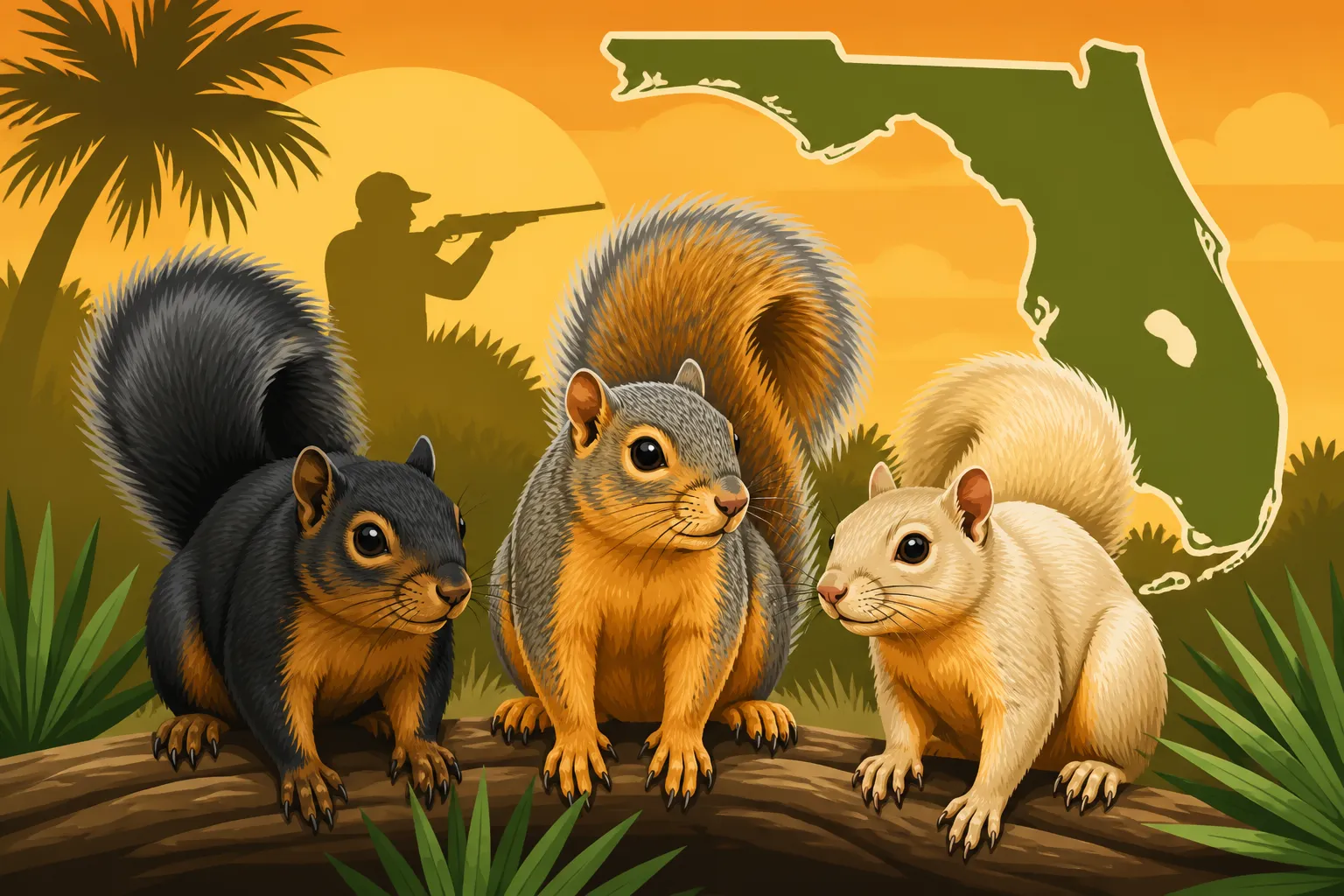
Florida Fox Squirrel Color Variations
It's easy to think of squirrels as just, well, squirrels. You know, the bushy-tailed little dynamos scampering up oak trees and chattering away. But if you've spent any real time exploring Florida's wild places, from the pine flatwoods to the cypress swamps, you've likely encountered a much more striking, and often bewildering, type of squirrel: the fox squirrel. These aren't your average gray squirrels; they're bigger, bolder, and frankly, a kaleidoscope of colors that can leave even seasoned woodsmen scratching their heads about what they just saw. This guide is here to unravel the mystery behind the fascinating color variations of Florida's fox squirrels.
The Many Shades of Florida's Fox Squirrels
When most folks picture a squirrel, they envision the ubiquitous gray squirrel, small and agile, usually a uniform grizzled gray with a white belly. But the fox squirrel, Sciurus niger, is a different beast entirely, both in stature and in its incredible palette of fur colors. Florida, with its diverse ecosystems and a history of geographic isolation for certain populations, boasts some of the most dramatic and distinctive fox squirrel color variations you'll find anywhere. It's a testament to the Sunshine State's unique natural heritage, where adaptation and genetics have painted these creatures in truly remarkable ways.
Not Your Average Bushy-Tailed Gray
Let's clear this up right away: a fox squirrel is significantly larger than its gray squirrel cousin. We're talking about an animal that can be twice the size, often weighing a pound or more, giving it a much more substantial, almost cat-like presence as it glides through the trees or bounds across the forest floor. Their movements are often slower, more deliberate, and they spend a good deal more time on the ground foraging for nuts, seeds, and even fungi. This larger size alone makes them stand out, but it's their fur that really sets them apart.
Unlike the fairly consistent gray of the common squirrel, fox squirrels in Florida can display an astonishing array of hues. You might see individuals with coats of deep black, rich chocolate brown, vibrant reddish-orange, grizzled gray, or even pale blonde. And it's not just the overall body color; the patterns are what truly capture attention. Many exhibit striking markings, like distinct white patches on their nose, ears, or feet, contrasting sharply with darker body fur. It's this wild variation that can make identification a fun challenge, often leading to debates among hunters and nature enthusiasts about what subspecies or color phase they've observed. These unique appearances are one of the many reasons hunters appreciate Gray Versus Fox Squirrels in Florida.
Geographic Color Patterns Across the Sunshine State
What's even more intriguing is that these color variations aren't just random acts of nature. Instead, they often follow distinct geographic patterns, largely dictated by localized subspecies and the environments they inhabit. Over generations, isolated populations have developed specific genetic traits that influence their fur coloration, creating regional "styles" of fox squirrels. You might see a very different-looking fox squirrel in the pine flatwoods of north Florida compared to one scampering through the cypress swamps of the Everglades.
These regional distinctions are a fascinating example of natural selection and genetic drift at play. In some areas, a darker coat might offer better camouflage against the shadows of a dense cypress forest, while in another, a lighter, more mottled pattern might blend perfectly with the bark of a longleaf pine. Knowing these regional differences can actually help you identify what you're seeing, and it adds another layer of appreciation for the incredible biodiversity of Florida's wild spaces. It also means that a hunting trip from the Panhandle down to South Florida might offer you the chance to observe several visually distinct populations of these magnificent rodents.
Identifying Key Color Phases and Subspecies
Florida is home to a few recognized subspecies of fox squirrels, and each one tends to have its own signature look, though individual variation always exists. Understanding these broad categories can help you make sense of the dazzling array of colors you encounter in the field.
| Subspecies | Common Description | Primary Range in Florida | Distinctive Marks |
|---|---|---|---|
| Sherman's Fox Squirrel | Black head, white nose/ears, dark body, lighter belly | Peninsular Florida (south of the Panhandle) | High contrast: black head, white face mask |
| Eastern Fox Squirrel | Rusty-red, gray, or black back; orange/tan belly | Florida Panhandle, Northern Florida | More variable, often reddish or grizzled, less stark |
| Big Cypress Fox Squirrel | Very dark, often entirely black or dark brown | Southwest Florida (Big Cypress, Everglades) | Often melanistic (all black), subtle patterns |
The Sherman's Fox Squirrel (Sciurus niger shermani)
If you've hunted or hiked anywhere in peninsular Florida, from Gainesville down to Lake Okeechobee, chances are you've seen a Sherman's fox squirrel. This is arguably the most recognizable and striking of Florida's fox squirrels. Imagine a squirrel with a jet-black head, often sporting a stark white patch on its nose and around its eyes, sometimes extending to its ears. The rest of its body can range from dark gray to rusty brown, often with a paler, sometimes orangey, belly. The contrast between the dark head and the white facial markings is truly unmistakable.
These squirrels are typically found in open pine forests, especially those managed with prescribed burns, as well as oak hammocks and mature pineland habitats. Their appearance makes them hard to miss, even from a distance, as that white nose acts like a beacon. I've often seen them bounding through the wiregrass and palmetto understory of a longleaf pine forest, their unique coloration making them stand out against the tawny ground. They are a real highlight for anyone exploring the state's central and northern peninsular woodlands, often seen browsing for pine cones or acorns. Using a mapping tool like GoHunt can help you locate areas with extensive pine forests, which are prime habitat for Sherman's fox squirrels.
The Eastern Fox Squirrel (Sciurus niger niger) and its Panhandle Variants
As you move into the Florida Panhandle and the northernmost parts of the state, the fox squirrels you encounter tend to fall under the broader "Eastern Fox Squirrel" classification, though even within this, there's quite a bit of local flavor. These squirrels often display a more classic fox squirrel look, with a back that can be a mix of grizzled gray and rusty red, or sometimes a solid dark brown or even black. Their bellies are typically lighter, ranging from a pale yellow to a vibrant orange or tan. They usually lack the distinct white face mask of the Sherman's.
In the Panhandle, you might find variations that closely resemble the fox squirrels found in southern Georgia and Alabama, reflecting the continuous habitat and gene flow across state lines. Some individuals might be a striking rusty orange all over, while others might be predominantly gray with just hints of reddish-brown. These squirrels thrive in the mixed pine-hardwood forests, especially in areas like the Apalachicola National Forest or the vast timberlands common in the region. When you're Hunting Florida Panhandle Pine Plantations, keep an eye out for these robust, colorful squirrels; their size and distinct coloration make them a beautiful part of the landscape.
The Big Cypress Fox Squirrel (Sciurus niger avicennia)
Now, for something truly different. Head down to the cypress swamps and mixed wetlands of southwest Florida, particularly within the vastness of the Big Cypress National Preserve and parts of the Everglades, and you might encounter the Big Cypress fox squirrel. This subspecies is particularly known for its melanistic (all black) phase. While not every Big Cypress fox squirrel is black, a significant proportion of them are, often displaying a deep, glossy black coat across their entire body, sometimes with just a hint of dark brown on their face or belly.
When you're out Hunting the Everglades and Big Cypress, seeing one of these dark, almost ominous-looking squirrels against the pale trunks of cypress trees or the vibrant green of swamp vegetation is an unforgettable experience. Even those that aren't entirely black tend to be much darker overall than their northern cousins, with less distinct patterning. This darker coloration is thought to provide excellent camouflage within the deep shadows and dense undergrowth of their swampy habitat. It's a prime example of how local environmental conditions can strongly influence the appearance of a species, leading to such a striking and unique population.
What Influences a Fox Squirrel's Color?
The kaleidoscope of colors seen in Florida's fox squirrels isn't just arbitrary; it's the result of a complex interplay of genetics, environment, and even age. Understanding these factors helps us appreciate the intricate natural processes that shape wildlife.
Genetics and Regional Isolation
The primary driver behind the distinct color variations we see in Florida's fox squirrels is genetics, coupled with geographic isolation. Over vast stretches of time, different populations of fox squirrels in Florida became somewhat separated by natural barriers or simply by distance. This isolation meant that gene pools remained relatively distinct, allowing specific genetic mutations for fur color to become more prevalent in certain areas. Think of it like a family trait that becomes very common in one branch of a family tree because that branch rarely intermarries with others.
These genetic differences lead to the expression of various pigments in the fur. For instance, the genes that lead to the striking black head and white nose of the Sherman's fox squirrel became dominant in populations throughout peninsular Florida. Similarly, the genes for melanism became more common in the isolated, swampy regions of southwest Florida, giving rise to the darker Big Cypress fox squirrel. This genetic legacy is why you can often tell where a fox squirrel comes from just by looking at its colors, showcasing the incredible biodiversity of the state.
Habitat and Camouflage Needs
While genetics lay the blueprint, the environment often plays a subtle but critical role in favoring certain colorations. Camouflage is a fundamental aspect of survival for many animals, helping them avoid predators and ambush prey. For fox squirrels, blending into their surroundings is key, whether it's the mottled bark of a longleaf pine or the deep shadows of a cypress swamp.
Consider the darker coloration of the Big Cypress fox squirrel. In the dense, shadowy understory of a cypress swamp, a black or very dark brown coat would offer superior camouflage compared to a lighter, reddish squirrel. Conversely, in the more open, sun-drenched pine flatwoods, a grizzled gray or reddish-brown coat might blend better with the bark and pine needles. While not as dramatic as genetic mutations, environmental pressures over generations can subtly favor individuals with better-suited coloration, helping to reinforce regional trends. Factors like diet and overall health can also play a minor role, impacting the vibrancy and sheen of their coats, but the underlying color pattern is primarily genetic. When you're out Hunting Florida Cypress Swamp Edges, you'll notice how wildlife adapts perfectly to its surroundings.
Age and Seasonal Changes
Just like us, animals can show changes in appearance as they age, and sometimes even with the seasons. While fox squirrels don't undergo a dramatic seasonal molt like some northern furbearers, there can be subtle shifts in their coat. Juvenile fox squirrels, for example, might have slightly different fur textures or even color intensities compared to mature adults. Their coats might appear a bit softer or less vibrant until they reach full maturity.
Over time, an individual squirrel's fur can also fade or become slightly discolored due to sun exposure, wear and tear, or even parasites. However, these are generally minor variations on their genetically determined base color. The most striking color differences you'll observe among Florida fox squirrels are due to their subspecies and regional genetic makeup, rather than significant seasonal changes. Still, knowing that a young squirrel might look a bit different from an old one can add to your observational skills when you're watching them forage after a good mast crop, something vital to understanding Florida Squirrel Nest Counts and Mast Crops.
Appreciating the Diversity of Florida's Woodlands
Florida's fox squirrels are more than just a target for hunters; they are a vibrant and integral part of the state's natural tapestry. Their varied appearances offer a unique window into evolution, ecology, and the sheer beauty of wild Florida.
More Than Just a Game Animal
While fox squirrels are indeed a legal game animal in Florida, offering a challenging hunt for small game enthusiasts, their value extends far beyond the hunting bag. These larger squirrels play an important ecological role in seed dispersal, helping to plant trees and maintain forest health. Observing their unique colorations, whether it's the striking white-faced Sherman's or the elusive dark Big Cypress variety, adds a rich layer to any outdoor experience. They are charismatic creatures that embody the wild spirit of Florida's woodlands and stand as a symbol of its rich biodiversity.
Encouragingly, many outdoor enthusiasts, including hunters, are keen observers of nature. Taking the time to really look at these squirrels, to appreciate their specific markings and understand why they look the way they do, enriches our connection to the environment. It transforms a simple sighting into a moment of natural wonder, reinforcing the idea that every creature has its place and its own story to tell within Florida's wild landscapes.
Conservation and Management Considerations
The very existence of these distinct color variations and subspecies highlights the importance of habitat conservation. Each fox squirrel subspecies is adapted to specific habitat types – the open pine flatwoods for the Sherman's, the dense swamps for the Big Cypress, and mixed forests for the Eastern variants. Maintaining these diverse habitats, often through careful land management practices like prescribed burning, is crucial for the continued health and genetic integrity of these unique squirrel populations.
Wildlife managers pay attention to these subspecies and their distributions when making decisions about land use and conservation efforts. Understanding where these unique populations thrive, and what threats they might face, helps ensure that future generations can continue to enjoy the sight of a colorful fox squirrel darting through the Florida woods. It's part of the broader effort to protect Florida's natural heritage, tying into initiatives that monitor Florida Wildlife Disease Monitoring Program and overall ecosystem health.
Where to See These Colorful Creatures
So, where can you go to try and spot these incredible fox squirrel color variations for yourself? The key is to head to the right habitat type within the correct geographic region. For the iconic Sherman's fox squirrel, focus your efforts on the vast pine flatwoods and oak hammocks of central and north Florida, particularly in areas like the Ocala National Forest or many state forests and wildlife management areas. These are often prime habitats with mature trees and relatively open understories.
If your heart is set on spotting the darker Big Cypress fox squirrel, you'll need to venture into the swampy, cypress-dominated regions of southwest Florida. The Big Cypress National Preserve is, as its name suggests, a perfect place to start. For the Eastern fox squirrel and its varied panhandle relatives, explore the mixed pine-hardwood forests of the western Panhandle, such as the Apalachicola National Forest. When planning your trips to Public Hunting Land in Florida or Florida Wildlife Management Areas, consider using mapping applications like GoHunt. These tools can help you identify specific habitat types, like pine plantations or cypress sloughs, which are critical for locating different fox squirrel populations. Knowing the habitat can greatly increase your chances of witnessing Florida's incredible fox squirrel diversity firsthand. Scouting With the Florida FWC App is another great way to prepare.
Disclaimer
This article is for general informational purposes only and does not constitute professional advice. Laws, prices and regulations vary by location and change over time. Consult a qualified professional for guidance on your specific situation.