How Florida’s Bear Quota Is Split by Zone
Navigating the world of Florida bear hunting can feel a bit like trying to solve a puzzle with half the pieces missing, especially when you start looking into the annual quotas. It's not as simple as a statewide free-for-all; specific allocations by zone can make or break your hunting plans. This guide will meticulously break down exactly how Florida's bear quota is split by zone, giving you the clarity you need to understand these crucial regulations.
Understanding Florida's Bear Management Zones
Florida's bear population has made a remarkable comeback, leading to the reinstatement of a managed hunting season. However, effective management means treating different parts of the state with different strategies, primarily due to varying bear densities, habitat types, and human-bear interactions. It's not a one-size-fits-all approach.
Why Florida Divides Its Bear Population for Management
The Florida Fish and Wildlife Conservation Commission (FWC) doesn't just draw lines on a map arbitrarily. Their zone divisions are deeply rooted in scientific data, focusing on distinct bear subpopulations and their unique ecological contexts. These divisions allow for targeted management strategies that address specific issues in each region, whether it's high population growth in one area or a focus on reducing human-bear conflicts in another. For instance, areas with burgeoning populations might receive a larger quota to help stabilize numbers, while zones still experiencing slower recovery might see stricter limits. Understanding these population dynamics is key, and you can delve deeper into the specifics of Florida Bear Population by Subpopulation Zone to see how FWC tracks these groups. Different subspecies or genetic variations, though less a factor for quota setting, still highlight the diverse nature of Florida's bear populations, as explained in articles like Florida Black Bear Subspecies Explained.
Geographic Overview of Bear Hunt Zones
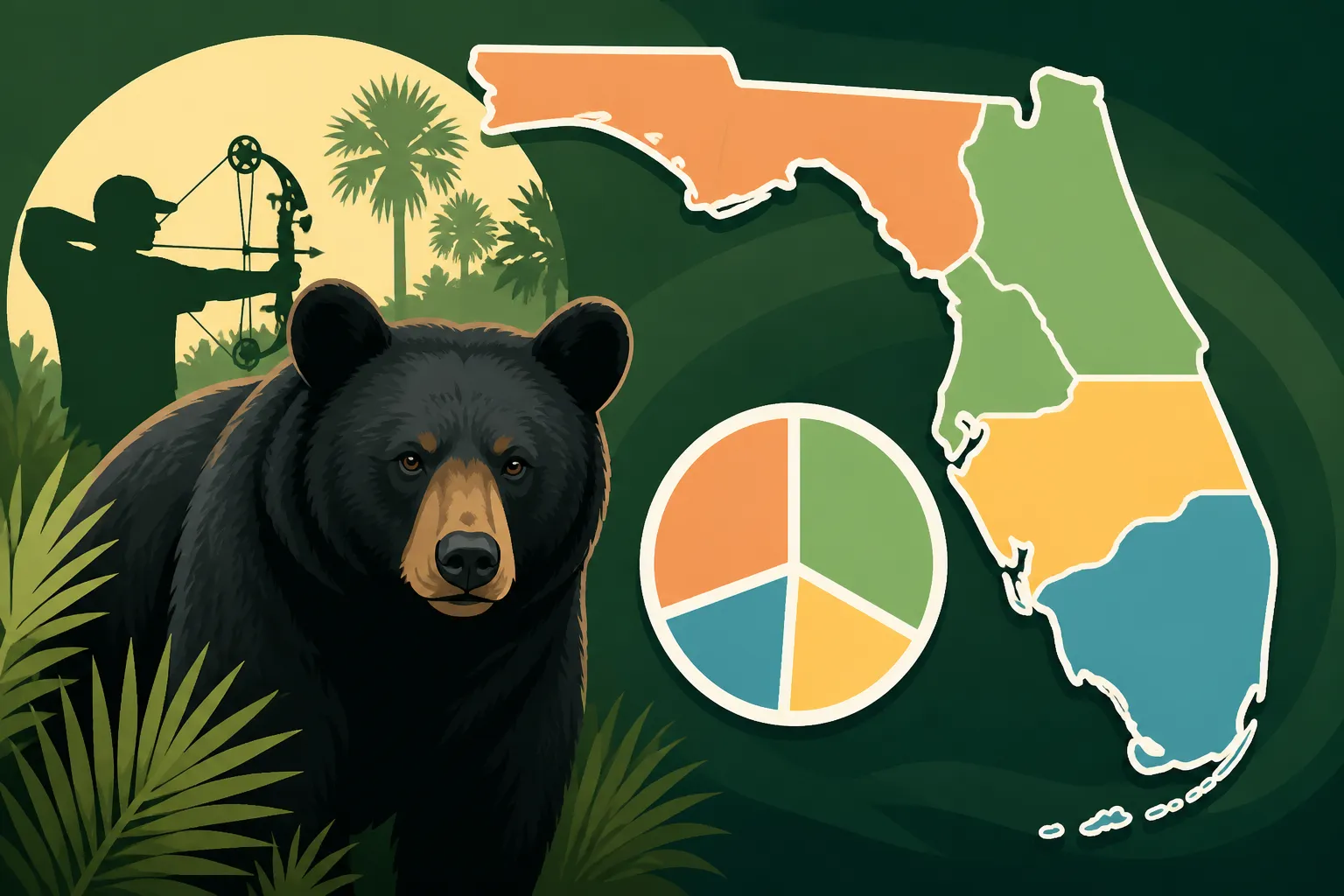
Currently, Florida's bear management is typically structured around several distinct population units, which often align with the hunt zones. While specific zone names and boundaries can shift slightly based on the most current biological data and management needs, they generally cover broad geographic areas. You might hear about zones like the Eastern Bear Management Unit (BMU), the Central BMU, the North-Central BMU, the St. Johns BMU, the South BMU, and the West Panhandle BMU. Each of these zones encompasses a unique blend of habitats, from the sprawling pine forests of the Panhandle to the dense palmetto and swamps of Central Florida. For hunters, knowing which counties fall into which zone is paramount. A comprehensive list can usually be found, like in our guide on Florida's Thirty-One Bear Hunting Counties, which helps pinpoint your hunting grounds. These zones are designed to ensure that hunting pressure is distributed appropriately, preventing overharvest in one area while allowing for effective management in others.
The Mechanics of the Annual Bear Quota Allocation
When the FWC sets its sights on a bear hunt, it's a carefully calculated process, not just a random number generation. The total statewide quota and its distribution across zones are critical components of ensuring a sustainable hunt that meets conservation objectives.
How the Total Statewide Quota is Determined
The FWC's decision to establish a statewide bear quota is grounded in years of research and monitoring. It begins with comprehensive population estimates for Florida's black bear population. These estimates consider factors like cub production, survival rates, and known mortalities (e.g., roadkills, nuisance bear removals). The goal isn't just to reduce the population but to manage it for long-term health and to minimize human-bear conflicts. The FWC evaluates various scenarios, balancing the biological sustainability of the bear population with public safety concerns and the desires of stakeholders. They project how a certain harvest level will impact the population trend in the coming years. This scientific rigor ensures that the total number of bears allowed to be harvested, often around the mark of Florida's One-Hundred-Eighty-Seven Bear Quota, is sustainable and aligns with the state's wildlife management goals. It's a testament to adaptive management, meaning these numbers are fluid and respond to current conditions.
Breaking Down the Quota by Individual Zone
Once a statewide quota is established, the real puzzle of distribution begins. The FWC then meticulously allocates portions of this overall quota to each specific bear management zone. This allocation is not a simple even split; it’s highly dependent on the bear population density within each zone, the history of human-bear conflicts, and the FWC’s specific management objectives for that region.
For example, a zone with a higher bear population and a history of more frequent human-bear interactions might receive a larger share of the quota. Conversely, a zone with a lower population density or a recovering population might have a much smaller, more conservative quota. The idea is to target areas where management is most needed while protecting populations in more vulnerable regions.
Let's consider a hypothetical scenario: if Florida sets a total statewide quota of 300 bears for the year. The FWC might then distribute this as follows:
| Bear Management Zone | Estimated Quota (Hypothetical) | Rationale (General) |
|---|---|---|
| Eastern BMU | 90 | High density, significant conflicts |
| Central BMU | 75 | Stable population, moderate conflicts |
| North-Central BMU | 50 | Growing population, some conflicts |
| St. Johns BMU | 40 | Recovering, localized conflicts |
| South BMU | 30 | Lower density, limited conflicts |
| West Panhandle BMU | 15 | Isolated population, very limited conflicts |
Note: These numbers are purely illustrative and do not reflect actual FWC quotas for any given year, which are subject to annual review and change.
This zone-specific breakdown is critical because it directly influences where hunters can apply for permits and the overall odds of drawing a tag in a particular area. It also highlights the FWC's dynamic approach to conservation, tailoring efforts to the unique needs of each region. The Florida Bear Permit Application Process details how hunters then apply for these zone-specific permits, entering a lottery system that grants access to the limited opportunities.
Impact of Zone-Specific Quotas on Hunters
For anyone hoping to participate in Florida's bear hunting season, these zone-specific quotas are a game-changer. They transform a broad opportunity into a highly localized and competitive endeavor, requiring strategic planning and a good understanding of the permit system.
Navigating Limited Opportunity and High Demand
The stark reality of Florida's bear hunt is that permits are extremely limited, especially in popular zones. With a relatively small statewide quota divided across multiple management units, the number of available permits for any single zone can be quite low. This scarcity immediately translates into high demand, creating a challenging environment for hunters.
Picture this: you've been dreaming of a Florida bear hunt for years, scouting potential areas, and getting your gear ready. Then you discover that the zone you planned to hunt has only a handful of permits issued for the entire season. This reality can be disheartening, but it's part of the managed approach to ensure sustainability. It means that most hunters will enter a lottery system, hoping their name is drawn from hundreds, if not thousands, of applicants for a limited number of tags in their preferred zone. The odds can be steep, a fact many hunters are all too aware of when they check the Florida Bear Permit Lottery Odds. This is where services like GoHunt become invaluable; they often provide tools that help hunters analyze draw odds and research success rates by zone, giving you a statistical edge in making informed application decisions.
Strategic Considerations for Applying
Given the intense competition, simply applying for any zone isn't a winning strategy. Hunters must think strategically about where they place their application. Several factors come into play:
- Proximity and Familiarity: Do you live near a particular zone, making scouting and travel easier? Familiarity with the terrain and local bear habits can significantly improve your chances if you draw a tag.
- Bear Density and Past Success Rates: Some zones consistently have higher bear densities or better hunter success rates. Researching these historical trends can help you decide if a zone, despite potentially higher competition, offers a better chance of harvesting a bear if you're lucky enough to draw.
- Permit Availability vs. Competition: This is the balancing act. A zone with a slightly higher permit allocation might attract more applicants, driving down your individual odds. Conversely, a less popular zone with fewer permits might still offer better odds if even fewer people apply. This is precisely the kind of detailed data that platforms like GoHunt compile, allowing you to weigh the trade-offs before you submit your application.
- Understanding Draw Windows: Missing the application window means missing the hunt entirely. Keep a close eye on the FWC's announced Florida Bear Permit Application Window to ensure you don't miss out on your chance to apply.
Careful consideration of these factors, combined with reliable data, can make a significant difference in your approach to applying for a Florida bear permit.
Adapting to Quota Adjustments and Future Outlook
The world of wildlife management is never static, and bear quotas in Florida are no exception. What holds true one year might shift the next, requiring hunters to stay informed and adaptable.
Why Quotas Change Annually
Bear quotas are not set in stone; they are part of an adaptive management strategy designed to respond to the dynamic nature of wildlife populations and environmental conditions. Several key factors can influence why quotas might change from year to year:
- Population Surveys and Health: The FWC continuously monitors Florida's black bear population through various surveys, including den studies, roadkill data, and observations. If population estimates show a significant increase or decrease in a particular zone, the quota will likely be adjusted accordingly to maintain healthy numbers. For instance, strong cub survival rates one year could lead to a slightly higher quota possibility in subsequent years.
- Human-Bear Conflict Data: Areas experiencing a spike in human-bear conflicts—such as nuisance bears getting into garbage or property damage—might see an increased quota to help mitigate these issues by reducing local bear densities. Conversely, successful conflict reduction efforts could allow for more conservative quotas.
- Previous Harvest Success: The actual harvest data from previous seasons plays a crucial role. If hunters consistently meet or exceed the quota in a specific zone, the FWC might re-evaluate the target population size or adjust the quota downward for the next season to prevent overharvest. Conversely, if quotas are consistently underfilled, it might prompt a re-evaluation of permit numbers or season structure.
- Habitat Changes and Disease: Large-scale habitat alterations, such as major wildfires, extensive land development, or even the potential emergence of wildlife diseases, can impact bear populations and necessitate quota adjustments. The FWC is always monitoring for threats that could affect bear health and numbers.
This constant evaluation means hunters can never assume the quota for the upcoming season will be identical to the last. Staying updated with the FWC's latest announcements and using resources like GoHunt to track changes is essential.
The Role of Private Landowner Permits
While the general statewide quota and zone-specific allocations primarily govern public land and general permits, it's also worth noting the existence of private landowner permits. In some situations, landowners may be granted permits to harvest bears on their property, particularly if they are experiencing significant property damage or safety concerns due to bear activity. These permits are distinct from the general public hunt permits and are usually issued under very specific circumstances to address localized issues. While they contribute to the overall harvest, their allocation and requirements differ significantly from the public lottery system. Understanding What the Private Landowner Bear Permit Requires clarifies this important distinction and shows how it fits into the broader bear management picture, albeit as a separate component from the public zone quotas.
Disclaimer
Please note that hunting regulations, season dates, and quota numbers are subject to change by the Florida Fish and Wildlife Conservation Commission (FWC). Always consult the most current FWC regulations booklet or website before planning any hunting activity. This guide provides general information and should not be considered a substitute for official FWC resources.