Ocala WMA’s Spring-Fed Lakes
Navigating the vastness of Florida's public lands can feel like trying to solve a puzzle with half the pieces missing, especially when you throw in complex waterways and dense vegetation. Many hunters struggle to pinpoint exactly where to focus their efforts, often overlooking prime habitat simply because it looks too difficult to access or understand on a map. This comprehensive guide will peel back the layers of Ocala Wildlife Management Area, specifically focusing on its unique spring-fed lakes, to help you uncover hidden hunting opportunities and develop effective strategies for success.
The Unique Waterscapes of Ocala WMA
Ocala National Forest, within which Ocala WMA resides, is a true gem of central Florida, boasting an incredible array of ecosystems. But it's the spring-fed lakes and their surrounding habitats that truly set parts of this WMA apart. These aren't your typical stagnant ponds; they're vibrant, dynamic systems teeming with life, and understanding them is key to unlocking their hunting potential.
Spring-Fed Lakes: More Than Just Water
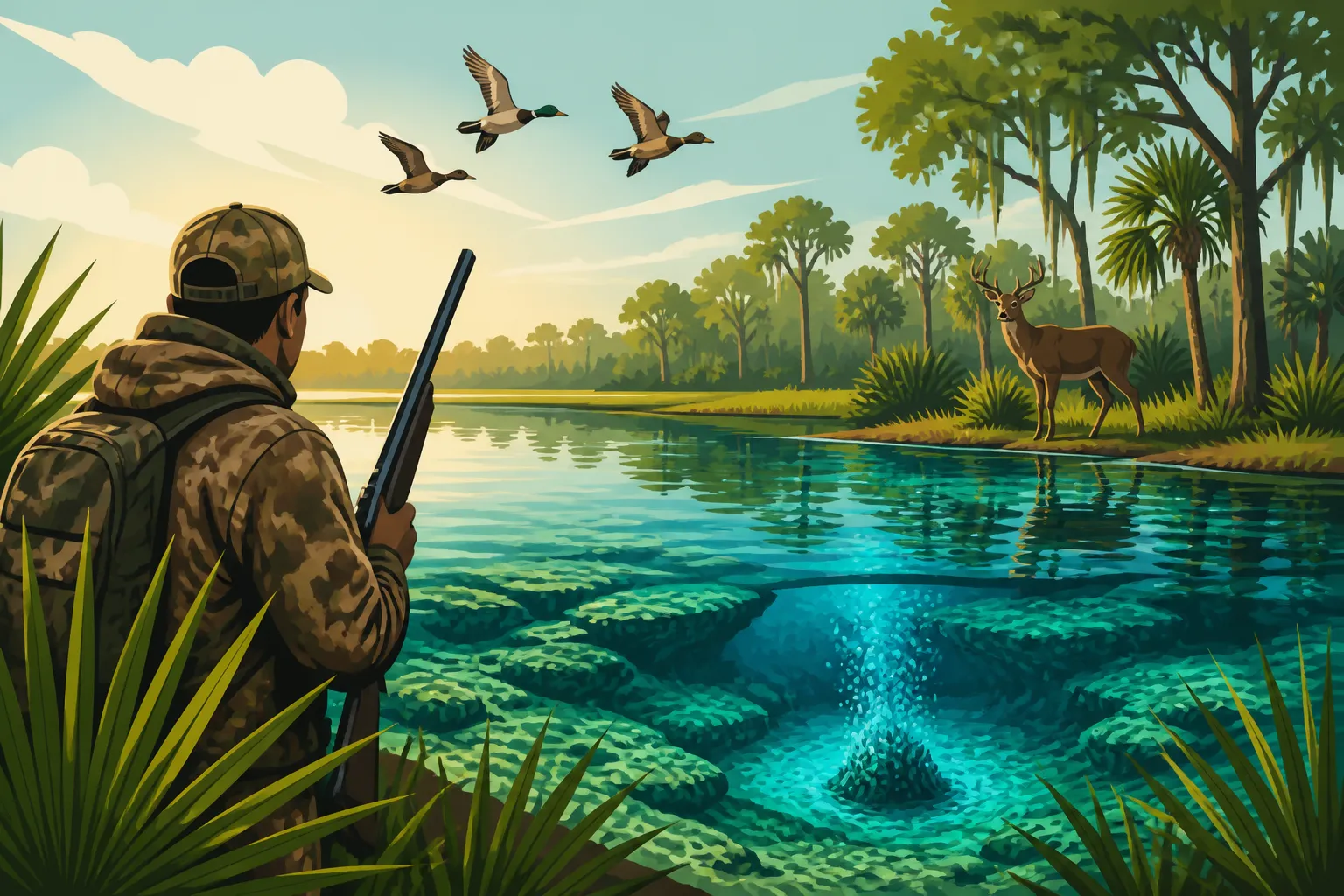
Imagine a landscape where crystal-clear water bubbles up from underground springs, feeding serene lakes and winding creeks. That's what you'll find in Ocala. These aren't just pretty places; the constant influx of fresh, cool water creates incredibly stable environments, especially during Florida's often brutal warm seasons. This stability attracts and holds game like deer and hogs, providing consistent water sources, lush vegetation along the banks, and thermal cover that drier areas simply can't offer. It also means the plant life around these lakes is often different, creating unique food sources and bedding areas that can concentrate animals.
The character of these lakes varies, too. Some are expansive and shallow, perfect for wading and attracting waterfowl. Others are deeper, with steep banks and dense shoreline cover that makes for excellent deer bedding. Knowing the subtle differences between these water bodies, and how they interact with the surrounding uplands and swamps, is critical. Hunters who dismiss these areas as simply "too wet" are missing out on some of the most consistent game concentrations in the WMA, especially when the rest of the forest dries out.
The Ecosystem: Flora, Fauna, and the Hunting Challenge
The margins of these spring-fed lakes are often a mosaic of cypress trees, dense palmetto thickets, and various water-tolerant hardwoods. This lush, diverse vegetation offers incredible cover and food sources for wildlife. Deer, especially, rely on these areas for bedding and escape cover, often moving between the thick lakeside vegetation and nearby pine flatwoods or oak hammocks where acorns might drop. Hogs are almost a constant presence, rooting through the soft, moist soil for tubers and grubs.
Hunting these areas presents a unique challenge. The thick cover can make visibility tough, and the soft, sometimes mucky ground can make silent travel difficult. However, these very challenges are what deter many hunters, leaving these prime spots less pressured. Expect to encounter abundant sign – tracks in the mud, hog rooting, and deer rubs on trees along the water's edge. The sheer diversity of game and the richness of the habitat make it worth the effort, but you need to come prepared for a different kind of Florida hunt.
Essential Tools for Navigating and Scouting Ocala's Lakes
Successfully hunting around Ocala's spring-fed lakes requires more than just a keen eye; it demands careful planning and the right tools to overcome the navigational challenges. The dense vegetation and numerous water bodies can quickly disorient an unprepared hunter.
Mastering Your Map: Digital and Physical Aids
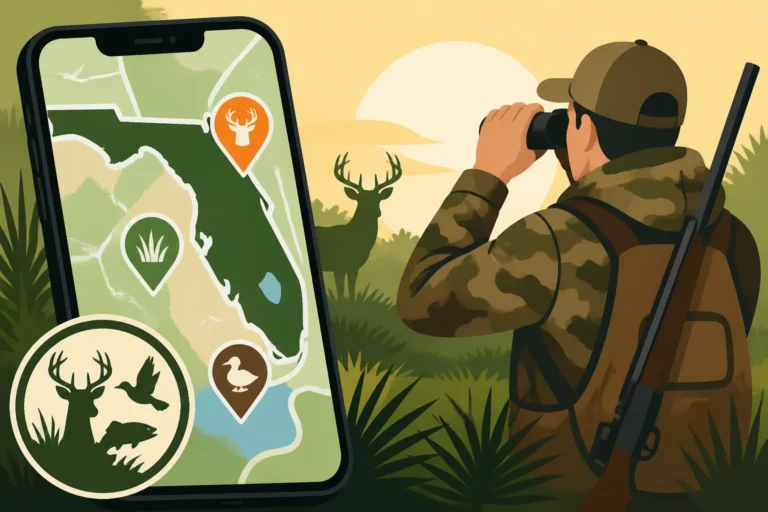
In a place like Ocala WMA, a good mapping system is your absolute best friend. Forget trying to rely solely on memory or faint trails; the terrain shifts, water levels change, and what looked like a clear path yesterday might be knee-deep mud today. Digital mapping apps, like onX Hunt, are invaluable. They allow you to see property boundaries, identify private land enclaves within the WMA, and, crucially, understand the intricate network of lakes, sloughs, and high ground that defines the area. I always mark potential access points, areas of fresh sign, and even good spots for a quick rest on my onX Hunt app. The ability to drop pins and track your route in real-time prevents you from getting turned around in the dense cover, which is a real concern when you're pushing into less-traveled areas.
While digital maps are powerful, don't underestimate the value of a physical map, too. Batteries die, screens crack, and sometimes you just need to spread out a large-scale map to get the bigger picture. Cross-referencing your digital intel with a printed topo map can help you spot subtle elevation changes or historical features that might influence game movement. When Scouting Florida Public Land Before Season, I'll often print out sections of my hunting area, highlighting key features I've identified on my app, like bottlenecks between two lakes or a hidden oak hammock bordering a cypress swamp. These maps are also excellent for marking things like Treestand Rules on Florida Public Land or Ground Blind Rules on Florida WMAs so you're always in compliance.
Watercraft and Foot Travel: Accessing Remote Pockets
Given the abundance of lakes and wetlands, incorporating watercraft into your hunting strategy can be a game-changer. A kayak, canoe, or even a small jon boat can open up vast tracts of land that are otherwise inaccessible to hunters on foot. Think about it: a small lake might have a road access point on one side, but the opposite bank could be a sanctuary, rarely disturbed due to the difficult overland approach. Paddling across allows you to sneak into these untouched areas, often revealing fresh game sign right at the water's edge.
When considering watercraft, portability is key. You'll often be launching from unimproved spots, so something you can handle solo or with a partner is ideal. Kayaks are fantastic for stealth and navigating tight spaces, allowing you to slip through small channels or across shallow flats. They also provide a stable platform for retrieving game, should you be fortunate enough to connect with an animal near the water. For more extensive explorations, a small motor on a jon boat might be useful, but remember that many areas within WMAs might have restrictions on motor size or type, so always check the specific regulations for Ocala WMA before heading out. Sometimes, the most productive spots are only accessible by wading or pushing through thick marsh grass, so waterproof boots and waders are non-negotiable.
| Watercraft Type | Pros | Cons | Ideal Use in Ocala WMA |
|---|---|---|---|
| Kayak/Canoe | Silent, highly maneuverable, good for shallow water, easy to transport. | Limited cargo space, can be slow, less stable for shooting/retrieval. | Stealthy access to small lakes, sloughs, narrow creeks; pre-season scouting. |
| Small Jon Boat (with small motor) | More cargo space, faster travel, more stable platform. | Can be noisy, limited to deeper water, harder to transport/launch, motor restrictions may apply. | Covering larger lakes, retrieving bigger game, accessing areas with more open water. |
| Wading | Ultra-stealthy, no equipment needed beyond good boots/waders, access very shallow areas. | Slow, physically demanding, limited range, can be dangerous in unknown depths/muck. | Short-distance creek crossings, exploring marshy lake edges, tracking game into wetlands. |
Strategies for Deer Hunting Near Ocala's Lakes
Deer in Ocala WMA, particularly around the spring-fed lakes, behave differently than their counterparts in drier pine flatwoods. Their movement patterns, bedding choices, and feeding habits are intricately linked to the water, making them predictable if you know what to look for.
Decoding Deer Patterns in Lakeside Cover
Florida deer, much like deer everywhere, are creatures of comfort and security. Near Ocala's lakes, that often means finding dense, undisturbed cover right along the water's edge. Cypress heads, thick palmetto islands, and areas where hardwoods and pines create a dense canopy bordering the water are prime bedding locations. The cooling effect of the water and the sheer thickness of the vegetation provide excellent thermal cover during the warmer parts of the day and escape routes if they feel pressured. They'll often bed just a few yards from the water, allowing them to disappear into the depths if a predator (or hunter) gets too close. You might find well-worn deer trails literally running parallel to the shoreline, or even tracks leading into the water where they've waded or swum across a narrow slough.
Understanding these patterns means studying your map to identify these unique habitat interfaces. Look for narrow fingers of land extending into a lake, or peninsulas of thick cover that offer protection on three sides. Deer will use these as travel corridors, especially during the rut when bucks are cruising for does. Your onX Hunt app can help you mark these potential travel routes and bedding areas, allowing you to build a detailed picture of deer movement before you even step foot in the woods. Pay attention to how the wind interacts with these features; thermals can be tricky near water, often pulling scent down toward the water in the mornings and lifting it upwards in the evenings.
Effective Stand and Stalk Tactics
Hunting the thick cover around Ocala's lakes calls for specific tactics. Still-hunting, moving slowly and deliberately through the woods, pausing frequently to observe, can be incredibly effective here. The dense vegetation limits visibility, forcing you to rely more on your ears and nose. Move into the wind, listening for the rustle of leaves, the snap of a twig, or the tell-tale splash of an animal moving through shallow water. Focus on areas with subtle openings, game trails, or intersections of different cover types, as these are natural funnels.
Setting up a treestand or ground blind can also be productive, particularly in areas where a prominent trail parallels the water, or where a hard-to-access island of cover serves as a natural crossing point. When choosing a stand location, consider entry and exit routes that minimize disturbance. If you're using a small boat or kayak, you might be able to access a stand from the water, leaving minimal human scent on the land. Look for mature oak trees dropping acorns near the water in the fall, or areas with other preferred browse. Remember to adhere to Florida's WMA rules regarding Treestand Rules on Florida Public Land and Ground Blind Rules on Florida WMAs. The deer here are accustomed to natural sounds, but human intrusion is a different story, so stealth is paramount.
Pursuing Hogs and Other Game by the Water
While deer are a primary target for many, Ocala's spring-fed lakes are also incredible magnets for other game, particularly feral hogs. These intelligent and adaptable animals thrive in the moist, food-rich environments found along the water's edge, offering year-round hunting opportunities.
Hog Sign and Behavior in Moist Habitats
Feral hogs are perhaps the most prevalent game animal around Ocala's lakes. They absolutely love wetlands and the soft, rich soil found there. You'll find extensive rooting where they've dug for tubers, grubs, and other edibles, often transforming large patches of ground into a ploughed field. Look for their distinct tracks in the mud, often accompanied by wallows – muddy depressions where they've rolled to cool off and escape insects. Hog rubs, where they've scratched against trees or posts, are also common, particularly near bedding areas in thick palmetto or cypress swamps.
Hogs are drawn to these areas for food, water, and cover. They'll bed down in the densest thickets bordering the lakes during the day, emerging in the cooler hours of dawn and dusk to feed. If a cold front moves through, they might be more active during daylight hours. Targeting these areas means carefully scouting for fresh sign. If you find significant rooting and fresh tracks, you're in hog country. Still-hunting the edges of these wetlands, particularly where higher ground meets the swamp, can lead to encounters. Baiting is also a legal and highly effective method for Year-Round Hog Hunting in Florida on private land, but always check WMA-specific regulations, as baiting rules can vary significantly on public land.
Waterfowl and Small Game: Added Opportunities
The spring-fed lakes and their surrounding wetlands in Ocala WMA also provide excellent habitat for various waterfowl and small game. While Florida isn't traditionally known as a waterfowl Mecca compared to states further north, the consistent water sources in Ocala can hold good numbers of resident birds, as well as migratory ducks passing through. Wood ducks are particularly fond of the cypress swamps and flooded timber around these lakes, and you might also find mottled ducks. Florida Waterfowl and Dove hunting can be a challenging but rewarding endeavor. Decoying can be effective in open water areas, especially early in the season. Consider setting up near natural food sources or travel corridors between roosting and feeding areas.
For small game, squirrel hunting can be fantastic in the hardwood hammocks bordering the lakes, especially during mast years. Gray squirrels and fox squirrels thrive on the acorns and other nuts produced by the oaks and hickories. The sounds of squirrels chattering and cutting nuts can often lead you to an otherwise hidden stand of timber. Rabbits, too, can be found in the thicker brush and palmetto patches around the lake edges. These opportunities can make a deer or hog hunt more diversified, ensuring that even if the bigger game isn't moving, you still have a chance to fill your cooler.
Safety and Regulations: Respecting Ocala's Unique Environment
Hunting in a diverse and potentially challenging environment like Ocala WMA's spring-fed lakes demands a heightened awareness of safety, both personal and environmental, and a thorough understanding of all applicable regulations. Florida's public lands have specific rules designed to protect both hunters and the ecosystem.
Water Safety, Gear, and Emergency Preparedness
Anytime you're hunting around water, safety becomes a primary concern. Florida's waters, even clear spring-fed lakes, can hide underwater obstacles, sudden drop-offs, or dense vegetation that can entangle you. If using a watercraft, always wear a life vest, even if you're a strong swimmer. The risk of capsizing in shallow, stump-filled water is real, and cold weather, even in Florida, can quickly lead to hypothermia if you're wet. Be mindful of alligators; while generally shy, they are present in these waters, and caution is always wise.
Beyond water safety, consider your general gear. Waterproof boots or waders are a must, as is appropriate clothing for varying Florida temperatures, which can swing wildly in a single day. A reliable GPS device, like your onX Hunt app, is non-negotiable for navigation, but also carry a compass and know how to use it as a backup. Pack a first-aid kit, plenty of water, high-energy snacks, and a way to signal for help (whistle, charged cell phone, satellite communicator). Inform someone of your hunting plans, including your exact location and expected return time. This is particularly important when you're venturing into more remote, less-traveled areas.
Understanding WMA-Specific Rules and Ethics
Ocala WMA operates under the general statewide hunting regulations, but it also has specific rules unique to the management area. Before any hunt, you must consult the current FWC WMA regulations handbook for Ocala. These handbooks detail open seasons, legal methods of take, bag limits, vehicle restrictions, camping rules, and any special permits required. For instance, some WMAs might have different rules for Florida WMA Quota Permit System draws or specific weapon restrictions that vary from the general statewide framework. Ignorance of the rules is never an excuse, and violations can result in hefty fines or loss of hunting privileges. You can find up-to-date information on the Florida Fish and Wildlife Conservation Commission (FWC) website or through resources like Using the FWC Public Hunting Map.
Beyond the written rules, practice good hunting ethics. This includes respecting other users of the WMA (hikers, birdwatchers, other hunters), cleaning up all trash, and leaving no trace. Retrieve all game promptly and efficiently, especially in warm weather. Understand that you are a steward of this unique environment. By hunting responsibly and ethically, you help preserve these opportunities for future generations. Ocala's spring-fed lakes are a special part of Florida's natural heritage, and it's our responsibility as hunters to ensure they remain vibrant and healthy.
Disclaimer
This article is for general informational purposes only and does not constitute professional advice. Laws, prices and regulations vary by location and change over time. Consult a qualified professional for guidance on your specific situation.