Apalachicola WMA’s Widespread Hogs
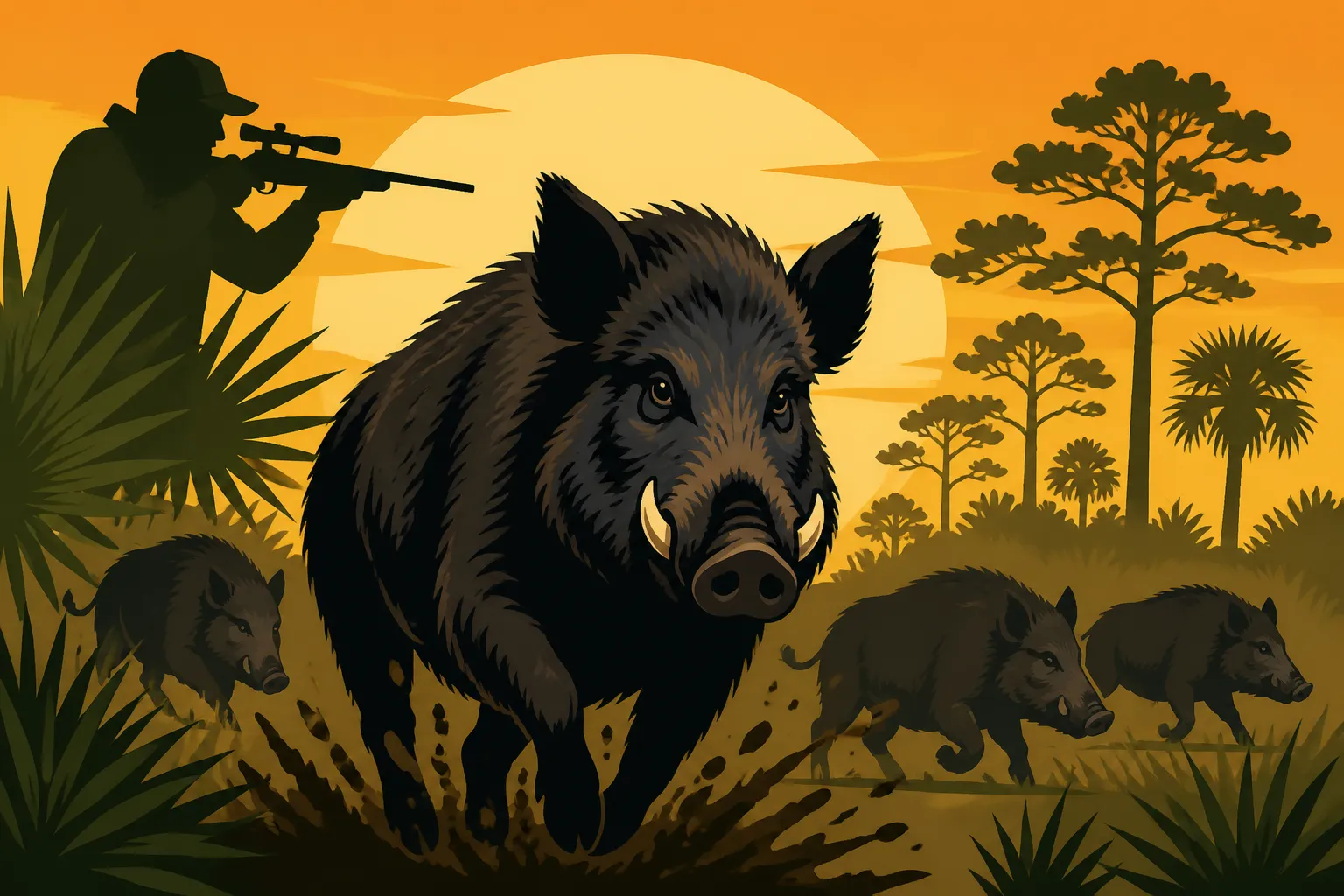
There's nothing quite like the thrill of chasing wild hogs in Florida, but the Apalachicola Wildlife Management Area presents its own unique set of challenges and opportunities. While the sheer numbers of hogs can feel overwhelming, leading to both excitement and frustration when you can't quite pin them down, understanding their habits and the specific landscape of this vast WMA is key to a successful hunt. This guide will help you decode the secrets of hunting these widespread hogs, offering practical strategies to increase your odds and make the most of your time in this incredible outdoor arena.
Understanding the Apalachicola Hog Landscape
The Apalachicola National Forest, where a significant portion of the Apalachicola WMA lies, is a sprawling, diverse ecosystem that feral hogs absolutely thrive in. It's a land of longleaf pine flatwoods, dense palmetto thickets, cypress swamps, and countless creek bottoms, all providing ideal cover, water, and food sources for these intelligent and adaptable animals. Knowing why hogs are so prevalent here, and where they prefer to spend their time, is the first step in formulating an effective hunting plan.
Why Hogs Flourish in Apalachicola
Florida's mild climate means hogs don't face harsh winters that might naturally thin their numbers in other states. In Apalachicola specifically, the habitat is a hog paradise. The vast expanses of pine flatwoods with their thick understory of palmettos and gallberry offer incredible bedding cover, making it easy for entire sounders to disappear from view. The abundant water sources, from seasonal ponds to permanent creeks and sloughs, provide not only drinking water but also crucial wallowing areas, especially during the warmer months. These wallows help hogs regulate body temperature and shed parasites, and they are significant indicators of hog presence.
Beyond cover and water, the food sources are incredibly rich. Acorns from various oak species are a prime seasonal food, drawing hogs to hardwood hammocks when they drop. Additionally, hogs will root extensively for tubers, roots, and invertebrates found in the damp soils of the forest floor, especially in bottomland areas. They're opportunistic omnivores, so anything from fallen berries to small reptiles and amphibians can become part of their diet. This constant buffet, combined with a lack of natural predators in numbers sufficient to control their population, allows them to multiply rapidly, leading to the "widespread" numbers we see.
Common Hog Hangouts and Travel Corridors
When you're looking for hogs in Apalachicola, don't just wander aimlessly. Focus on areas that offer a combination of their primary needs. Creek bottoms and drainages are absolute magnets. These areas tend to have richer soils, more diverse vegetation, and constant water, making them ideal for rooting and wallowing. Hogs will often travel along these natural corridors, using the dense cover along the banks for concealment. You'll find distinct trails, almost like miniature highways, running parallel to the water or leading down to a muddy bank.
Another prime location is the transition zone between different habitat types. Think about where a dense pine flatwood gives way to a hardwood hammock, or where a palmetto thicket meets a cypress swamp. These edges provide hogs with easy access to different food sources and quick escape routes into thick cover. Look for signs of rooting and fresh tracks where these changes occur. Even small islands of higher ground within a swamp can hold hogs, as they seek dry bedding areas close to water. The WMA's extensive network of dirt roads and fire breaks, while used by humans, also serve as convenient travel paths for hogs, especially during cooler parts of the day or at night. Keep your eyes peeled for crossings, fresh tracks, and rooting along these edges.
Scouting for Success in Apalachicola
Effective scouting is paramount when hunting widespread hogs on a large public land tract like Apalachicola WMA. You can't just show up and expect to stumble upon them. Pre-season work, both boots-on-the-ground and with modern technology, will drastically improve your chances. Remember, this is about finding their patterns, not just hoping they cross your path. For a deeper dive into general public land scouting, check out Scouting Florida Public Land Before Season.
Reading the Sign: Tracks, Rubs, and Wallows
When you're out in Apalachicola, you need to become a detective. Fresh hog sign is your most reliable indicator of recent activity. Tracks are perhaps the easiest to spot, especially in soft, sandy soil or mud near water. Look for their distinct cloven hoofprint – generally wider and rounder than a deer's, often with visible dewclaws behind the main hooves, especially in soft ground. Small tracks indicate younger hogs, while larger, deeper tracks can reveal a mature boar. Pay attention to the direction of travel and the freshness of the print; recent rain can wash away old sign, making fresh tracks stand out even more.
Rooting is another unmistakable sign. Hogs use their powerful snouts to dig up the ground in search of roots, tubers, and insects. This leaves distinct churned-up patches of earth, sometimes quite extensive. Fresh rooting will show moist soil and perhaps still-intact pieces of disturbed vegetation. Older rooting will be dry and compacted. The size and depth of the rooting can give you an idea of the size of the hogs. Wallows are depressions filled with mud where hogs cool off and coat themselves to deter insects. They'll often be found near water sources or in low-lying, damp areas. Fresh wallows will show wet mud and recent tracks. Finally, rubs – where hogs rub themselves against trees or posts to scratch or remove parasites – can indicate their travel paths. Look for mud or hair left on trees, often low to the ground.
Utilizing Technology for WMA Navigation and Strategy
Modern hunting apps have revolutionized scouting, even on vast WMAs. Tools like onX Hunt are invaluable for Apalachicola. You can use it to pinpoint property boundaries (crucial for staying within the WMA), identify different habitat types (pine flatwoods, hardwoods, swamps), and mark potential hot spots you find while scouting. Imagine finding a fresh wallow – you can drop a pin, note the date, and refer back to it later. The satellite imagery helps you visualize the terrain, identifying pinch points, creek crossings, and dense cover that might not be obvious on a basic map. You can even use layers to see historical timber cuts or prescribed burns, which can influence hog movement and food availability.
Another helpful resource is GoHunt, which offers a wealth of information including public land access and species distribution maps, though its primary focus often leans towards western big game. However, cross-referencing information about Florida's general ecosystems and typical hog behavior can still be beneficial. Don't forget the official FWC Public Hunting Map, which you can often integrate with these apps or use alongside them. Before you head out, download offline maps on your chosen app, as cell service can be spotty to non-existent in much of the WMA. This allows you to navigate confidently, track your own movements, and identify potential escape routes for hogs. Using the FWC Public Hunting Map offers more insights into official resources.
| Hog Sign | What to Look For | What it Indicates | Freshest Sign |
|---|---|---|---|
| Tracks | Rounded, cloven hoofprints, often with dewclaws in soft soil. | Recent hog presence, direction of travel, approximate size. | Crisp edges, clear definition, moist if in mud. |
| Rooting | Churned-up patches of earth, disturbed vegetation. | Feeding activity, recent presence in the area. | Moist soil, exposed roots, freshly turned earth. |
| Wallows | Muddy depressions, often near water. | Hogs cooling off, relieving parasites, consistent use. | Wet mud, fresh tracks entering/exiting, strong hog odor. |
| Rubs | Mud or hair on trees, fence posts, low to the ground. | Travel routes, congregation points, hog size. | Wet mud, fresh hair, strong odor, sap or bark scraped off. |
| Scat (Droppings) | Varies in shape and consistency depending on diet, often tubular. | Recent presence, dietary habits. | Moist, shiny, strong odor, undigested food particles visible. |
Hunting Methods for Apalachicola Hogs
With hogs being so abundant and having a year-round open season in Florida on private land, and extended seasons on WMAs, you have a lot of flexibility in how you approach your hunt. Apalachicola's diverse terrain lends itself to several effective methods, each with its own nuances and requirements. Keep in mind that specific WMA regulations for baiting, night hunting, or dog hunting can vary, so always check the current rule brochure for Apalachicola before planning your trip. For general rules, refer to Year-Round Hog Hunting in Florida.
Still-Hunting and Stalking in Thick Cover
Still-hunting is perhaps the most traditional and often the most rewarding method in Apalachicola's challenging environment. It involves moving slowly and deliberately through the woods, pausing frequently to observe, listen, and scan for any sign of movement or sound. This is particularly effective in areas with dense cover, like palmetto thickets or gallberry bushes, where hogs might be bedded down. You'll need incredible patience and a keen eye. The key is to cover ground very slowly, taking a few steps, then stopping for several minutes to glass and listen. Pay attention to the wind, as hogs have an excellent sense of smell. Always try to approach with the wind in your face to avoid being detected.
Stalking is an even more intense version, focusing on actively pursuing a hog once you've spotted or heard it. This requires stealth, quiet foot placement, and the ability to navigate silently through crunchy leaves, pine needles, and undergrowth. Focus on breaking up your silhouette, moving slowly from cover to cover. Apalachicola's terrain, with its varied understory and frequent creek bottoms, offers plenty of opportunities for both still-hunting and stalking, especially during cooler parts of the day when hogs might be more active. You'll often find yourself trying to ease into a thicket after spotting fresh rooting or hearing distant grunts.
Stand Hunting and Baiting (Where Allowed)
While baiting is widely permitted for hogs on private land, its legality on Florida WMAs, including Apalachicola, is subject to specific rules and often restrictions. Always consult the current FWC WMA regulations for Apalachicola to understand what is and isn't allowed regarding baiting. If baiting is permitted in a specific area or during certain seasons, it can be a highly effective strategy for hogs, drawing them to a predictable location. Corn, soured grain, or commercial hog attractants can be placed in active areas.
Once a bait site is established and hogs are consistently visiting, setting up a stand or ground blind offers a comfortable and concealed position. Tree stands provide a higher vantage point, often above a hog's direct line of sight and scent, while ground blinds can be excellent in thick cover, allowing you to blend in. Using a Ground Blind on Florida Public Land can give you ideas for setup. Position your stand or blind downwind of the bait, and consider the direction of the sun for morning or evening hunts. Be prepared for hogs to be wary, especially after dark or if they've been pressured. Consistency is key with baiting; it often takes several days to establish a pattern of visits.
Dog Hunting for Hogs
Dog hunting for hogs is a long-standing tradition in Florida, and it's a popular method in many parts of the state, including some WMAs. This method involves using trained dogs to locate, pursue, and bay (hold at bay) or catch feral hogs. It's an active, high-energy hunt that can be incredibly effective for finding hogs in dense, otherwise impenetrable cover. The dogs' keen sense of smell allows them to track hogs that hunters might never find on foot.
However, dog hunting on WMAs comes with very specific and often strict regulations. Apalachicola WMA, like many others, will have designated periods and areas where dog hunting for hogs is allowed, often during specific deer dog hunting seasons or special hog dog hunts. There are also rules regarding dog identification, vehicle use, and how hunters must manage their dogs to prevent conflicts with other hunters or non-target species. You need to be intimately familiar with these rules before considering a dog hunt on Apalachicola. It’s also important to understand the significant investment in time and training required for good hog dogs. If this method interests you, be sure to delve into Dog Hunting Hogs in Florida for more comprehensive information.
Night Hunting With Lights (Where Permitted)
Hunting hogs at night with the aid of artificial lights or thermal/night vision equipment is another method that has gained popularity, particularly on private land where there are no bag limits. Hogs are often most active during cooler nighttime hours, especially in warmer climates like Florida or in areas with heavy hunting pressure during the day. This nocturnal activity makes night hunting a potentially very effective strategy.
Again, like baiting and dog hunting, night hunting on WMAs is usually heavily regulated, or even prohibited. On Apalachicola, you must check the WMA's specific regulations regarding legal shooting hours and the use of artificial lights or night vision devices. If permitted, night hunting requires specialized equipment, including powerful spotlights, headlamps, and potentially thermal or night vision optics. Safety is paramount when hunting in the dark; always positively identify your target and what lies beyond it before taking a shot. Night hunting can be a thrilling experience, offering a unique challenge and perspective. For a deeper look at the legalities and methods, refer to Night Hunting Hogs With Lights in Florida.
Navigating the Apalachicola WMA: Access and Regulations
Apalachicola WMA is vast, and knowing how to access it, where you can drive, and what specific rules apply is just as important as knowing how to hunt hogs. This isn't your backyard hunting spot; it's a managed public land system designed for multiple uses. Respecting the rules ensures a safe and productive hunt for everyone. If you're new to the WMA system, getting a The Florida WMA Management Area Permit is usually a prerequisite.
Access Points and Vehicle Rules
Accessing Apalachicola WMA generally involves using the extensive network of graded dirt roads and forest trails. Many of these roads are well-maintained, but some can become very soft or muddy, especially after heavy rains. Pay close attention to signage. Certain roads might be designated "seasonal," meaning they are closed during specific times of the year, or permanently closed to vehicular traffic beyond a certain point. Always be mindful of gates; if a gate is closed, it's closed for a reason, even if it doesn't have a lock. Never block gates, even if they're open.
Vehicle rules on Florida public land are often strict. Beyond designated roads, off-road vehicle (ORV) use, including ATVs and UTVs, is usually restricted to specific trails or prohibited entirely outside of designated recreation areas. Hunters are typically expected to park in designated areas and proceed on foot, bicycle, or sometimes via electric golf cart in specific zones. Understanding these rules is critical to avoid fines and ensure you're hunting legally. Check the latest Apalachicola WMA brochure for precise details on which roads are open, which are closed, and where parking is permitted. This also directly relates to general Vehicle Rules on Florida Public Land.
Specific WMA Regulations and Quotas
Hunting on any Florida WMA means adhering to a set of regulations that go above and beyond the statewide hunting rules. Apalachicola WMA will have its own specific management plan, which dictates season dates, bag limits, legal weapons, and sometimes even hunting methods for hogs. While hogs are generally open season on WMAs, there might be specific quotas in place during certain deer or turkey seasons to manage pressure or specific areas.
You need to obtain a WMA permit in addition to your regular hunting license, and always carry proof of both. Check stations are common on WMAs, especially during quota hunts, where you might be required to check in and out, and present your harvest for biological data collection. This is less common for hogs but still possible. Be aware of any rules regarding permanent stands or ground blinds; most WMAs require stands to be removed daily or have strict guidelines on how long they can remain. Additionally, blaze orange requirements often apply, even when hunting hogs, so ensure you understand when and how much blaze orange you need to wear. This isn't just about safety; it's about compliance.
Post-Harvest Considerations for Apalachicola Hogs
Congratulations, you've successfully harvested a hog in Apalachicola! But the hunt isn't over yet. Proper handling of your harvest is crucial, especially in Florida's warm climate, to ensure the meat is good and that you're in compliance with any reporting requirements. Feral hogs are prolific, and your harvest is a valuable contribution to wildlife management and a source of delicious wild game.
Field Dressing and Meat Care in Warm Weather
Florida's warm weather can be tough on harvested game, and hogs are no exception. Prompt and thorough field dressing is absolutely critical to prevent spoilage. As soon as possible after the kill, you need to gut the animal. Remove all internal organs, taking care to keep the meat clean. This allows the carcass to cool down internally, which is the primary goal. If you're far from your vehicle, consider quartering the animal in the field to make it easier to pack out and to facilitate further cooling.
Once field dressed, get the hog to a cooler or refrigeration as quickly as possible. If it's a very large hog and you're far from a cooler, you might need to pack the body cavity with ice to aid cooling during transport. In hot weather, bacteria multiply rapidly, so time is of the essence. Having a plan for this before you hunt is vital. Bring plenty of water, sharp knives, game bags, and a large cooler with ice. For more detailed advice on hot weather game care, you can adapt many of the principles discussed in Field Dressing a Deer in Hot Weather to your hog harvest.
Handling Your Harvest and Regulations
After you've field dressed your hog, you'll need to transport it out of the WMA. Ensure you know the rules for transporting game, especially if you plan to quarter it in the field. Some WMAs might have specific rules about what parts must remain attached until you've left the property or reached a check station. Once home or at your hunting camp, you'll want to process the meat quickly. You can do this yourself, or take it to a professional meat processor. Wild hog meat is lean and flavorful, excellent for various dishes.
While specific reporting requirements for hogs on WMAs are less common than for deer or turkey, it's always wise to review the Apalachicola WMA regulations to see if there are any specific instructions. Generally, hogs do not have individual tag requirements like deer or turkey, as they are considered an invasive species. However, documenting your harvest with photos or notes can be helpful for your own records and for sharing your success. The delicious reward of Cooking a Wild Florida Hog is the ultimate culmination of a successful hunt.
Disclaimer
This article is for general informational purposes only and does not constitute professional advice. Laws, prices and regulations vary by location and change over time. Consult a qualified professional for guidance on your specific situation.