Ocala Ridgeline Public Access
Florida's public lands offer incredible opportunities, but let's be real: trying to unlock the secrets of a specific area like the Ocala Ridgeline can feel like trying to solve a puzzle with half the pieces missing. You hear about these unique habitats, these slight elevations that might hold game, but actually finding viable access and developing effective hunting strategies can be a massive headache. This guide is here to break down the complexities of hunting the Ocala Ridgeline, helping you navigate its distinctive terrain, understand its access points, and develop smart strategies to find success in this beautiful, challenging part of Florida.
Understanding the Ocala Ridgeline Landscape for Hunters
The Ocala National Forest is vast, but the ridgeline areas within it offer a truly unique hunting experience, far removed from the cypress swamps or flat pine plantations you might typically associate with Florida. These aren't mountains by any stretch, but the subtle undulations and higher ground here create microclimates and habitat types that significantly influence how game animals live and move.
Topography and Vegetation's Influence on Game
When we talk about the Ocala Ridgeline, we're really talking about a series of ancient sandhills, formed over millennia, often covered in scrubby oak hammocks, longleaf pine forests, and dense palmetto thickets. It's a dryer, almost arid landscape compared to many other parts of the state. This slightly higher elevation and sandy soil mean better drainage, which influences everything from the type of vegetation that thrives here to where deer and hogs choose to bed. The scrub oaks drop acorns, which are a critical food source, especially in the fall, and the dense palmettos provide incredibly thick cover where game can disappear completely. Understanding this relationship between the dry, sandy ridges and the pockets of dense cover is key. Hunting Florida Central Ridge Sandhills delves deeper into these specific terrains.
Hunting these areas often means traversing more rolling terrain than you might expect, with gradual inclines and declines. While not steep, these elevation changes can create subtle wind currents and thermal drafts that are important to consider, especially at dawn and dusk. The vegetation, primarily scrub and palmetto, often grows in dense, almost impenetrable thickets, interspersed with more open pine stands. This creates natural travel corridors and bedding areas that, once identified, can become prime ambush spots.
Limited Water Sources and Game Concentration
One of the most significant factors influencing game movement on the Ocala Ridgeline is water. Unlike areas crisscrossed by numerous creeks or dotted with ponds, permanent natural water sources can be sparse on these higher, drier ridges. This scarcity means that any available water, whether it's a seasonal puddle in a low spot, a natural spring, or even a seepage area, becomes a magnet for all wildlife.
Deer, hogs, and even turkeys will naturally gravitate towards these reliable water points, creating well-worn trails and concentrated activity. Identifying these critical water sources, even small ones, before or during your hunt can be a game-changer. These areas are excellent places to scout for fresh tracks, droppings, and rub lines. Reading Florida Mud for Fresh Deer Movement can help you interpret the subtle signs near these vital water sources. Focus your scouting efforts on topographical depressions or areas where the soil composition might retain moisture longer after a rain.
Navigating Public Access Points and Regulations in the Ocala Ridgeline
The Ocala National Forest is a huge chunk of public land, but just because it's public doesn't mean every square inch is easily accessible or open to hunting at all times. Understanding the specific access points and the varying regulations for different hunting opportunities is crucial to avoid frustration and ensure a legal, enjoyable hunt.
Identifying Access Points and Roads
Accessing the Ocala Ridgeline often means utilizing the extensive network of forest roads, many of which are unpaved. Some roads are well-maintained, while others might require a high-clearance vehicle, especially after heavy rains. The challenge for many hunters is figuring out which roads lead to productive areas and, more importantly, which ones are open to public vehicular traffic. It's not uncommon to find gates blocking roads, limiting access to foot traffic only, or seasonal closures that can throw a wrench in your plans.
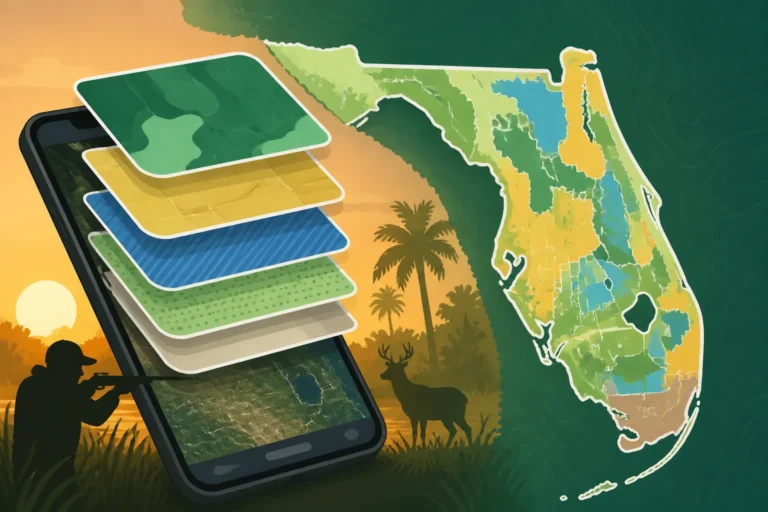
This is where modern mapping applications become invaluable. Tools like onX Hunt offer detailed property line information, identifying public versus private land, and often showing marked forest roads and trails, along with land ownership overlays. They can save you countless hours of driving down dead-end roads or inadvertently trespassing. Before you even leave home, spend time poring over these maps, identifying potential parking areas and walk-in access points that might lead you away from heavy pressure. For a broader overview of state resources, consider Using the FWC Public Hunting Map to cross-reference access information.
Ocala WMA Specific Rules and Requirements
While the Ocala National Forest is generally open to hunting, much of it falls under the Florida Fish and Wildlife Conservation Commission's (FWC) Wildlife Management Area (WMA) system. This means that specific rules, beyond general state hunting regulations, often apply. These WMA regulations can dictate everything from specific season dates, legal weapons, bag limits, and even the requirement for a quota permit for certain hunts.
For many areas within the Ocala WMA, a The Florida WMA Management Area Permit is required in addition to your regular hunting license. Some periods might be general gun seasons with no quota, allowing anyone with the proper licenses and permits to hunt. Other, often more desirable periods, might be quota hunts, requiring you to apply and be drawn for a permit. Always check the current FWC regulations booklet specific to the Ocala WMA before planning your trip. Pay close attention to rules regarding vehicle use, camping, and the use of ATVs, as these can vary significantly even within different sections of the forest.
Hunting Strategies for Deer, Hogs, and Other Game on the Ridgeline
The Ocala Ridgeline offers diverse hunting opportunities, primarily for white-tailed deer and feral hogs, but also for turkeys during their season. Success hinges on adapting your tactics to the unique features of this sandy, scrubby environment.
Deer Hunting Tactics in Ocala's Sandhills
Hunting deer in the Ocala sandhills requires patience and an understanding of how deer use the terrain. Unlike flat agricultural fields, deer here often move within the dense cover of palmetto thickets and scrub oaks, only venturing into more open pine stands to feed or travel between bedding and feeding areas. Look for subtle funnels – narrow strips of cover between more open areas, or low spots that provide easier travel through dense scrub. Deer will often choose the path of least resistance.
Still-hunting can be very effective here, especially on cool mornings when the crunch of dry leaves isn't as loud. Move slowly, stopping frequently to glass ahead and listen. Focus on the edges where the thick palmetto meets open pine, or along the subtle ridge tops where deer might travel. Where Florida Bucks Bed in Thick Palmetto can provide insights into their bedding habits in this terrain. Also, keep an eye out for scrape lines along sand roads or game trails; these can be prime spots, especially during the rut. Hunting a Funnel Between Two Palmetto Heads is a tactic particularly well-suited to this landscape.
| Deer Movement Indicator | Ridgeline Terrain Significance | Best Hunting Tactic |
|---|---|---|
| Well-worn trails | Connect bedding to feeding/water; often in low spots or cover | Ambush near crossings, still-hunt parallel |
| Rub lines | Mark buck territory, often along ridge crests or cover edges | Set up nearby, especially during rut |
| Scrapes | Communication hubs, frequently on sand roads or open edges | Watch from a distance, check with trail cams |
| Bedding areas | Dense palmetto/scrub on leeward side of ridges | Approach quietly, use prevailing wind |
| Feeding areas | Oak hammocks with acorns, fire lanes with new growth | Early morning/late evening sits |
Hog and Turkey Opportunities
Feral hogs are abundant throughout the Ocala National Forest, and the ridgeline is no exception. They thrive in the dense cover and root through the sandy soil for acorns, roots, and invertebrates. Hog hunting is open Year-Round Hog Hunting in Florida in most public areas, offering fantastic opportunities when deer seasons are closed. Look for fresh rooting sign in oak hammocks or along the edges of palmetto heads. Hogs often travel in sounders, so if you find recent sign, there are likely more nearby. Still-hunting or setting up over a heavily rooted area are common tactics. While not typically allowed to bait on public land, understanding their natural food sources is key.
For turkeys, the Ocala Ridgeline is firmly within Osceola country. The longleaf pine and scrub oak habitats provide ideal roosting and foraging grounds. During spring season, locating roosting birds at dawn and setting up an ambush point is a classic tactic. Decoy placement is critical, especially with pressured birds. Calling can be challenging in the vastness of the forest, but soft yelps and purrs can often draw a wary gobbler. Hunting an Osceola Gobbler in Palmetto Scrub provides detailed strategies for this unique subspecies and habitat. Remember, turkeys are incredibly sharp-eyed, so camouflage and minimal movement are paramount.
Essential Gear and Planning for Ocala Ridgeline Hunts
Hunting the Ocala Ridgeline, while rewarding, presents its own set of challenges. Proper planning and the right gear can make all the difference between a frustrating trip and a successful, enjoyable experience. Don't underestimate the Florida heat, the dense vegetation, or the potential for getting turned around.
Pack Essentials and Navigation Tools
Given the remote nature of much of the Ocala National Forest, being self-sufficient is vital. Hydration is paramount, especially outside of the cooler winter months. Carry more water than you think you'll need, or bring a reliable water filter. A good quality backpack with comfortable straps will be your best friend when carrying gear through thick palmetto and sandy terrain. First aid supplies are also non-negotiable, as help can be a long way off.
Beyond physical comfort and safety, navigation is crucial. Cell service can be spotty or nonexistent in many parts of the Ocala. Relying solely on your phone's GPS is a mistake. Invest in a dedicated GPS unit or, at the very least, download offline maps to your smartphone using apps like GoHunt or onX Hunt. Always carry a physical compass and a printed map as a backup. Familiarize yourself with how to use them before you're deep in the woods. Mark your truck's location, and if you're venturing far, mark your route in and out. This area is easy to get lost in, even for experienced woodsmen.
Pre-Season Scouting and E-Scouting
Successful hunting on the Ocala Ridgeline almost always begins long before opening day. Pre-season scouting, both in person and from the comfort of your home, is incredibly valuable. E-scouting using aerial imagery on mapping platforms can help you identify potential access roads, hidden food sources like oak hammocks, dense bedding cover, and subtle terrain features that might funnel game. Look for color changes in the vegetation that indicate different forest types or clear-cuts, which can be deer magnets. Reading Aerial Photos for Florida Deer will teach you what to look for.
Once you have some areas of interest identified, a boots-on-the-ground scouting trip is essential. Look for fresh tracks, rubs, scrapes, and hog rooting. Pay attention to how the wind generally moves through the area at different times of day. Discovering overlooked travel corridors or hidden water sources can give you a significant advantage. Even if you're not hunting deer, Shed Hunting on Florida Public Land can be a fantastic way to learn deer movement patterns and find old rubs in the off-season. Remember, hunting pressure can be a factor on public land, so scouting for those less-traveled areas can often lead to better success. Hunting Pressure on Florida Public Land is a good read on how to approach this.
Disclaimer
This article is for general informational purposes only and does not constitute professional advice. Laws, prices and regulations vary by location and change over time. Consult a qualified professional for guidance on your specific situation.