Stalking an Alligator on a Freshwater Lake
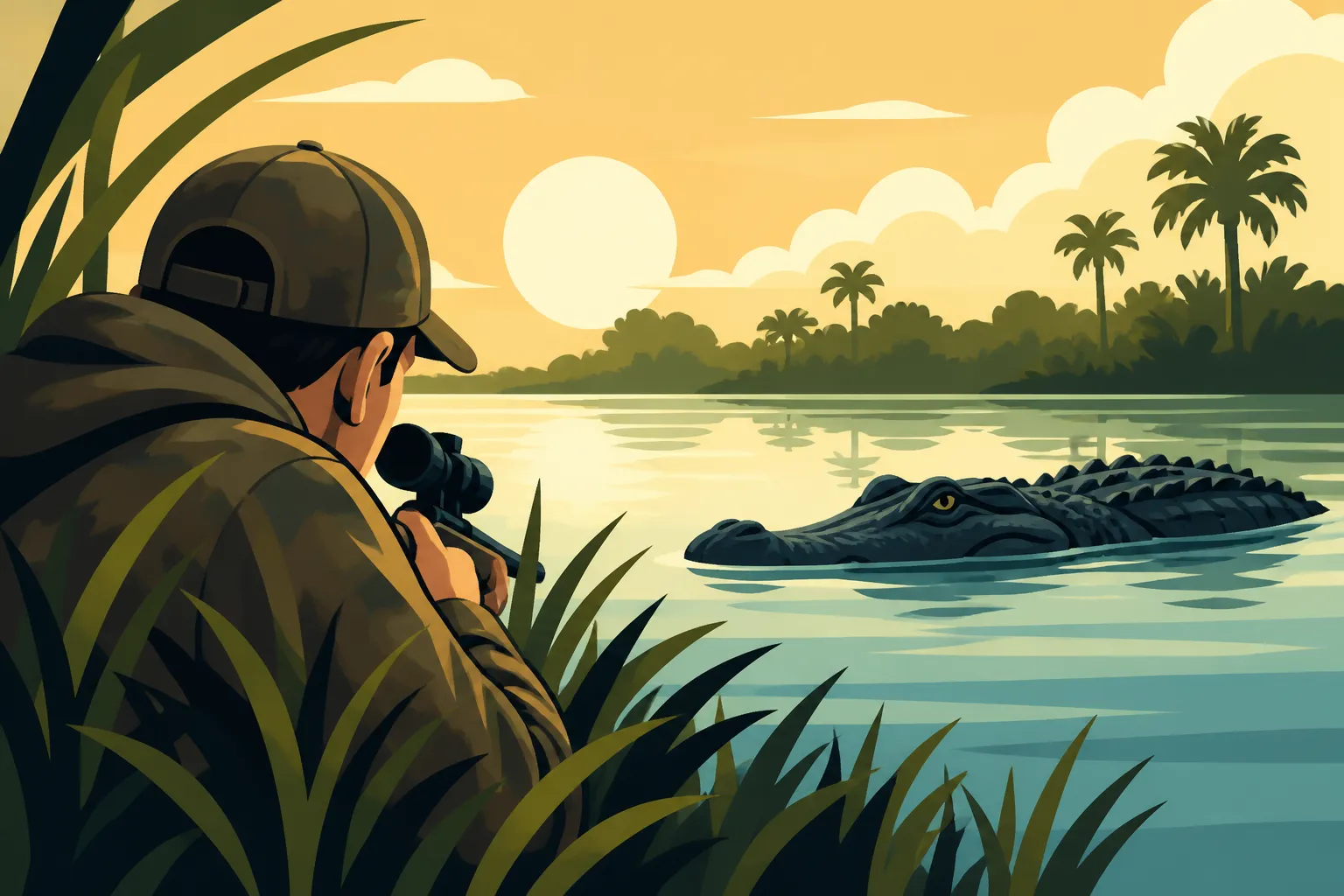
There’s nothing quite like the thrill of pursuing an alligator in its natural element, but for many hunters, the idea of stalking one on a vast freshwater lake feels incredibly daunting. The open water, the wary nature of these ancient reptiles, and the sheer power they possess can make a successful stalk seem impossible. This comprehensive guide will walk you through the nuances of alligator behavior, essential gear, stealthy approaches, and crucial safety measures to help you confidently navigate the waters and achieve a successful, ethical harvest on Florida's beautiful, sprawling lakes.
Understanding Florida Alligator Behavior in Freshwater Lakes
Before you even think about pushing off from the bank, you’ve got to get inside the head of a Florida alligator. These creatures are masters of their environment, and understanding their daily routines, preferred hangouts, and how they react to their surroundings is absolutely critical for a successful stalk. Forget what you think you know from nature documentaries; real-world hunting requires a much deeper appreciation for their habits.
Daytime Habits and Sunning Rituals
During the day, especially when the Florida sun is high and the air is warm, you’ll often find alligators engaged in thermoregulation, which basically means they're warming up their cold-blooded bodies. This usually involves them basking on sunny banks, floating just below the surface with only their eyes and nostrils exposed, or sometimes even lying partially submerged in shallow water near the shore. They love those areas where they can quickly slip into deeper water if they feel threatened. Look for those sandy stretches, exposed mud flats, or even just the subtle hump of a log sticking out of the water where they can soak up the rays. This is where your long-range glassing skills will pay off, allowing you to spot them without getting too close too soon. You might see a huge bull gator completely laid out, looking like a statue, or several smaller ones grouped together. These sunning spots are prime locations for initial scouting and planning your approach.
They’re often remarkably still during these periods, conserving energy. However, don’t mistake stillness for inattentiveness. Their senses, particularly their sight and hearing, are incredibly acute, even when they appear to be half-asleep. A sudden noise, a wrong movement, or an unfamiliar silhouette on the horizon can send them sliding silently into the water in an instant, often disappearing without a ripple. This makes the initial spotting phase crucial; you want to find them before they ever know you’re there. Pay attention to how the light hits the water; reflections can make spotting difficult, but polarized sunglasses can be a game-changer here.
Nighttime Foraging and Movement Patterns
As dusk settles over a Florida lake, a whole new world of alligator activity begins. Many of these reptiles become far more active under the cover of darkness, shifting from their daytime basking to actively hunting and moving across the water. They'll often cruise the shorelines, patrol open water channels, or seek out shallower coves where prey might be more abundant. This nocturnal behavior is why some hunters prefer hunting alligators at night legally, as their eyes glow a distinct red in the beam of a spotlight, making them easier to locate, though stalking them without lights requires a different level of skill.
During these hours, their movements are less about finding a warm spot and more about food. They’ll often follow subtle currents, move between feeding grounds, or even visit specific areas where they’ve had past success. This is also when they can be less wary of human presence if you’re moving quietly and effectively, though never underestimate their senses. The lack of visual cues for them means your sound and scent control become paramount. It's a completely different challenge than a daytime stalk, demanding acute hearing and an understanding of how sound travels across water at night. Using a reliable mapping app like GoHunt can help you understand the lake's topography and potential travel corridors even in the dark.
Preferred Habitat Features
Alligators aren't just randomly distributed throughout a lake; they have preferred zones that offer them everything they need for survival. Shallow coves with plenty of emergent vegetation like cattails, reeds, or lily pads offer excellent ambush points for prey and cover from predators (including humans). Deeper channels running through the middle of a lake provide easy travel routes and cooler water during the hottest parts of the day. Structure is key, whether it's submerged logs, fallen trees along the bank, or even floating mats of vegetation. These spots offer cover, shade, and proximity to food sources.
When you're scouting, look for these types of features. Areas where creeks flow into the lake, or where two bodies of water connect, are often high-traffic zones. You’ll also find them congregating near areas with abundant fish populations, waterfowl nesting sites, or even where other game species come down to drink. Understanding these "alligator hotspots" is crucial. If you know how many alligators live in Florida and their general distribution, you can narrow down your search on any given lake. Look for subtle signs like slides on muddy banks where they’ve entered or exited the water, or even distinct trails through thick vegetation. The more you can read the landscape, the better your chances of encountering a gator in a favorable stalking position.
Essential Gear for Stalking Alligators on a Lake
Stalking an alligator on a freshwater lake isn't like deer hunting in the woods; the environment itself dictates a very specific gear list. Your success, and more importantly, your safety, will heavily depend on having the right tools for the job. You’re dealing with water, powerful animals, and often vast distances, so don’t skimp on preparation.
Watercraft Selection and Setup
When it comes to stalking alligators on a lake, your choice of watercraft is arguably the most critical piece of equipment. You need something stable, quiet, and maneuverable. Kayaks and canoes are often the top choices for this method, providing a low profile and silent propulsion. A tandem kayak or canoe is ideal if you're hunting with a partner, allowing one person to paddle while the other focuses on spotting or preparing for the shot. Make sure your chosen craft has ample storage for your gear and is rated for the weight you'll be carrying, including the potential weight of a harvested gator. Remember, the average size of a harvested Florida alligator can be quite substantial.
Stability is paramount. You'll be making precise movements, perhaps standing to get a better view, or even taking a shot, so a wobbly craft is a recipe for disaster. Sit-on-top kayaks offer great stability and easy entry/exit, which can be a lifesaver in an emergency. Ensure your paddles are quiet; wrap the shafts with tape to prevent clanking against the boat, and use a paddle leash so you don’t lose it in a moment of excitement. Always wear a PFD (Personal Flotation Device), no matter how confident a swimmer you are. The last thing you want is to be in the water with an agitated gator, especially if you’re weighed down by gear. Rig your boat for minimal noise, securing everything so nothing rattles or shifts during your approach.
Optics and Spotting Tools
You can't stalk what you can't see, and on a large Florida lake, alligators can be incredibly camouflaged. High-quality optics are non-negotiable. A good pair of waterproof binoculars, at least 8x or 10x magnification, will be your best friend for spotting subtle clues—the curve of a back, the slight ripple of a tail, or the glint of an eye peeking above the water. Beyond binoculars, a spotting scope can be incredibly useful for long-range identification and judging a legal-size Florida alligator without getting too close. Remember, you're not just looking for a gator, you're looking for the right gator.
Consider a rangefinder, especially if you plan to use a bow or crossbow. Knowing the exact distance will be crucial for an accurate shot. For night hunting, if you choose that route, a powerful spotlight with a red filter (to preserve your night vision and minimize disturbance) is essential for locating their glowing eyes. Even during the day, a small, focused flashlight can help illuminate dark shadows under overhanging banks where a gator might be lurking. Polarized sunglasses are also critical; they cut through the glare on the water, allowing you to see beneath the surface and spot submerged alligators or important habitat features more easily. Having a detailed mapping app like GoHunt on your phone, loaded with satellite imagery and public land boundaries, can also help you mark potential alligator locations and plan your approach routes from afar.
Recommended Weaponry for Close Encounters
When stalking alligators, especially from a small watercraft, you need a weapon that offers stopping power and precise shot placement at close range. Florida regulations are specific, allowing firearms, bows, crossbows, and harpoons. For firearms, a large caliber handgun (like a .44 Magnum or .454 Casull) or a rifle chambered in a powerful cartridge (like a .30-30 or .45-70) is often chosen, primarily because these allow for a quicker, more humane dispatch in an emergency, especially with a bang stick for the final harvest. However, the primary method for taking an alligator is often a bang stick or harpoon once the animal is secured.
Many hunters prefer archery equipment for the challenge and the quiet nature of the shot. A powerful compound bow or crossbow, equipped with a heavy arrow and a specialized alligator head (often a barbed, detachable head with a retrieval line), is highly effective. The key is to tether your arrow or harpoon to a float, typically a buoy or heavy-duty bottle, so that once you've hit the gator, it can't just dive and disappear forever. This allows you to tire it out and bring it to the surface for a clean dispatch with a bang stick. Whatever weapon you choose, practice extensively with it, ensuring you’re proficient and can make a clean, ethical shot under pressure. Always keep it readily accessible but secured in your watercraft, perhaps in a dry bag or a dedicated mount, until the moment of truth.
| Weapon Type | Primary Use | Key Considerations |
|---|---|---|
| Harpoon | Securing, tiring, and retrieving | Must be tethered to a float. Requires close range. |
| Compound Bow | Initial strike, securing to a float | Requires strong draw weight, specialized arrow heads, and retrieval line. |
| Crossbow | Initial strike, securing to a float | Similar to compound bow, often easier for beginners. Specialized heads required. |
| Bang Stick | Humane dispatch at close range | Mandatory for final dispatch. Used after gator is secured. |
| Firearm | Backup/Emergency, precise shot placement | Must be legal caliber. Used for initial strike or follow-up shot. |
Mastering the Art of the Approach
Stalking an alligator on a freshwater lake is less about brute force and more about finesse and patience. The water magnifies sounds, carries scents, and offers few places to hide. Your ability to move silently, read the environment, and anticipate the gator's reactions will be the difference between a successful stalk and watching a dark shape disappear into the depths.
Reading the Wind and Water
Just like deer hunting, understanding the wind is paramount when stalking alligators. Their sense of smell is highly developed, and while they might spend a lot of time in the water, a whiff of human scent can send them packing. Always try to approach from downwind, positioning yourself so the breeze carries your scent away from the alligator's location. This might mean taking a longer, more circuitous route across the lake, but it's often worth the effort.
Beyond wind, you need to read the water itself. Flat, glassy water is beautiful, but it's also incredibly unforgiving; every paddle stroke, every drip from your paddle, and every whisper will carry. Choppy water, caused by wind or boat traffic, can provide excellent cover for sound and movement, but it can also make maintaining a stable platform for a shot more challenging. Pay attention to currents, especially in areas where rivers feed into the lake or near dams. These currents can affect your drift and make it harder to maintain a silent approach. Think about how the light hits the water too; reflections can reveal your position, so sometimes using shorelines or shadowed areas for cover is beneficial. Learning to drift silently with a subtle current can be a highly effective way to close the distance without detection.
Stealth Techniques from a Kayak or Canoe
This is where the rubber meets the road—or rather, the paddle meets the water. When you're in a kayak or canoe, every movement matters. The goal is to become an extension of the natural environment, blending in so seamlessly that the alligator never perceives you as a threat.
- Silent Paddling: This is perhaps the most crucial skill. Use short, shallow strokes that keep the paddle blade mostly submerged, minimizing splashing and dripping. Glide your paddle through the water rather than chopping it. Feather your paddle at the end of each stroke to prevent water from running down the shaft and dripping loudly. If you're with a partner, synchronize your strokes to maintain a smooth, quiet rhythm.
- Low Profile: Stay low in your boat. The higher you sit, the more easily you're silhouetted against the sky. Wearing camouflage clothing that blends with the shoreline vegetation can also help break up your outline, especially if you're working along a vegetated bank.
- Utilize Cover: Hug shorelines with overhanging trees, tall grasses, or thick lily pad fields. These natural features provide visual and auditory cover. Move slowly, pausing often to scan the area and assess the alligator's reaction. Don't be afraid to stop completely and let your boat drift with the current or wind, using natural momentum to close the gap.
- Slow and Steady: Impatience is your enemy. Alligators can remain perfectly still for long periods. If you push too fast, you risk spooking them. Take your time, sometimes only gaining a few feet at a minute. Observe their posture; if they look tense or their head is high, back off or pause. You might find some useful insights on scouting Florida public land before season to help identify good areas for a quiet approach.
Approaching from Shoreline Cover
Sometimes, the best approach isn't directly across the open water but by utilizing the contours and cover of the shoreline. This method can be particularly effective if the alligator is basking on a bank or in very shallow water close to land. It requires a different set of skills, often involving a mix of land-based and water-based movement.
Start by scouting from a distance, using your optics to pinpoint the alligator's exact location and assess the available cover. Look for stretches of dense palmetto, thick marsh grass, or a line of cypress trees that could shield your approach. You might need to beach your kayak or canoe a good distance away and proceed on foot, or hug the shoreline in your boat, moving through the thick vegetation. If you’re on foot, every step must be deliberate and silent. Watch for fallen branches, rustling leaves, or muddy spots that could betray your presence. When you can no longer advance on land without breaking cover, carefully re-enter your watercraft, if applicable, and make your final, silent push. This hybrid approach often allows you to get much closer than an open-water stalk would, especially if the gator is already partially camouflaged by its surroundings. Remember to check if it's legal to leave your watercraft in a specific WMA you're hunting; some have strict rules about vehicles and equipment.
Ethical Considerations and Safety First
Hunting is inherently an activity that demands respect—respect for the animal, respect for the environment, and respect for the safety of yourself and others. Stalking an alligator on a freshwater lake, given the power and unpredictability of these creatures, elevates these considerations to paramount importance.
Respecting Alligator Zones and Personal Space
Alligators are powerful apex predators. While they generally avoid humans, cornering or crowding them can lead to dangerous situations. When stalking, always maintain a respectful distance until you are ready to make a deliberate, ethical shot. Don't harass or chase an alligator; that's not hunting, and it's certainly not ethical. If a gator is clearly aware of your presence and showing signs of agitation (hissing, mouth open, tail thrashing), it's a strong signal to back off and try another approach or find another animal.
Beyond the gator's personal space, you must also be acutely aware of Florida Alligator Season Opening Date and other hunters or recreational users on the lake. Many lakes are popular for fishing, boating, or even swimming. Make sure your hunting activities do not endanger or unduly disturb others. This means being aware of your background, your shot trajectory, and always clearly identifying your target before you even think about raising your weapon. Communication with a hunting partner, if you have one, is also crucial to ensure everyone knows the plan and is aware of potential hazards. This is part of being a responsible hunter, ensuring our traditions continue without incident.
Handling the Shot and Retrieval
The moment of truth arrives when you've successfully stalked within effective range. Your shot placement is absolutely critical for a humane and quick harvest. The target zone on an alligator is surprisingly small—typically a spot about the size of a teacup on the top of the head, directly behind the eyes, where the brain is located. A shot anywhere else is unlikely to be lethal and will only injure the animal, leading to a prolonged and unethical retrieval. This is why many hunters, even those using bows or firearms, rely on a harpoon or specialized alligator arrow with a heavy retrieval line attached to a float. This initial strike is designed to secure the gator, allowing you to tire it out and bring it alongside your boat for a final, humane dispatch with a bang stick.
Once the gator is secured, the real work of retrieval begins. Alligators are incredibly powerful, even when mortally wounded, and can thrash violently. Keep all body parts, especially hands and feet, inside the boat. Your priority is to get the animal to shore safely and legally. This might involve towing it slowly or, if it’s a smaller gator, carefully bringing it into a stable part of your boat. Be prepared for the unexpected; a "dead" gator can suddenly come to life. Many incidents occur during the retrieval phase, so extreme caution is warranted. This is when knowing the rules about Harvesting an Alligator With a Bang Stick becomes absolutely critical for safety and ethics.
Partnering Up for Safety
While a solo stalk can be incredibly rewarding, hunting alligators on a lake, especially for a first-timer or when dealing with large animals, is often best done with a partner. A second set of eyes can help spot gators, assess the environment, and navigate the water. More importantly, a partner provides an invaluable layer of safety. If one person falls overboard, has a medical emergency, or needs assistance with a struggling gator, the other is there to help.
Your partner can assist with paddling, hold the boat steady for a shot, or manage the retrieval lines. They can also act as a lookout for other boats or potential hazards. Discuss your plan thoroughly beforehand, including emergency procedures, hand signals, and what to do in various scenarios. Having a fully charged cell phone (in a waterproof bag) and a first-aid kit on board are non-negotiable. Sharing your float plan—letting someone on shore know where you're going and when you expect to return—is always a smart move, especially when dealing with potentially dangerous game and water conditions.
Post-Harvest Procedures and Legalities
The hunt isn't over once the alligator is on the bank. There are crucial legal and practical steps that must be followed to ensure you remain compliant with Florida FWC regulations and properly utilize your harvest. Ignoring these steps can lead to severe penalties and a wasted animal.
Tagging and Reporting Requirements
Florida has strict rules regarding the tagging and reporting of harvested alligators. As soon as you harvest an alligator, you are legally required to immediately attach your CITES tag to the animal. This often involves punching a hole through the hide near the tail and securing the tag firmly. These CITES tags are critical for wildlife management and tracking, proving that your harvest was legal. For more details, refer to the FWC guide on Tagging an Alligator With a CITES Tag.
Beyond the physical tag, you must also report your harvest to the Florida Fish and Wildlife Conservation Commission (FWC). This process is typically done online or through a designated check station within a specific timeframe after the harvest, usually 24 to 48 hours. Providing accurate information, such as the date, time, location, and length of the alligator, is vital for data collection that helps the FWC manage the state's healthy alligator population. Failing to tag or report your alligator is a serious offense, so always double-check the current regulations before you head out.
Field Dressing and Preservation in Warm Climates
Florida's warm and humid climate presents unique challenges for preserving game meat, and alligators are no exception. The moment you harvest the gator, the clock starts ticking to get it field dressed and cooled. The primary goal of field dressing is to remove the internal organs quickly to prevent spoilage. This typically involves making an incision from the sternum down to the vent, carefully removing all viscera, and flushing the cavity with clean water if possible.
After field dressing, focus on cooling the carcass as rapidly as possible. If you have access to ice, pack the body cavity with it. If not, elevate the gator to allow air circulation, especially if you're transporting it for a distance. Protecting the hide from direct sunlight is also important, as intense heat can damage the skin. For long transport, a large cooler or even a dedicated insulated bag for large game is essential. The sooner you can get the gator to a professional processor or begin processing it yourself in a cool environment, the better the quality of the meat and hide will be.
Processing and Utilizing Your Harvest
The beauty of harvesting an alligator is that nearly every part of the animal can be utilized. The meat, particularly from the tail and jowls, is a delicious, lean white meat that can be fried, grilled, or stewed. Many hunters consider alligator tail to be a delicacy. If you're not planning to process the gator yourself, locate a reputable wild game processor in Florida who has experience with alligators. They can expertly skin, butcher, and package the meat to your specifications.
The hide is also a valuable resource. Alligator leather is highly prized for its durability and unique pattern, used for boots, belts, wallets, and other accessories. If you wish to keep the hide, it's crucial to properly skin and salt it immediately after harvest to prevent slippage and preserve its quality. Many processors also offer tanning services, or they can prepare the hide for transport to a specialty tannery. Don't forget about the skull, which can be cleaned and prepared as a unique trophy. From the rich, flavorful meat to the durable hide and impressive skull, a responsibly harvested alligator offers a tremendous bounty for the dedicated hunter.
Disclaimer
Hunting is an inherently dangerous activity. This guide provides general information and recommendations. Always consult the most current Florida Fish and Wildlife Conservation Commission (FWC) regulations before engaging in any hunting activities. Ensure you have all necessary licenses and permits. Prioritize safety, always follow ethical hunting practices, and understand your local laws. The author and publisher are not responsible for any accidents, injuries, or legal infractions incurred while following this advice.