Hunting the September Dove Opener
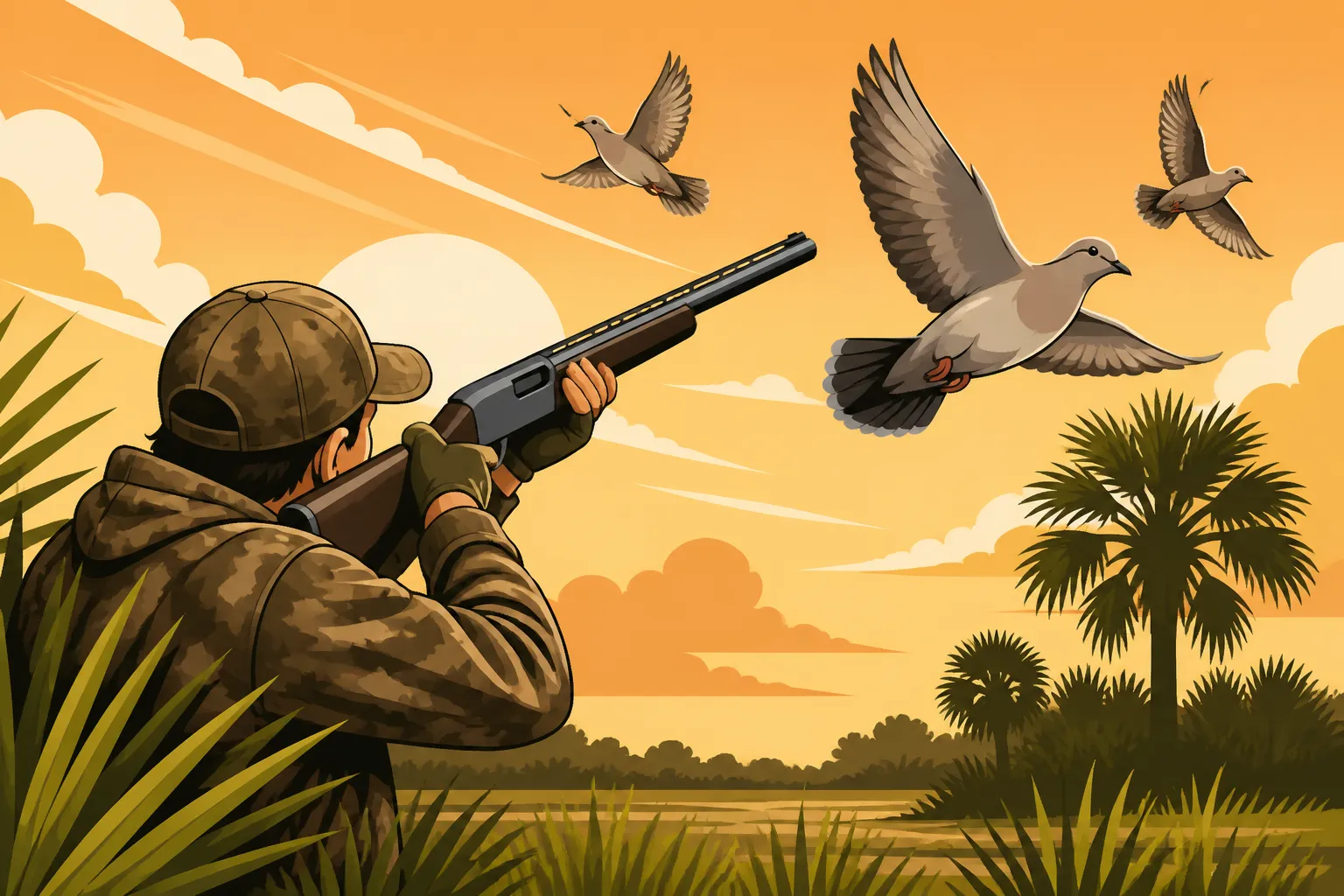
There's nothing quite like the rush of Florida's dove opener in September. That first crisp, or more likely, sweaty, morning of the season, when the air is still thick with summer humidity but carries the faint promise of cooler days. Many of us have fond memories of growing up chasing these fast-flying missiles, but if you're new to it, or just haven't had consistent luck, it can feel like you're just burning through shotgun shells without much to show for it. This guide is all about helping you understand the nuances of the September dove opener in the Sunshine State, from scouting those hidden hotspots to perfecting your field setup and shooting tactics, ensuring your cooler fills up this year.
Understanding Florida's Dove Seasons and Zones
Florida offers hunters multiple dove seasons, but the September opener is truly special. It marks the unofficial start of the fall hunting calendar for many, bringing with it a palpable excitement and the chance to reconnect with friends and family in the field. However, to be successful and, more importantly, legal, you need to understand the specifics of Florida's dove regulations.
Key Dates and Zones for the Opener
Florida divides its dove hunting into two primary zones: the North Zone and the South Zone. The exact dates for the dove season can vary slightly year to year, so it's absolutely crucial to check the Florida Fish and Wildlife Conservation Commission (FWC) regulations annually. Typically, the September opener falls on a Saturday in mid to late September for the North Zone, with the South Zone opening a week or two later. This split allows hunters in different parts of the state to experience the beginning of the season, often capitalizing on early migrating birds in the north before they push south.
The excitement surrounding this opening day is hard to beat. Fields that have been quietly growing all summer suddenly come alive with hunters eager to test their wingshooting skills. For many, it's a social event, a chance to gather in a cut field, share stories, and maybe even a few good-natured jabs about missed shots. Knowing your zone and the precise opening day, like the specific Florida Dove Season Opening Day, is the first step in planning your hunt and making sure you're ready when that first legal minute rolls around. Don't just assume; double-check the FWC calendar every single year.
Required Licenses and Stamps
Before you even think about stepping into a dove field, you need to make sure your paperwork is in order. It's a fundamental part of responsible hunting, and getting caught without the right licenses can quickly turn a fun day into a frustrating one, complete with hefty fines.
First and foremost, you'll need a valid Florida hunting license. For residents, this could be an annual license or part of a lifetime package. Non-residents have several options, including a 10-day or annual license. Beyond the base hunting license, anyone hunting migratory birds, including doves, in Florida is required to obtain a Florida Migratory Bird Certification, often referred to as a "HIP (Harvest Information Program) certification." This isn't a separate stamp you lick and stick; it's a simple certification you add to your license, indicating that you intend to hunt migratory birds. It helps FWC and the U.S. Fish and Wildlife Service gather important harvest data to manage bird populations nationwide. You can purchase your licenses and certifications easily online through the FWC website, by phone, or at most sporting goods stores and tax collectors' offices. Unlike waterfowl hunting, a Federal Duck Stamp is not required for dove hunting, but it's important to understand the distinctions for migratory bird regulations, such as the Florida Duck Daily Bag Limit for other species you might pursue later in the season. Always carry proof of your licenses, whether on your phone through the FWC app or as a physical copy.
Scouting and Field Selection for Opening Day Success
You can have the best shotgun and the fastest reflexes, but if you're hunting in a field devoid of doves, you're just getting a tan. Effective scouting is the backbone of a successful dove hunt, especially on the highly pressured opening day. Knowing where the birds want to be and why is your biggest advantage.
Identifying Prime Dove Habitat
Doves are creatures of habit, always looking for a reliable combination of food, water, grit, and roosting cover. Understanding these four components is key to finding their preferred hangouts. When you're driving around, keep an eye out for fields that offer these elements.
Food sources are paramount. Doves are primarily seed-eaters, and they absolutely flock to agricultural fields that have been recently harvested or specifically planted for them. Think about cut sunflower fields, fields of millet, harvested corn, wheat, or sorghum. In some parts of Florida, especially the Panhandle, doves will also key in on peanut fields after the harvest. The scattered seeds on the ground are an irresistible buffet. Look for signs of feeding: white droppings, empty seed husks, and distinct flight paths into and out of the field. Beyond just the food, doves need water daily, especially in Florida's warm September weather. Stock ponds, shallow ditches, and even puddles after a rain can be hotspots, particularly during the mid-day lull. They also need grit—small gravel or coarse sand to aid in digestion—which they'll find along dirt roads or sandy patches. Finally, roosting and loafing cover like power lines, dead trees on a field edge, or even substantial tree lines provide safe perches before and after feeding. Observing birds flying to and from these areas can reveal key flight corridors.
Using Technology for Scouting
In today's hunting world, technology can give you a serious edge in your scouting efforts. While nothing replaces boots on the ground, tools can help you narrow down your search and maximize your time.
Platforms like GoHunt or even the free FWC hunting map app can be invaluable. These tools allow you to overlay satellite imagery with public land boundaries, helping you identify potential dove fields, power lines, and water sources before you ever leave your couch. For example, you can use satellite views to spot large agricultural tracts, discern crop types, and identify potential flight corridors between feeding areas and roosts. Many hunters also use mapping apps like onX Hunt to precisely mark property lines and identify public hunting land in Florida that might hold birds. For instance, if you're considering Scouting Florida Public Land Before Season, these apps can show you exactly where to park and how to access fields. While these tools are excellent for initial reconnaissance, always follow up with physical scouting. Drive the back roads, walk the field edges, and look for actual bird activity. Doves move, and what looks good on a map might be barren on the day. Conversely, a seemingly innocuous field could be teeming with birds if it has the right food and water. Looking for clues like white droppings on power lines or along fence rows can confirm active flyways.
Essential Gear and Setup for Dove Hunting
Having the right gear isn't just about comfort; it's about efficiency and safety. Dove hunting might seem simple, but a few key items can significantly increase your success and enjoyment.
Shotguns, Ammunition, and Choke Selection
When it comes to shotguns, flexibility is your friend. Most dove hunters opt for a 12-gauge or 20-gauge shotgun, with semi-automatics and over/unders being popular choices due to their quick follow-up shot capability. The rapid action of doves means you'll often need to cycle a second, or even third, shell quickly.
Ammunition choice is also critical. For doves, you want smaller shot sizes that provide a dense pattern for these agile birds. Generally, 7.5 or 8 shot are the go-to choices. Lighter loads are often preferred for their reduced recoil during a high-volume shoot, but make sure they have enough oomph to consistently bring down birds at typical dove ranges. As for chokes, an improved cylinder or modified choke is usually ideal for the typical ranges doves are engaged, often between 20-40 yards. An improved cylinder provides a wider pattern, great for close-flushing birds or snap shooting, while a modified choke offers a slightly tighter pattern, extending your effective range a bit. Some hunters might even bring a full choke for longer pass-shooting opportunities, but it’s less common. The key is to pattern your shotgun with your chosen ammunition to understand how it performs. And trust me, on opening day, you'll want to bring plenty of shells. It's not uncommon to shoot several boxes if the birds are flying hot.
Decoys, Blinds, and Comfort
Don't underestimate the power of dove decoys. While not strictly necessary, a few well-placed decoys, especially spinning-wing models like those from Mojo Outdoors or Lucky Duck, can significantly increase your success. These decoys mimic landing birds and draw doves directly into your shooting lane, offering higher percentage shots. Static clip-on decoys can also be effective, making your setup look like a safe landing zone.
Concealment is another crucial element. Doves have excellent eyesight, and a hunter standing in the open is quickly spotted. Natural cover, like thick palmetto heads, brush lines, or tall weeds, works wonders. If natural cover is sparse, a simple portable blind (whether a pop-up blind or even a ghillie blanket) can make all the difference. Brands like Avery and Banded make excellent ground blinds that are easy to set up. Beyond concealment, think about comfort. A lightweight folding stool will save your back and legs during long waits. A cooler filled with water, sports drinks, and snacks is non-negotiable in the Florida heat. Don't forget bug spray, sunscreen, a wide-brimmed hat, and polarized sunglasses to cut the glare and spot incoming birds. Lastly, remember that dove hunting can involve a lot of walking to retrieve birds. Having a good bird vest or bag and, ideally, a well-trained retriever, can make the experience far more enjoyable and ensure no birds are lost.
Safety First and Foremost
Safety is paramount in any hunting scenario, but especially in a fast-paced environment like a dove field on opening day, where multiple hunters might be present. Always prioritize safe firearm handling.
First, wear appropriate clothing. While Florida Blaze Orange Requirements typically apply more to big game hunting during specific seasons, it’s always a good idea to wear some blaze orange when walking to and from your setup, especially on public lands where other hunting activities might overlap. During the hunt itself, you might shed the orange for better camouflage, but awareness is key. Maintain safe spacing between hunters. A general rule of thumb is to allow at least 40-50 yards between hunters to ensure safe zones of fire. Clearly communicate with those around you about your shooting lanes. Never swing your gun outside your safe zone of fire, and always be aware of where other hunters are located. Eye protection (your polarized sunglasses will do double duty here) and ear protection are also highly recommended due to the sheer volume of shooting. Finally, don't underestimate the Florida heat. Dehydration and heat exhaustion are real threats. Drink plenty of fluids throughout the day, take breaks in the shade, and know the signs of heat-related illness.
Tactics for a Successful Dove Opener
Once you've scouted your location, secured your licenses, and gathered your gear, it's time to put a plan into action. Success on the dove opener often comes down to understanding dove behavior and making smart tactical decisions in the field.
Mastering Flight Paths and Angles
Doves, like most birds, tend to follow predictable flight patterns, especially when moving between feeding areas, water, and roosts. Your ability to identify and position yourself along these paths is crucial. Before the hunt even begins, or during the first few minutes of shooting, take the time to observe. Where are the birds entering the field? Are they hugging a tree line, crossing a ditch, or flying over a particular corner? These are your "highways."
Position yourself to intercept these birds, ideally with the sun at your back, if possible, to give you an advantage and make it harder for doves to spot you. Consider the wind direction; doves often use the wind to their advantage, gliding or battling against it, which can affect their speed and altitude. If there's a strong breeze, birds might fly lower or funnel through sheltered areas. Getting to the field early is also a huge advantage. The "early bird gets the worm" isn't just for doves; it's for hunters, too. Arriving before dawn allows you to pick a prime spot, set up your decoys, and be fully concealed before the first bird starts to fly. This is particularly important on public lands, such as those covered under the Florida WMA Quota Permit System, where competition for prime spots can be fierce.
The Art of the Shot and Calling
Dove hunting is often described as "shotgunning practice," and for good reason. The sheer volume of flying targets provides ample opportunity to improve your wingshooting. However, it's not just about spraying lead; it's about ethical, effective shooting.
Focus on taking shots within your effective range – typically 20-40 yards. While it's tempting to sky-bust at birds way out there, it leads to wounded birds and frustration. Learn to lead the bird properly. Doves are fast, and you need to swing through them, anticipating their flight path. A good technique is to start behind the bird, accelerate past it, and fire as you pull ahead, continuing your swing. Don't stop your swing! The most common mistake hunters make is stopping their swing, resulting in a shot behind the bird. Practice this movement even without firing a shot. Be ready for quick follow-up shots; doves often fly in pairs or small groups. While less common than for turkeys or waterfowl, a simple dove call (a soft cooing sound) can occasionally pique the curiosity of a passing dove, especially later in the day when birds are warier. However, your primary focus should be on positioning and wingshooting. You can learn more about specific shooting techniques in guides like Pass-Shooting Doves Over a Sunflower Field.
Dealing with Pressure and Persistence
Opening day, especially on public land, can feel like a war zone. Expect crowds and hunting pressure. This pressure will change dove behavior throughout the day. Birds that were flying consistently early in the morning might become skittish and change their patterns as the day wears on and more shots are fired.
Don't be afraid to move if your chosen spot isn't producing. A productive dove field is often dynamic. What was hot in the morning might be dead in the afternoon. Pay attention to where other hunters are shooting and where birds seem to be landing or coming from. Sometimes, a short walk to a different edge of the field or even to an entirely different field can make all the difference. Persistence truly pays off in dove hunting. The middle of the day can often be slow, with birds watering or loafing. But the late afternoon, as doves begin their final feeding push before roosting, can be just as productive, if not more so, than the morning hunt. This late-day activity is similar to other evening hunts, like Hunting a Cypress Head at Last Light for deer. Even when the action slows, stay vigilant. That one lone dove often comes out of nowhere.
Remember, dove hunting is a marathon, not a sprint. Enjoy the camaraderie, the Florida sunshine (or clouds), and the thrill of the chase. Every bird is a trophy, and every shot is an opportunity to improve.
Disclaimer
The information provided in this article is for general guidance and informational purposes only. Hunting regulations, season dates, and license requirements in Florida are subject to change. Always consult the latest official Florida Fish and Wildlife Conservation Commission (FWC) regulations and local ordinances before engaging in any hunting activities. It is the hunter's responsibility to know and follow all applicable laws.