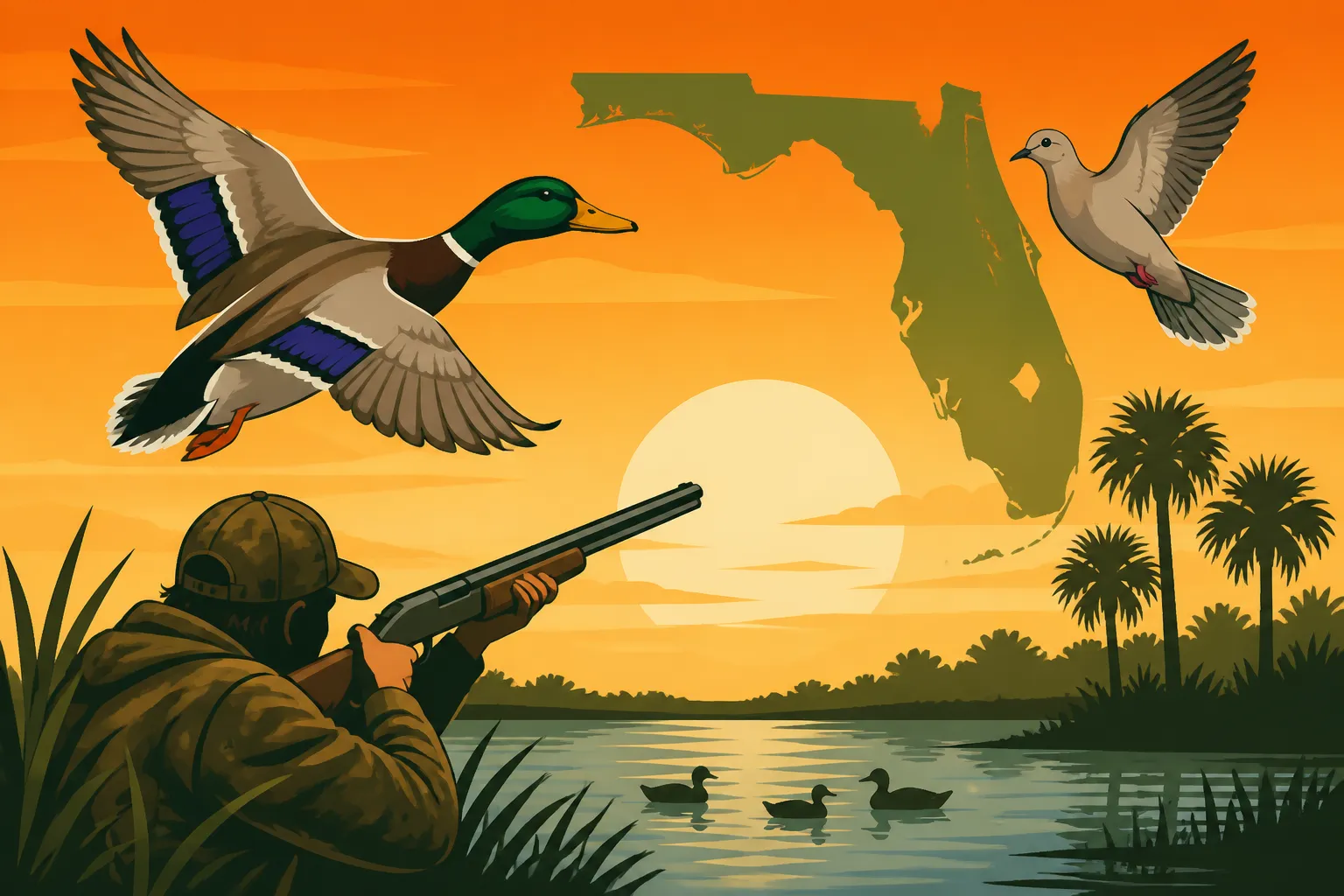
Florida Waterfowl and Dove
The Sunshine State might bring to mind images of monstrous alligators, elusive Osceola turkeys, or cunning feral hogs, but for many hunters, the true joy lies in the fast-paced action of waterfowl and dove seasons. It’s easy to feel a bit lost trying to navigate the unique habitats and specific regulations that come with pursuing these feathered rockets in Florida’s diverse landscapes. This comprehensive guide is here to cut through the confusion, offering seasoned advice and practical tips to help you experience some of the most exciting bird hunting Florida has to offer.
Understanding Florida's Diverse Waterfowl Habitat and Species
Florida's unique geography, situated at the bottom of the Atlantic Flyway, makes it a critical wintering ground for a stunning array of waterfowl. But it's not just about the migrants; the state also boasts healthy populations of resident ducks that provide year-round opportunities for those in the know.
The Atlantic Flyway and Migratory Birds in Florida
When those first cool fronts finally push down from the north, Florida truly comes alive with migratory ducks. Our marshes, lakes, and rivers become crucial havens for birds seeking refuge from colder climes, making the state a prime destination for waterfowl enthusiasts. You'll find a fantastic mix of species making their way through the flyway each fall and winter.
Common species that grace Florida's wetlands include fast-flying teal, both the vibrant Green-winged Teal and the earlier-arriving Blue-winged Teal. Ring-necked Ducks, with their distinctive white bill bands, are also plentiful, rafted up on larger lakes and ponds. For those who appreciate a challenge, the graceful Pintails and the unmistakable Spoonbills (Northern Shovelers) can also be found. The influx of these birds typically ramps up from late October through November, though specific numbers vary year to year depending on weather patterns and habitat conditions further north. Understanding the patterns of these migrations is key to successful hunting, as early season hunts might focus on resident birds and early migrants, while later in the season brings a wider variety of species.
Timing your hunts to coincide with significant cold fronts up north can dramatically improve your success rates. These weather events often push new waves of birds into Florida. Additionally, paying attention to local reports and scouting the movement of birds can give you a significant advantage. A valuable tool like GoHunt can provide real-time mapping data, helping you identify accessible water bodies, potential roosting areas, and even historical flight paths where these migratory ducks might concentrate. This strategic approach ensures you're not just heading out blindly but are making informed decisions based on observed bird behavior and favorable conditions.
Resident Waterfowl: Mottled Ducks and Wood Ducks
While the migratory spectacle is undeniable, Florida also holds its own special resident waterfowl populations that offer distinct hunting experiences. These birds don't migrate, offering more consistent opportunities for hunters who might not be able to time their trips with northern cold fronts. Focusing on these resident populations can fill the gaps in the migratory bird seasons or provide a great primary target.
The Florida Mottled Duck, a truly native Floridian, presents unique challenges and opportunities. These ducks are incredibly wary and often found in open marshes and brackish estuaries. Unlike their more colorful migratory cousins, mottled ducks are a subtle beauty, perfectly camouflaged for Florida's coastal and interior wetlands. Hunting them often requires a good understanding of their local patterns and exceptional concealment, as they are notoriously difficult to fool. Their year-round presence means that hunters can hone their skills and learn the local haunts of these intelligent birds, offering a rewarding pursuit for those willing to put in the effort.
Then there are the beautiful Wood Ducks, often found tucked away in the serene cypress swamps and wooded creeks across Florida. These birds, with their iridescent plumage, are a stunning sight and a prized trophy for many hunters. You might find them in the same sloughs where you're scouting for hogs, or even in the edges of those thick palmetto heads. They often prefer smaller, quieter water bodies with plenty of overhead cover, making for a very different hunting experience compared to open marsh hunts. Jump-shooting a Florida Creek or carefully setting up a blind in a cypress slough can be incredibly effective for these secretive birds. Identifying their preferred roosting and feeding areas, often marked by abundant acorn crops or aquatic vegetation, is paramount to success.
Florida's Dove Hunting Scene: A September Tradition
For many Floridian hunters, the crisp (or sometimes still stiflingly hot) air of early September signals the arrival of the dove season. It's a classic opening day, a time for fellowship, fast shooting, and kicking off the broader hunting calendar. It's not just a hunt; it's a tradition deeply ingrained in the state's outdoor culture, often marking the true start of fall, regardless of what the thermometer says.
Species of Doves and Their Habitats
Florida is home to several species of doves, each offering a slightly different challenge and requiring a keen eye to distinguish. Understanding where each species prefers to hang out can significantly improve your scouting efforts and success rate on opening day, and throughout the season.
The classic game bird is, of course, the Mourning Dove. Widespread across the state, these birds are the bread and butter of Florida dove hunting. You'll find them concentrating in agricultural fields – think corn, sunflower, millet, or even cut peanut fields – where they feed on fallen seeds. They also frequent power lines, field edges, and water sources, particularly during dry spells. Their erratic, darting flight makes them a formidable target, and a good box of shells is usually a prerequisite for a successful hunt. Learning their flight paths between feeding and roosting areas is often the key to consistent shooting opportunities.
In recent years, the White-winged Dove has become an increasingly common sight in Florida, particularly in the southern and central parts of the state, and agricultural areas. These slightly larger doves are often found alongside mourning doves but can also be seen in more urban fringe areas or citrus groves. Their flight can be a bit more direct than a mourning dove, though still swift. As their populations grow, they offer additional opportunities for hunters, and their presence adds an exciting variable to any dove hunt. Spotting the prominent white bar on their wings is the best way to identify them in flight.
Lastly, we have the Eurasian Collared-Dove, a non-native species that has rapidly expanded its range across Florida. These larger doves are often found closer to human habitation, around barns, farms, and suburban areas. Because they are an exotic species, there is no closed season or bag limit on Eurasian Collared-Doves, which means hunters can pursue them year-round. While not typically the primary target, they can provide extra action on days when other doves are scarce, and you don't need to report them like you would a deer through Florida's app. Just be sure to correctly identify them to avoid accidentally harvesting a protected native species.
Early Season Dove Hunting Tactics
The September dove opener in Florida is legendary for its excitement, but success often hinges on smart tactics, especially in our warm climate. It's not just about showing up; it's about understanding the birds and the environment. Preparation is everything for a productive hunt.
One of the most crucial aspects of early season dove hunting is finding the right location. Doves are creatures of habit, often flying predictable routes between their roosting areas, feeding grounds, and water sources. Agricultural fields are prime real estate, especially those with recently harvested crops like corn, sunflower, or millet. Pay close attention to field edges, fence lines, and power lines, as doves often use these as travel corridors. Water sources, particularly during dry periods, also act as major attractants. Using a mapping tool like GoHunt can help you identify these features on both public and private lands, allowing you to scout potential hot spots virtually before you even step foot in the field.
Once you’ve identified a promising area, the next step is setting up strategically. Pass-shooting Doves on a September Field is the quintessential Florida dove hunt, requiring hunters to position themselves along these flight paths. Good camouflage and remaining still are vital. Decoys can be incredibly effective, especially motorized dove decoys like the Mojo Dove, which mimic erratic flight and draw birds in closer. Place your decoys where they are visible from a distance, perhaps on a fence post or a tall stubble stalk. Experiment with different placements and numbers of decoys to see what works best in your specific field. Understanding how to set up against the sun and prevailing wind can also dramatically improve your shooting opportunities, as doves often approach into the wind.
Beyond decoys, a successful early season hunt involves understanding bird patterns throughout the day. Doves often have peak feeding times in the morning and late afternoon. Scouting during these times a few days before the season opens can reveal key flight paths and concentration areas. When the action heats up, focus on your shooting fundamentals: lead the bird, follow through, and maintain good situational awareness, especially if hunting with a group. Safety is paramount, so always be aware of where other hunters are located and establish clear zones of fire. And remember, staying hydrated in the Florida heat is just as important as your shooting skills!
Navigating Seasons, Licenses, and Permits for Bird Hunting
Hunting ducks and doves in Florida isn't just about sharp shooting and good camouflage; it's also about understanding the regulatory landscape. Florida's licensing structure, coupled with federal requirements for migratory birds, can seem daunting at first. However, a clear grasp of these necessities ensures your hunt is legal and contributes to conservation.
Essential Licenses and Stamps for Waterfowl
Before you even think about setting out your decoys or loading your shotgun, you need to make sure your paperwork is in order. Hunting migratory waterfowl in Florida requires a few specific items, combining state and federal mandates. Missing just one can turn an exciting hunt into a costly mistake.
First and foremost, you'll need a valid Florida hunting license. This is your base entry into hunting any game in the state, whether you're a Florida Resident License Options holder or a Nonresident License Options purchaser. This license covers a wide range of game, but for waterfowl, it’s just the starting point. Ensure you understand how long a Florida license stays valid, so you don't get caught out in the field. You can often carry proof of license on your phone, making things much easier to manage.
Beyond the basic state license, every waterfowl hunter 16 years of age and older must possess a valid Federal Duck Stamp. This physical stamp, which you sign across the face, is literally your ticket to hunting ducks, geese, and other migratory waterfowl in the United States. The revenue generated from these stamps directly funds the conservation of wetland habitats crucial for these birds. It’s a small investment that yields massive returns for waterfowl populations, making it an essential purchase for any dedicated duck hunter. You also need to make sure you have your Florida Migratory Bird Certification, often referred to as the HIP (Harvest Information Program) permit. This is free but mandatory and helps the FWC gather vital harvest data.
Sometimes, especially on certain Wildlife Management Areas (WMAs), you might also need additional permits. For example, some WMAs that offer exceptional waterfowl hunting may require a Florida WMA Management Area Permit or even specific quota permits obtained through a lottery system. It’s always critical to check the regulations for the specific WMA you plan to hunt well in advance. These additional permits help manage hunting pressure and ensure sustainable harvests on highly sought-after public lands. Always double-check the local regulations to avoid any surprises.
Understanding Florida's Duck and Dove Season Splits
Florida's migratory bird seasons, particularly for ducks and doves, are often structured with "splits" – periods of open hunting separated by temporary closures. This design allows wildlife managers to align hunting pressure with migratory patterns and biological needs, maximizing opportunity while ensuring sustainable populations. Knowing these dates precisely is paramount for planning your trips.
For ducks, Florida Duck Season Split Dates vary by zone, typically featuring an early opening, a mid-season closure, and a later, longer segment. This allows hunters to target early migrants and resident birds, then takes a break, and reopens for the main push of wintering ducks. For instance, the general duck season might open in late November, close for a period in early December, and then reopen through January. Additionally, Florida offers an Early Teal Season Dates, usually in September, which provides a fantastic, action-packed opportunity to hunt Blue-winged and Green-winged Teal before the main duck season even begins. This early season is often a favorite for many, offering fast shooting in still-warm weather.
Dove season also follows a split structure, often with three distinct periods. The Florida Dove Season Opening Day in early September is a highly anticipated event, bringing hunters to agricultural fields across the state. This initial burst of hunting pressure is followed by a closure, and then the season typically reopens for later segments in October/November and again in December/January. These splits help distribute hunting pressure and allow birds to resettle. Understanding the specific zones – for example, how Florida's Four Deer Zones also relate to specific turkey and dove regulations – is crucial, as some seasons might vary slightly depending on your location within the state. Always consult the current FWC regulations booklet or website for the exact dates and zone specific rules, as these can change annually.
Beyond just the season dates, you need to be acutely aware of the daily bag limits and possession limits. The Florida Duck Daily Bag Limit specifies how many ducks of each species you can harvest per day, and the overall limit of ducks you can have in possession. These limits are set based on population assessments and are designed to ensure sustainable hunting. Similarly, dove hunting has its own bag limits, usually a generous daily take, but always check the specifics. Over-bagging, even unintentionally, can lead to serious penalties. Responsible hunters always know their limits and adhere to them, ensuring future generations can enjoy these same traditions.
Key Waterfowl Hunting Strategies for Florida's Unique Landscapes
Hunting waterfowl in Florida isn't a one-size-fits-all endeavor. Our state offers a myriad of landscapes, from vast open marshes to cypress-choked swamps, each requiring tailored strategies. What works for a teal in a flooded rice field might not cut it for a wood duck in a winding creek. Understanding these nuances is critical for consistent success.
Decoying and Blind Hunting in Marshes and Swamps
The classic image of duck hunting often involves a spread of decoys and hunters concealed in a blind. This strategy is incredibly effective in Florida's open marshlands and even some cypress-edged sloughs, provided you adapt your approach to the specific environment and species. The goal is always to create a scene so inviting that even the wariest duck can't resist.
In open marsh environments or flooded agricultural fields, deploying a realistic decoy spread is paramount. Think about what the birds are doing naturally. Are they resting, feeding, or just socializing? A mix of dabblers (like Mottled Ducks and Shovelers) and divers (like Ring-necked Ducks) can be effective depending on what you're targeting. When Layout Blind Hunting Florida Rice Fields, positioning your spread to take advantage of prevailing winds is crucial; ducks almost always land into the wind, so set your decoys upstream or upwind of your blind. Motion decoys, like spinning wing teal or flapping mallards, can add lifelike movement and significantly increase your pulling power, especially on clear, calm days when birds are less likely to notice stationary decoys. Always check WMA rules for motion decoy allowances, as some areas may have restrictions.
When the habitat shifts to cypress swamps and more confined water bodies, your decoying strategy needs to adapt. Decoying Wood Ducks in a Cypress Slough is a much more intimate affair. You'll often be using fewer decoys, perhaps just a half dozen wood duck specifics, placed close to cover where the birds feel safe. Calling is also a huge factor here. Soft, contented hen calls or whistling drakes can often seal the deal when birds are circling. In these tighter spots, concealment is even more critical. Brushing In a Blind on a Field Edge or along a cypress line needs to be meticulous; ducks flying low through the trees will pick up on unnatural shapes very quickly. Natural vegetation, strategically placed, is always your best friend.
Calling techniques for different species also vary. For mottled ducks and pintails in open water, a good mallard hen call can work, but learn the distinctive chuckle of the mottled duck for a more authentic sound. For teal, high-pitched peeping calls are effective. Mastering your calls is an art form that comes with practice and listening to real birds. Remember that less can often be more; over-calling can spook wary birds. Observe their reactions and adjust your calling volume and frequency accordingly. Sometimes, just a few soft quacks are enough to bring a flock into range.
Jump Shooting and Scouting Florida's Waterways
Not every duck hunt requires a blind and a full spread of decoys. For the more adventurous and mobile hunter, jump shooting offers an exhilarating alternative, especially in Florida’s winding waterways and smaller ponds. This method relies on stealth, keen observation, and quick reflexes.
Jump-Shooting a Florida Creek involves slowly and quietly stalking along creek banks, canals, or ditch lines, flushing ducks that are resting or feeding in secluded bends. It's a highly active form of hunting that requires you to be constantly alert, ready to shoulder your gun and fire at a moment's notice. This method is particularly effective for Wood Ducks and smaller groups of Mottled Ducks that prefer these more intimate, tree-lined environments. Success hinges on approaching from a direction that puts you upwind and with the sun at your back, making it harder for birds to spot you and giving you a clear shot when they flush. Good waders are essential for navigating the often-muddy banks and shallow waters without spooking birds.
Scouting is absolutely paramount for successful jump shooting and also for understanding overall bird movement. You can't just stumble into a productive spot; you need to know where the birds are. Reading a Marsh for a Morning Flight involves observing where ducks are flying to and from, identifying their preferred feeding and roosting areas. Pay attention to water levels, as ducks will follow changes in depth, concentrating in areas with abundant food. Using satellite imagery or tools like GoHunt can be incredibly helpful for identifying potential wetlands, oxbows, and secluded ponds that might hold birds. GoHunt's mapping features allow you to mark potential hotspots, analyze historical satellite images for water patterns, and even gauge public land access points, saving you countless hours of unproductive scouting.
Beyond the initial scout, continuous observation throughout the season is key. What holds ducks one week might be dry or pressured the next. Drive county roads, observe birds flying overhead at dawn and dusk, and use your binoculars to identify species and numbers. Don't be afraid to walk a little further or explore less-traveled areas on public lands; often, the birds will be where the pressure isn't. Remember, ducks are opportunistic, and their patterns can shift with food availability, hunting pressure, and weather. Staying flexible and adaptable in your approach will ultimately lead to more consistent success in Florida's dynamic waterfowl landscape.
Finding Your Spot: Public and Private Land Opportunities
Florida offers a variety of locations for waterfowl and dove hunting, from expansive public lands managed by the state and federal government to private agricultural fields. Deciding where to hunt often comes down to accessibility, hunting pressure, and the specific species you're targeting. Each type of land comes with its own set of challenges and rewards.
Florida Wildlife Management Areas WMAs for Waterfowl and Doves
Florida's Wildlife Management Areas (WMAs) are incredible resources for public land hunters, and many provide outstanding opportunities for ducks and doves. These managed lands are often specifically designed to enhance wildlife habitat, making them prime locations if you know where to look. While you can find How Many Acres of Public Land Florida Has, specific WMAs stand out for bird hunting.
For waterfowl, some of Florida's stormwater treatment areas (STAs), managed by water management districts and sometimes accessible through FWC quota hunts, are world-class. These massive engineered wetlands in South Florida attract huge numbers of migratory ducks and can offer spectacular shooting. However, access is often highly controlled through the Florida WMA Quota Permit System, so applying early is crucial, and the odds can be tough. Other WMAs like Apalachicola WMA in the panhandle or Three Lakes Wildlife Management Area in central Florida can also provide good duck hunting, especially if you venture into less accessible areas. These areas often require an understanding of the local terrain, such as finding those secluded cypress heads where birds might roost. For those hunting in the panhandle, understanding Florida Panhandle Pine Plantations can also lead to finding small ponds or flooded timber within.
Dove hunting on WMAs is also a popular option. Many WMAs maintain dedicated public dove fields, often planted with sunflowers, millet, or corn, specifically to attract birds for hunters. These fields are typically open for the general dove season and sometimes require no special quota permits, though a WMA Management Area Permit is always a good idea. The FWC website and district offices are the best places to find lists of WMAs with dove fields. Keep in mind that these fields can see significant hunting pressure, especially on opening day, so arriving early and scouting the field beforehand is essential. The Best Florida Ground for Public Land Waterfowl and doves is often where the FWC has put in the habitat work, so follow their lead. Using the FWC Public Hunting Map, which is often available through their app, can pinpoint these locations and provide specific regulations for each area.
Accessing Private Land and Agricultural Areas
While public lands are invaluable, private lands, particularly agricultural properties, often offer some of the most consistent and productive dove and waterfowl hunting opportunities in Florida. However, gaining access requires diligence, respect, and often, a bit of old-fashioned networking.
For dove hunters, private agricultural fields are goldmines. Doves thrive on waste grain from harvested crops. Hunting a Standing Peanut Field or a Cut Florida Field that has recently been harvested for corn, sunflowers, or millet can provide incredible action. The key here is securing permission from the landowner well in advance. Asking a Florida Landowner for Permission involves being polite, respectful, and offering to help out around the property in return. Often, demonstrating your commitment to safety and leaving no trace can go a long way. Some landowners may require written permission in Florida, so always clarify the rules. Accessing private land often means less hunting pressure and potentially more predictable bird patterns compared to heavily hunted public fields.
For waterfowl, private land opportunities often revolve around cattle ranches with large, shallow impoundments, flooded pastures, or even managed rice fields. These areas can hold incredible numbers of ducks, especially during strong migration pushes. Securing access to these lands can be more challenging and might involve hunting leases or joining a Florida Hunting Club. Leasing options can range from a day hunt fee to seasonal or annual agreements. These private operations often have specific habitat management programs in place to attract and hold birds, offering a premium hunting experience. You might even find opportunities for deer drives with three or four hunters on some of these large ranches, demonstrating the diverse opportunities they provide.
Whether pursuing access on private land for ducks or doves, always prioritize building a good relationship with the landowner. Be prompt, clean up all your shells and trash, respect their property, and consider offering them some of your harvest. These gestures go a long way in ensuring future access and maintaining a positive image for all hunters. Remember, Florida's Posted Land Rules are strict, and unauthorized access is trespassing, which can lead to legal issues and damage the reputation of hunters statewide.
Gear Essentials and Safety Considerations for Florida Bird Hunters
Just like any other outdoor pursuit, successful and safe bird hunting in Florida depends heavily on having the right gear and an unwavering commitment to safety. Our unique climate and terrain mean that what works up north might not be ideal here, and neglecting basic safety can have serious consequences.
Decoys, Calls, and Shotgun Selection
Having the right tools for the job can make all the difference between a frustrating outing and a memorable hunt filled with fast-flying action. This is especially true when it comes to decoys, calls, and, of course, your shotgun.
For decoy selection, consider the species you're targeting. If you're hunting ducks in open water, a spread of versatile mallard or pintail decoys will serve you well, augmented with a few species-specific decoys like teal or ringnecks if those are abundant. For the more intimate cypress swamps, a half-dozen realistic Wood Duck decoys are often more effective than a massive spread. Motion decoys, such as spinning-wing models, can be incredibly effective for drawing attention, but always check local WMA rules, as some areas restrict their use. For doves, a few stationary dove decoys on fence posts or ground stakes can add realism, but motorized decoys are often the real game-changer, mimicking a flying dove and grabbing attention from afar.
When it comes to calls, practice makes perfect. A good duck call can range from a simple mallard hen call to more complex setups for various species. Learning how to make soft, contented quacks is often more effective than loud, aggressive calling for wary birds. For doves, a dove coo call can be used, though often, consistent flight patterns and good decoys are more critical than calling for these birds. Remember, calling is about realism; if you sound unnatural, you'll likely spook more birds than you attract. There are plenty of online resources and instructional videos to help you hone your calling skills, and spending time listening to actual bird sounds in the field can be invaluable.
Your shotgun is, of course, your primary tool. For dove hunting, a lighter gauge like a 20-gauge or even a .410 can be enjoyable, especially for younger hunters or those sensitive to recoil, but a 12-gauge with lighter loads (7.5 or 8 shot) is standard for its versatility and pattern density. For ducks, a 12-gauge is almost universally preferred due to its ability to handle heavier, non-toxic shot loads required for waterfowl. Which Shotgun Gauges Florida Allows for Deer also applies to birds, though the shot size requirements differ. Always use non-toxic shot (steel, bismuth, tungsten alloy) for waterfowl hunting; lead shot is strictly prohibited in wetlands. Choke selection is also important: improved cylinder or modified chokes are popular for doves, offering a wider pattern for fast-moving targets, while modified or full chokes are often preferred for ducks, especially over decoys at slightly longer ranges.
Waders, Blinds, and Weather Preparedness
Florida's climate can be incredibly dynamic, shifting from cool mornings to scorching afternoons, and our landscapes often involve water. Being prepared for these conditions with the right gear is not just about comfort; it's about safety and effectiveness.
Good quality waders are an absolute must for most Florida waterfowl hunts. Whether you're setting decoys in a shallow marsh, retrieving a downed bird from a slough, or jump-shooting a creek, you'll inevitably be in the water. Breathable chest waders are often preferred, especially in the early season, to combat the heat and humidity while still offering protection. In colder weather, neoprene waders might be more appropriate. Always check for leaks before heading out; there's nothing worse than a cold, wet surprise early in the morning. When it comes to blinds, natural concealment is often best. Use the existing vegetation to your advantage. If a manufactured blind is used, ensure it's well-brushed in with local vegetation to break up its outline. For dove hunting, a simple stool or bucket to sit on and some camouflage netting might suffice, but complete concealment is still advantageous.
Weather preparedness in Florida extends beyond just temperature. Our state is prone to sudden thunderstorms, especially during the early bird seasons. Always check the forecast, but be ready for unexpected changes. Rain gear – waterproof jacket and pants – should always be in your pack. Sun protection is equally important: hats, sunglasses, and sunscreen are crucial to prevent sunburn and heat exhaustion. Staying hydrated is non-negotiable, so carry plenty of water, even on short hunts. The combination of heat, humidity, and physical exertion can quickly lead to dehydration. Always let someone know where you are hunting and when you expect to return, especially if you're venturing into remote WMA areas with limited cell service.
Finally, while less common than in big game hunting, understanding Florida Blaze Orange Requirements is important. While generally not required for migratory bird hunting on private lands (unless deer hunting concurrently), some public lands or specific quota hunts might have particular safety requirements. Always consult the WMA regulations. More importantly, be aware of the wildlife around you. Florida is home to venomous snakes, alligators, and other critters. Be cautious when wading, and always be aware of your surroundings. Wearing sturdy boots or waders can offer some protection against snakebites, and always give alligators a wide berth. Safety, for yourself and others, should always be your top priority.
Conservation and the Future of Florida Bird Hunting
Hunting in Florida is more than just a pastime; it's a vital component of wildlife conservation. Hunters, through their license fees, excise taxes on equipment, and direct involvement, are the primary funders and stewards of wildlife. Understanding the conservation efforts behind Florida's waterfowl and dove populations is crucial for every ethical hunter.
Habitat Preservation and Restoration Efforts
The long-term health of Florida's waterfowl and dove populations is intrinsically linked to the availability and quality of their habitats. Without suitable places to breed, feed, and rest, even the most robust populations would dwindle. This is where dedicated habitat preservation and restoration efforts come into play, often supported directly by hunters.
Numerous organizations, both governmental and non-profit, are deeply involved in waterfowl and dove habitat work across Florida. The Florida Fish and Wildlife Conservation Commission (FWC) manages extensive tracts of land, including many of our WMAs, specifically for wildlife benefit, often through active habitat management like prescribed burns. Ducks Unlimited, a prominent waterfowl conservation group, has invested millions in wetland restoration projects throughout the state, working to enhance critical wintering grounds and breeding habitats. Similarly, the National Wild Turkey Federation and other local conservation groups also play a role in managing diverse habitats that benefit doves and other upland birds. These efforts create and maintain the mosaic of wetlands, agricultural fields, and upland areas that these birds depend on.
The role of hunters in funding conservation through license and stamp purchases cannot be overstated. When you buy your Florida hunting license, your Federal Duck Stamp Requirement, or a Florida Migratory Bird Certification, a significant portion of those funds goes directly into conservation initiatives. These funds are used for land acquisition, habitat restoration, wildlife research, and enforcement. This "user-pays, user-benefits" model is the bedrock of wildlife conservation in North America. Beyond direct funding, hunters often volunteer their time and effort for habitat projects, planting food plots, building nesting boxes for Wood Ducks in Florida Cypress Swamps, or assisting with prescribed burns. This direct involvement fosters a deep connection to the land and a personal investment in the future of hunting.
Understanding the impact of prescribed burns on habitat is also key. While it might look destructive at first glance, controlled burns are a natural and necessary part of managing many of Florida's ecosystems, including pinelands and prairies that benefit quail, doves, and deer. These burns reduce fuel loads, prevent catastrophic wildfires, stimulate new plant growth, and create open understories that are ideal for ground-nesting birds and for doves to forage. The FWC regularly uses prescribed fire as a management tool on public lands to improve habitat quality for game species.
Monitoring Populations and Sustainable Practices
Conservation isn't just about habitat; it's also about understanding the health of bird populations and ensuring that hunting practices are sustainable for the long haul. This involves rigorous scientific monitoring and adaptive management strategies.
State and federal wildlife agencies, including the FWC and the U.S. Fish and Wildlife Service, constantly monitor Florida Duck and Goose Numbers, as well as Florida Dove Population Trends. This data is collected through various means, including breeding bird surveys, migration counts, harvest surveys (like the HIP program), and banding efforts. This scientific information is then used to set annual hunting regulations, including season lengths, bag limits, and possession limits. For example, the Florida Duck Daily Bag Limit isn't just a random number; it's carefully determined to allow for a recreational harvest without negatively impacting the overall population. These limits can change year-to-year based on population fluctuations, habitat conditions, and other factors, demonstrating a commitment to adaptive management.
Ethical hunting practices are the cornerstone of sustainable hunting. This means adhering to all regulations, accurately identifying your target species (especially important given Florida's diverse waterfowl and dove species), and making every effort to retrieve downed birds. Wounded birds that are not recovered are a wasted resource. Responsible hunters also strive to minimize their impact on the environment, leaving no trace, and respecting other outdoor users. Taking Florida Hunter Education is a great first step to understanding these ethical considerations and legal requirements, ensuring that every hunter goes afield with the knowledge and respect necessary to maintain our hunting heritage.
The future of Florida bird hunting relies on the continued commitment of hunters to these conservation efforts. By supporting conservation organizations, adhering to regulations, practicing ethical hunting, and advocating for habitat protection, hunters ensure that the skies over Florida will remain filled with ducks and doves for generations to come. It’s a legacy worth preserving, built on the principle that wise use of our natural resources benefits everyone.
| Species | Typical Size (approx.) | Common Habitat | Daily Bag Limit (general) | Notes |
|---|---|---|---|---|
| Mourning Dove | Small (10-13 inches) | Agricultural fields, power lines, open woodlands | 15 | Classic game bird, widespread, fast flight. |
| White-winged Dove | Medium (11-12 inches) | Agricultural fields, urban fringe, citrus groves | 15 (may be combined with Mourning) | Increasing population, prominent white wing bars. |
| Eurasian Collared-Dove | Large (12-14 inches) | Urban/suburban, farms, residential areas | No limit | Non-native, year-round season. |
| Mottled Duck | Medium (20-22 inches) | Open marshes, brackish estuaries, coastal areas | 5 (part of 6-duck limit) | Resident Florida duck, wary, excellent table fare. |
| Wood Duck | Small (17-19 inches) | Cypress swamps, wooded creeks, beaver ponds | 3 (part of 6-duck limit) | Resident and migratory, beautiful plumage, found in timbered wetlands. |
| Blue-winged Teal | Small (15-16 inches) | Shallow marshes, flooded fields | 6 (part of 6-duck limit) | Early migrant, fast flier, often found in large flocks. |
| Green-winged Teal | Small (14-15 inches) | Shallow marshes, flooded fields | 6 (part of 6-duck limit) | Later migrant, agile flier, common in smaller wetlands. |
| Ring-necked Duck | Medium (16-18 inches) | Larger lakes, open ponds, deep marshes | 6 (part of 6-duck limit) | Common diver, distinctive white bill ring, often rafts up. |
| Northern Shoveler | Medium (19-20 inches) | Shallow ponds, sewage treatment plants | 6 (part of 6-duck limit) | Distinctive spatulate bill, feeds by dabbling, often in turbid water. |
Disclaimer
The information provided in this guide is for general informational purposes only and is not intended as legal advice. Hunting regulations and seasons in Florida are subject to change. It is the responsibility of every hunter to consult the most current Florida Fish and Wildlife Conservation Commission (FWC) regulations booklet or website before engaging in any hunting activity. Always prioritize safety and ethical hunting practices.