How Florida’s Alligator Population Recovered
It’s hard to imagine Florida without alligators, isn't it? These ancient reptiles are synonymous with the Sunshine State, but it wasn't always this way. For decades, Florida's alligator population faced a grim future, teetering on the brink due to unchecked exploitation and habitat destruction. This comprehensive guide will walk you through the incredible journey of how the American alligator made its triumphant return from near extinction to a thriving, sustainably managed species across Florida’s diverse landscapes.
The Brink of Extinction: A Look Back at the Alligator's Decline
Before alligators became an iconic symbol of Florida, they were nearly hunted out of existence. The story of their decline is a stark reminder of humanity's impact on wildlife and the critical need for conservation. It’s a period many folks don't even realize happened, but it shaped everything we know about alligator management today.
Early Exploitation and Market Hunting
Imagine a time when alligators weren't protected, and their hides were a booming commodity. This was the reality for much of the 19th and early 20th centuries. Alligators were hunted relentlessly for their valuable skins, which were used to make boots, belts, and luggage. It was a lucrative business, and there were no regulations to speak of, leading to an unsustainable free-for-all. Hunters, known as "gator getters," would often venture deep into the Everglades and other wetlands, taking every alligator they could find, regardless of size or age. The sheer volume of animals harvested year after year began to decimate populations across the state, particularly in easily accessible areas. Back then, there was little understanding of ecological balance or the long-term consequences of such intensive hunting pressure.
Beyond their hides, alligator meat was also a local delicacy, and their teeth were sought after for souvenirs. These multiple pressures created a perfect storm, pushing the species closer and closer to the edge. It was a classic case of demand outpacing supply, with dire implications for a creature that takes a long time to mature and reproduce. The constant disturbance and removal of breeding adults meant that the population simply couldn't replenish itself fast enough.
Habitat Loss and Degradation
As if market hunting wasn't enough, the rapidly developing state of Florida also played a significant role in the alligator's historical decline. The same wetlands that alligators called home were often viewed as obstacles to progress, prime targets for draining and conversion into agricultural land, residential areas, or commercial developments. Think of the massive efforts to drain the Everglades for farming in the early to mid-20th century. This drastically reduced the amount of suitable habitat available for alligators to live, hunt, and breed.
The degradation wasn't just about outright loss; it was also about the quality of the remaining habitat. Pollution from agricultural runoff, industrial waste, and burgeoning urban centers began to contaminate waterways, impacting the alligator's food sources and overall health. Altered water flow, increased salinity in freshwater marshes due to coastal development, and the fragmentation of natural areas meant that even where habitat remained, it was often subpar. Alligators are incredibly resilient, but they still need clean water, ample food, and undisturbed nesting sites to thrive. When these fundamental needs were compromised on such a massive scale, it spelled trouble for their survival.
A Turn of the Tide: The Dawn of Conservation Efforts
The realization that Florida was losing its iconic reptile finally prompted action. The turn of the tide didn't happen overnight, but a combination of legal protections, scientific understanding, and a growing public consciousness laid the groundwork for the alligator's remarkable recovery.
Legal Protections and the Endangered Species Act
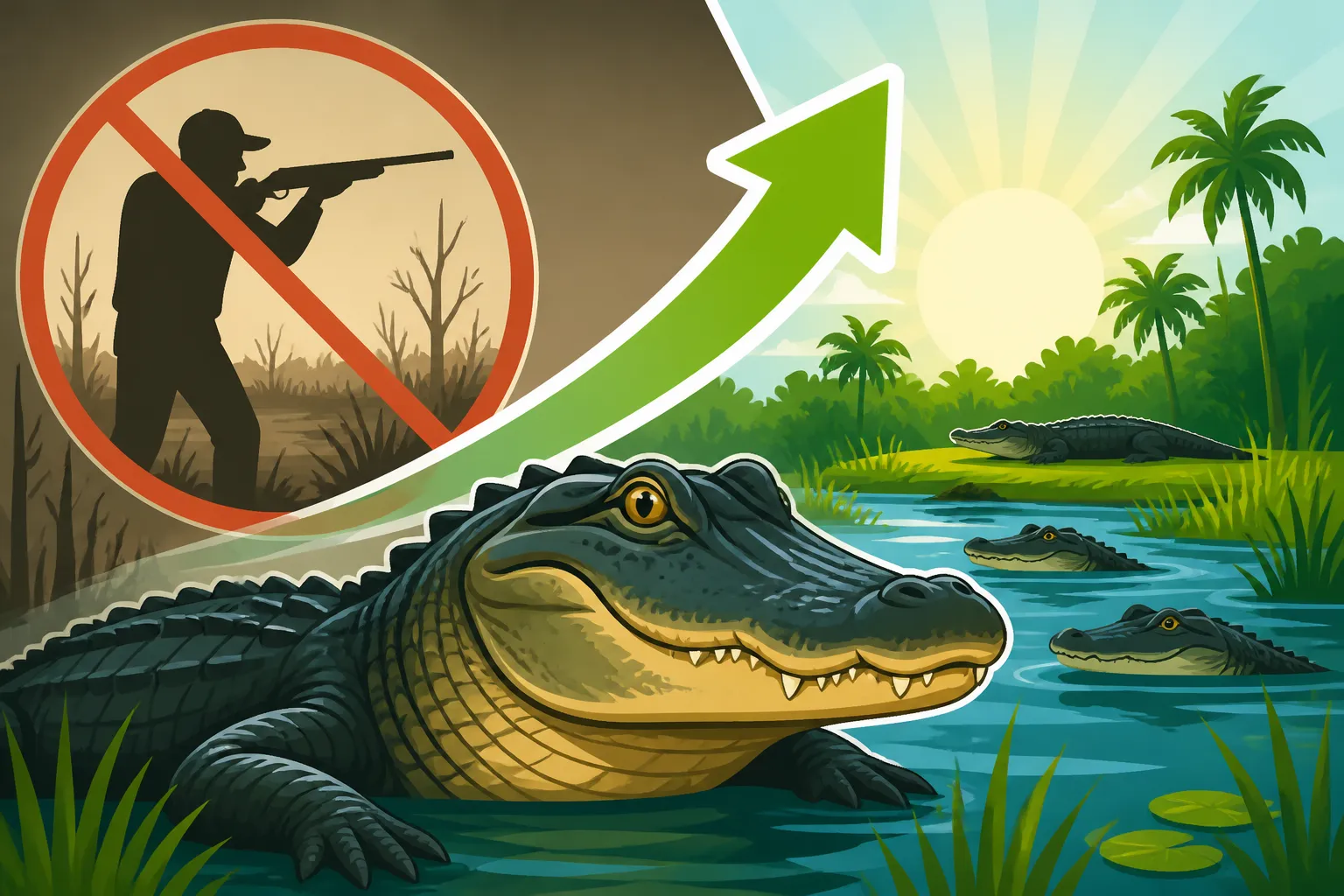
The most significant turning point for the American alligator came with federal protection. By the 1960s, alligator populations had plummeted so severely that they were listed as an endangered species under the precursor to the Endangered Species Act (ESA). In 1967, the American alligator was officially listed as endangered, making it illegal to hunt, kill, or harass them. This listing gave the species the breathing room it desperately needed, halting the rampant market hunting that had decimated their numbers for decades.
The ESA provided strict regulations and powerful enforcement mechanisms, leading to a dramatic reduction in poaching. Suddenly, law enforcement had the tools to pursue and prosecute those who continued to illegally hunt alligators. This protection wasn't just a paper declaration; it was actively enforced, and the penalties were severe enough to deter many would-be poachers. This immediate cessation of legal and illegal hunting pressure allowed the remaining alligator populations to begin their slow, steady climb back from the brink. The success of the alligator’s recovery eventually led to its removal from the endangered species list in 1987, a true testament to the power of the ESA.
Scientific Research and Monitoring
While legal protection stopped the bleeding, robust scientific research and ongoing monitoring by agencies like the Florida Fish and Wildlife Conservation Commission (FWC) were crucial for understanding alligator biology and guiding recovery efforts. Scientists began to study alligator population dynamics, reproductive rates, habitat requirements, and movement patterns. This data was invaluable in developing effective management strategies.
FWC biologists conducted extensive population surveys, often at night when alligators' eyes shine brightly in a spotlight, allowing for accurate counts. They also studied nesting success, hatchling survival rates, and the impact of environmental factors like drought and flood on alligator health. This scientific foundation ensured that management decisions were based on sound ecological principles, not guesswork. Understanding the long-term trends in Florida Alligator Population Estimate was vital for validating the success of conservation programs and adapting strategies as the population grew. Platforms like GoHunt, while primarily for hunters, also help visualize accessible areas where such population monitoring might occur, offering a spatial understanding of where these animals thrive.
Public Awareness and Education
Beyond legal and scientific efforts, a shift in public perception also played a crucial role. For generations, alligators were often viewed as dangerous pests, creatures to be feared and eradicated. However, as conservation efforts gained traction, there was a concerted push to educate the public about the alligator's ecological importance and its role as a native Florida species. Educational campaigns highlighted that alligators are apex predators, essential for maintaining the health of wetland ecosystems by controlling prey populations.
Signs were posted in natural areas, park rangers led educational programs, and media outlets began to portray alligators in a more balanced light, emphasizing their natural behaviors rather than sensationalizing rare attacks. This increased awareness fostered a greater appreciation for alligators and encouraged coexistence, reducing instances of deliberate harm or harassment. The combination of protection, science, and education created a powerful wave of change that ultimately saved the American alligator.
The Resurgence: Florida's Alligator Population Today
Thanks to decades of dedicated conservation, the American alligator has not just recovered; it has thrived. Florida now boasts a robust and healthy alligator population, a conservation success story that few other species can match.
Tracking Growth and Density
The numbers don't lie: Florida's alligator population has rebounded spectacularly. From critically low numbers in the mid-20th century, estimates now place the statewide population at around 1.3 million alligators. This means that if you spend any time near fresh or brackish water in Florida, you're almost guaranteed to encounter one. This growth is consistently monitored through various methods, including aerial surveys, night-light surveys, and harvest data collected from the regulated hunting seasons.
The density of alligators varies across the state, naturally, depending on habitat availability and quality. Areas with extensive wetlands, like the Everglades, the St. Johns River system, and vast areas of north and central Florida, support higher densities. FWC’s long-term monitoring shows a stable and self-sustaining population, a testament to the effectiveness of past conservation actions. Hunters and outdoor enthusiasts using mapping tools, much like those found on GoHunt, can often see wetland features and water bodies that indicate prime alligator habitat, even on public lands.
Here's a snapshot of the alligator population's recovery milestones:
| Year | Status (Federal) | Estimated Population (Florida) | Key Actions/Milestones |
|---|---|---|---|
| Pre-1960s | Unprotected | Significantly Depleted | Unregulated market hunting, habitat destruction |
| 1967 | Endangered | Low (tens of thousands) | Listed under Endangered Species Act (precursor) |
| 1970s | Endangered | Growing | Strict protections enforced, poaching reduced |
| 1978 | Threatened | Moderate (hundreds of thousands) | Population growing, experimental harvest programs begin |
| 1987 | Delisted | High (over one million) | Population fully recovered, delisted from ESA |
| 1990s-Present | Sustainable Harvest | Stable (around 1.3 million) | Managed harvest, nuisance alligator program |
Note: Population estimates are approximate and vary by methodology and year, but show a clear trend of recovery.
Geographic Distribution and Abundance
One of the most remarkable aspects of the alligator's recovery is its widespread distribution across Florida. You can find American Alligators in Florida in all 67 counties, inhabiting practically every type of freshwater environment: lakes, rivers, ponds, canals, and even brackish coastal marshes. While some areas, like the vast Everglades ecosystem, naturally hold more alligators due to expansive, ideal habitat, they are truly ubiquitous across the state.
The abundance means that whether you're boating on Lake Okeechobee, hiking in the Ocala National Forest, or fishing a small pond in your local park, you're likely to be sharing that space with alligators. This broad distribution is a sign of a truly healthy and resilient population, capable of adapting to various environments. The success of their recovery means that Florida residents and visitors alike can experience these magnificent creatures in their natural habitats, offering unique wildlife viewing opportunities – though always from a safe and respectful distance!
Modern Management: Balancing Coexistence and Conservation
With a recovered and thriving population, the focus of alligator management in Florida shifted from strict protection to sustainable management. This involves a delicate balance: ensuring the long-term health of the alligator population while also managing interactions with a growing human population.
Regulated Harvest Programs
Perhaps the most significant evidence of the alligator's recovery is the existence of Florida's carefully regulated public harvest program. Since 1988, the FWC has managed an annual alligator hunting season. This isn't a return to the free-for-all days; rather, it’s a scientifically based program designed to control population growth, provide recreational opportunities for hunters, and generate revenue for conservation. Hunters must apply for Florida's Statewide Alligator Permit Lottery and, if successful, receive specific permits for designated harvest units.
Each permit comes with strict guidelines, including bag limits, size restrictions in some areas, and designated hunting periods. The season typically runs from August 15th to November 1st, but specific dates and phases vary. This allows the FWC to fine-tune the harvest based on localized population data and ensures that the removal of alligators is sustainable and doesn't negatively impact the overall population. The success of the harvest program also offers insights into Florida Alligator Harvest Numbers and helps FWC gauge population health and distribution. For those interested in participating, understanding how to apply for a permit and the associated costs is key to Applying for a Statewide Alligator Permit.
Nuisance Alligator Control SNAP
Another critical component of modern alligator management is the Statewide Nuisance Alligator Program (SNAP). As the alligator population rebounded and Florida's human population expanded into traditional alligator habitats, interactions—and conflicts—became more common. Alligators are naturally opportunistic predators, and sometimes they wander into residential areas, swim in public swimming spots, or become habituated to human feeding, posing a potential threat.
The SNAP program addresses these situations by employing contracted nuisance alligator trappers who remove alligators that are deemed a threat to public safety. These are typically alligators that are at least four feet long and have become a problem by exhibiting aggressive behavior or frequenting areas where they pose a risk to people, pets, or livestock. The goal is to safely remove problem animals without harming the overall alligator population. This program is crucial for maintaining public acceptance of alligators and preventing unnecessary conflicts, ensuring that both people and alligators can coexist safely in Florida's shared environment.
Habitat Preservation and Restoration
Even with a healthy population, ongoing habitat preservation and restoration efforts remain vital. Alligators rely on clean, interconnected wetland ecosystems. Agencies like the FWC and the various Water Management Districts continually work to protect existing wetlands, restore degraded areas, and manage water resources in a way that benefits wildlife, including alligators. This includes efforts to maintain natural water flows, control invasive species that can degrade alligator habitat, and acquire new lands for conservation.
Preserving large tracts of public land, such as vast Wildlife Management Areas (WMAs) and National Forests, ensures that alligators have ample space to roam, breed, and find food away from human development. These areas are not just crucial for alligators but for countless other species that rely on Florida's unique wetland habitats. The health of the alligator population is a strong indicator of the overall health of these invaluable ecosystems.
Ongoing Challenges and the Future of Alligator Management
While the American alligator's recovery is a shining example of conservation success, managing such a large and widespread population isn't without its challenges. Florida's continuous growth means that human-alligator interactions will always be a factor.
Human-Alligator Conflicts
The primary ongoing challenge is managing human-alligator conflicts. With over a million alligators sharing a state with over 22 million people, close encounters are inevitable. While Florida Alligator Attack Statistics remain incredibly low given the number of alligators and people, every incident is serious and receives significant media attention. Most conflicts arise when people feed alligators, making them lose their natural fear of humans, or when pets are allowed to swim or roam unsupervised near water.
Education remains paramount. FWC constantly reminds residents and visitors not to feed alligators, to keep pets on leashes away from water, and to swim only in designated areas. The SNAP program addresses immediate threats, but preventing habituation is key to long-term safety. Understanding proper etiquette when encountering an alligator in the wild, whether you are Stalking an Alligator on a Freshwater Lake or just enjoying a quiet hike, is essential for safety and respect.
Disease and Environmental Factors
Like any wildlife population, Florida's alligators are susceptible to disease and environmental changes. While generally robust, alligators can be affected by bacterial infections, parasites, and even neurological issues caused by environmental toxins. Monitoring these health trends is an important part of FWC's ongoing Florida Wildlife Disease Monitoring Program. Large-scale environmental changes, such as prolonged droughts or severe hurricanes, can also impact alligator populations by altering water levels, affecting food availability, and even damaging nesting sites.
Climate change also presents a long-term challenge. Changes in rainfall patterns, rising sea levels that can increase salinity in freshwater habitats, and altered temperatures could all impact alligator reproduction and survival. Continued scientific research and proactive habitat management will be crucial for helping alligators adapt to these future challenges and ensuring their continued health. For instance, understanding Florida Alligator Nesting Season Timing and how it might be affected by temperature shifts is vital.
Sustainable Management for Tomorrow
The future of Florida's alligator population depends on continued sustainable management practices. This means maintaining the regulated harvest program, refining the nuisance alligator program, and robustly protecting and restoring habitat. It also means adapting to new scientific findings and public needs. For example, the FWC's Florida Alligator Egg Collection Program allows for commercial alligator farming, reducing pressure on wild populations while providing economic opportunities.
Ultimately, the story of Florida's alligators is one of hope and resilience. From being hunted to near extinction, they have made a remarkable comeback, demonstrating that with focused conservation efforts, even severely threatened species can recover. Their presence is a reminder of Florida's wild heart, and with continued responsible stewardship, they will undoubtedly continue to be a vital part of the state's ecosystem for generations to come.
Disclaimer
Please remember that hunting regulations, seasons, and licensing requirements can change. Always consult the latest official Florida Fish and Wildlife Conservation Commission (FWC) regulations before planning any hunting activity. Safety and ethical hunting practices are paramount.