Where Florida Quail Numbers Hold Up Best
For many seasoned hunters in Florida, the sight of a bobwhite quail bursting from cover, or the sound of their distinctive whistle, conjures up nostalgic memories of classic wingshooting. However, finding these birds in huntable numbers can feel like searching for a needle in a haystack across much of our vast state. This guide will dive deep into the specific regions and habitats where Florida's wild bobwhite quail populations still manage to thrive, offering insights into why certain areas are more productive than others and how you can increase your chances of a successful quail hunt.
The Shrinking Realm of Florida's Bobwhite Quail
The reality of bobwhite quail hunting in Florida, and indeed across much of the Southeast, is that populations have faced significant declines over the past several decades. It's a frustrating truth for anyone who remembers more abundant days or dreams of the kind of wild bird hunting their grandfathers experienced. This isn't just a Florida problem, but our unique landscape and development pressures have certainly played a role. Understanding why their numbers have shrunk helps us appreciate where they still persist.
Historical Abundance and Modern Challenges
Back in the day, before intensive agriculture and sprawling urban development reshaped the landscape, Florida was a bobwhite quail paradise. Vast tracts of pine flatwoods, open savannas, and agricultural fields managed with less intensity provided a mosaic of ideal habitat. Quail thrived in these conditions, and coveys were a common sight and sound. The challenge today is that much of that prime, contiguous habitat has been fragmented or lost entirely.
Modern forestry practices, which often favor dense, fast-growing timber with little understory management, eliminate the crucial low-growing vegetation quail need for cover and food. Similarly, large-scale monoculture farming, with its clean field edges and heavy pesticide use, leaves little for quail to forage on or hide in. It's a stark contrast to the small, diverse family farms of yesteryear that inadvertently created excellent quail habitat. Even urban and suburban sprawl, while seemingly unrelated, devours land that once could have supported birds, further isolating remaining populations.
Habitat Degradation and Fragmentation
The biggest culprit in the quail decline isn't just development, but the subtle, insidious loss of quality habitat. Quail are particular creatures; they need a very specific mix of short, herbaceous vegetation for foraging, dense shrubby cover for escape from predators, and open ground for moving around. Think of it like a carefully crafted recipe – if you're missing key ingredients or they're not in the right proportions, the dish just doesn't work.
When these elements are separated by miles of unsuitable land, small coveys become isolated. They struggle to find new mates, leading to inbreeding and reduced genetic diversity, making them less resilient to disease or environmental changes. This fragmentation also makes them more vulnerable to predation, as they have fewer safe havens. It’s a cascading effect that paints a challenging picture for the future, but it also underscores the importance of the few places where quail still manage to thrive.
Key Factors for Healthy Quail Populations
Despite the widespread challenges, pockets of robust quail populations still exist in Florida. These areas aren't thriving by accident; they possess a combination of environmental conditions and land management practices that cater to the bobwhite's specific needs. Understanding these factors is crucial for hunters and conservationists alike.
Optimal Habitat Structure
Quail require a very specific blend of cover and open ground. They need plenty of native grasses, forbs, and low-growing shrubs that provide both concealment and a buffet of seeds and insects. Crucially, this vegetation can't be too dense or too sparse. Imagine trying to walk through a thick briar patch—quail face the same challenge. They need "walkable" cover that allows them to move freely while staying hidden.
This means a healthy quail habitat often looks like an open pine forest with a maintained understory, or old fields that have been allowed to revert naturally, but with some judicious management. Bunch grasses, like wiregrass, are vital for nesting and loafing cover, while small patches of dense palmetto or gallberry offer essential escape cover from aerial predators like hawks and ground predators like coyotes. The key is a patchwork quilt, not a uniform blanket.
Fire and Land Management Practices
One of the most critical factors in maintaining prime quail habitat in Florida is fire. Our ecosystems are fire-adapted, and prescribed burning is a natural and necessary tool for managing the landscape. Regular, controlled burns prevent the understory from becoming too thick and overgrown. They knock back invasive species, promote the growth of beneficial native grasses and forbs, and create the open, diverse structure that quail depend on.
Without fire, Florida's pine flatwoods and prairies quickly become choked with dense hardwoods and impenetrable brush, making them uninhabitable for quail. Beyond fire, other active management practices like timber thinning, disking, and even controlled grazing can mimic natural disturbances and maintain the desired habitat structure. These efforts, whether on private plantations or public lands, are what separate areas with lingering quail from those where they've vanished.
Reduced Predator Pressure
While habitat is king, predator pressure certainly plays a role, especially in fragmented landscapes. Quail are prey animals, and their nests, chicks, and adults are all fair game for a variety of predators, including raccoons, opossums, snakes, bobcats, coyotes, and various raptors. In areas where habitat is poor and quail numbers are already low, heavy predator loads can significantly suppress population recovery.
On well-managed private lands, some level of predator control might be undertaken to give quail a better chance. However, on public lands, the focus is almost entirely on habitat restoration, with the understanding that robust habitat can naturally support healthy quail numbers even with a full complement of predators. Still, avoiding areas with obvious high predator activity, or focusing your efforts in places with excellent escape cover, can be a smart strategy.
Prime Quail Habitat Across Florida
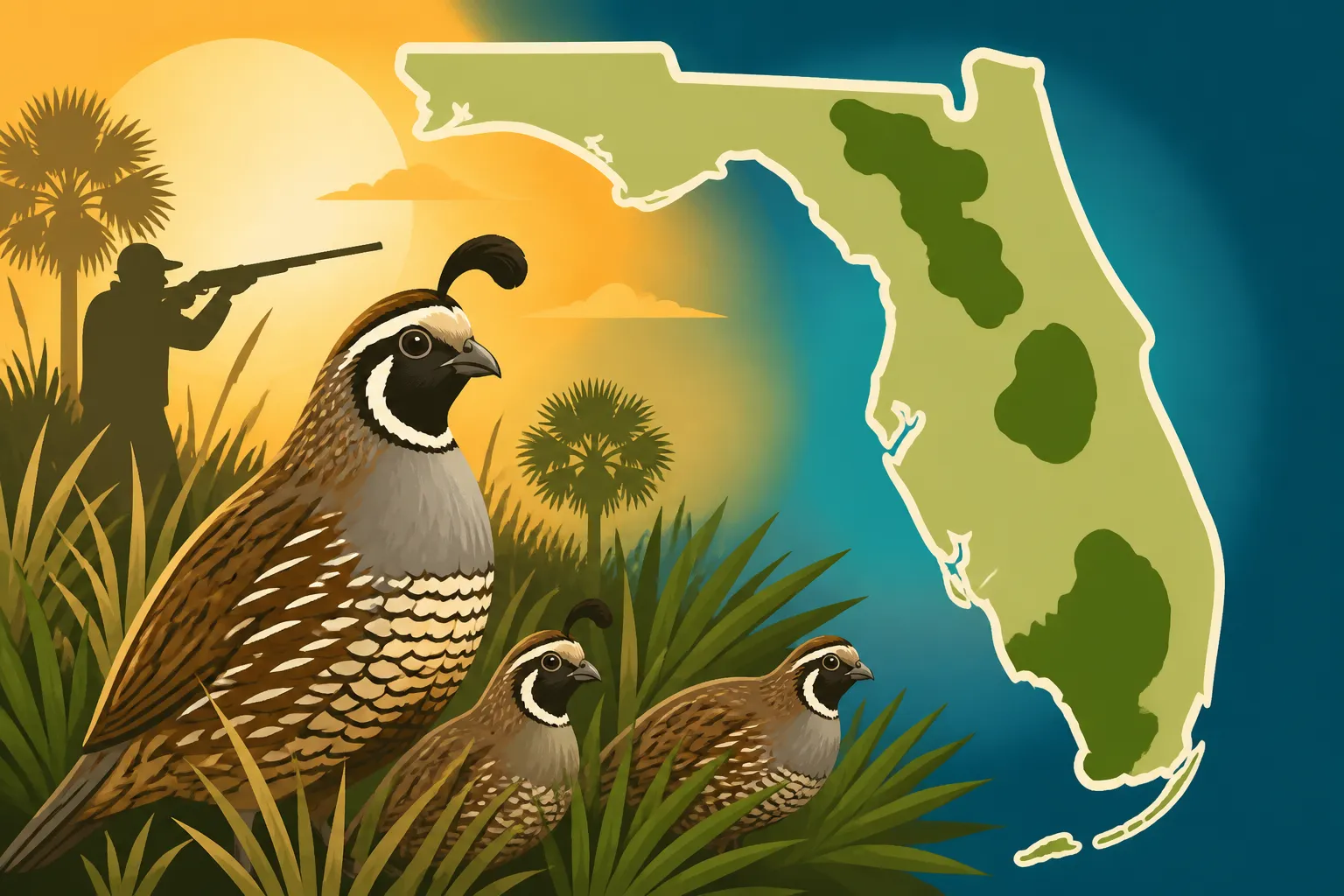
While the general trend for bobwhite quail has been downward, certain regions and specific habitat types within Florida still offer excellent opportunities for finding and hunting these iconic birds. These aren't always easy hunts, but they represent the best of what's left.
Panhandle Pine Plantations and Savannas
The Florida Panhandle, especially the western and central parts, is arguably the best region in the state for wild bobwhite quail. Here, you'll find extensive tracts of privately owned timberland, often managed for both timber production and wildlife, and significant public lands with a strong emphasis on prescribed fire. These areas typically feature open pine savannas, often longleaf pine, with a diverse understory of wiregrass and various forbs.
Counties like Leon, Jefferson, Madison, and Taylor have a long history of quail hunting, largely due to these vast landholdings and consistent land management. Many large hunting plantations in this region actively manage for quail, making them prime examples of how habitat work can sustain populations. On public lands, areas within the Apalachicola National Forest or specific Wildlife Management Areas (WMAs) known for their aggressive burn regimes can still hold birds. This is where you might still experience that classic covey flush that makes your heart pound.
North Central Florida Sandhills
Moving into North Central Florida, the landscape shifts to more sandhill environments, characterized by rolling hills of longleaf pine and turkey oak. While not as extensive as the Panhandle's managed pine lands, these areas can still hold good pockets of quail, particularly where fire has been consistently applied. Think of places like the Ocala National Forest, although finding birds here requires serious effort and knowledge of recent burn activity.
Smaller private landowners and some state forest lands in counties like Marion, Putnam, and Alachua, especially those actively engaged in habitat restoration, can also offer opportunities. The key here is to look for areas with a healthy, diverse understory, not dense, unburned timber. These areas tend to have lighter soil, which supports a different suite of plants but still provides good seed sources and dusting spots for quail. Scouting on public land, potentially using tools like GoHunt to examine land cover and past burn maps, can reveal these hidden gems.
South Central Florida Ranches and Prairies
Farther south, as you move into the heart of Florida's cattle country, you encounter vast expanses of improved pasture and native prairie lands. While much of this land is private and intensely managed for cattle, some of the larger, more traditional ranches still maintain native rangeland or have implemented habitat programs for quail. These ranches often utilize prescribed grazing and burning to create suitable conditions.
Counties like Polk, Osceola, Highlands, and Okeechobee might not scream "quail hunting," but on the right private lands, decent populations can be found. The challenge for the public land hunter is that significant public access to these types of prime ranch and prairie habitats is limited. However, some of the large WMAs in this region, such as Three Lakes Wildlife Management Area, occasionally report good quail numbers following extensive habitat work and favorable weather patterns. It's a different kind of quail hunting here, often involving traversing vast open spaces.
How to Find Productive Quail Hunting Spots
Finding huntable populations of bobwhite quail in Florida is rarely a matter of luck. It requires diligent scouting, understanding habitat, and often, a willingness to work hard on the ground.
Digital Scouting and Public Land Resources
Before you even step foot in the woods, the best way to start your search is with digital scouting. Use online mapping tools and resources provided by the Florida Fish and Wildlife Conservation Commission (FWC). Many WMAs publish annual hunt maps and even habitat work schedules. You can often see where prescribed burns have occurred, which is a major clue for finding quail. Look for areas burned 1-3 years prior, as this allows vegetation to recover sufficiently to provide food and cover.
Satellite imagery can reveal the mosaic of habitat types – look for open pine stands, grassy fields transitioning to brush, and field edges near thicker cover. Remember, quail need diverse cover types close together. Platforms like GoHunt, with their detailed public land layers and habitat analysis tools, can be incredibly useful for pinpointing potential spots, especially when trying to differentiate between dense timber and actively managed pine savannahs. This helps you narrow down vast areas before committing to a long drive and boots-on-the-ground scouting.
Boots-on-the-Ground Scouting and Sign
Once you've identified promising areas digitally, it's time to hit the field. This can be done in the off-season, or just before the season opens. Walk through areas that look promising. What are you looking for?
- Tracks: While small, quail tracks can be found in dusty paths or sand roads.
- Feathers: Look for small, patterned feathers, especially near dusting bowls (small depressions where quail dust themselves to clean their feathers).
- Droppings: Small, dark, elongated droppings are another sign.
- Food Sources: Are there plenty of native grasses with seeds? Are there any small patches of agricultural plants (like peanuts or millet) if you're on a WMA known to plant food plots?
- Cover: Does the area have a good mix of open ground, low vegetation, and dense escape cover nearby? An ideal spot might have a grassy field next to a palmetto head or a thinned pine stand.
Listen for the distinctive "bob-white" call during the warmer months. While they're quieter during hunting season, hearing them in the spring and summer tells you they're in the area. Pay attention to game trails and edges between different habitat types; these are natural travel corridors. For more insights on general scouting, check out this article on Scouting Florida Public Land Before Season.
Utilizing Dogs for Quail Hunting
Let's be real: hunting wild quail without a good bird dog is incredibly challenging, if not nearly impossible, especially in Florida's thick cover. A well-trained pointing or flushing dog is absolutely essential. Their keen sense of smell can locate scent cones you'd never pick up, allowing them to pinpoint a covey or a single bird that's holding tight.
Pointing dogs, like English Pointers, Setters, and Brittanys, excel at locking up on scent and holding the birds until you walk in for the flush. Flushing dogs, like English Springers and Labs, will range out, find birds, and push them into the air. Whichever breed you choose, ensure they're accustomed to Florida's heat and terrain, as they'll be covering a lot of ground in often unforgiving conditions. A good dog transforms a frustrating walk into a truly rewarding hunting experience, allowing you to focus on the shot while they focus on the find.
Conservation Efforts and Future Outlook
While hunting is an important part of wildlife management, the future of Florida's bobwhite quail ultimately rests on robust conservation efforts. It's a difficult road, but dedicated individuals, organizations, and state agencies are working tirelessly to turn the tide.
Private Landowner Initiatives
Many of Florida's remaining robust quail populations exist on private lands, particularly large ranches and hunting plantations. These landowners often have the resources and the long-term commitment to implement intensive habitat management strategies. Programs exist to assist private landowners with technical advice and even financial incentives to improve quail habitat. This might involve prescribed burning, native grass restoration, timber thinning, and controlling invasive species.
These private efforts are critical because they often create large, contiguous blocks of prime habitat that are less susceptible to fragmentation. For instance, the National Bobwhite Conservation Initiative (NBCI) works with private landowners across the Southeast to restore quail habitat, and their efforts are seeing some localized successes. It's a testament to the fact that when land is managed specifically with quail in mind, these birds can rebound.
Public Land Management and Restoration
Florida's public lands, particularly its Wildlife Management Areas (WMAs) and National Forests, also play a vital role in quail conservation. The FWC, along with the U.S. Forest Service, actively manages these areas through prescribed fire, timber thinning, and native vegetation restoration. While public land will always face more hunting pressure, these management practices are creating pockets where quail can thrive.
It takes time, effort, and significant funding to restore degraded habitats, but the commitment is there. Hunters can contribute to these efforts by purchasing The Florida WMA Management Area Permit and supporting conservation organizations that advocate for and fund habitat work. Some WMAs are specifically managed with upland birds in mind, offering special hunt opportunities that prioritize experience over sheer harvest numbers. Learning about Florida Quail Habitat Restoration Efforts can provide a deeper understanding of these vital programs.
Challenges and Hope for the Future
The challenges facing Florida's bobwhite quail are immense, from continued habitat loss and fragmentation to climate change and increasing predator populations. There's no magic bullet, and returning to the "good old days" of widespread abundance is unlikely. However, there is hope. The understanding of quail ecology has never been better, and the tools for habitat restoration are well-established.
The future of quail hunting in Florida will likely be focused on these intensely managed areas, whether private plantations or specific, actively managed public land units. It will require hunters to be more strategic, more knowledgeable about habitat, and perhaps, more patient. But for those willing to put in the effort, the reward of a wild covey flush, particularly behind a good dog, remains one of Florida hunting's most cherished experiences. It's a reminder that even in a rapidly changing world, the spirit of the bobwhite still calls from Florida's wild corners.
Disclaimer
This article is for general informational purposes only and does not constitute professional advice. Laws, prices and regulations vary by location and change over time. Consult a qualified professional for guidance on your specific situation.