Florida Squirrel Nest Counts and Mast Crops
It can be incredibly frustrating to head into the squirrel woods with high hopes, only to find the woods eerily quiet, or conversely, stumble into a busy area purely by luck. Understanding the annual rhythms of mast crops and squirrel nest counts can transform your hunting experience from a gamble to a strategic endeavor, giving you the insights needed to consistently find and harvest Florida's bushytails. This guide will walk you through the interconnected world of squirrel populations, their primary food sources, and how to use this knowledge to become a more effective hunter.
Understanding the Foundation: What are Mast Crops?
When we talk about hunting squirrels in Florida, the conversation inevitably circles back to "mast." But what exactly is mast, and why is it so incredibly important to our furry friends? Simply put, mast refers to the fruits, nuts, and seeds of forest trees and shrubs that serve as food for wildlife. For squirrels, these bountiful offerings are the lifeblood that determines everything from their survival rates to their reproductive success. Florida's diverse landscape means we have a fantastic variety of mast producers, from towering oak trees to low-lying palmettos.
Hard Mast vs. Soft Mast
Mast isn't a one-size-fits-all term; it typically breaks down into two crucial categories: hard mast and soft mast. Each plays a distinct role in the squirrel's diet and seasonal movements, and understanding the difference is key for any hunter looking to pattern these energetic critters.
Hard mast consists primarily of nuts. Think about acorns from the various oak species that blanket much of Florida – live oaks, water oaks, laurel oaks, and white oaks. Hickory nuts and pecans also fall into this category. These food sources are nutritional powerhouses, packed with fats and carbohydrates that provide squirrels with the energy they need to thrive, especially as cooler weather approaches. The tough outer shells protect the inner kernel, allowing them to last longer on the forest floor, providing sustenance well into the winter months. A bumper crop of acorns in a particular area can literally hold squirrels in that location for weeks, making it a prime hunting ground.
Soft mast, on the other hand, includes fruits and berries. While perhaps less renowned than acorns for their long-term storage, soft mast is incredibly important, particularly in the warmer early seasons. Think about the tart-sweet persimmons that drop in late summer and early fall, wild grapes climbing through the canopy, or the myriad of berries from dogwoods, sabal palms, and other understory plants. These soft mast sources provide vital hydration and readily available sugars. They ripen and decay much faster than hard mast, meaning squirrels will hit them hard and fast when they're available. If you're out early in the season, checking areas with known persimmon trees or wild grapevines can be extremely productive. Knowing which trees produce what, and when, can give you a significant advantage. You might find squirrels gorging themselves on fallen wild grapes one week, only to shift entirely to newly dropping water oak acorns the next.
The Annual Mast Cycle and Its Variability
The rhythm of mast production isn't a steady, predictable drumbeat; it's more like a chaotic symphony, with some instruments playing loudly one year and falling silent the next. Every year, trees and shrubs go through a cycle of flowering, pollination, and fruit/nut production, and this cycle is heavily influenced by a whole host of environmental factors. This variability is precisely why understanding the current year's mast crop is so vital for planning your squirrel hunts.
One year, a particular stand of red oaks might be absolutely loaded with acorns, so much so that the ground beneath them looks like a carpet of green and brown. The squirrels in that area will be fat, happy, and plentiful. The next year, those same trees might produce next to nothing, perhaps due to a late spring frost during flowering or an extended summer drought. When that happens, squirrels are forced to move, sometimes considerable distances, to find alternative food sources. They might rely more heavily on pine cones, cypress seeds, or even switch almost exclusively to whatever soft mast is available. Factors like spring rainfall during flowering, summer temperatures, insect infestations, and even the age and health of the trees all play a role in determining how much mast will be available. An old-timer once told me, "You don't hunt where they were last year; you hunt where the food is this year." That wisdom holds true for squirrel hunting more than almost any other game animal. Tracking these annual fluctuations is a critical component of successful hunting, and it's why a smart hunter is always scouting. Scouting Florida Public Land Before Season is a great way to stay ahead of these changes.
| Mast Type | Examples in Florida | Nutritional Value | Availability Duration | Squirrel Preference |
|---|---|---|---|---|
| Hard Mast | Live Oak Acorns, Water Oak Acorns, Hickory Nuts, Pecans | High Fat, High Carbohydrate | Longer (weeks-months) | High, especially for winter fat |
| Soft Mast | Persimmons, Wild Grapes, Blackberries, Sabal Palm Berries | Hydration, Sugars, Vitamins | Shorter (days-weeks) | High, especially early season |
The Significance of Squirrel Nest Counts
Beyond just looking at food on the ground, one of the most direct indicators of a healthy, thriving squirrel population in a specific area is the visible presence of their nests. These arboreal homes tell a story about population density, successful breeding, and overall habitat quality. While it might seem like a small detail, understanding and observing squirrel nest counts can provide valuable intel before you even step foot in the woods with your .22.
What Differentiate Nests and How to Count Them
When we talk about squirrel nests, we're primarily referring to two types: leaf nests, often called "dreys," and cavity nests. Both are essential for survival, but the leaf nests are the most obvious indicators for a hunter.
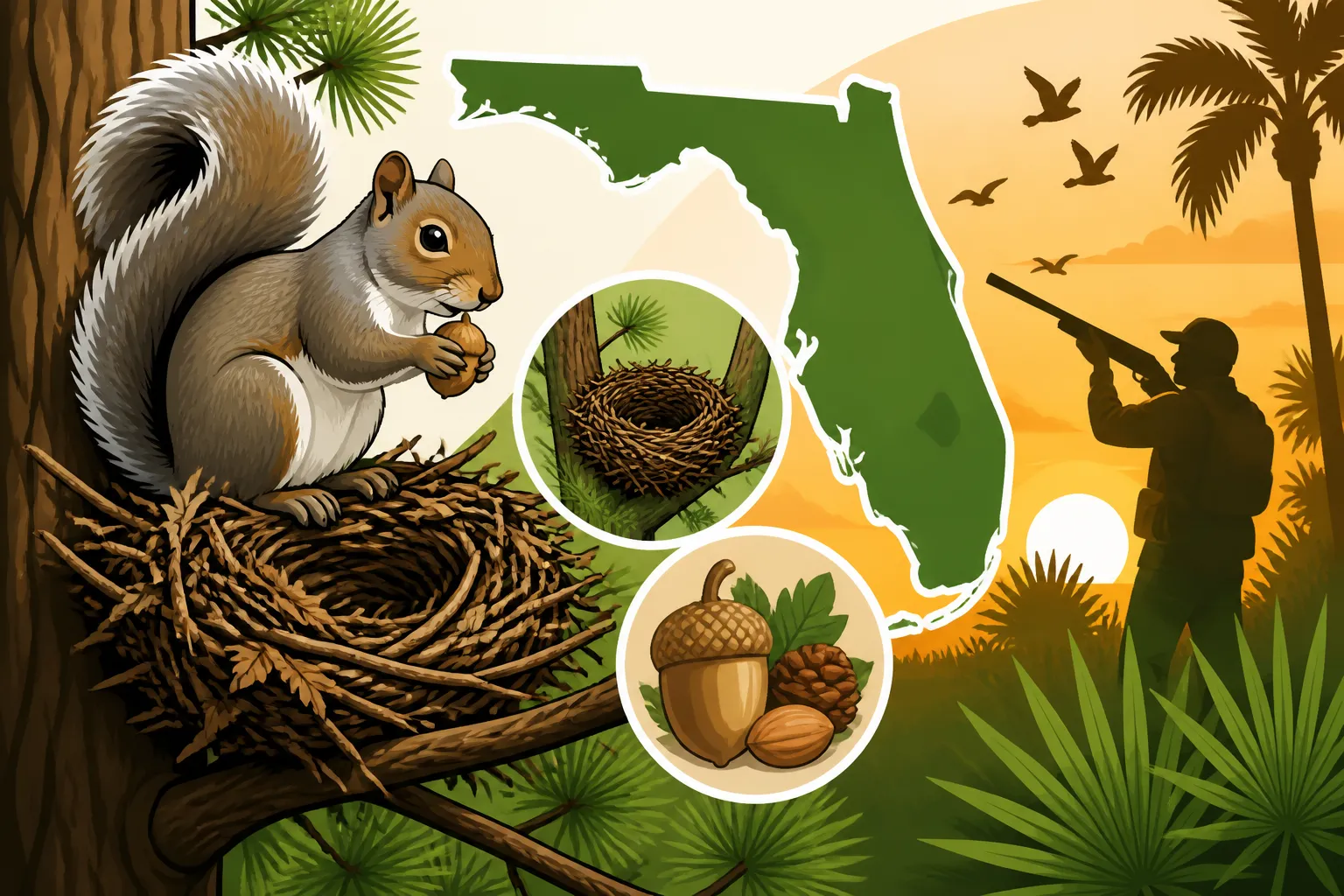
Leaf nests, or dreys, are those messy, ball-shaped structures you often see high in the branches of deciduous trees, especially after the leaves have fallen. They're typically built from twigs, leaves, bark, and other debris, woven together to form a cozy, insulated shelter. Squirrels use these for rearing young, resting, and escaping predators. They often have multiple dreys in their territory, providing alternative shelters if one is disturbed. Cavity nests, on the other hand, are much harder to spot. These are usually hollows in tree trunks or large limbs, often formed by old woodpecker holes or natural decay. They offer superior protection from weather and predators but require specific tree conditions that aren't always available. For a hunter, counting dreys is the practical approach. To count them, you're essentially walking through a woodlot, looking up, and tallying every visible leaf nest. It sounds simple, but it takes patience. The best time for this is typically late fall or winter when the leaves are off the trees, providing an unobstructed view. During the summer, the dense canopy can make counting accurately nearly impossible. You'll need to develop an eye for spotting them, distinguishing them from bird nests (which are usually smaller and more cup-shaped) or random clusters of leaves. Pay attention to how many are in a given area – a cluster of five or six dreys within a few acres suggests a robust local population.
Connecting Nest Counts to Population Health and Hunter Success
A high density of visible leaf nests isn't just a quirky observation; it's a strong sign of a healthy and numerous squirrel population. When you see many dreys in an area, it means that squirrels have successfully reproduced, raised multiple litters, and have sufficient resources to sustain them. More nests generally correlate with more squirrels, plain and simple.
This correlation directly translates to hunter success. If you're scouting a new piece of public land or revisiting a familiar private tract, and you notice a significant number of nests, you can infer that the habitat supports a good number of squirrels. This means your chances of encountering game are higher. Conversely, if an area with historically good squirrel hunting suddenly has very few nests, it might indicate a decline in the local population, perhaps due to previous overhunting, habitat loss, or a series of poor mast years leading to lower reproductive success. This insight allows you to adjust your expectations and potentially shift your hunting efforts to a different location where nest counts are more promising. Think of it as nature's own population survey, offering real-time clues to where the action might be. Understanding these indicators can help you plan your hunts more effectively, whether you're targeting gray squirrels or the larger fox squirrels. Knowing where the squirrels are living gives you a great starting point for finding where they're feeding.
The Critical Link: Mast Crops and Squirrel Nesting Success
The world of squirrels is a delicate balance, and nothing influences their lives quite as much as the annual mast crop. These food sources aren't just about immediate sustenance; they're the engine that drives reproduction and ensures the survival of future generations. If you want to understand why squirrels are where they are, and how many there are, you have to look at the mast.
How Abundant Mast Fuels Reproduction
Imagine a squirrel trying to raise a litter of pups when food is scarce. It's a tough uphill battle. But when mast crops are abundant, it's a completely different story. A plentiful supply of nutrient-rich hard mast, like acorns and hickory nuts, provides female squirrels with the high-energy diet they need to enter breeding condition. This translates directly into larger litter sizes and often, the ability to produce multiple litters in a single year. When there's plenty of food, mothers are healthier, their milk is richer, and the young squirrels have a much better chance of surviving their crucial first few weeks.
Conversely, a "bust" year for mast production can have devastating effects. If the acorn crop fails across a broad area, squirrels might be forced to delay breeding, have smaller litters, or even forgo reproduction altogether. Young squirrels born into lean times are less likely to survive, and the overall population will see a noticeable dip in the following year or two. This boom-and-bust cycle of mast production can lead to significant fluctuations in squirrel populations, which is why a keen observer pays attention year after year. A good mast crop one year often means a higher squirrel population the next, providing more targets for hunters. You can even consider Florida Fawn Survival Rates in deer, which also rely on mast crops for their mothers' nutrition and energy during gestation and lactation, showing how critical these food sources are across many game species.
Predicting Squirrel Season Success Based on Mast and Nests
For the Florida squirrel hunter, connecting the dots between current year mast production and observable nest counts is your crystal ball for predicting season success. It removes some of the guesswork and allows you to hunt smarter, not just harder.
Let's say you've been out scouting in late summer or early fall, before the Florida Squirrel Season Dates even kick off. You've noticed a phenomenal crop of live oak acorns blanketing the ground in a particular hardwood hammock. You've also taken the time to scan the trees and observe a high concentration of leaf nests. What does this tell you? It screams "squirrel central!" This area is likely to hold a robust population that is well-fed and has successfully reproduced. The abundant mast will keep them concentrated, and the numerous nests confirm their presence. You can then confidently plan your hunts around this specific location, focusing your efforts where success is most probable.
On the flip side, if your scouting reveals a very poor mast crop – say, the water oaks are bare, and the persimmon trees dropped almost nothing – combined with a sparse number of nests, you know you need to adjust your strategy. In such a scenario, squirrels will be more dispersed, forced to travel further to find whatever scattered food sources exist, like pine cones or less common berries. This might mean hunting larger areas, looking for less obvious food sources, or even exploring completely different tracts of land. Tools like GoHunt can be invaluable here. While often used for larger game, their mapping features can help you identify different timber types, potential mast producers, and even terrain features that might concentrate squirrels in lean years. By reviewing historical satellite imagery on GoHunt, you might even spot consistent oak ridges or bottomlands that are worth checking for mast production year after year. This kind of systematic approach, rather than just wandering aimlessly, significantly increases your odds of filling your bag.
Practical Application for Florida Squirrel Hunters
Now that we've dug into the "why" behind mast crops and nest counts, let's talk about the "how." How do you take this knowledge from theory to actual boots-on-the-ground hunting success? It's all about diligent scouting and smart strategy adjustments.
Scouting for Mast and Nests in Your Hunting Area
Scouting for squirrels is a year-round activity if you want to stay consistently on top of their movements and population trends. However, the most critical time for mast scouting is late summer through early fall, before the leaves really start to drop. This is when nuts are developing and fruits are ripening, allowing you to gauge the upcoming bounty.
Start by identifying the primary mast-producing trees in your chosen hunting area. In Florida, this means focusing on various oak species, hickory, and pecan trees for hard mast. For soft mast, look for persimmons, wild grapes, sabal palms, and even blackberry thickets. Walk through your chosen woodlots, paying close attention to the ground beneath these trees. Are there fallen acorns, hickory nuts, or persimmons? Are there signs of squirrels actively feeding – chewed nuts, scat, or fresh tracks? Use your binoculars to scan the canopy. Are the branches heavy with developing nuts? This early reconnaissance is crucial. As you scout, make mental notes or even use a GPS mapping app to mark promising areas. Reading Aerial Photos for Florida Deer can also apply to squirrel habitat, helping you identify distinct hardwood hammocks or bottomlands that are likely to hold mast trees. When it comes to nests, the best time to conduct a drey count is once the leaves have fallen, typically in late fall or early winter. With an unobstructed view, you can systematically count nests in different sections of your hunting area. Again, mark these on your map. A high concentration of nests near a robust mast crop is your golden ticket. Pay attention to how many squirrels you see during your scouting trips, too. Are they fat and energetic? Or do they look lean and scattered? These visual cues, combined with nest and mast observations, paint a clear picture.
Adjusting Hunting Strategies Based on Crop and Nest Data
Once you have a good understanding of the mast crop and nest counts in your area, you can adapt your hunting strategy to maximize your success. This isn't just about showing up; it's about showing up smart.
In years with an abundant hard mast crop, especially acorns, squirrels will often be concentrated around those specific oak stands. Your strategy should involve still-hunting slowly and quietly through these areas, or finding a comfortable spot near a productive oak and sitting patiently, waiting for the squirrels to move in to feed. They won't have to travel far, so they'll often be busy right there. If you've identified a spot with many nests and a heavy acorn drop, you're likely sitting on a honey hole. For example, if you're Hunting a Florida Green Swamp Slough and find a pocket of water oaks dropping heavily, that's where you'll want to focus your efforts.
Conversely, in years with poor mast production, squirrels will be much more spread out, and their movements will be less predictable. They'll be forced to utilize alternative food sources that might be more scattered or less common, like pine cones, cypress seeds, or even digging for roots and fungi. In these lean years, you'll need to cover more ground, moving through different habitat types and checking various potential food sources. Hunting the edges of swamps, pine plantations, and river bottoms might become more productive as squirrels forage for whatever they can find. You might also find them concentrating on more persistent food sources, like standing peanut fields or corn fields if you have access to private land. This might require more of a "walk and stalk" approach, patiently scanning trees for movement. Remember that Florida Deer Season Overlap With Small Game often means you might be seeing squirrel sign while hunting for larger game; don't overlook it! Always check the specific regulations for the Wildlife Management Area (WMA) you're hunting, as some require a The Florida WMA Management Area Permit in addition to your state hunting license.
By combining your knowledge of Florida's diverse habitats, the fluctuating mast crops, and the tell-tale signs of squirrel nests, you'll be well on your way to a more consistent and rewarding squirrel hunting season.
Disclaimer
This article is for general informational purposes only and does not constitute professional advice. Laws, prices and regulations vary by location and change over time. Consult a qualified professional for guidance on your specific situation.