Florida Indigo Snake Protection Status
For many hunters enjoying Florida's wild lands, the thought of encountering a snake is often met with caution, especially when identifying venomous species. However, a less common, yet equally critical, concern is understanding and respecting the legal protection surrounding certain non-venomous snakes, particularly the Eastern indigo snake. This comprehensive guide will walk you through everything you need to know about the Florida indigo snake's protected status, why it matters, and how you, as a responsible hunter, can play a vital role in its conservation.
Understanding the Florida Indigo Snake
Before we delve into the legalities, let's get to know the magnificent creature we're talking about. The Florida indigo snake, or Eastern indigo snake ( Drymarchon couperi), is an iconic part of Florida's natural heritage, a true gem of the ecosystem. Its presence often signifies a healthy, diverse environment, which, as hunters, we all strive to maintain and protect.
Identifying the Eastern Indigo Snake
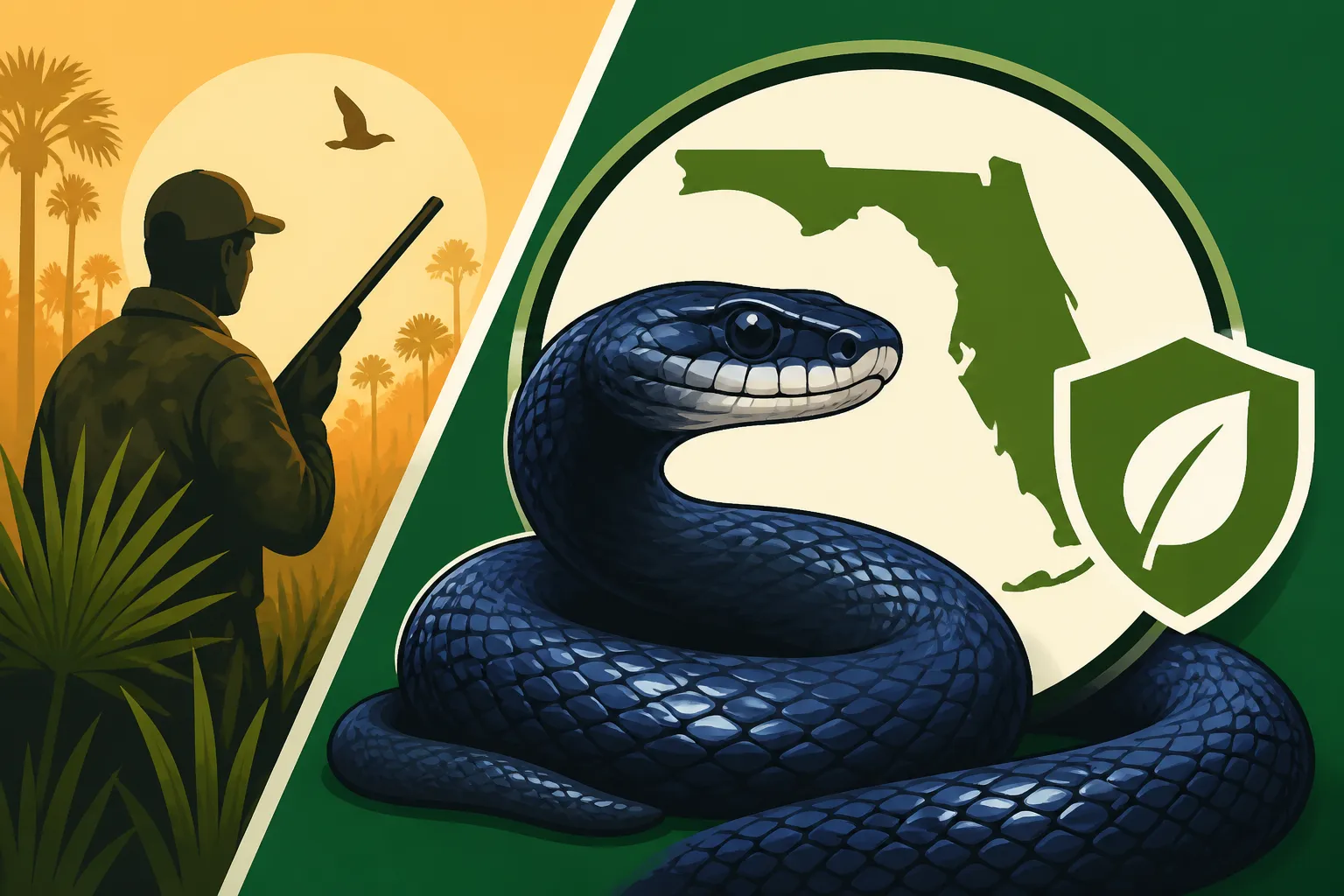
Imagine a snake that can grow to impressive lengths, sometimes over eight feet, making it the longest native snake in North America. That's the Eastern indigo snake. Its most striking feature is its glossy, iridescent black scales that shimmer with purple and blue hues in the sunlight, giving it that distinct "indigo" name. There are no patterns or markings on its body, just that uniform, sleek black. Sometimes, you might see a bit of reddish-orange or cream coloration on its chin and throat, but otherwise, it's all dark.
These snakes are quite robust and thick-bodied, giving them a formidable appearance, which unfortunately sometimes leads to misidentification and fear. They prefer a variety of habitats, from dry pine flatwoods and sandhills to cypress swamps and hammocks. In Florida, you can find them in many of the same areas we love to hunt, from the vast stretches of the Ocala National Forest to the wild frontiers of Big Cypress. Knowing their preferred haunts is the first step to avoiding accidental encounters or, even better, appreciating a rare sighting. They are often found near Gopher Tortoise burrows, which they use for shelter, especially during colder months.
Their impressive size and calm demeanor, coupled with their unmistakable color, usually make them easy to identify once you know what to look for. Unlike many other snakes, they tend to move with a deliberate, smooth glide rather than a quick, jerky motion. This makes them stand out, and hopefully, gives you enough time to observe and give them their space if you're lucky enough to cross paths.
Its Ecological Role
The Eastern indigo snake isn't just a pretty face; it's a critical component of the Florida ecosystem. These snakes are apex predators in their snake world, meaning they sit at the top of the food chain for their kind. Their diet consists of a wide range of prey, including rodents, frogs, birds, and even other snakes, notably venomous ones like rattlesnakes and cottonmouths. This natural predation on venomous snakes is one of the many reasons why having a healthy indigo snake population is so beneficial. They are essentially nature's pest control, helping to keep rodent and other snake populations in balance.
Because of their specific habitat needs and their position as a top predator, Eastern indigo snakes are considered an "indicator species." This means that a healthy, thriving indigo snake population often indicates a healthy, intact ecosystem. If indigo snake numbers start to decline in an area, it's often a sign that something is amiss with the broader environment, perhaps habitat loss, pesticide use, or other stressors. As hunters, we are often among the first to notice subtle changes in the environment, and recognizing the indigo snake's role can help us understand the bigger picture of wildlife health. This perspective aligns with our overall goal of sustainable Florida Hunting Licenses and What They Cost and sound land stewardship.
Their reliance on gopher tortoise burrows also highlights their connection to other protected species. The gopher tortoise is another keystone species, and its burrows provide shelter for hundreds of other animals, including the indigo snake. So, when you protect one, you indirectly protect many others. It's a beautiful example of how interconnected Florida's wildlife truly is.
Protection Status and Legal Ramifications
Now, let's talk about the serious stuff: the legal protections afforded to the Eastern indigo snake. This isn't just a suggestion; it's the law, enforced at both federal and state levels, and it carries significant consequences for violations. Understanding these rules is paramount for any responsible person venturing into Florida's wilds, especially hunters.
Federal and State Protections
The Eastern indigo snake is listed as a Federally Threatened species by the U.S. Fish and Wildlife Service, and it's also protected by Florida state law. This "threatened" status means that while the species is not yet endangered (on the brink of extinction), it is likely to become endangered in the foreseeable future throughout all or a significant portion of its range. The primary threats to indigo snakes include habitat loss and fragmentation due to development, as well as road mortality and persecution by humans.
Because of this dual protection, it is illegal to harass, harm, pursue, hunt, shoot, wound, kill, trap, capture, or collect Eastern indigo snakes. It is also illegal to attempt any of these actions. This means that even accidentally harming one can lead to legal issues. Furthermore, it's illegal to possess, sell, or transport an indigo snake or any parts of an indigo snake. These protections are serious and are in place to ensure the species has a chance to recover and thrive. For hunters, this means being extra vigilant in areas where indigos might be present. The laws are designed to protect these animals, and ignorance is not a valid defense.
The Florida Fish and Wildlife Conservation Commission (FWC) actively works to monitor and protect these snakes, including habitat management on Florida Wildlife Management Areas. They also encourage the public to report sightings, which helps them better understand population dynamics and distribution. When you consider the vast amount of effort that goes into wildlife conservation, from Florida's One Confirmed CWD Case monitoring to bear population studies, the indigo snake's protection is a testament to its ecological importance.
What "Protected" Means for Hunters
For you, as a hunter in Florida, understanding the indigo snake's protected status boils down to a few key points: leave them alone, and do not harm them. If you encounter an indigo snake while hunting or scouting, the best course of action is to observe it from a distance and allow it to go on its way undisturbed. Never attempt to handle, relocate, or injure the snake, even if you believe you are "helping" it. Interfering with a protected species can be misinterpreted and lead to significant legal trouble.
The penalties for violating federal and state protections can be severe. This could include substantial fines, potential jail time, and loss of hunting privileges. It's not a risk worth taking. Even if you're out Scouting Florida Public Land Before Season and come across one, resist the urge to get too close or interact. Just enjoy the rare sight and let it be. This also applies if you find a deceased indigo snake; do not collect it or any parts. Instead, consider reporting the sighting and location to FWC, which can help them track mortality causes and locations.
Remember, the goal of these regulations is not to inconvenience hunters but to safeguard a valuable, vulnerable species. By respecting these rules, you not only avoid legal trouble but also contribute directly to the conservation of Florida's biodiversity. It's part of the broader ethical framework that guides responsible hunting and outdoor recreation in our state. This commitment to wildlife stewardship is a cornerstone of the hunting tradition.
How Hunters Can Help Protect Indigo Snakes
As hunters, we spend a lot of time in the field, often in the very habitats where Eastern indigo snakes thrive. This unique position gives us a special opportunity to be active participants in their conservation. It's about being observant, responsible, and proactive in our approach to the environment around us.
Best Practices in the Field
When you're out in the woods, whether you're deer hunting in Hunting Florida's Green Swamp or searching for hogs, being aware of your surroundings is crucial. Here are some best practices to minimize any potential negative impact on indigo snakes:
- Learn to Identify Them: The most important step is to be able to confidently identify an Eastern indigo snake. Know its distinctive iridescent black color and its large size. This prevents accidental harm due to misidentification with other snakes. If you're ever unsure, err on the side of caution and treat it as a protected species – which means leaving it alone.
- Watch Your Step: Indigos often move slowly and can sometimes be found crossing roads, trails, or open areas. Be mindful of where you're walking, driving ATVs, or setting up camp. A little extra attention can prevent an accidental run-over or step-on. Many protected species face threats from Florida Deer Vehicle Collisions, so being careful with vehicles is good practice for all wildlife.
- Respect Their Space: If you see an indigo snake, give it a wide berth. Keep your distance, appreciate its presence, and allow it to move freely. Do not poke it, try to pick it up, or attempt to move it. This is not only for its protection but also for yours, as even non-venomous snakes can bite if they feel threatened.
- Habitat Awareness: Understand that areas with gopher tortoise burrows, pine flatwoods, and sandhill ecosystems are prime indigo snake habitat. When hunting in these regions, be particularly vigilant. This knowledge can also inform your scouting process, helping you recognize areas of high ecological value. The more you know about the habitat, the better hunter and conservationist you become.
Being a hunter means being intimately connected with nature. This connection brings with it a responsibility to protect the wild places and the creatures that live there. By adopting these simple practices, we ensure that our hunting activities are compatible with the conservation goals for species like the Eastern indigo snake.
Reporting Sightings and Habitat Management
Beyond simply avoiding harm, hunters can actively contribute to indigo snake conservation through reporting and by supporting habitat management efforts. Your boots-on-the-ground observations are incredibly valuable to wildlife biologists.
- Report Sightings: If you encounter an Eastern indigo snake, especially in an unusual location or if you find a deceased one, consider reporting it to the FWC. They often have online portals or dedicated phone numbers for wildlife sightings. Provide as much detail as possible, including the date, time, location (GPS coordinates are ideal), and any relevant observations about the snake's condition or behavior. This data helps FWC track populations, understand migration patterns, and identify areas that need more protection or management. Using tools like the GoHunt app or your smartphone's GPS can make this reporting process much easier and more accurate. Remember to prioritize the snake's safety over getting the perfect picture or precise coordinates if interaction is required.
- Support Habitat Management: Many of Florida's wildlife management areas and national forests are actively managed to preserve and restore habitats that benefit species like the indigo snake. This includes prescribed burns, timber thinning, and gopher tortoise burrow protection. By supporting these efforts, through purchasing necessary permits like the Florida WMA Management Area Permit or simply advocating for sound conservation practices, you're directly helping the indigo snake and a host of other species. A healthy longleaf pine ecosystem, for instance, provides ideal habitat for both deer and indigo snakes.
- Spread Awareness: Educate your fellow hunters and outdoor enthusiasts about the importance of the indigo snake and its protected status. Many people simply don't know, or they mistake them for venomous snakes. Sharing accurate information can help dispel myths and foster a greater respect for this unique reptile.
Our collective efforts, even small individual actions, contribute to the larger picture of wildlife conservation. Hunters are often the strongest advocates for healthy ecosystems, and protecting the Eastern indigo snake is just another way we demonstrate that commitment.
Dispelling Common Myths and Misconceptions
When it comes to snakes, fear and misinformation often run rampant. The Eastern indigo snake, despite its protected status and generally docile nature, isn't immune to these misconceptions. Let's clear up some common myths to help everyone better understand and appreciate this magnificent reptile.
"They're Harmless" vs. "They're Dangerous"
One of the biggest areas of confusion revolves around whether indigo snakes are truly harmless or if they pose a danger. The truth is, Eastern indigo snakes are non-venomous. Their bite, while certainly capable of breaking the skin and causing discomfort, is not medically significant like a bite from a rattlesnake or cottonmouth. They are generally quite docile and will typically try to escape rather than confront a threat. In fact, if cornered, they might flatten their head, hiss, and vibrate their tail, mimicking venomous snakes as a deterrent, but they are rarely aggressive.
However, saying they are "harmless" can be a bit misleading because, like any wild animal, they are not pets and should not be handled. Any interaction can cause stress to the snake and could result in a defensive bite. So, while they are not dangerous in the sense of being venomous, they should always be given their space and respected as wild creatures. The best practice, as with all wildlife, is to observe from a distance and avoid interaction. This ensures the safety of both you and the snake.
It's crucial for hunters to understand this distinction. If you mistakenly believe an indigo is venomous, you might react in a way that harms the snake. Conversely, if you assume it's completely "harmless" and try to pick it up, you risk a painful bite and potentially violating protection laws. Always remember the mantra: observe, appreciate, and leave alone. This applies to all wildlife, especially the "game you cannot hunt in Florida" such as this protected species.
Indigo Snakes and Other Snake Species
Another common issue is misidentification. Florida is home to many snake species, and it's easy for someone unfamiliar with them to confuse an Eastern indigo snake with something else, or vice versa. For example, some people might confuse them with black racers, which are also black but typically much thinner and faster, and rarely grow to the impressive length of an indigo. Another common mix-up could be with certain types of ratsnakes, which also vary in color and pattern.
The key to proper identification lies in a few distinct characteristics:
- Size: Indigos are large, heavy-bodied snakes. If you see a slender black snake, it's likely not an indigo.
- Color: That uniform, glossy, iridescent black is very specific. Look for any patterns or markings – if they are present, it's not an indigo.
- Head/Neck: Some indigo snakes might have reddish-orange or cream coloration on their chin and throat.
- Behavior: Indigos tend to be slower and more deliberate in their movements compared to many other fast-moving black snakes.
Becoming proficient in snake identification, especially for protected species, is an excellent addition to any hunter's skillset. You wouldn't want to accidentally harm an indigo snake, nor would you want to mistake a venomous snake for a harmless one. The more knowledge you acquire about the flora and fauna of Florida, the better equipped you'll be to navigate its diverse environments responsibly. This is just as important as knowing Florida Hunter Education Requirements or understanding Florida Deer Population Estimate in your hunting zone.
| Characteristic | Eastern Indigo Snake (Protected) | Black Racer (Non-Protected) | Common Rat Snake (Non-Protected) |
|---|---|---|---|
| Color/Pattern | Uniform glossy black, iridescent sheen | Uniform dull black, sometimes white chin | Highly variable: black, yellow, orange with patterns |
| Size (Adult) | Up to 8+ feet, very robust | Up to 6 feet, slender, whip-like | Up to 6-7 feet, moderately robust |
| Head Shape | Rounded, not distinct from neck | Slender, not distinct from neck | Can be somewhat distinct from neck |
| Temperament | Generally docile, defensive hissing/tail rattle if provoked | Very fast, flighty, may bite if cornered | Variable, can be defensive, musks if handled |
| Venomous? | No | No | No |
| Habitat | Pine flatwoods, sandhills, cypress swamps, tortoise burrows | Wide variety of habitats, often open areas | Forests, fields, barns, often arboreal |
Remember, your knowledge and respect for all wildlife, including protected species like the Eastern indigo snake, make you a more ethical and effective hunter. By taking the time to learn and identify these animals, you contribute directly to the health and preservation of Florida's incredible natural resources.
Disclaimer
This article is for general informational purposes only and does not constitute professional advice. Laws, prices and regulations vary by location and change over time. Consult a qualified professional for guidance on your specific situation.