Florida Cottonmouth Range in Swamp Country
When you're out enjoying Florida's wild spaces, whether you're chasing deer, calling in a gobbler, or pursuing hogs, the thought of encountering one of our venomous snakes, particularly a cottonmouth, can definitely put a slight edge on an otherwise peaceful day. That sudden rustle in the palmettos or a splash from the water's edge can instantly trigger a moment of intense vigilance for even the most seasoned outdoors enthusiast. This guide is dedicated to helping you understand the real range and habitat of Florida's cottonmouths in our unique swamp country, providing you with practical knowledge to identify them, understand their behavior, and most importantly, stay safe during your adventures.
Where Florida Cottonmouths Call Home: Understanding Their Aquatic Realm
Florida's landscape is a mosaic of habitats, from dry pine flatwoods to dense hardwood hammocks, but when it comes to the cottonmouth (scientific name Agkistrodon piscivorus), their preferred address is almost always near water. These pit vipers are semi-aquatic, meaning they are perfectly adapted to life both in and around bodies of fresh water. So, if you're venturing into any swamp, marsh, pond, lake, river, or even a drainage ditch in Florida, you need to operate with an awareness that these snakes might be present.
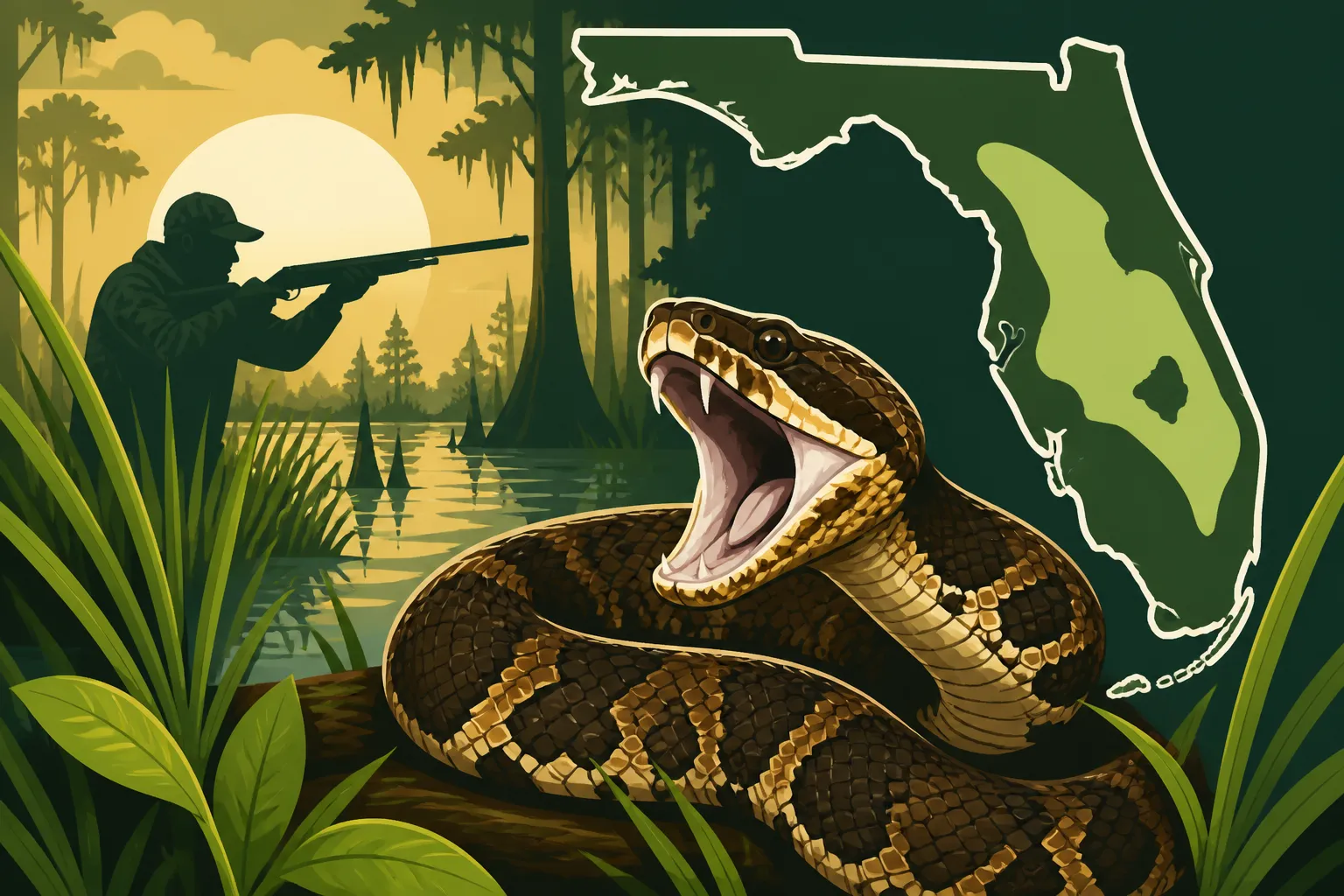
Their range covers virtually the entire state of Florida, with a particular prevalence in the wetter, low-lying regions. You'll find them in the vast stretches of the Everglades and Big Cypress, throughout the extensive river systems like the St. Johns and Suwannee, and certainly within countless local ponds and wetlands. They are masters of camouflage, often blending seamlessly with dark mud, decaying leaves, or submerged vegetation. They’re not just in the water, mind you; they’ll bask on logs, tree branches overhanging the water, or on tussocks of grass right at the water's edge. When you're scouting areas like Hunting Florida Cypress Swamp Edges or setting up in low-lying areas, keep your eyes peeled not just on the ground but also on low branches and logs.
This preference for aquatic environments means that hunters pursuing game in Florida's wetlands, such as those Waterfowl Hunting Florida's Marshes or Hunting the Everglades and Big Cypress, will inevitably be in cottonmouth territory. Even those hunting deer in areas bordering swamps or sloughs should be highly attentive. It’s not about fear, but about respect and awareness for the wildlife that calls these places home. Knowing the typical cottonmouth range means understanding their preferred habitat, and using resources like GoHunt maps to identify those low, wet areas can be a real game-changer for pre-hunt planning and staying safe.
Identifying a Florida Cottonmouth: Look for These Key Features
One of the biggest anxieties many hunters face isn't just seeing a snake, but not knowing if it's dangerous. Florida is home to many non-venomous watersnakes that are often mistaken for cottonmouths, leading to unnecessary fear or, worse, misidentification. Learning the distinct characteristics of a cottonmouth is crucial for your safety and for avoiding harm to beneficial non-venomous species.
Firstly, cottonmouths are typically thick-bodied snakes with a distinctly triangular, blocky head that is much wider than their neck. Their pupils are vertical, like a cat's eye, though this can be hard to see at a distance or in dim light. They also possess prominent heat-sensing pits located between their eyes and nostrils, a hallmark of all pit vipers. Their coloration can vary quite a bit, from dark olive, brown, or black, to lighter patterns with dark bands. Younger cottonmouths often have more vibrant patterns and a yellowish-green tail tip, which they may wiggle to attract prey.
Perhaps their most telling defensive display, which gives them their common name, is when they feel threatened: they'll often coil up and throw their head back, opening their mouth wide to reveal the startling white, cotton-like interior. This is a clear warning sign. They might also vibrate their tail, though unlike rattlesnakes, they don't have a rattle. Non-venomous watersnakes, on the other hand, generally have rounder pupils, a more slender body, and a head that isn't much wider than their neck. They also lack the heat pits. While they can flatten their heads to appear more menacing, their overall build is usually less robust. Always err on the side of caution if you're unsure, but take the time to learn these distinctions.
| Feature | Cottonmouth (Venomous) | Florida Watersnake (Non-venomous) |
|---|---|---|
| Head Shape | Triangular, blocky, distinct from neck | Oval, tapers into neck |
| Body Build | Thick, heavy-bodied | Slender to moderately stout |
| Pupils | Vertical, slit-like (like a cat's eye) | Round |
| Facial Pits | Present (heat-sensing pits between eye & nostril) | Absent |
| Nose Scale | Sharp, upturned snout | Rounded snout |
| Coloration/Pattern | Dark (olive, brown, black) with faint bands (often obscured), sometimes yellowish tail tip on young | Highly variable, often banded or blotched, typically brighter patterns |
| Defensive Display | Coils, opens mouth to show white interior | Flattens head, may strike, rarely shows mouth interior |
| Behavior | Often holds head at an upward angle, slow moving | Often flees quickly, may drop into water |
| Swimming Style | Swims with most of its body on top of the water | Swims with only head above water |
Staying Safe in Cottonmouth Country: Practical Advice for Hunters
Navigating Florida's wilderness safely requires more than just knowing where game animals live; it also means being aware of your surroundings, and that includes potential encounters with cottonmouths. Whether you're making your way through a WMA with your Florida WMA Management Area Permit or traversing a private swamp, vigilance is your best friend.
Firstly, and this might seem obvious, always watch where you step. This is especially true when walking through thick vegetation, around logs, or near water sources. Cottonmouths are ambush predators and will often lie still, relying on their camouflage. Before you step over a log or reach into a thick bush, take a moment to look. If you're going into really dense cover, especially wet palmetto heads or cypress knees, use a long stick or your walking stick to probe the area ahead of you. This can stir up a hidden snake, giving it a chance to move away before you get too close. This is particularly important when you're Hunting a Cypress Head at Last Light and visibility is reduced.
Wearing appropriate footwear is also paramount. High-quality snake boots or snake gaiters can provide an excellent layer of protection against a bite, which typically occurs on the lower leg or ankle. While no gear is foolproof, this significantly reduces your risk. Always avoid handling any snake you encounter, even if you believe it to be non-venomous. Give them a wide berth. Remember, they are generally not aggressive unless provoked or cornered. Most bites occur when someone tries to harass, handle, or kill a snake. If you stumble upon one, slowly back away and give it space. Pre-scouting your hunt area with an app like GoHunt can help you pinpoint areas where you might need to be extra cautious due to low, wet terrain.
Dispelling Myths and Understanding Their Role
The cottonmouth, like many venomous snakes, has been the subject of countless myths and exaggerations, painting it as an inherently aggressive creature that will actively chase people. While it's vital to respect their venom and give them space, the truth is that cottonmouths are generally quite timid. Their primary defense is to avoid confrontation, and they'll usually try to retreat or warn you before striking. The open-mouth display is a warning, not an immediate attack.
These snakes play a critical role in the Florida ecosystem. They are apex predators in their aquatic habitats, helping to control populations of rodents, frogs, lizards, and even other snakes. Without them, prey populations could boom, leading to imbalances in the food chain. Understanding their place in the environment fosters a healthier respect for them, rather than an irrational fear. When we are aware of their presence and their needs, we can coexist more easily. For instance, when you're Reading Florida Mud for Fresh Deer Movement, you're also reading the signs of a vibrant ecosystem, and cottonmouths are a part of that intricate web.
As hunters and outdoors enthusiasts, we are guests in these wild places. By learning about the animals that inhabit them, we enhance our experience and contribute to conservation. Knowledge about creatures like the cottonmouth, alongside understanding deer behavior and habitat in Florida's Four Deer Management Zones Explained, helps us become more effective and responsible stewards of Florida's incredible natural resources. Staying informed, whether through FWC resources or detailed mapping apps like GoHunt, is part of being a responsible hunter in Florida.
Disclaimer
This article is for general informational purposes only and does not constitute professional advice. Laws, prices and regulations vary by location and change over time. Consult a qualified professional for guidance on your specific situation.