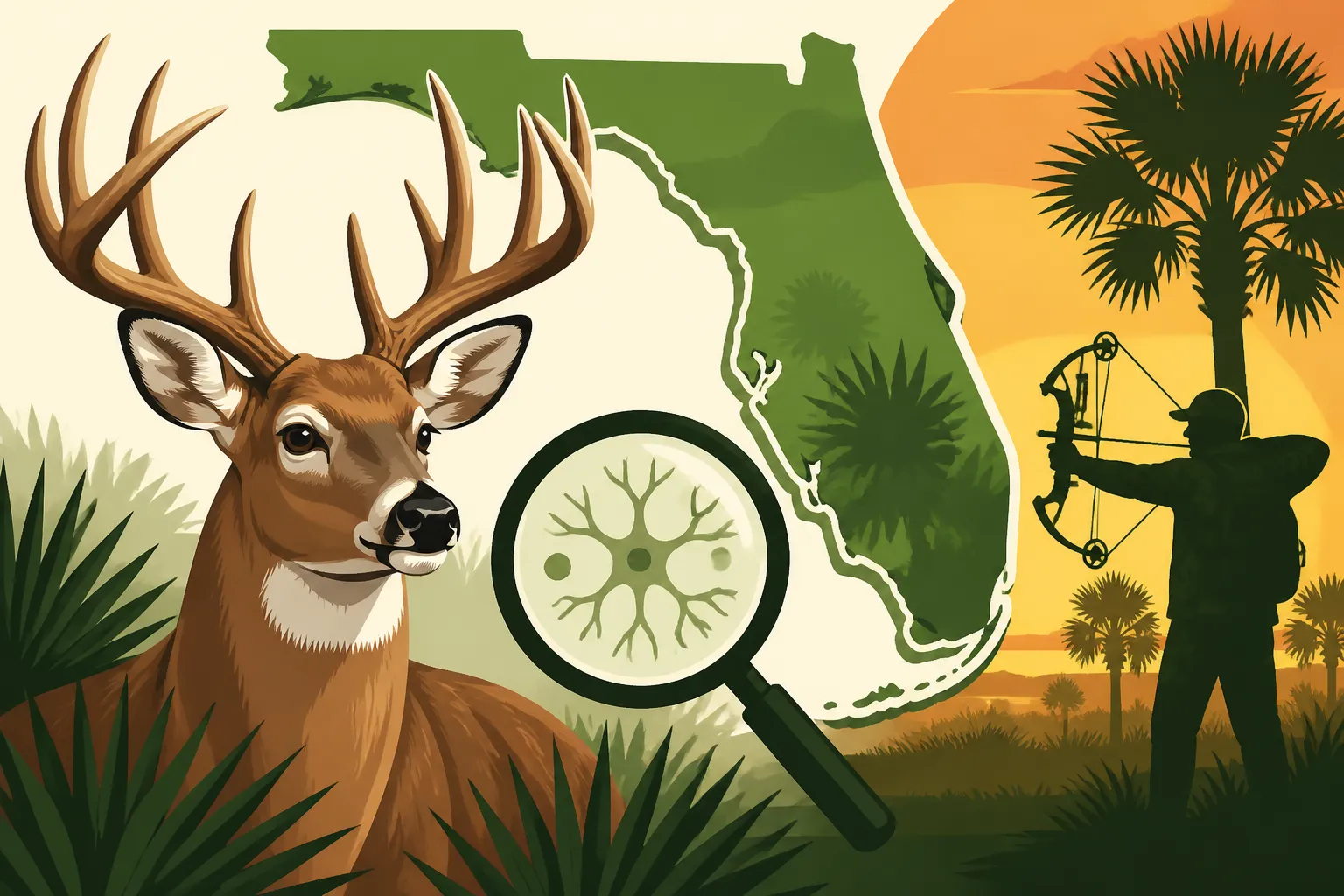
Florida’s CWD-Monitored Deer Herd
Hearing the words "Chronic Wasting Disease" can send a shiver down any Florida hunter's spine. For years, we've watched from afar as this devastating neurological illness spread through deer herds in other states, always hoping it wouldn't reach our subtropical paradise. Then, in June 2023, the unthinkable happened: Florida had its first confirmed case. Suddenly, the abstract threat became a very real challenge, bringing new regulations, uncertainties, and a profound responsibility for every one of us who cherishes our wild places. This guide is here to walk you through everything you need to know about Florida's CWD-monitored deer herd, from what the disease actually is to how you can actively help prevent its spread and continue to enjoy hunting in our beautiful state.
Understanding Chronic Wasting Disease What Every Florida Hunter Needs to Know
Let's face it, the sheer volume of information about wildlife diseases can be overwhelming, and it's easy to tune out or feel disconnected from a problem that once seemed so far away. But CWD is different; it demands our attention. It’s not just another ailment; it's a game-changer for deer management and hunting culture, not just here but across the continent. Understanding the basics is the first step in protecting our deer and our traditions.
What Exactly is CWD?
When we talk about CWD, we're not dealing with a typical bacteria or virus. This is a unique and particularly insidious disease caused by abnormal proteins called prions. These aren't living organisms, so they can't be "killed" by antibiotics or traditional disinfectants. Instead, these misfolded proteins cause normal proteins in the brain and nervous system of infected animals to also misfold, leading to a progressive degeneration of the brain. Think of it like a sponge forming in the deer's brain—it slowly but surely destroys neurological function.
The symptoms are heartbreaking to witness and, crucially, always fatal. Infected deer might show signs of severe weight loss (hence "wasting"), stumbling, poor coordination, excessive drooling, listlessness, and a lack of fear of humans. These symptoms can take a long time to manifest, sometimes years after initial infection, which makes detection incredibly challenging in the early stages. While it shares some visual similarities with other deer diseases, like Epizootic Hemorrhagic Disease (EHD), CWD is distinct because it's always fatal, transmissible, and has a very long incubation period. The long incubation period is precisely why it’s such a concern; an animal can look perfectly healthy for years while shedding infectious prions into the environment.
How CWD Spreads Among Deer
This is where CWD becomes a truly daunting challenge for wildlife managers. Unlike many diseases that require direct, sustained contact, CWD prions are remarkably persistent in the environment. The primary ways CWD spreads include direct animal-to-animal contact, such as during breeding or social grooming. However, a significant concern is indirect transmission through environmental contamination. Infected animals shed prions through their saliva, urine, feces, and even decaying carcasses. These prions can then bind to soil particles and remain infectious for years, even decades.
Imagine a deer scraping its antlers on a tree, drooling in a food plot, or urinating along a trail. If that deer is infected, it's leaving behind infectious material. Other deer can then pick up these prions by grazing contaminated vegetation, drinking contaminated water, or simply interacting with that contaminated soil. The sheer resilience of prions in the environment means that even after an infected animal is gone, the ground it walked on, the water it drank, and the vegetation it ate can continue to pose a risk to future deer. This environmental persistence makes containing and eradicating CWD incredibly difficult, as you're not just fighting the disease in animals but also in the very landscape they inhabit.
The Threat CWD Poses to Florida's Deer Herd
The potential impact of CWD on Florida's white-tailed deer population is a serious concern, not just for the deer themselves, but for our entire hunting heritage. In states where CWD has been established for years, we've seen significant declines in deer populations, sometimes as high as 20-30% in heavily affected areas. This isn't just a number; it means fewer deer for future generations to enjoy, a diminished wildlife resource, and a fundamental shift in the health of the ecosystem.
Beyond the ecological impact, there's a profound economic and cultural threat. Hunting is a significant economic driver in Florida, supporting local businesses from sporting goods stores to taxidermists and guides. A decline in deer populations or a perceived risk from CWD could lead to fewer hunters buying licenses, booking trips, or investing in gear, which would ripple through our rural economies. Culturally, hunting is deeply ingrained in Florida's identity. The thought of losing access to healthy, robust deer herds or facing increasingly restrictive regulations is a frustrating prospect for many of us. The Florida Fish and Wildlife Conservation Commission (FWC) is working tirelessly to keep our herd healthy, and every hunter needs to understand their part in protecting this invaluable resource. Ultimately, the long-term changes to Florida hunting culture, including how we scout, harvest, and process deer, could be substantial if CWD were to become widespread.
Florida's First Confirmed CWD Case A Detailed Look
For years, many of us in Florida hunting circles talked about CWD as "up north" or "out west" problem. We knew it was out there, but it felt distant, almost hypothetical. Then came the announcement in June 2023, and everything changed. It was a sobering reminder that wildlife diseases don't respect state lines and that vigilance is always paramount.
Where and When Florida's One CWD Case Was Found
The news hit hard: Florida's first and, as of now, only confirmed case of CWD was detected in a deer harvested in Holmes County in June 2023. This wasn't some random discovery; it was the result of a hunter submitting a sample from a symptomatic deer, coupled with FWC's ongoing, proactive surveillance efforts. The deer was exhibiting signs consistent with CWD, which thankfully prompted the hunter to report it to FWC, leading to its testing and confirmation. This incident immediately triggered an emergency response and placed Holmes County at the center of Florida's CWD management efforts.
The specific circumstances of the detection highlight the crucial role hunters play. If that hunter hadn't been observant or hadn't known to report a sick-looking deer, the disease might have gone undetected for even longer, potentially allowing for further spread. The rapid response from FWC, once the case was confirmed, involved immediately establishing a CWD Management Zone (CMZ) and implementing emergency rules to try and contain the threat.
The Florida's CWD Management Zone Boundaries
Following the positive CWD detection, FWC wasted no time in establishing the Holmes County CWD Management Zone (CMZ). This isn't just a theoretical line on a map; it's a practical boundary designed to minimize the risk of CWD spreading further through human-assisted transport of deer carcasses or parts. The CMZ encompasses all of Holmes County and portions of Washington and Jackson counties, extending into surrounding areas that could be impacted by deer movement or hunter activity.
Specifically, the boundaries are defined to control the movement of deer, deer carcasses, and certain deer parts both within and out of the designated zone. The goal is to prevent a hunter, for example, from harvesting a deer in the CMZ and then inadvertently transporting an infected carcass several counties away, potentially starting a new outbreak. These boundaries are critical for hunters to understand, especially those who hunt near or within these areas, as they dictate how you can transport your harvest and what you need to do to comply with state regulations. For current and detailed maps of the CMZ, the FWC website is your best resource.
Initial Reactions and Hunter Concerns
When the news broke about Florida's CWD case, the initial reaction among hunters ranged from shock and concern to, let's be honest, a fair bit of frustration. For many, it felt like an intrusion on their traditional hunting practices. Suddenly, what used to be a straightforward process of harvesting a deer, field dressing it, and taking it home, became subject to new rules, mandatory testing, and carcass transportation restrictions. It's completely understandable to feel put out by these changes; hunting is often about tradition and freedom, and new regulations can feel like they're chipping away at that.
We heard the concerns: "This is going to make hunting too complicated." "What about my processing routine?" "Is my venison safe to eat?" FWC had to walk a tightrope, providing critical information and implementing necessary measures without causing undue panic. The key message, which they communicated effectively, was that while CWD is serious, cooperative effort from hunters is the most powerful tool in its containment. There was a learning curve for everyone, and it required hunters to adapt, often on short notice, to protect the long-term health of Florida's deer herd. While inconvenient, these measures are crucial for our deer.
FWC's Comprehensive Response and Monitoring Program
In the wake of the confirmed CWD case, the Florida Fish and Wildlife Conservation Commission (FWC) sprang into action, rolling out a robust and comprehensive response plan. This wasn't a knee-jerk reaction; it was a carefully considered strategy based on lessons learned from other states and the best available science. Their goal is clear: detect any further spread as quickly as possible and minimize the risk to Florida's overall deer population. This requires a significant partnership with hunters, whose cooperation is absolutely vital.
Mandatory Deer Reporting and Sample Submission
One of the most critical components of FWC's CWD management plan, especially within the designated CWD Management Zone (CMZ), is mandatory deer reporting and sample submission. This means that if you harvest a deer within the CMZ, you can't just take it home and process it as usual. You are now legally required to report your harvest and submit a sample for CWD testing. This might feel like an extra hurdle, but it's an indispensable tool for understanding the disease's prevalence and geographic extent.
FWC has established various locations and methods for submitting these crucial samples, including dedicated drop-off sites and check stations within and around the CMZ. They've made an effort to make the process as straightforward as possible, recognizing that hunters are busy. Usually, you'll need to provide some basic information about your harvest – date, location, sex of the deer – and then submit a lymph node sample. The FWC website and app are regularly updated with precise locations and instructions. Your participation isn't just about compliance; it's about actively contributing to the state's ability to monitor, track, and hopefully, contain CWD. Without this data, wildlife managers are flying blind.
Carcass Transportation and Importation Restrictions
To prevent the human-assisted spread of CWD, FWC has implemented strict rules regarding the transportation of deer carcasses and certain parts, both out of the CWD Management Zone and into Florida from other states. This is where many hunters find themselves needing to adjust their routines significantly.
Moving a deer carcass out of a surveillance zone is now heavily restricted. If you harvest a deer within the Holmes County CMZ, you generally cannot transport whole carcasses or most parts (like the brain, spinal cord, eyes, or lymph nodes) outside of the zone. The rule is designed to ensure that if a deer were infected, its highly transmissible prion-rich tissues don't leave the area and contaminate new environments. You can transport deboned meat, clean antlers (without skull plate), hides (without the head), and finished taxidermy mounts. This means you’ll likely need to process your deer entirely within or very close to the CMZ before heading home if you live outside the zone.
Similarly, there are crucial rules for importing deer carcasses or parts into Florida from any state or Canadian province where CWD has been detected. The same principle applies: only deboned meat, clean antlers, hides, and finished taxidermy mounts are permitted. Bringing a whole carcass from a CWD-positive state is a serious violation and could introduce the disease to Florida. These rules underscore the importance of processing your deer prior to transport if you've been hunting out of state. It's a minor inconvenience that serves a massive purpose in protecting our local herds.
Proactive Surveillance and Testing Efforts
Florida has always taken CWD seriously, even before its first detection. For many years, FWC has maintained a robust proactive surveillance and testing program, sampling thousands of deer annually across the state. This wasn't just a box-ticking exercise; it was a continuous effort to detect the disease early if it ever arrived, and it's how they managed to confirm the Holmes County case.
Since the initial detection, testing efforts have been significantly ramped up, especially within and around the CMZ. The goal is to cast a wide net, testing a sufficient number of deer to gain a clearer picture of the disease's presence, if any, beyond that single case. For example, FWC has tested thousands of deer across the state for CWD since 2000, with a substantial increase in testing within the CWD Management Zone in 2023-2024. This expanded testing includes not only hunter-harvested deer but also roadkill and sick deer observations. The importance of ongoing testing cannot be overstated. Given the long incubation period of CWD, it’s entirely possible for the disease to be present in other animals without showing outward signs. Only through diligent, widespread testing can we hope to detect additional cases and respond effectively to prevent widespread outbreaks. It’s a marathon, not a sprint, and FWC relies on hunters to be their eyes and ears in the field.
Navigating Hunting in a CWD Management Zone
Hunting is about adapting to conditions, whether it's changing weather, shifting deer patterns, or, in this case, new regulations. While the CWD Management Zone (CMZ) adds layers of responsibility and logistical considerations, it doesn't mean hunting stops. It simply means a heightened awareness and a commitment to doing things a little differently to safeguard our deer for the long haul.
Understanding the New Regulations for Hunters
For hunters operating within the CWD Management Zone, or even those adjacent to it, it’s absolutely critical to understand the new regulations. These aren't just suggestions; they are legally binding rules designed to prevent the spread of CWD. The main changes revolve around deer carcass transportation, mandatory testing, and restrictions on baiting or supplemental feeding that could concentrate deer and increase transmission risk. While FWC has generally allowed baiting for deer on private lands in Florida (outside of WMAs), any practices that draw deer into close contact may come under scrutiny or restriction within a CMZ.
Specific rules you'll encounter include:
- Mandatory Reporting and Sampling: As mentioned, any deer harvested in the CMZ must be reported, and a CWD sample must be submitted.
- Carcass Export Restrictions: Only deboned meat, clean antlers, hides, and finished taxidermy products can leave the CMZ. This means you need a plan for processing your deer before you leave the area.
- Baiting/Feeding Restrictions: FWC has implemented an immediate ban on the placement of feed or attractants for deer within the CMZ. This is because concentrating deer at a single site increases the likelihood of disease transmission through shared saliva and contact with contaminated soil.
- Permit Changes: While not yet implemented statewide, future changes to harvest limits or specific permits could be a possibility in heavily affected areas, though Florida is currently focused on containment.
Ignoring these rules isn't just irresponsible; it carries penalties. The FWC is serious about CWD, and non-compliance could result in fines, loss of hunting privileges, and even criminal charges, depending on the severity of the violation. It's a small price to pay for protecting our state's invaluable deer resource.
Finding a Florida CWD Sampling Location
Navigating the new requirement for submitting CWD samples might seem daunting at first, but FWC has made a concerted effort to provide clear guidance and accessible sampling locations. If you harvest a deer in the CWD Management Zone, your next step after field dressing is to find one of these locations.
The best way to locate an official CWD sampling drop-off point is through the FWC website or by using the FWC Fish/Hunt mobile app. These resources provide up-to-date maps, addresses, and operating hours for check stations and self-service kiosks. Typically, a self-service kiosk will have instructions, sample collection kits (which usually include gloves, a bag, and a form), and a cooler for depositing the sample. You’ll be asked to provide information such as the harvest date, location (county, nearest road, GPS coordinates if possible), the hunter's license number, and contact information. Often, you'll remove the lymph nodes yourself following clear instructions provided at the station or online. It's a quick process once you get the hang of it, and it's vital. Think of it as another step in ethical hunting, just like proper field dressing.
Ethical Hunter Practices and CWD Prevention
Beyond following the letter of the law, every hunter has a moral and ethical obligation to contribute to CWD prevention. Our actions in the field directly impact the health of the herd.
First and foremost, if you encounter a deer exhibiting signs of CWD—severe emaciation, stumbling, excessive drooling, or abnormal behavior—do NOT harvest it. Instead, immediately contact the FWC’s CWD Hotline or your regional FWC office. They will dispatch staff to investigate and, if necessary, dispatch the animal and collect samples for testing. This prevents an infected animal from entering the food chain and provides valuable surveillance data.
Proper field dressing and carcass disposal are also crucial. When field dressing a deer, minimize the spread of potentially infectious materials. Use disposable gloves and clean your tools thoroughly afterward with a bleach solution. If you're in the CMZ, leave high-risk parts (brain, spinal cord, lymph nodes) at the kill site or dispose of them properly in a landfill, where they won't come into contact with other cervids. Never discard carcasses or parts in open fields or woods, especially outside the CMZ, as this could lead to environmental contamination.
Finally, clean all your gear thoroughly after hunting, especially if you've been in a CWD-positive area. This includes boots, clothing, knives, and vehicles. Prions are tough, but good hygiene can reduce the risk of inadvertently transporting them to new areas. Being a responsible hunter means being an active participant in wildlife health, not just a harvester.
The Future of Florida's Deer Herd and CWD Management
The detection of CWD in Florida marks a new chapter in wildlife management for our state. While it's a challenging one, it's also an opportunity for hunters and wildlife agencies to work together, learn, and adapt to protect our cherished natural resources. The future health of Florida's deer herd hinges on sustained vigilance, scientific understanding, and the continued cooperation of its passionate hunting community.
Why CWD Testing Continues After One Confirmed Case
It's natural to wonder why, after a single confirmed case in Holmes County, FWC continues to push for widespread CWD testing, even years later. The answer lies in the insidious nature of CWD itself. As we discussed, the disease has an incredibly long incubation period, often two to five years, before any visible symptoms appear. This means that a deer could be infected and shedding prions into the environment for a significant amount of time while appearing completely healthy.
If FWC were to simply stop testing after the initial discovery, any subsequent infections could go undetected for years, allowing the disease to silently spread and become deeply entrenched in the environment before anyone realized the true scope of the problem. Continued testing provides critical baseline data, helps track any potential changes in prevalence, and serves as an early warning system. Florida's aggressive testing strategy aims for early detection, which is the best chance we have to contain localized outbreaks before they become widespread, unmanageable epidemics. We are monitoring the herd proactively, not waiting for a crisis to unfold. Just as hunters regularly scout Florida public land before season, FWC must continually scout the herd for signs of disease.
Potential Long-Term Impacts on Deer Population and Hunting
If CWD were to spread more widely in Florida, the long-term impacts could be significant, altering both the deer population dynamics and the very nature of hunting in the state. In other regions where CWD is endemic, we've observed sustained population declines, particularly among mature bucks. This isn't just about fewer deer; it also affects the age structure and genetic health of the herd.
Imagine changes to current deer management strategies. This could mean more restrictive harvest limits, particularly on antlerless deer or younger bucks, to try and maintain population numbers or shift disease prevalence. It might also involve targeted culls in heavily affected areas, a management tool that is often contentious but can be necessary. For hunters, this could translate into reduced opportunities, shorter seasons, or more complex regulations depending on which of Florida's Four Deer Management Zones Explained they are hunting in. The economic repercussions for outfitters, guides, and related businesses could be substantial. It's not an exaggeration to say that uncontrolled CWD could fundamentally change the face of deer hunting in Florida as we know it, making it even more important for everyone to adhere to protocols.
Research and Collaboration in the Fight Against CWD
The fight against CWD is a complex, multi-faceted challenge that extends beyond state lines. FWC isn't operating in a vacuum; they are actively engaged in collaborative efforts with leading research institutions, universities, and federal agencies like the United States Geological Survey (USGS) and the Centers for Disease Control and Prevention (CDC). These partnerships are crucial for advancing our understanding of CWD.
Current research focuses on several key areas: developing more rapid and efficient diagnostic tests, understanding the exact mechanisms of prion transmission in different environments, and exploring novel management strategies, including potential ways to remediate contaminated soil or reduce prion loads in the environment. Florida is also benefiting from ongoing nationwide research into the efficacy of different management interventions. Furthermore, FWC invests heavily in public awareness and education campaigns, recognizing that an informed hunting community is its most vital ally. Through workshops, online resources, and direct outreach, they empower hunters to be part of the solution, fostering a sense of shared responsibility in protecting our wildlife heritage.
Resources and Tools for Florida Hunters
Navigating the complexities of CWD and its associated regulations requires access to accurate, up-to-date information. As hunters, it's our responsibility to stay informed and utilize the tools available to us. Fortunately, FWC and other organizations provide excellent resources to help us do just that.
Staying Informed with FWC Updates
The Florida Fish and Wildlife Conservation Commission (FWC) is the primary source for all official CWD information and regulations in Florida. It's absolutely crucial to go directly to the source for updates, rather than relying on hearsay or social media rumors. Their website, MyFWC.com, has a dedicated section for CWD that is regularly updated with the latest news, regulations, maps of the CWD Management Zone, and FAQs.
I highly recommend signing up for their email alerts and following FWC's official social media channels. These platforms often provide real-time updates on regulation changes, new sampling station locations, and important advisories. Don't hesitate to contact your regional FWC office directly if you have specific questions that aren't answered online. They are there to help, and getting clarification from an official source is always the best approach. Staying informed is the first line of defense in protecting our deer and ensuring you're compliant with all hunting rules.
Utilizing Mapping Tools for CWD Zones and Public Land
In today's digital age, mapping tools have become indispensable for hunters, and they are particularly valuable when dealing with CWD Management Zones. Services like GoHunt and the FWC Fish/Hunt mobile app offer detailed mapping capabilities that can literally put the information you need right in the palm of your hand.
These apps allow you to overlay CWD Management Zone boundaries onto maps, so you can clearly see if your hunting spot falls within a restricted area. This is invaluable for planning your hunt, understanding carcass transportation rules, and locating nearby CWD sampling stations. You can also use these tools to research Utilizing the FWC Public Hunting Map and identify specific parcels of public land, understand land ownership, and even scout potential hunting spots. Knowing precisely where you are in relation to the CMZ is critical for compliance, especially if you're hunting close to the boundaries. Before you head out, use these resources to check the latest maps and ensure you're fully aware of any CWD-related restrictions in your chosen hunting area.
The Role of Hunter Education in CWD Eradication
Hunter education has always been about safety and responsible hunting practices, but its role has expanded significantly to include wildlife disease awareness. For new hunters, understanding the Florida Hunter Education Requirements now involves not just firearm safety and ethics, but also crucial information about diseases like CWD. These programs are vital for instilling a sense of responsibility in the next generation of hunters.
Educational programs often include specific modules or information on CWD, covering topics like disease identification, proper carcass handling, and the importance of reporting sick animals. This foundational knowledge empowers hunters to be active participants in CWD surveillance and prevention efforts. Beyond formal courses, FWC offers workshops and online resources that dive deeper into CWD. By educating ourselves and adhering to these best practices, we are not just complying with regulations; we are becoming essential partners in the ongoing effort to manage and, hopefully, ultimately eradicate CWD from Florida. An informed hunter is a responsible hunter, and a responsible hunter is our best hope for a healthy deer herd.
CWD Management Zone Regulations Summary
Here's a quick overview of the key regulations within Florida's CWD Management Zone, but always consult the FWC website for the most current and specific details.
| Regulation Category | Action Required / Permitted | Important Notes |
|---|---|---|
| Harvest Reporting | Mandatory reporting of all deer harvested within the CWD Management Zone (CMZ). | This is a critical step for FWC to monitor disease prevalence. Use the FWC app or website, or designated check stations. |
| CWD Sample Submission | Mandatory submission of CWD samples (typically lymph nodes) from all harvested deer within the CMZ. | Samples are typically collected at designated FWC drop-off sites or check stations. Instructions for self-collection are provided. |
| Carcass Transportation (Out of CMZ) | Prohibited: Transporting whole deer carcasses, heads (with brain/lymph nodes), spinal columns, eyes, or internal organs out of the CMZ. Permitted: Deboned meat, clean antlers (without brain matter/skull plate), hides (without head), finished taxidermy mounts, and teeth. | Hunters must process their deer completely within the CMZ before transporting any restricted parts outside its boundaries. This prevents inadvertent spread of prions. This is similar to Moving a Deer Carcass Out of a Surveillance Zone as seen in other states with CWD. |
| Importation into Florida | Prohibited: Importing whole deer carcasses or high-risk parts (brain, spinal cord, etc.) from any CWD-positive state or Canadian province. Permitted: Deboned meat, clean antlers, hides, finished taxidermy mounts, and teeth. | Applies to all of Florida, not just the CMZ. If you hunt out of state, ensure you understand and comply with these rules to protect Florida's herd. |
| Baiting & Supplemental Feeding | Prohibited: Placement of feed or attractants for deer within the CMZ. | This restriction aims to prevent the concentration of deer, which increases the risk of direct and indirect CWD transmission. |
| Reporting Sick Deer | Immediately report any deer exhibiting CWD-like symptoms (severe weight loss, stumbling, listlessness, abnormal behavior) to FWC. | Do NOT harvest a symptomatic deer. Contact FWC's CWD Hotline or your regional office. This is a critical surveillance measure. You can find out more on How FWC Counts the Florida Deer Herd and the importance of hunter observation. |
| Carcass Disposal | Dispose of high-risk carcass parts (if not submitted for testing) in a permitted landfill. Do not discard them in the woods or fields. | Proper disposal prevents environmental contamination with prions. |
Disclaimer
This article is intended for informational purposes only and does not constitute legal advice. Hunting regulations, including those pertaining to Chronic Wasting Disease, are subject to change. Always consult the Florida Fish and Wildlife Conservation Commission (FWC) official website and current regulations handbook before engaging in any hunting activities. Adherence to all state and federal laws is the responsibility of the individual hunter.