Hunting a Standing Peanut Field
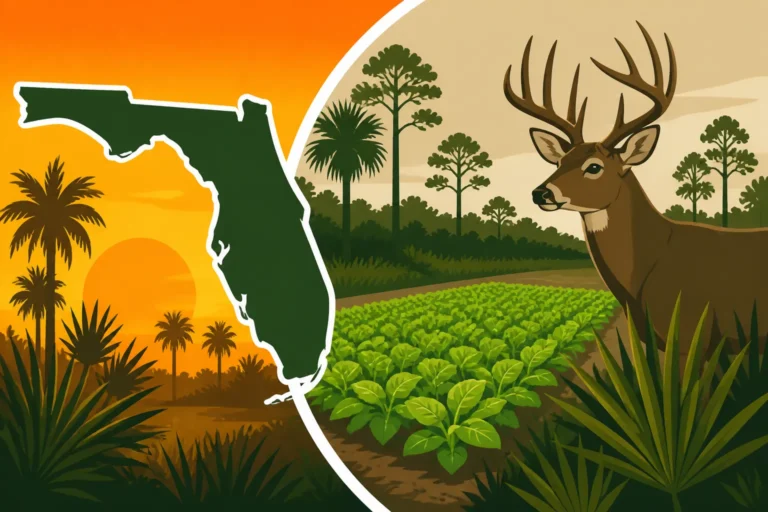
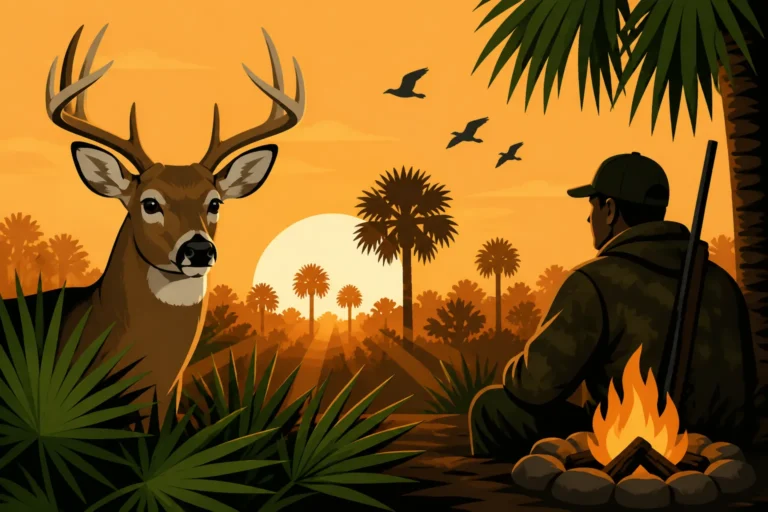
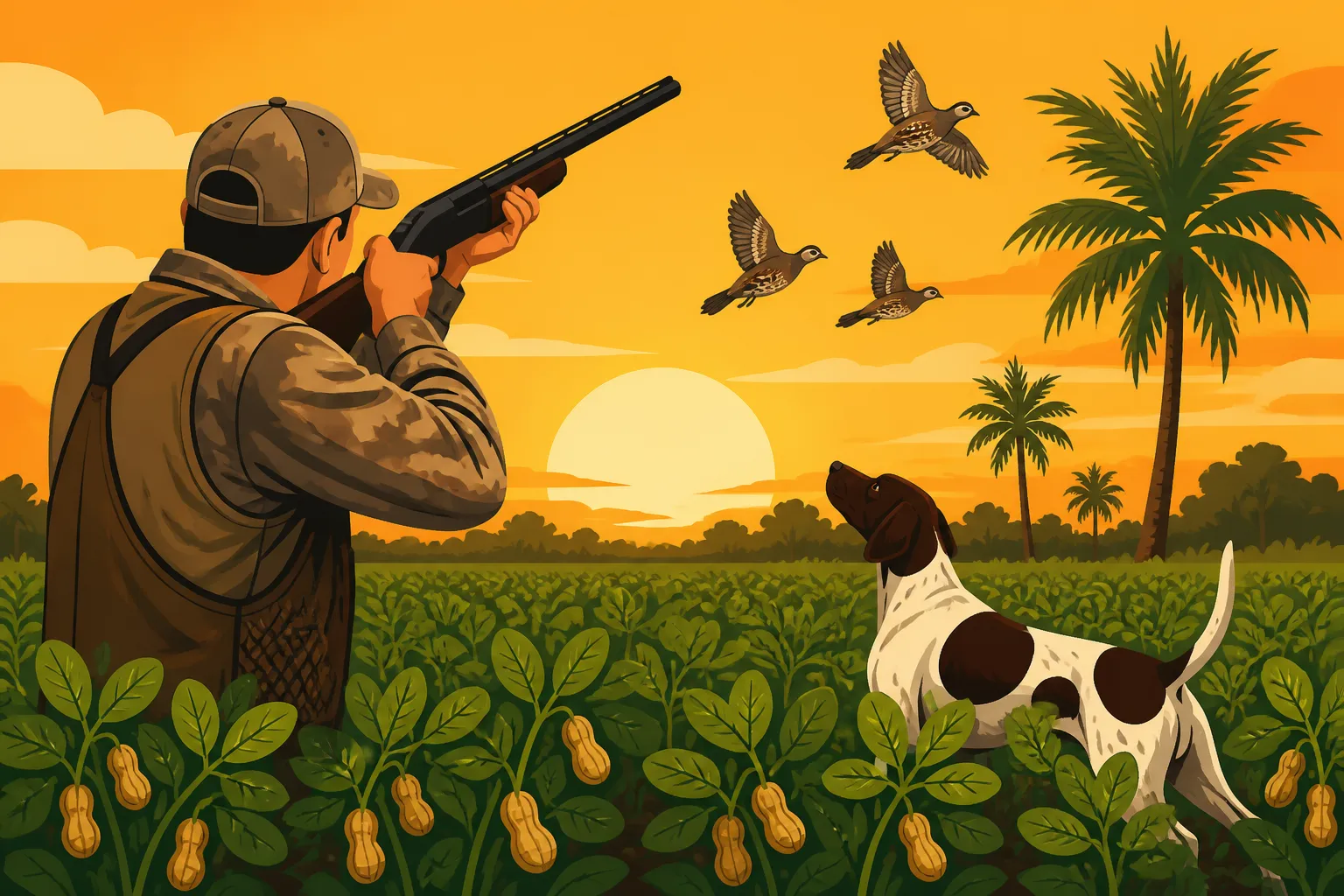
Hunting a standing peanut field in Florida can feel like staring at an impenetrable green wall, leaving many hunters frustrated as deer seem to vanish into the dense foliage, feeding unpressured just out of sight. It's a common dilemma: deer are clearly there, drawn by the irresistible bounty, but how do you actually get a shot? This guide will dive deep into understanding deer behavior in these unique agricultural settings and provide actionable strategies to turn that frustration into success.
Understanding Why Deer Love Standing Peanut Fields
Florida's agricultural landscape offers some incredible hunting opportunities, and standing peanut fields are often at the top of a deer's preference list. They're not just a food source; they're a sanctuary, and recognizing this dual appeal is key to unlocking success.
The All-You-Can-Eat Buffet and Security Cover Combo
Imagine a deer looking for a meal and a safe place to rest in one spot – that's a standing peanut field. Peanuts are incredibly rich in protein and fat, offering a high-energy boost that deer crave, especially during demanding times like the rut or late season. They're packed with essential nutrients, making them a prime caloric source. For a whitetail, it's like an all-you-can-eat buffet that never closes, right there in their backyard.
But it's not just the food. The dense, sprawling canopy of standing peanut plants provides an almost unparalleled level of security cover. Unlike a cut cornfield or a wide-open pasture, a standing peanut field can easily be three feet tall, sometimes even more, creating a leafy ceiling that swallows deer whole. They can bed down, move, and feed with a profound sense of safety, knowing they're hidden from predators, including hunters. This combination is precisely what makes them so challenging yet so rewarding to hunt; deer don't have to leave the field, making them incredibly difficult to pattern as they spend extended periods entirely within the green labyrinth.
Peak Attraction Times and Seasonal Considerations
The allure of peanuts isn't constant; it changes with their growth cycle. Deer are most attracted to standing peanuts during their ripening phase, when the plants are mature and the underground pods are full of energy-rich nuts. This period can often overlap perfectly with Florida's early archery and even some gun seasons, depending on local planting and harvest schedules. For instance, if you're Hunting Florida's Zone C Early Archery, you might find yourself facing lush, standing peanut fields that are drawing deer in like magnets.
Once the peanuts are fully mature, the field becomes an absolute magnet. Local agricultural practices play a massive role here. Farmers in areas like Gilchrist, Levy, or Jackson counties might plant at different times, which means peak attraction for deer can vary. Always keep an eye on farming activity in your hunting area. If you see the plants starting to yellow and mature, you know the clock is ticking and it's time to focus your scouting efforts. Once they're harvested, the dynamics change completely, which we'll discuss later.
Scouting Strategies for Standing Peanut Fields
You can't effectively hunt what you don't understand, and that starts with thorough scouting. Standing peanut fields demand a different approach than typical woods hunting. You're not looking for deer in the field as much as you're looking for how they interact with it.
Reading the Edges and Entry Points
Deer are creatures of habit and efficiency. While a standing peanut field offers incredible cover, deer rarely just burst into the middle of a massive field from thin air. Instead, they'll use predictable travel corridors that lead them from their bedding areas directly into the field. Your primary focus should be on these entry and exit points. Look for distinct trails that lead from dense bedding cover – think cypress swamps, shady oak hammocks, or sprawling palmetto thickets – directly to the edge of the peanut field. These trails will often be well-worn, almost like small tunnels through the brush.
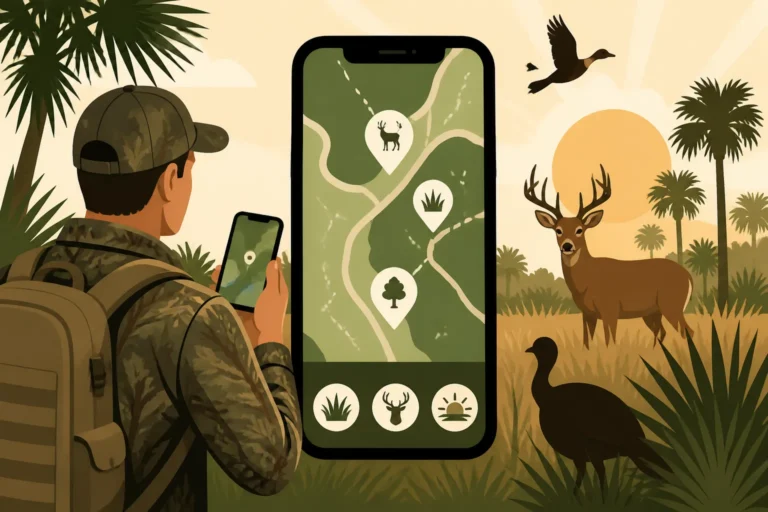
Pay special attention to "pinch points" or funnels where natural terrain or cover forces deer movement into a concentrated area along the field's perimeter. This might be a narrow strip of woods between two fields, a fence corner, or a ditch crossing. Using mapping tools like GoHunt can be invaluable here. You can identify adjacent property lines, locate potential bedding areas, and mark likely travel corridors even before you step foot in the field. This digital scouting can save you hours of on-the-ground work and help you pinpoint the most promising spots.
Interpreting Tracks and Droppings Within the Field
While challenging, it's not entirely impossible to find sign inside a standing peanut field. You'll need to be patient and observant. Deer, especially bucks, will create "tunnels" or preferred paths within the dense foliage. These aren't always obvious from afar. The best way to find them is to walk the very edges of the field, looking for where deer consistently enter, and then, if possible, carefully follow a few yards into the field where the plants are slightly pushed aside.
Look for fresh tracks and droppings in these paths. The fresh sign will tell you which trails are currently active. Be mindful of moisture; after a good rain, tracks will be much clearer. Focus your efforts on areas where the field meets thicker cover, or where there might be subtle internal variations, like a slight dip in the terrain that collects water or a lone standing tree. These small features can act as internal magnets within the field. Remember, you're trying to piece together a puzzle of movement patterns without the benefit of clear visibility. It's tough, but it's part of the fun of hunting these unique areas.
Using Trail Cameras on Field Perimeters
Trail cameras are your silent scouts and are indispensable when hunting standing peanut fields. Instead of blindly placing them, strategically position your cameras at those known entry and exit points you've identified. You want to capture deer as they're committing to entering or exiting the field. Don't just face the camera parallel to the field edge; orient it to capture animals moving perpendicular to the edge, either coming out of the woods into the peanuts or vice-versa.
Consider placing a camera just inside the edge of the peanuts if you can find a natural lane or a slightly less dense spot. This can give you invaluable insight into what's happening just beyond the visible edge. If you're Scouting Florida Public Land Before Season, this intel is even more critical since you can't rely on landowner updates. Be extra mindful of battery life and security, especially on public lands where theft can be an issue. Cellular cameras can give you real-time updates without having to disturb the area by checking cards.
Hunting Tactics for Standing Peanut Fields
Once you've done your homework and found those promising spots, it's time to put a plan into action. Hunting standing peanut fields requires precision, patience, and a deep respect for the deer's superior sense of smell.
Wind Direction and Scent Control are Paramount
I cannot stress this enough: wind direction and meticulous scent control are not just important, they are absolutely paramount when hunting standing peanut fields. Because deer often spend a considerable amount of time inside these dense fields, they are essentially surrounded by food and cover, making them incredibly sensitive to any foreign scent. If your scent drifts into the field from any direction, you're done before you even begin.
You must never, under any circumstances, hunt a wind that will carry your scent into the peanut field itself. Prioritize getting directly downwind of predicted entry/exit points, or at least crosswind, ensuring your scent is blowing away from the deer's likely travel path or feeding area. This means sometimes, no matter how perfect the spot looks, if the wind isn't right, you stay home. It's tough, but it's the realistic truth. Beyond wind, adhere to a strict scent control regimen: use scent-free laundry detergent for all your hunting clothes, shower with scent-eliminating soap, spray down thoroughly with scent-killing sprays, and store your hunting clothes in airtight containers. Understand how Wind and Thermals in Flat Florida Terrain can impact scent dispersion, even in seemingly flat fields, causing your odor to swirl unpredictably in certain conditions.
Strategic Stand Placement and Entry/Exit Routes
When it comes to stand placement, you'll generally have two choices: a tree stand or a ground blind. A well-placed tree stand often offers the advantage of height, allowing you to see over the dense peanut foliage, even if only slightly, and providing a better shot angle into the field edges. Position your stand downwind of known trails or pinch points, just outside the field edge, or perhaps even slightly inside if there's sufficient cover from an isolated tree or a dense fencerow.
If elevated stands aren't an option, a carefully deployed ground blind can work wonders. However, it needs to be meticulously brushed in. Don't just plop it down; use natural vegetation to break up its outline. When considering Using a Ground Blind on Florida Public Land near a peanut field, remember that deer in these fields are often less skittish about human scent if they don't see or hear you. The visual concealment of a well-camouflaged blind is essential.
Crucially, plan your entry and exit routes with extreme care. You do not want to spook deer already in the field or approaching it. Avoid walking across open field edges at dawn or dusk. Use natural cover, ditches, or low-lying areas to approach your stand silently and concealed. Your goal is to be in position long before legal shooting light and to exit well after dark, minimizing disturbance.
Timing Your Hunt: Low Light and Weather Patterns
Timing is everything in deer hunting, and standing peanut fields are no exception. Dawn and dusk are always prime times for deer movement, as they'll feel more secure moving during these low-light periods. The cover of darkness provides them the confidence to step out of the dense peanuts and move towards other feeding or bedding areas.
However, don't dismiss mid-day movement entirely. If deer are bedded in the field, a sudden temperature drop, especially after a warm spell, or the passage of a strong cold front, can often get them up and moving to feed. This is when paying attention to weather patterns, as discussed in Hunting Deer After a Cold Front, can really pay off. Overcast days, light rain, or even the periods just before a major storm can also trigger deer movement, as they might feel more secure moving in less direct sunlight or stocking up before inclement weather. After a rain, the ground is quieter for your approach, and deer often emerge to feed on freshly washed foliage.
The Still-Hunting Approach on Field Edges
Still-hunting is a challenging but potentially effective tactic, especially if you know deer are in the field but aren't coming to your stand. This involves moving incredibly slowly and deliberately along the very edge of the peanut field, usually just inside the tree line or along an adjacent fencerow. You're not "stalking" in the traditional sense, but rather taking a few steps, pausing for several minutes, and glassing every inch of visible cover.
This method demands extreme patience and an ability to pick apart cover. Use high-quality binoculars to scan for subtle clues – a flick of an ear, a patch of brown hide, or the twitch of a tail. This tactic is especially viable if you're navigating similar adjacent habitats, such as Still-Hunting Florida Palmetto Flatwoods that abut the peanut field. The idea is to catch a deer moving along the edge, or perhaps one that briefly sticks its head out of the peanuts for a quick scan before retreating. It's a game of inches and extreme observation.
Post-Harvest Strategies and Challenges
The game changes entirely once the combines roll through and the peanuts are harvested. The dense, protective canopy vanishes, but a new opportunity emerges for the persistent hunter.
Gleaning Opportunities After the Pickers Leave
Even the most efficient harvesting equipment leaves behind a significant amount of peanuts in the field. For deer, this still represents a massive food source, rich in the same nutrients they craved before. These "gleaned" fields can be incredibly attractive, but with one critical difference: the security cover is gone.
This lack of cover means deer will primarily utilize these fields under the cloak of darkness or in the absolute lowest light conditions of dawn and dusk. They might quickly dash into the field from nearby cover, grab a mouthful, and dart back to safety. Your focus should shift to identifying the thickest, most secure bedding cover closest to the picked field. Deer will stage in these areas, waiting for the opportune moment to move into the open. This might be a dense pine plantation, a thick oak hammock, or a swamp edge. Knowing Finding Sign in a Florida Oak Hammock or similar cover is crucial here.
Adapting Tactics for Open Fields
Hunting a picked peanut field requires a complete overhaul of your strategy. Since the deer are now exposed, you'll need to adapt. Ground blinds become even more crucial here, and they need to be brushed in meticulously, almost becoming part of the landscape. Natural concealment is your best friend. Look for any existing cover, like a fencerow, a lone oak, or a ditch, to set up your blind.
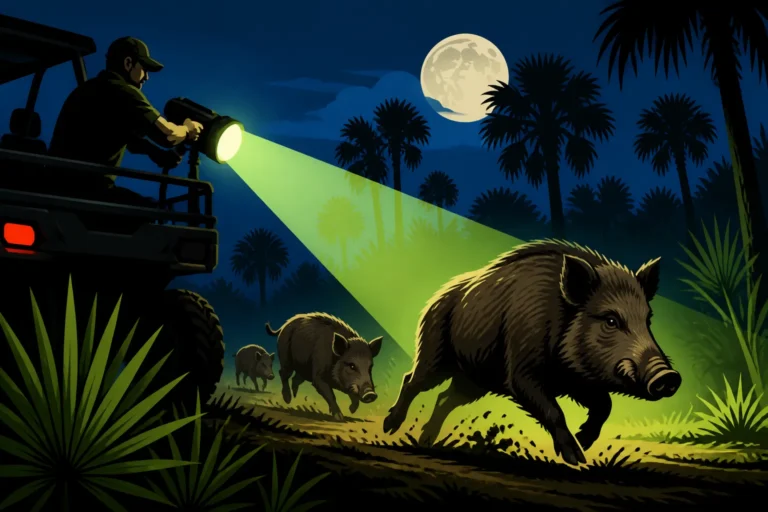
Given the open nature of these fields, long-range shots are more common. Practice your shooting skills diligently at various distances, ensuring you're comfortable and accurate. Remember, the goal is an ethical shot. Another fantastic opportunity in these post-harvest fields, often permissible year-round, is night hunting for hogs. With the peanuts exposed, hogs will root through the fields, and utilizing tactics like Night Hunting Hogs With Lights in Florida can be incredibly effective.
Consider hunting these open fields during overcast days, right before a storm, or during a light drizzle. These conditions often make deer feel less exposed and more willing to venture out during daylight hours. Also, keep an eye on how these fields fit into the broader landscape, noting Entry Routes Through a Florida Food Plot as a similar strategic concept. These late-season food sources can be critical, especially when other options dwindle, making them key for Late-Season Food Sources for Florida Whitetails.
| Feature / Tactic | Standing Peanut Field | Harvested Peanut Field |
|---|---|---|
| Deer Activity | Feed and bed primarily within the field; frequent movement. | Feed mainly in low light/darkness; stage in nearby cover. |
| Cover for Deer | Excellent (dense foliage) | Minimal (exposed) |
| Cover for Hunter | Adjacent tree lines, internal field features, well-brushed ground blinds. | Meticulously brushed ground blinds, natural fencerows. |
| Primary Challenge | Deer are hard to see and pattern; scent control is paramount. | Deer are exposed and primarily nocturnal; range estimation. |
| Scouting Focus | Entry/exit trails, pinch points, internal deer paths. | Adjacent bedding cover, staging areas. |
| Stand Placement | Tree stands on edges, well-concealed ground blinds. | Well-concealed ground blinds near cover. |
| Recommended Tactics | Ambush at entry points, still-hunting edges. | Ambush from blinds, long-range shooting. |
| Best Time of Day | Dawn, dusk, mid-day (cold front). | Dawn, dusk (brief visits). |
Disclaimer
Hunting is an inherently unpredictable activity with risks involved. Always prioritize safety, understand and follow all Florida Fish and Wildlife Conservation Commission (FWC) regulations, and respect private property. The information provided here is for educational and informational purposes only and does not guarantee hunting success or eliminate risk. Conditions change, and local rules may vary, so always do your own research and scouting.