Trapping a Sounder on Private Land
If you're a landowner or managing property in Florida, you know the immense frustration that comes with feral hogs. They root up fields, destroy food plots, damage valuable timber stands, and contaminate water sources with an alarming efficiency that can feel utterly overwhelming. This guide is all about tackling that problem head-on by teaching you how to effectively trap an entire sounder of hogs on private land, offering a long-term solution to mitigate their destructive impact.
Understanding Feral Hogs in Florida
Before you even think about setting a trap, it's crucial to understand the enemy you're up against. Feral hogs aren't just a nuisance; they're an ecological and agricultural menace in Florida, and understanding their behavior is the first step to controlling them.
Why Feral Hogs Are a Persistent Problem
Florida's warm climate and abundant forage provide an ideal environment for feral hogs to thrive, and boy, do they thrive! These intelligent, adaptable animals reproduce at an incredible rate, with sows capable of having two litters of 4-12 piglets each year. That means a small group can explode into a massive problem in no time flat. Their impact on the ecosystem is profound; they destroy native plant communities by rooting, compete with native wildlife for food, and even prey on vulnerable species like ground-nesting birds and sea turtle eggs. From a property management perspective, their rooting behavior can ruin acres of pasture overnight, undermine fences, and even damage irrigation systems, costing landowners thousands in repairs and lost crops. This is why Florida treats hogs as an unprotected species, allowing for their year-round harvest with no bag limits, acknowledging the sheer scale of the problem. You can learn more about Florida's Year-Round Hog Hunting Rules to understand the flexibility landowners have in managing these pests.
The Concept of a "Sounder"
When we talk about feral hogs, we often refer to a "sounder," which is essentially a family group. This typically consists of a dominant sow, her offspring, and sometimes a few other related females and their young. Mature boars are usually solitary but might temporarily join a sounder during breeding. Understanding the sounder dynamic is paramount to effective trapping. If you only catch a few hogs from a larger group, the remaining animals quickly become "trap shy" – they've learned to associate your trap with danger and will diligently avoid it in the future. The goal of trapping, therefore, isn't just to catch a hog, but to capture the entire sounder in one fell swoop, preventing those educated survivors from spreading their learned caution. This makes successful trapping a strategic game of patience and observation, far removed from simply setting out a single snare.
Essential Gear for Trapping a Sounder
Effective hog trapping isn't just about throwing out some corn and hoping for the best; it requires the right tools and a smart approach. Investing in quality gear will dramatically increase your success rate and save you frustration in the long run.
Choosing the Right Trap System
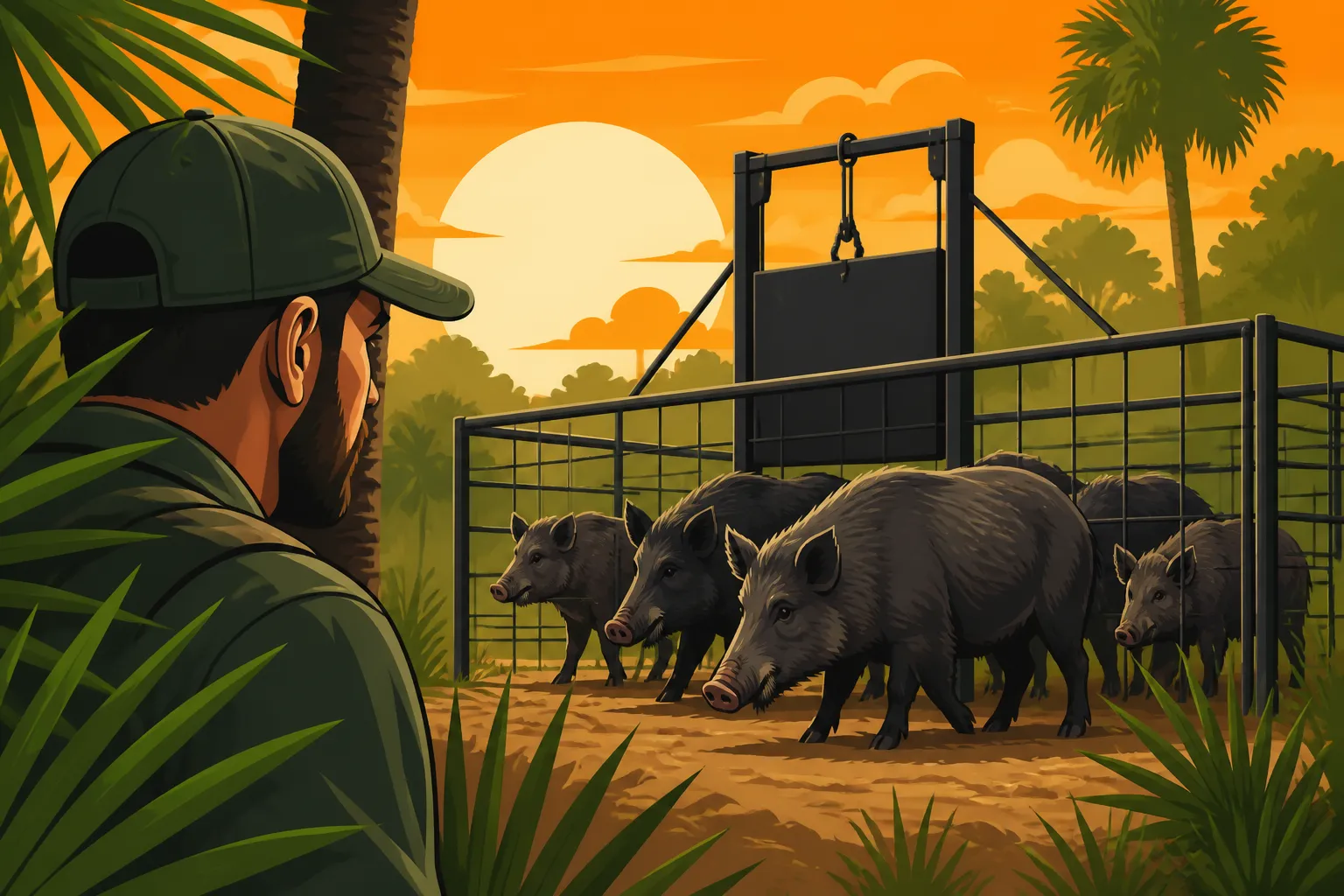
Forget those small, single-entry box traps if you're serious about taking out a whole sounder. You need a large, robust trap system designed for multiple captures. The most effective options typically fall into two categories: large panel traps and continuous-entry traps. Panel traps, often circular or rectangular, consist of multiple heavy-duty steel panels (usually 6-8 feet tall) that form a large enclosure, with a single, wide gate. This gate can be triggered manually, by a trip wire, or, increasingly, remotely via a cellular signal. Brands like Jager Pro or Boar Buster offer sophisticated remote-triggering systems that allow you to observe the sounder via a camera feed and drop the gate only when the entire group is inside. These systems are an investment, but they pay for themselves in efficiency and the ability to catch wary hogs. Continuous-entry traps, on the other hand, are designed with a funnel or swing-door system that allows hogs to enter but makes exiting difficult. While good for consistent catching, they don't offer the certainty of capturing an entire sounder at once like a remote-triggered gate does. For Florida's larger and more intelligent hogs, especially on private land where you want complete removal, a large, remote-triggered panel trap is often the superior choice.
Baiting Strategies and Scents
Bait is your best friend when it comes to luring hogs into a trap. The undisputed king of hog bait is corn, but it's not just about tossing it out. Soured corn, which ferments and emits a strong, attractive odor, is often even more effective. You can achieve this by soaking corn in water for several days, letting it get good and funky. Other effective baits include sweet feed, commercial hog attractants (many incorporate anise or other strong scents), and even discarded fruits or vegetables. The key is consistency and abundance during your pre-baiting phase. Don't skimp on the bait; you want the hogs to associate your trap area with an easy, reliable food source. Once they're regularly visiting, you can slowly begin placing bait closer to and then inside the trap. For more ideas, check out Baiting Hogs Legally in Florida to ensure your practices align with state regulations.
Monitoring Technology
This is where technology really shines in modern hog trapping. Trail cameras, especially cellular-enabled cameras, are indispensable. These cameras allow you to monitor the trap site 24/7 without having to physically visit and disturb the area. You can see when hogs are visiting, how many are in the sounder, and observe their comfort level with the bait and the trap itself. This information is critical for deciding when to set the trap and, if using a remote-triggered system, when to drop the gate. Advanced scouting applications like GoHunt, though primarily known for western big game, offer robust mapping tools that can be incredibly useful for private land analysis. While GoHunt's specific public land data isn't directly relevant to private trapping, its detailed topographical maps, satellite imagery, and weather overlays can help you analyze terrain, identify potential hog travel corridors, and understand patterns that might affect your trap location. Whether you use GoHunt or another detailed mapping software, the ability to visualize your property and mark hog sign can improve your strategy significantly. This digital scouting, coupled with physical scouting, allows you to determine optimal trap placement.
Step-by-Step Trapping Process on Private Land
Successful hog trapping is a process that demands patience and a systematic approach. Rushing it will often lead to failure and create trap-shy hogs, making future efforts much harder.
Reconnaissance and Pre-Baiting
The first, and arguably most critical, phase is extensive reconnaissance. You need to become intimately familiar with the hogs' habits on your property. Spend time walking your land, looking for fresh hog sign: rooting, tracks, wallows, and rubs on trees. Identify active travel routes—often subtle trails through thick cover that connect bedding areas to feeding grounds. Pay close attention to water sources and dense cover, as these are prime hog habitats in Florida. Once you've identified an area with consistent hog activity, begin your pre-baiting. This involves placing a generous amount of bait (soured corn works wonders here) directly on the ground in the chosen trap location, without any trap present. Do this for several days, or even a week or two, replenishing the bait as needed. The goal is to get the entire sounder comfortable visiting this spot regularly to feed. Use your trail cameras to confirm their presence and monitor their feeding patterns. This period allows them to develop a positive association with the bait site, building trust before the trap is ever introduced. You might even use some of the same principles as Scouting Florida Public Land Before Season, adapting them to your private property.
Trap Placement and Acclimation
Once the hogs are consistently feeding on your pre-bait site, it's time to introduce the trap. Assemble your chosen large trap system (panel trap, continuous entry) in the exact spot where you've been pre-baiting. Crucially, do not set the trigger or close the gate initially. Prop the gate wide open or remove it entirely if possible. Continue to liberally bait inside and around the trap. You want the hogs to enter and exit the trap freely, getting completely comfortable with its presence. They need to see it as just another part of their feeding routine, not a threat. This acclimation period can last anywhere from a few days to a week or even longer, depending on how wary your specific sounder is. Monitor with your trail cameras (or a cellular camera for real-time updates via apps, similar to the advanced mapping features GoHunt provides for understanding terrain) to ensure the hogs are entering and exiting without hesitation. You'll know you're ready when you have multiple images or videos of the entire sounder feeding calmly within the trap enclosure. You can also apply strategies similar to Where to Hang a Camera on a Sand Road to get the best angles for monitoring your trap.
Triggering the Trap and Harvest
When your trail cameras confirm that the entire sounder is regularly entering and feeding comfortably inside the open trap, it's time for the big moment. If you have a remote-triggered trap, wait until you see every single hog you're targeting inside the enclosure, then hit that button. For manual triggers, you'll need to visit the trap site and set the trigger mechanism at a time when you expect the hogs to visit next, often just before dusk or after dawn. Once the trap is sprung and the sounder is contained, approach cautiously. Hogs, especially large boars, can be dangerous when cornered. For ethical and humane dispatch, a small-caliber firearm like a .22LR to the brain is commonly used and highly effective. Always prioritize safety for yourself and anyone assisting. Have a clear plan for dispatch and ensure all animals are quickly and humanely taken. While it's not a direct trapping method, some hunters use tactics like Night Hunting Hogs With Lights in Florida to quickly dispatch trapped animals if regulations allow and conditions are safe.
Post-Trapping Management and Continued Control
Trapping a sounder is a huge victory, but it's rarely a "one and done" situation. Effective hog management is an ongoing commitment to protect your property.
Carcass Removal and Processing
Once you've successfully harvested a sounder, the work isn't over. You need a plan for carcass removal and processing. For just a few hogs, you might be able to process them yourself. Many landowners enjoy Cooking a Wild Florida Hog, making use of the meat. If you've caught a large sounder, you might consider taking them to a local processor, or if that's not feasible, you'll need to arrange for proper disposal. Florida regulations generally allow for burying carcasses on private land as long as it's not near a water source, or you can contact local animal removal services. Ensure the area around the trap is cleaned thoroughly to minimize lingering scent that might deter future hog activity, but also to prevent attracting other scavengers that could cause new problems.
Long-Term Hog Management
Feral hogs are incredibly resilient, and even after a successful sounder trap, it's highly likely that other hogs will eventually move into the area. Your long-term strategy needs to be about continued vigilance and employing a combination of methods. Keep those trail cameras out, scouting new areas of rooting and activity. Consider maintaining a few "bait sites" throughout your property, even if no trap is present, to monitor for new hog presence. Hunting can supplement trapping efforts, especially for individual boars that might not enter a trap. Learn about Hunting Hogs Without a Bag Limit to understand how continuously you can pursue them. Some landowners also employ tactics like Dog Hunting Hogs in Florida where permitted, though this is a very different approach. Regularly check fences and property perimeters, immediately repairing any damage that hogs might exploit. Habitat modifications, such as maintaining strong fencing around vulnerable areas or removing dense, unused cover, can also make your property less appealing to new sounders looking to move in.
Comparing Hog Trapping Systems
Here's a quick look at some common hog trapping systems to help you weigh your options:
| Trap Type | Description | Pros | Cons | Best For |
|---|---|---|---|---|
| Large Panel Trap | Circular or square enclosure with heavy steel panels and a single large gate. | Can catch entire sounders; remote trigger options; durable. | High initial cost; requires vehicle for transport/setup; visible. | Whole sounder removal, long-term control on private land. |
| Continuous Entry | Box or panel trap with a funnel or swing-door entry that hogs can't exit. | Can catch multiple hogs over time; lower cost than panel traps. | Hogs can become trap-shy if only some are caught; often misses large boars. | Consistent, low-effort catching of smaller hogs/individuals. |
| Box Trap (Small) | Traditional small box trap, usually wood or light metal. | Inexpensive; portable; easy to conceal. | Limited to one or two small hogs; large hogs will destroy or avoid. | Backyard nuisance animals, very small hogs. |
| Snare/Cable Restraint | Loop of cable placed in a trail to catch a hog by the neck or leg. | Inexpensive; highly effective in certain situations; low visibility. | Non-target catches; requires skill to set correctly; higher risk of injury to hog. | Specific hog removal, supplemental to trapping (where legal). |
Disclaimer
The information provided in this guide is for general informational purposes only and does not constitute legal advice. Hunting and trapping regulations, including those for feral hogs, can change frequently. Always consult the latest rules and regulations published by the Florida Fish and Wildlife Conservation Commission (FWC) before engaging in any hunting or trapping activities. Landowners should also be aware of any local ordinances that may apply. Safety should always be your top priority when handling firearms or interacting with trapped animals.