Pass-Shooting Doves Over a Sunflower Field
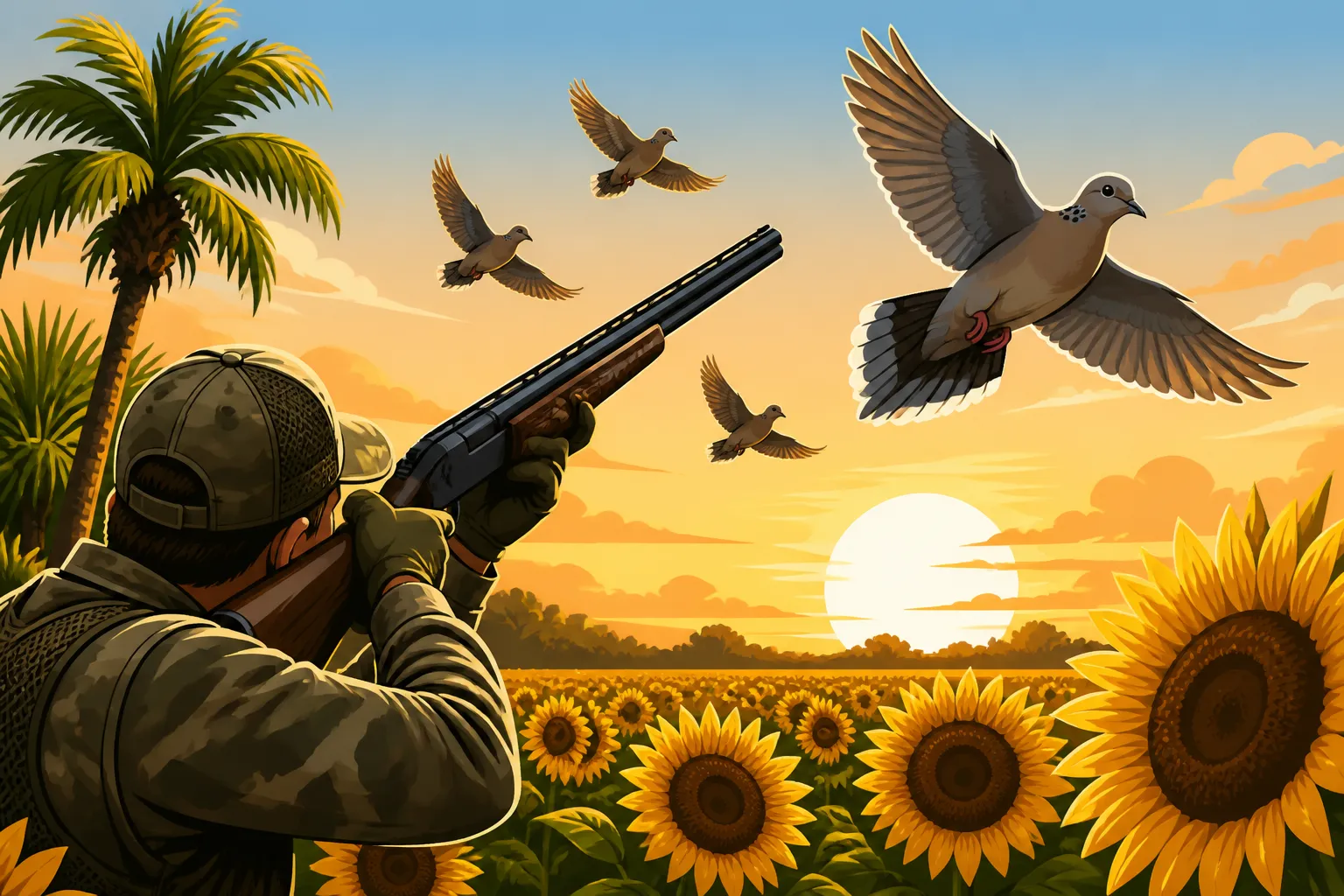
There's nothing quite like the sight of doves streaking across a wide-open Florida sky, but hitting those fast-flying targets, especially over a pristine sunflower field, can feel like trying to catch smoke. Many hunters get frustrated with missed shots and unpredictable flight paths, turning what should be a thrilling experience into a lesson in humility. This guide is here to unravel the mysteries of pass-shooting doves over a sunflower field, providing you with the insights and tactics to improve your success and truly enjoy one of Florida's most exciting wingshooting opportunities.
Understanding the Dove's World in a Sunflower Field
Dove hunting, particularly pass-shooting over fields, is an annual tradition for many, but there's a real science to understanding why these birds are where they are. It’s not just about showing up; it's about knowing their habits and anticipating their moves, especially when they're drawn to a feast of sunflower seeds.
Why Sunflowers are a Dove Magnet
If you've ever seen a field of mature sunflowers, you understand their appeal. For doves, it's like an all-you-can-eat buffet. The seeds are highly nutritious, easy to access, and provide an abundant food source. Doves are primarily ground feeders, and as the sunflower heads mature and dry, seeds naturally fall to the ground or are easily plucked from the drying heads. This creates a perfect scenario for doves to gather, feed, and socialize. They aren't just looking for a meal; they're looking for a reliable, safe place to eat before heading to roost. Landowners often plant sunflowers specifically to attract doves, understanding this biological draw. It’s a win-win: the doves get their fill, and hunters get a prime location. Sometimes, these fields are strategically mowed or disced just before the season to expose even more seeds, creating an irresistible attraction.
Decoding Dove Flight Patterns and Daily Routines
Doves are creatures of habit, and understanding their daily commute is key to pass-shooting success. Typically, doves will leave their roosting areas shortly after sunrise, heading directly to feeding grounds like sunflower fields. They'll feed intensely in the morning, often making multiple passes into the field, landing, eating, and then flying off to a watering hole or grit source. This morning flight can be fast and furious, offering prime pass-shooting opportunities. As the sun climbs, activity might slow down, with birds taking a midday break in shady trees nearby. However, come late afternoon, usually a few hours before sunset, the birds will return to the fields for another feeding frenzy before flying back to their roosts. This evening flight can be just as, if not more, productive than the morning, as birds are often eager to get one last meal in before dark. Observing these patterns, perhaps during some pre-season scouting, can tell you exactly when and where to expect the most action. I've found that using mapping tools like GoHunt during the off-season to identify potential flight corridors between known roosts and feeding fields is incredibly useful.
The Unpredictable Impact of Weather and Pressure
While doves are creatures of habit, weather and hunting pressure can throw a wrench into their routine. A strong cold front, for instance, can push birds south rapidly, clearing out fields that were packed just days before. Conversely, a stable weather pattern with light winds often means consistent flight. Wind direction is particularly crucial for pass-shooting. Doves will almost always fly into the wind when landing or taking off, and they'll use it to their advantage, gliding at incredible speeds when flying with it. Understanding the wind helps you predict their approach angles.
Hunting pressure, especially on opening day, can quickly educate birds. A field that was hot for the first few hours might go quiet as birds learn to avoid certain areas or shift their feeding times. If you're Hunting the September Dove Opener on public land, expect birds to be warier and fly higher as the day progresses. They might also start using less obvious entry and exit points. On private land, managing pressure by rotating hunting days can keep birds in an area longer. Always be mindful of other hunters; safe shooting lanes are paramount, and you don't want to burn out a field too quickly.
Strategic Setup: Blinds, Decoys, and Positioning
Pass-shooting doves isn't just about quick reflexes; it's heavily influenced by how effectively you blend into the environment and whether you can subtly influence the birds' flight paths. Your setup can make or break your hunt, drawing birds closer for more ethical shots.
Choosing the Right Blind for Concealment
Doves have excellent eyesight, and they're quick to spot anything out of place. This means effective concealment is absolutely critical. For pass-shooting, you're not trying to hide entirely, but rather to break up your human silhouette enough to avoid alarming incoming birds. A natural blind, made from existing vegetation like tall weeds, brush piles, or the edge of a tree line, is often the most effective. Just make sure you trim any branches that might impede your swing.
If natural cover is sparse, a simple camo pop-up blind or even a lightweight ghillie suit can make a huge difference. A popular choice is a layout blind, especially if you're hunting a large, open field that's been mowed down. These blinds allow you to lay flat, almost invisible to overhead birds, and then pop up for the shot. Remember, the goal isn't just to be hidden, but to be hidden effectively from the dove's perspective. Think about the sun's position – you want the sun at your back if possible, both for your comfort and to make it harder for doves to see into your blind. For more insights on this, consider checking out tips on Using a Ground Blind on Florida Public Land.
The Art of Decoy Placement for Drawing Birds
While pass-shooting often involves taking birds on their natural flight paths, decoys can significantly enhance your success by pulling birds closer and lowering their flight elevation. Doves are social birds, and they are naturally drawn to the sight of other doves on the ground or flying.
A mix of stationary decoys and motion decoys typically works best. Place stationary decoys on the ground in a scattered pattern, simulating feeding birds. You want them spread out, not in a tight cluster, to look more natural. Think about how doves actually feed – they peck and move, so replicate that. Then, incorporate motion decoys, such as Mojo Voodoos or similar spinning-wing models, placing them slightly above the ground decoys on poles. These motion decoys are incredibly effective at catching the attention of high-flying birds, making them dip down to investigate. Some hunters even use kite decoys on long poles to mimic a soaring bird. Always position your decoys within range of your planned shooting zone, ideally 20-30 yards from your blind, and consider the wind direction as birds will often approach the decoys flying into the wind. This technique shares principles with Decoying Wood Ducks in a Cypress Slough, where motion and realism are key to success.
Optimizing Your Position for Incoming Shots
Your position within or around the sunflower field is paramount. You need to identify the primary flight corridors that doves are using to enter and exit the field. This might mean setting up along a treeline bordering the field, near a patch of taller weeds within the field itself, or even at a corner where birds are making a turn. Look for "funnels" – natural breaks in vegetation or terrain that concentrate dove traffic.
Once you identify these flight paths, choose a spot that offers an unobstructed view of incoming birds and provides clear shooting lanes. You want to be able to swing your shotgun smoothly without hitting branches or other obstacles. Always ensure you have a safe backdrop for your shots – never shoot toward other hunters, roads, or occupied buildings. Often, the edge of a field, particularly near a watering hole or a line of power lines where doves like to perch, can be a hotspot. If you're hunting with a group, spread out safely, creating a perimeter that allows each hunter clear, safe shots without interfering with others. A good planning tool like GoHunt can really help here, allowing you to scout satellite imagery for potential flyways and plan your setup positions digitally before you even step foot in the field.
Mastering the Pass-Shoot: Techniques and Shot Selection
Pass-shooting doves is often considered the pinnacle of wingshooting challenges. Their erratic flight, incredible speed, and small size demand precision, patience, and a well-practiced technique. It's not about blasting away; it's about making smart, ethical shots.
Lead, Swing, and Follow-Through: The Fundamentals
The holy trinity of wingshooting applies perfectly to pass-shooting doves: lead, swing, and follow-through.
- Lead: This is probably the most challenging aspect. Doves are fast, often clocked at 40-60 mph, and they rarely fly in a straight line. The amount of lead you need depends on the dove's speed, distance, and angle. A good starting point for a crossing shot might be to hold 3-5 feet in front of the bird, but this is highly variable. You're essentially shooting where the bird will be, not where it is.
- Swing: Once you spot an incoming bird, get your barrel on it from behind, match its speed, and then smoothly swing through it. Your body should be fluid, rotating from your core, not just your arms. Keep your head on the stock, ensuring a consistent cheek weld, and let your eyes focus intensely on the bird, not the bead of your shotgun.
- Follow-Through: This is where many hunters falter. After pulling the trigger, continue your swing for another moment. Don't stop the gun the instant the shot breaks. This ensures your lead and swing remain consistent through the shot, rather than slowing down or jerking the gun. It's a fundamental principle, whether you're dove hunting or Waterfowl Hunting Florida's Marshes. Practice is key, and the only way to truly develop this muscle memory is by getting out there and shooting.
Picking Your Shots and Managing Your Ammunition
It’s easy to get excited and start blasting at every bird that flies by, but truly effective pass-shooting involves discipline. Learn to identify birds that are within your effective range – typically 20-40 yards. Birds beyond this range are often just wasted shells, and more importantly, can result in wounded birds. Doves are small targets, and the pattern density from your shotgun diminishes rapidly at longer distances.
Focus on a single bird in a flock. Trying to "flock shoot" rarely works and usually just results in missed opportunities. Pick one bird, focus on it, and execute your shot. Once you fire, if the bird is still flying, resist the urge to immediately swing to another. Reload quickly and be ready for the next incoming bird. Dove hunting can consume a surprising amount of ammunition, so bring plenty – often several boxes per hunter for a full day. Also, consider the Florida Duck Daily Bag Limit for comparison; while ducks have specific limits, doves are also regulated by daily and possession limits you must adhere to.
Common Pass-Shooting Mistakes and How to Avoid Them
Even seasoned wingshooters can make mistakes when pass-shooting doves. Here are a few common pitfalls and how to steer clear of them:
- Stopping Your Swing: This is probably the number one reason for missing. Remember that follow-through! Keep the gun moving.
- Lifting Your Head Off the Stock: As you mount the gun and swing, it's natural to want to peek over the barrel to see the bird. This lifts your eye off the plane of the barrel, causing you to shoot high. Keep your cheek firmly pressed against the stock.
- Shooting Too Soon or Too Late: Learning when to pull the trigger is crucial. If you shoot too soon, you'll be behind the bird. Too late, and you might miss or take an unethical shot at a bird that's already out of range. Find that sweet spot where your lead and swing align.
- Improper Choke/Ammunition: Using too tight a choke or too large a shot size for close birds can result in blown-up birds, while too open a choke or too small a shot can lead to crippled birds at longer ranges. Experiment to find what works for your style and the typical ranges you're shooting. The table below offers some common recommendations.
- Lack of Practice: Wingshooting is a perishable skill. A few rounds of trap or skeet before the season can dramatically improve your confidence and consistency. Don't wait until opening day to knock off the rust.
Essential Gear and Regulatory Compliance
A successful dove hunt in Florida involves more than just a shotgun and shells. Having the right gear and understanding the local regulations are just as important for a safe, enjoyable, and legal experience.
Shotgun and Ammunition Choices for Fast Doves
When it comes to shotguns, most any 12, 20, or even 28 gauge will get the job done for doves. The key is comfort and fit. A shotgun that fits you well will point naturally and consistently. Semi-automatics and pump-actions are popular choices due to their multi-shot capacity, which can be advantageous when multiple birds are working. Over/under and side-by-side shotguns are also perfectly effective, but require quicker reloading.
For ammunition, small shot sizes are generally preferred. #7.5, #8, or even #9 shot in a standard target load (often 1 1/8 oz for 12 gauge, 7/8 oz for 20 gauge) works wonders for doves. These smaller pellets create a denser pattern, increasing the chances of hitting the small, fast-flying birds. The choke you choose will depend on your shooting style and the distance of the birds you're typically engaging.
Here's a quick guide to common choke and shot size pairings for dove hunting:
| Shotgun Gauge | Choke Recommendation | Shot Size Recommendation | Typical Engagement Range | Notes |
|---|---|---|---|---|
| 12 Gauge | Modified or Improved Cylinder | #7.5 or #8 | 20-40 yards | Most versatile option, good balance of pattern density and spread. Start with Improved Cylinder for closer birds, switch to Modified if birds are flying higher. |
| 20 Gauge | Modified or Improved Cylinder | #7.5 or #8 | 15-35 yards | Lighter recoil, excellent for youth or smaller-framed hunters. Performs very well with appropriate loads and chokes. |
| 28 Gauge | Improved Cylinder or Light Modified | #8 or #9 | 15-30 yards | Known as a "gentleman's gauge" for its light recoil and efficient patterns with small shot. Excellent for quick follow-up shots. |
| .410 Bore | Full | #7.5 or #8 | 10-25 yards | Very challenging to shoot effectively at doves due to small payload and tight patterns. Best for experienced shooters at very close ranges. |
Remember, this is a general guide. Your specific shotgun and ammunition combination may perform differently. Always pattern your shotgun with your chosen loads before heading to the field.
Navigating Florida's Dove Season Regulations
Florida's dove season typically runs in several splits from September through early January, offering ample opportunities to chase these popular game birds. However, it's absolutely crucial to stay up-to-date on the specific dates for Florida Dove Season Zones, as they can vary slightly year to year and by region. The Florida Fish and Wildlife Conservation Commission (FWC) website is your go-to resource for the most current regulations.
Beyond dates, pay close attention to bag limits. Doves generally have a generous daily bag limit, but there's also a possession limit that dictates how many birds you can have on hand. It’s also legally required for migratory bird hunters in Florida to possess a valid Florida hunting license, a migratory bird permit (HIP certification), and a Federal Duck Stamp if you're over 16, even if you're "only" hunting doves. Make sure you understand the Florida HIP Certification for Bird Hunters requirements, as it's often overlooked but essential for all migratory game bird hunters. Another often-forgotten rule involves baiting. It is strictly illegal to hunt migratory birds over bait, which includes distributing grains or other foods to attract birds. Always ensure the field you are hunting is legally prepared, meaning any manipulation of crops is done in a way consistent with normal agricultural practices.
Field Care and Respectful Harvest
After the shot, the work isn't over. Proper field care is essential to ensure your doves are table-ready and that you're respecting the game you've harvested. In Florida's often warm climate, prompt cooling is key. Carry a cooler with ice to the field. As soon as you retrieve a bird, clean it. Many hunters simply breast out doves in the field, which reduces bulk and allows for faster cooling. Make sure to leave one fully feathered wing attached to the breast if required by law for identification purposes until you reach your final destination, especially if crossing state lines or in areas with specific rules.
Always strive for quick, clean kills. If a bird is wounded, pursue it immediately and dispatch it humanely. Retrieving every bird you shoot is not just good ethics; it's often a legal requirement. Having a well-trained retriever can be an invaluable asset in this regard. Beyond the immediate care, it’s important to acknowledge the role of hunting in conservation. Organizations like the FWC use hunter license fees and taxes on hunting equipment to fund habitat restoration and wildlife management efforts, directly contributing to healthy dove populations and fantastic hunting opportunities for years to come.
Disclaimer
Please remember that hunting regulations can change frequently. Always consult the most current Florida Fish and Wildlife Conservation Commission (FWC) regulations before planning or participating in any hunting activity. This guide is for informational purposes only and should not replace official state regulations or proper hunter education. Be safe, ethical, and always hunt legally.