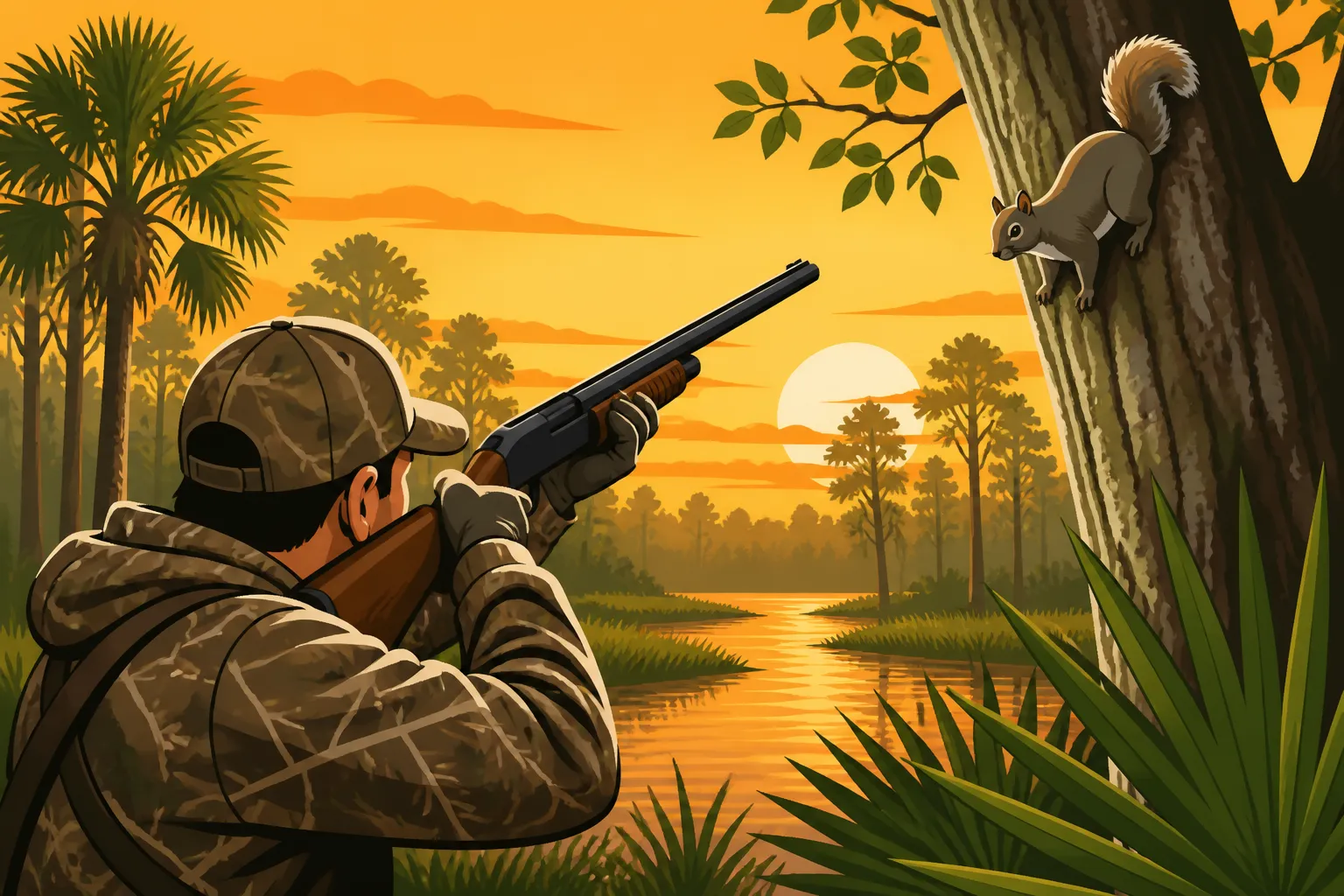
Squirrel Hunting Florida River Bottoms
Florida's river bottoms can feel like a whole different world when you're out hunting squirrels. It's not like the open hardwoods up North; here, you're often battling dense palmetto, knee-deep muck, and humidity that clings to you like a second skin. But for those of us who love the challenge and the reward of a squirrel dinner, these unique ecosystems offer some of the most exciting and productive hunting grounds. This guide will walk you through everything you need to know to navigate and successfully hunt squirrels in Florida's sprawling, often wild river bottoms.
Understanding Florida's River Bottom Habitats for Squirrel Hunting
Hunting squirrels in Florida’s river bottoms isn’t just about walking into the woods and looking up. It’s about understanding a very specific and often challenging ecosystem. These areas are characterized by their proximity to flowing water, which dictates everything from the types of trees that grow to the density of the undergrowth, and even the behavior of the squirrels themselves. If you don't grasp these nuances, you'll be spending more time swatting mosquitoes and less time filling your game bag.
What Makes River Bottoms Unique for Squirrels?
Florida's river bottoms are dynamic environments, constantly influenced by water levels, seasonal flooding, and rich, alluvial soils. This isn't your typical dry pine flatwoods hunting; this is a place where the air hangs heavy with moisture, and the ground can range from firm earth to squishy muck in a matter of steps. But this constant moisture is exactly what makes them squirrel havens. The fertile soil supports a incredible diversity and density of mast-producing trees, offering a year-round buffet for both gray and fox squirrels.
You'll find these areas often follow the winding paths of rivers like the Suwannee, the St. Johns, or the Apalachicola, spreading out into wide floodplains. When the river is high, certain areas become inaccessible, pushing squirrels to higher ground. When it recedes, new food sources might be exposed, like fallen nuts or fungi. This constant flux means you need to be adaptable. What worked last week might not work this week. Understanding these fluctuations, perhaps by checking local river gauges or even scouting from an airboat if that's your thing, can give you a significant advantage. This unique habitat is also home to a thriving population of Florida Squirrel and Rabbit Populations, making it a prime target for small game enthusiasts.
Common Trees and Their Importance to Squirrels
The backbone of any good river bottom squirrel hunt is the trees. Unlike the vast monocultures of pine plantations, river bottoms boast a rich tapestry of hardwood species that are vital food sources. The dominant players are usually various species of oak, particularly water oaks, willow oaks, and laurel oaks, which drop acorns from late summer through fall. These acorns are a primary food source, and finding a cluster of producing oak trees can be like finding a goldmine.
Beyond the oaks, you’ll also encounter pecans, hickories, and sweetgum trees. Pecans and hickories produce hard-shelled nuts that squirrels absolutely adore and will work diligently to crack open. Sweetgum trees, while not a direct food source, often have hollows that provide den sites. Further into the wetter sections, you'll find cypress and tupelo trees. While these don't offer much in the way of edible mast, their large, often hollow trunks provide excellent shelter and escape routes for squirrels, especially fox squirrels that prefer larger trees. Learning to identify these trees, even without leaves, can guide you to productive areas. As you’re Scouting Florida Public Land Before Season, make sure to focus on these key tree species. A good resource like the GoHunt app can help you identify tree types and potential mast crops from aerial maps, even if you’re Using the FWC App Without Cell Service in the field.
Challenges of the River Bottom Environment
Let's be real, Florida's river bottoms aren't for the faint of heart. They present a unique set of challenges that can quickly turn an enjoyable hunt into a miserable slog if you're not prepared. The most obvious is the water itself. You can expect anything from damp ground to ankle-deep mud, or even knee-deep swamps, depending on recent rainfall and river levels. This makes silent stalking incredibly difficult and requires specialized footwear.
Then there are the insects. Mosquitoes, deer flies, and gnats thrive in these humid, swampy conditions. Good bug repellent isn't an option; it's a necessity. The dense undergrowth, often comprised of palmetto, saw palmetto, and various thorny vines, can make movement noisy and exhausting. You're constantly pushing through thick cover, which limits visibility and increases the chances of getting turned around. Dealing with fallen timber, sometimes submerged, also adds to the physical demands. And let’s not forget the heat and humidity, which can be oppressive, even in the cooler months. You'll need to develop a Hot-Weather Sitting Strategy in Florida if you plan to still-hunt for any length of time.
Key Strategies for Successful River Bottom Squirrel Hunting
Once you understand the environment, it's time to refine your hunting tactics. River bottoms demand a blend of patience, stealth, and sometimes, a little bit of help from a four-legged friend. The success often hinges on how well you adapt your approach to the specific conditions of the day.
Still-Hunting and Stalking Techniques
Still-hunting is probably the most common and effective method for pursuing squirrels in Florida's river bottoms, especially if you're hunting solo. This involves moving incredibly slowly, stopping frequently to scan the trees and listen. Think of it as a moving ambush. Take one or two steps, then pause for several minutes, allowing your eyes and ears to do the work. Squirrels are masters of camouflage and can sit absolutely still when they sense danger. It's often their sudden movement or a tell-tale chatter that gives them away.
When still-hunting, pay close attention to the sound of falling nuts or the subtle rustling of leaves as squirrels move through the canopy. Use binoculars or a spotting scope to scan distant limbs. Once you spot a squirrel, evaluate the shot. If it’s high in a tree, try to move silently to get a better angle. Sometimes, if you stand still after spotting one, another might emerge from its hiding spot, thinking the coast is clear. The key is to be fluid, patient, and constantly observant. Remember to move into the wind if possible to help mask your scent and sound. Just like when you're Still-Hunting Florida Palmetto Flatwoods for deer, stealth is paramount.
Using Squirrel Dogs
For many, there's no better way to hunt squirrels in the thick cover of river bottoms than with a good squirrel dog. These dogs, typically curs or feists, are bred and trained to locate squirrels by scent and sight, bark at the base of the tree where the squirrel has treed, and then hold it there until the hunter arrives. This method is incredibly efficient in dense vegetation where still-hunting can be frustratingly slow and unproductive. The dogs do the hard work of finding the squirrels and telling you exactly where they are.
The joy of dog hunting isn't just about filling the bag; it's about the interaction with your dog and the thrill of hearing that distinct bark that tells you a squirrel is treed. However, it requires a well-trained dog that knows how to stay close, doesn't chase deer, and understands the difference between a squirrel and other small game. If you're considering this, find a reputable breeder or trainer, and invest the time in working with your dog. Be mindful of Florida's heat and humidity, as dogs can overheat quickly. Always carry plenty of water for your canine companion.
Timing Your Hunt for Maximum Success
Timing is everything in squirrel hunting, and river bottoms are no exception. The best times are typically early morning, right after sunrise, and late afternoon, leading up to sunset. During these periods, squirrels are most active, feeding, and moving between den trees. The cooler temperatures also mean less insect activity, making for a more pleasant experience.
The season itself also plays a huge role. Early season (typically August and September, depending on the zone) often coincides with abundant mast crops, and squirrels are plentiful and focused on feeding. This is when How Early Season Squirrels Give Themselves Away with their noisy feeding habits. Later in the season, after several cold fronts have passed, squirrels might be harder to find as they've cached much of their food, but they'll still be out foraging, especially on warmer, sunny days. Pay attention to the Florida Squirrel Season Dates for your specific area. A sudden cold snap can often trigger a burst of feeding activity as squirrels try to put on weight.
Essential Gear and Preparations for Florida River Bottoms
Being prepared for the unique environment of Florida's river bottoms is crucial for both comfort and success. Skimping on gear can lead to a miserable, or even dangerous, outing.
Firearms and Ammunition
When it comes to firearms for squirrel hunting, you've got a few solid options, and each has its place in the river bottom environment.
| Firearm Type | Pros | Cons | Ideal Use Case |
|---|---|---|---|
| .22 Rifle | Accurate, quiet, cheap ammo, light | Misses can mean lost squirrels in dense cover | Still-hunting, precise headshots from a stable position |
| .17 HMR/WMR | Very accurate, flatter trajectory | Louder, more expensive ammo, can damage meat | Longer shots in more open canopy areas |
| Shotgun (20GA/410) | Easier to hit moving targets, dense cover | Louder, more expensive ammo, can damage meat | Dog hunting, fast-moving squirrels in thick branches |
| Air Rifle | Very quiet, no recoil, cheap ammo | Limited range, can be less powerful | Close-range still-hunting, urban/suburban areas |
A good .22 rifle is a classic for a reason. Its accuracy allows for headshots, preserving meat, and the report is relatively quiet, meaning you might get multiple shots in a single area. A quality rimfire scope, 3-9x magnification, is ideal. For those who prefer a bit more punch or flatter trajectory for slightly longer shots, a .17 HMR or .17 WMR can be excellent, though they are louder.
If you're hunting with dogs or in extremely thick canopy where precise rifle shots are tough, a shotgun (20 gauge or .410) loaded with small shot (like #6 or #7.5) is hard to beat. It allows for a greater margin of error on a moving target. However, it can damage more meat. More and more hunters are also turning to powerful air rifles, especially PCP (Pre-Charged Pneumatic) models, for their incredible accuracy and near-silent operation. They offer a great middle ground, especially for still-hunters seeking minimal disturbance.
Clothing and Footwear
Forget your heavy denim and thick wool. Florida demands lightweight, breathable clothing. Long-sleeved shirts and pants are a must, not just for sun protection but more importantly, for shielding against thorns, insects, and abrasive vegetation. Quick-drying synthetic fabrics are your best friend, as you're bound to sweat and potentially get wet. Camouflage patterns that blend with the green and brown of the swamp are ideal.
Footwear is arguably the most critical piece of gear for river bottom hunting. You need waterproof boots, plain and simple. Knee-high rubber boots are often the best choice for dealing with mud, shallow water, and snake protection. Brands like LaCrosse or Muck Boots are popular for their durability and comfort in wet conditions. Make sure they fit well to prevent blisters, especially on longer treks. And don't forget quality socks that wick away moisture.
Beyond clothing, a good bug spray with a high DEET concentration is non-negotiable. Head net and lightweight gloves can also provide crucial relief from persistent insects. A small backpack or game vest to carry your squirrels, water, snacks, and other essentials completes the ensemble.
Navigation and Safety
Getting lost in Florida's vast, often featureless river bottoms is a real possibility. The dense canopy can obscure the sun, and winding sloughs can quickly disorient you. A reliable GPS device or a smartphone app like GoHunt (which works even without cell service if you download maps beforehand) is essential. Carry a compass and a physical map as a backup, and know how to use them.
Safety also means being aware of your surroundings. Florida is home to venomous snakes, like water moccasins and rattlesnakes, especially in these damp environments. Always watch where you step and where you place your hands. Carry a basic first-aid kit, a whistle (to signal for help), and plenty of water to stay hydrated. Tell someone where you're going and when you expect to return. Consider carrying a personal locator beacon (PLB) or satellite messenger for emergencies, especially if you're venturing deep into remote areas. For general safety, remember that Florida Hunter Education Requirements apply to most hunters, ensuring a baseline of knowledge.
Reading the Woods and Locating Squirrels
Finding squirrels consistently in the dense river bottom habitat is an art form. It requires patience, keen observation, and an understanding of squirrel behavior and their environment.
Identifying Prime Food Sources
Squirrels are creatures of habit, and their habits revolve heavily around food. In river bottoms, this means focusing on mast-producing trees. Before you even set foot in the woods, use aerial maps to identify areas with concentrations of oak hammocks, pecan groves, or even isolated groups of hickory trees near water sources. These are your starting points.
Once in the woods, look for fresh cuttings—pieces of acorn or pecan shells on logs, stumps, or the forest floor. The fresher the cuttings, the more recently squirrels have been feeding there. This is a dead giveaway that you're in a productive area. If you're Hunting After a Poor Acorn Year, squirrels might be concentrated on other food sources like fungi, buds, or even agricultural fields adjacent to the river bottom, so keep an open mind and adjust your search. Don't overlook the edges where the river bottom transitions to slightly drier ground; these ecotones can be super productive.
Spotting Squirrel Sign and Behavior
Beyond fresh cuttings, keep an eye out for other subtle signs. Squirrel nests, called "dreys," are often visible as large, messy clumps of leaves and twigs high in tree branches. While a drey doesn't guarantee a squirrel is home, it indicates past or present activity. Look for bark rubbed off trees where squirrels have climbed, or even tracks in soft mud near water.
Learning to interpret squirrel vocalizations is also key. The excited chatter often signals a squirrel that has spotted you or another predator. A softer "bark" might be a squirrel communicating with others. Sometimes, you'll hear the distinct thump of an acorn hitting the ground before you see the squirrel that dropped it. By paying attention to these cues, you can pinpoint their location even when they are hidden from view. Understanding how squirrels give themselves away, like in How Early Season Squirrels Give Themselves Away, applies year-round.
Using Terrain to Your Advantage
Florida's river bottoms might seem flat, but they have subtle terrain features you can exploit. Look for slight rises in elevation, even a foot or two, that create drier ground. Squirrels will often favor these areas, especially during high water. Creek banks or old logging roads that run through the bottom can act as natural travel corridors for squirrels and also provide easier, quieter walking for you.
When you're still-hunting, try to position yourself near these travel routes or in areas where multiple food trees converge. Use large tree trunks or dense clumps of palmetto as cover to break up your silhouette. If you spot a squirrel high in a tree, try to move around it to put the trunk between you and the squirrel. This "stalking the tree" technique often allows you to get into a better shooting position without spooking the animal. Learning to work a Hunting a Cypress Head at Last Light or along Hunting a Funnel Between Two Palmetto Heads can be incredibly effective. Remember, even in flat terrain, Wind and Thermals in Flat Florida Terrain still play a role, so try to approach from downwind to minimize your scent.
Disclaimer
Always consult the latest regulations from the Florida Fish and Wildlife Conservation Commission (FWC) before heading afield, as rules and season dates can change. Ensure you have all required licenses and permits.