Dragging a Deer Out of a Palmetto Head
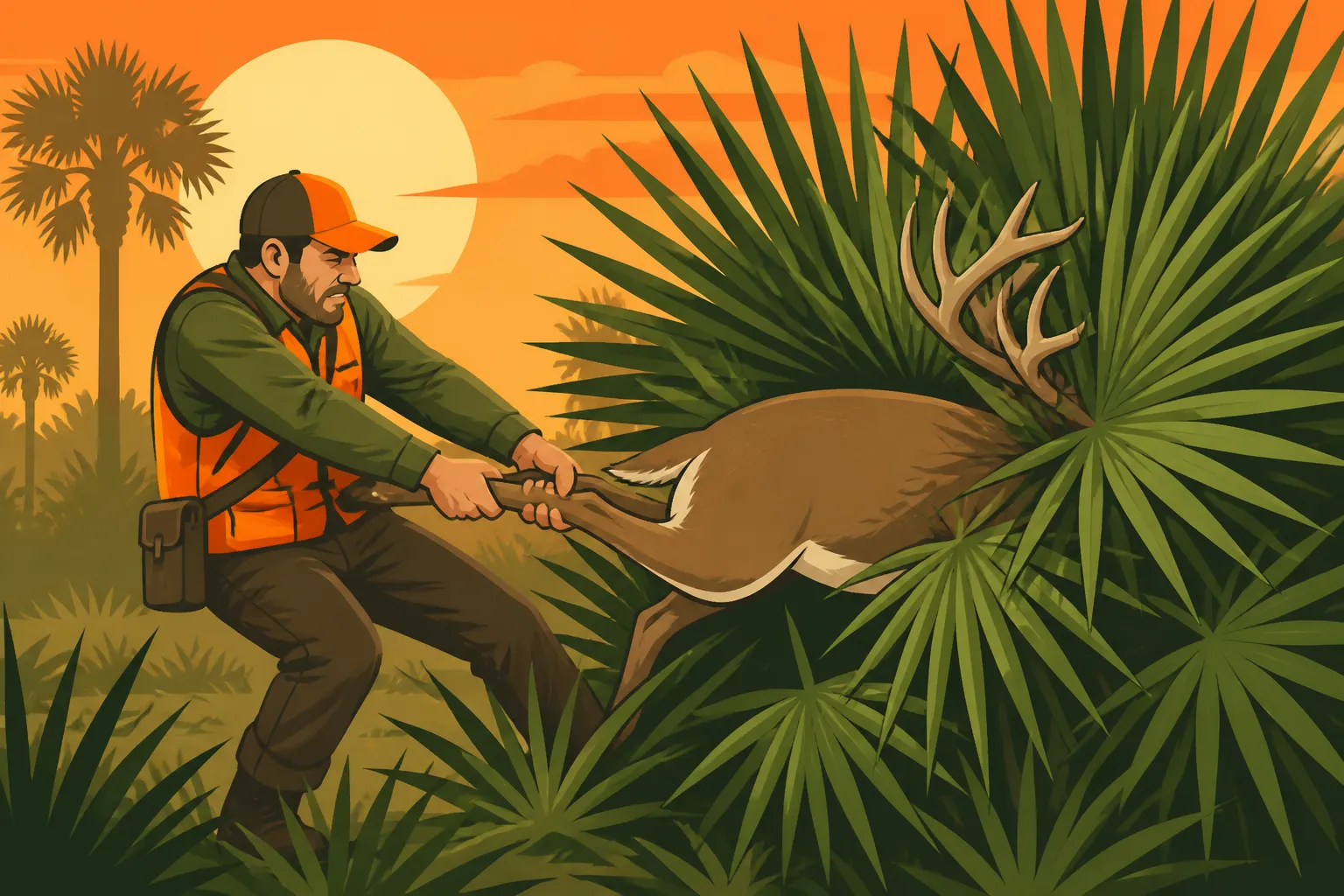
We've all been there: the heart-pounding moment when your shot connects, the deer drops, and then you realize it’s piled up deep inside an impenetrable palmetto head, thick as a brick wall, often miles from any easy access. The elation of success quickly turns into the dread of extraction. This guide is all about tackling that uniquely Floridian challenge, offering practical strategies and gear advice to help you get your deer out of the nastiest scrub without breaking your back or losing your mind.
The Pre-Shot Mindset and Essential Gear for Palmetto Country
Successfully recovering a deer from a dense palmetto head often starts long before you ever pull the trigger. It begins with how you approach the hunt itself and the tools you bring into the field. Ignoring these initial steps can turn an otherwise perfect hunt into a grueling ordeal.
Scouting Smart to Avoid Disaster
Think back to the last time you had a truly miserable drag. Chances are, a lot of the misery could have been mitigated with a bit more foresight. When you're scouting, especially in areas known for thick palmetto, it's not just about finding deer sign; it's also about finding extraction routes. You need to identify potential paths of least resistance. Look for natural breaks in the palmetto, old logging trails, fire lanes, or even slightly drier, higher ground where the vegetation might be a bit sparser. These subtle changes can make a world of difference when you're trying to move a heavy animal.
I remember one season hunting in the Big Bend region, deep in a coastal palmetto flat. I found great sign and eventually got on a solid buck, but he dropped maybe 75 yards into a palmetto swamp so thick I could barely crawl through it. It took three of us over two hours to drag him out, and we were absolutely shredded. That experience taught me a valuable lesson: if I'm hunting an area with heavy palmetto, I need to know exactly where I'll take a shot and have a mental escape route planned. Use your mapping apps like GoHunt or the Florida FWC app to study satellite imagery beforehand. Look for those lighter green lines that might indicate a slightly more open area, or darker lines that could be old ditch beds offering a marginally clearer path. Understanding Where Florida Bucks Bed in Thick Palmetto can also inform your stand placement, ideally setting up to intercept them closer to open edges or trails.
Must-Have Gear for Any Florida Deer Hunter
Dragging a deer in Florida, especially in our oppressive heat and often unforgiving terrain, demands specialized gear. Going into the woods unprepared is a recipe for exhaustion, injury, and potentially spoiled meat.
First and foremost, a quality deer dragging harness is a game-changer. Forget about tying a rope around the deer’s neck and throwing it over your shoulder – that’s for TV shows, not real Florida palmetto. A harness allows you to use your legs and core, distributing the weight more efficiently and saving your back. Brands like the Allen Company or even homemade solutions can work, but the key is leverage and comfort.
Next, a strong, multi-purpose rope – at least 25-50 feet of it. This isn't just for the deer; it can be used to pull yourself over obstacles, tie up limbs, or even act as a makeshift assist if you're trying to pull a game cart through an unexpectedly clear patch (though game carts are often useless in true palmetto heads). Don't forget heavy-duty gloves to protect your hands from palmetto fronds and briars. A sharp knife (or two!) is essential for field dressing.
Given Florida's notorious heat, even in the "cooler" months, plenty of water and electrolyte drinks are non-negotiable. Dehydration can hit fast, leading to fatigue and poor judgment. A good first-aid kit is also crucial; cuts, scrapes, and punctures are common when navigating dense vegetation. Finally, a reliable headlamp with fresh batteries is a must, even if you plan to be out before dark. Things can go sideways quickly, and you don't want to be caught in the dark, wrestling a deer out of a swamp. Having a bright light allows you to see the path, avoid obstacles, and keep an eye on your surroundings when Blood Trailing After Dark in Florida or making your way out.
Field Dressing and Initial Recovery in Thick Cover
The moments immediately following the shot are critical, especially when your deer has dropped into dense palmetto. How you approach the initial recovery and field dressing can significantly impact the ease of extraction and the quality of your venison.
The Immediate Post-Shot Assessment
You've made the shot, and you're fairly confident the deer is down. Now what? Resist the urge to charge in, especially if the palmetto is super thick. Your immediate priority is confirming the kill and then assessing the situation. If you can't see the deer, use your binoculars to scan the area carefully. Listen for any sounds of movement. If you're unsure, give it some time, perhaps 30-60 minutes, before moving in, especially if the deer bolted. This allows the animal to expire peacefully and prevents bumping a wounded deer that might run further into the thick stuff.
Once you approach the deer, take a moment to survey the immediate surroundings. Is it in a boggy area? Is there a relatively clear lane, however small, leading out? Or is it truly swallowed by the palmetto? Mentally map out the easiest exit path, even if it's only 10 feet at a time. This initial assessment, even before you touch the deer, helps you strategize the recovery. Consider what you learned during your scouting and look for any of those subtle, easier routes you might have identified.
Field Dressing Techniques for Easier Transport
Field dressing in Florida is always a race against the clock because of the heat, and it's even more challenging when you're doing it half-buried in palmetto. But it’s an absolutely critical step that makes the drag immensely easier. By removing the entrails, you immediately reduce the animal's weight by a significant margin – often 20-30% or more – and allow the carcass to cool down much faster, preserving the meat.
Start by moving the deer to the most open spot you can find within the palmetto head. It might only be a small clearing, but it's better than trying to work in absolute claustrophobia. Lay the deer on its back or side. Use your sharpest knife to make the necessary cuts, working carefully to avoid puncturing the stomach or intestines. If you're not experienced, there are plenty of online tutorials, but the basic idea is to open the body cavity from the breastbone to the pelvis and remove all internal organs. Some hunters even remove the windpipe and esophagus up to the throat, as this further aids cooling and removes more weight.
In Florida's humid climate, rapid cooling is paramount. You might even consider propping the chest cavity open with a stick or two to allow for better airflow as you prepare for the drag. For more detailed advice, check out our guide on Field Dressing a Deer in Hot Weather. As for the gut pile, in thick palmetto, it's usually best to leave it where it falls. The thick vegetation will quickly obscure it, and local scavengers will take care of the rest. Trying to carry out a gut pile from a palmetto head is often more trouble than it's worth and can contaminate your gear or yourself.
Strategies for Extracting Your Deer from the Palmetto Head
Now for the real work: getting that deer out of the palmetto. This is where physical conditioning, the right technique, and sometimes, a little help from your friends make all the difference.
Solo Dragging Techniques and Aids
Dragging a deer solo out of dense palmetto is one of the toughest challenges a hunter can face. It's a test of endurance, strength, and mental fortitude. The key is to be methodical and conserve your energy.
- Positioning: Once field dressed, orient the deer so you're pulling it headfirst. The antlers, if present, can get tangled, but pulling with the grain of the body and hair generally makes it slide better. If the palmetto is extremely dense, sometimes pulling it by the hind legs can be easier for short bursts, as the head and shoulders can wedge less. Experiment to see what works best for the specific cover you're in.
- Harness Up: Attach your dragging harness securely to the deer's head/antlers or a heavy-duty rope tied around the neck. Put on your harness and get low.
- Short Pulls, Frequent Rests: Don't try to pull the deer 50 yards in one go. You'll exhaust yourself immediately. Instead, take short, powerful pulls of 5-10 feet, then stop, rest, catch your breath, and reassess your next few feet of progress. Look for the path of least resistance – even a slight depression or a break in the undergrowth can ease the burden.
- Clear the Path: Use your feet to stomp down smaller palmetto fronds and other brush directly in front of the deer. If you have a machete, it can be invaluable for clearing a narrow lane, but be careful with safety. You're trying to create a trough for the deer to slide through.
- Leverage and Obstacles: If the deer gets hung up on a palmetto clump, try to lift and pull simultaneously. Sometimes, a log or even your hunting pack can be used as a fulcrum to get the deer over a particularly stubborn obstacle. If you used an app like GoHunt to mark your deer's location, keep it open to ensure you're heading in the right general direction toward easier ground.
As for aids, besides the harness, a lightweight plastic deer sled or a heavy-duty tarp can be a lifesaver. While bulky to carry in, if you anticipate a long drag out of a tough spot, it might be worth the effort. These allow the deer to slide over rough terrain with less friction and protect the hide from abrasions. However, in truly dense palmetto, even a sled can get hung up. In such scenarios, a simple rope and brute force might be your only option until you hit more open ground.
Here’s a quick comparison of common dragging aids:
| Dragging Aid | Pros | Cons | Best Use Case |
|---|---|---|---|
| Deer Drag Harness | Hands-free, uses leg/core strength, versatile | Still requires significant physical effort | Solo or tandem drags over varied terrain (after exiting deep palmetto) |
| Heavy-Duty Rope | Cheap, versatile, can be used for multiple purposes | Can cause rope burn, less ergonomic for solo drags | Group drags, short pulls through very dense brush, improvising |
| Plastic Deer Sled | Reduces friction, protects hide, keeps deer clean | Bulky to carry in, can get snagged in extremely dense palmetto | Longer drags once out of the worst cover, relatively smooth ground |
| Game Cart | Minimizes physical effort, can carry extra gear | Impractical in dense palmetto, needs clear trails | Final leg of the drag on roads or established trails |
Teamwork Makes the Dream Work (and the Drag Shorter)
If you're lucky enough to be hunting with a partner, getting a deer out of a palmetto head becomes significantly more manageable, though still challenging. Two (or more) people can distribute the load and work together to navigate obstacles.
The most effective two-person drag involves one person pulling the head/shoulders with a harness or rope, and the second person pushing or pulling the hindquarters. The person at the front sets the pace and chooses the route, while the person at the back helps lift over obstacles, clears brush, and provides crucial pushing power. Communication is key: "Lift on three!" "Watch out for that stump!" "Let's pivot left here!"
I remember a hunt years ago in the Ocala National Forest. My buddy shot a decent doe that expired in a nasty cluster of saw palmetto right on the edge of a cypress slough. It was wet, thick, and covered in briars. We tied a rope around the antlers and another around the hind legs. One of us pulled the front, the other pulled the back, and we crab-walked that deer out of there like a six-legged beast, rotating positions when one of us got too tired. It was slow going, but together, we made steady progress. Having someone to scout ahead for just a few yards, identifying the easiest next few steps, also saves a lot of wasted energy.
When to Call for Reinforcements (and What Not to Do)
Sometimes, despite your best efforts, the situation is just too much for you and your hunting party. It's crucial to know your limits. Pushing yourself too hard can lead to injury, which is far worse than leaving a deer overnight or calling for help. Heatstroke, exhaustion, pulled muscles, or even more serious injuries like sprains and broken bones can happen when you're exerting yourself in thick cover.
If you’re miles back in a remote WMA, and the deer is in truly awful terrain, consider your options. Is it getting dark? Are you running out of water? Is someone in your party starting to feel unwell? These are all signs it might be time to tag the deer, mark its location with your GPS (GoHunt, Garmin, OnX, etc.), and come back fresh in the morning with more help. Make sure to clearly mark the deer's location, perhaps with reflective tape or a specific waypoint on your GPS, so you can find it again easily. For more about navigating public land, see our guide on Hunting Florida Public Land.
In some areas, especially private land, you might have the option of using an ATV or UTV. While these machines are invaluable for quickly extracting a deer, remember that they are often restricted or entirely prohibited on many public lands. Always check the specific WMA or National Forest rules regarding vehicle use. If you can use one, the best approach is to get the deer out of the densest palmetto by dragging it a short distance to where you can access it with a vehicle. Then, you can use a winch or simply load it onto a game cart or directly into the back of the ATV. Don't try to force a vehicle through palmetto that's too thick; you'll only get stuck and make things worse.
Post-Recovery: Lessons Learned and Future Preparedness
After the grueling task of dragging your deer out of a palmetto head, it’s natural to want to just collapse and celebrate. But taking a few extra moments for reflection can turn a tough experience into valuable knowledge for future hunts.
Assessing Your Drag Route and Success
Once your deer is out and safely secured, take a few minutes to mentally or physically retrace your steps. What worked well during the drag? What caused the most trouble? Did you find a small, overlooked game trail or an old roadbed that significantly eased the last hundred yards? Mark these discoveries on your GoHunt app or GPS. These are invaluable points for your next scouting trip.
Perhaps you realize that a particular type of palmetto was harder to navigate than another, or that pulling by the hind legs actually worked better for a specific section of dense cover. Maybe you found that resting every 20 feet, rather than every 50, kept your energy levels more consistent. These granular details are what transform a frustrating experience into learned expertise. Even if it was a total nightmare, understanding why it was a nightmare can help you avoid similar situations in the future. You might find that Hunting a Green Field Planted for Deer offers easier recovery than a deep palmetto swamp, for instance.
Planning Ahead for the Next Hunt
The best way to deal with tough deer recoveries is to prevent them, or at least prepare for them better. Use the lessons from your palmetto drag to refine your future hunting strategies.
- Stand Placement: Can you set up your stand in a way that encourages a deer, once shot, to move towards an area with easier access? For example, if bucks tend to bed deep in the palmetto but feed along an edge, try to intercept them closer to that edge or near an existing trail. Understanding Entry Routes Through a Florida Food Plot can also guide your setup.
- Physical Conditioning: Let's be honest, Florida hunting can be brutal. Regularly engaging in strength training, especially for your back and legs, and incorporating cardio into your routine will make a significant difference. Those long drags are as much about endurance as they are about raw strength.
- Gear Check: Did any of your gear fail? Did you wish you had brought something different? Use this experience to refine your pack list. Maybe you need a lighter dragging harness, a sharper machete, or a small, collapsible saw for clearing thicker brush.
- Scouting for Access, Not Just Deer: When you're out scouting next time, pay even more attention to the lay of the land, not just deer sign. Look for natural funnels where Hunting a Funnel Between Two Palmetto Heads might lead to a more open area. Identify potential pick-up points for a game cart or ATV (if allowed). Knowing these escape routes can boost your confidence and reduce anxiety about recovery, allowing you to focus on the hunt itself. Apps like GoHunt are great for this, letting you mark potential exit strategies even before you step foot in the woods.
Florida hunting is an incredible experience, but it often comes with unique challenges. Getting a deer out of a palmetto head is one of them. By thinking ahead, packing the right gear, employing smart techniques, and learning from every experience, you can turn a potential nightmare into a manageable, albeit still strenuous, part of the adventure.
Disclaimer
The information provided in this article is for general guidance only and does not constitute professional advice. Hunting regulations and safety requirements can change. Always consult the latest Florida Fish and Wildlife Conservation Commission (FWC) regulations and local laws before hunting. Hunters are responsible for their own safety and for understanding and following all applicable rules.