Legal Weapons During Florida Archery Season
There’s nothing quite like the anticipation of Florida’s archery season, but let's be honest, figuring out exactly what gear is legal can feel like navigating a palmetto thicket blindfolded. Many new and even seasoned hunters get tripped up by the specific rules for bows, crossbows, and broadheads. This comprehensive guide is designed to cut through that confusion, ensuring you're fully equipped and compliant, making your next archery hunt both successful and legal.
The Foundations of Florida's Archery Season
Florida's archery season is a unique time on the calendar, offering hunters an early opportunity to pursue game like white-tailed deer and feral hogs before the gun seasons fully kick into gear. It’s a chance to challenge yourself with a more primitive, close-range method, honing skills that often get overshadowed by modern firearms. But with this distinct season comes its own set of rules, particularly regarding the types of weapons you can legally wield in the field.
Purpose and Philosophy of Archery Hunting
Archery hunting isn't just about taking an animal; for many, it's about the connection to the hunt itself. It demands a higher level of skill, patience, and woodsmanship. You have to get closer to your quarry, understand their movements, and often spend more time scouting and waiting. The Florida Fish and Wildlife Conservation Commission (FWC) designates an archery-only season to provide these dedicated hunters with a specific window, recognizing the increased challenge and lower success rates often associated with bowhunting compared to gun hunting. This separation helps manage game populations by allowing for varying pressure levels throughout the broader hunting calendar. It's an opportunity to truly immerse yourself in the natural rhythms of the Florida wilderness, relying on stealth and precision.
General Season Dates and Zone Variations
Florida's deer seasons are carefully staggered across four distinct deer management zones: Zones A, B, C, and D. This zonal system accounts for the differences in deer rut timing and habitat across the state, ensuring that hunting pressure aligns with biological cycles. Consequently, the archery season dates will vary significantly depending on which zone you plan to hunt. For example, hunters looking to hit the woods during the earliest part of the season might focus on areas covered by Florida Zone A Archery Opening Day, while those further south might be waiting for Florida Zone B Archery Opening Day or even Florida Zone C Archery Opening Day. It’s absolutely crucial to consult the current FWC regulations booklet or the FWC website for the exact dates for your chosen zone and Wildlife Management Area (WMA), as these can shift slightly from year to year. Knowing your zone is the first step; knowing what you can legally shoot once you’re there is the next.
Deciphering Legal Bow Equipment
When it comes to bows, Florida's regulations are quite clear about what constitutes legal equipment for deer and other game during archery season. Generally, you’re looking at traditional bows (recurve and longbows) and compound bows. Each type has its own characteristics and, sometimes, subtle nuances in how they are regulated, though the core principles of using a projectile propelled by a string are consistent.
Compound Bow Regulations
Compound bows are by far the most popular choice for modern archery hunters, and for good reason. Their system of cams and cables allows for a significant "let-off" at full draw, meaning you hold less weight, making it easier to aim steadily for longer periods. In Florida, there aren't specific minimum draw weight requirements for compound bows used in deer hunting, but common sense and ethical hunting dictate using a bow with sufficient power to achieve a clean, humane kill. Most hunters would aim for a draw weight of 40-60 pounds or more, depending on their physical ability and the bow's efficiency.
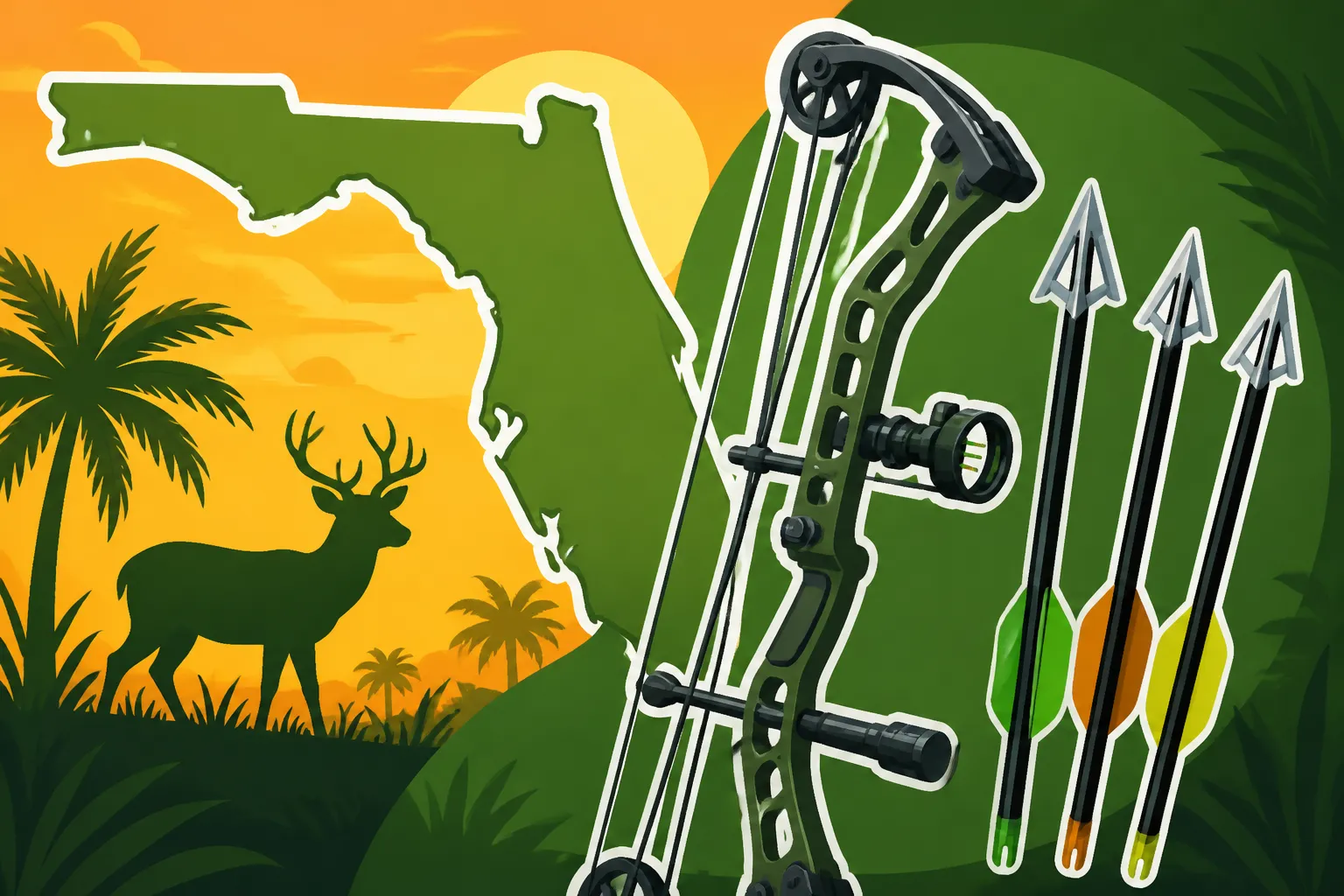
Legal accessories for compound bows during archery season include sights, kisser buttons, string silencers, and stabilizers. Lighted pins on your sight are also perfectly legal. However, any device that projects a beam of light onto the target, like a laser sight, is strictly prohibited. You can use a mechanical release aid, which many archers prefer for consistency and accuracy over a finger release. The key is that the compound bow must propel a broadhead-tipped arrow by mechanical force of the string, not an explosive charge or other means.
Traditional Bows: Recurves and Longbows
For those who prefer a more classic, minimalist approach, recurve bows and longbows are also perfectly legal and widely used during Florida’s archery season. These bows are defined by their simplicity – essentially, a string attached to a single piece or two pieces of wood (or synthetic material) that store energy when drawn. Unlike compounds, there's typically no let-off, so you're holding the full draw weight throughout the aiming process. This demands significant physical strength and consistent form, offering a truly challenging and rewarding hunting experience.
Similar to compound bows, Florida doesn't stipulate a minimum draw weight for traditional bows for deer, but again, ethical harvest is paramount. A good rule of thumb is to use a recurve or longbow that you can comfortably and consistently draw and hold, delivering sufficient energy with a sharp broadhead for penetration. Many traditional bowhunters opt for bows in the 45-60+ pound range. Accessories for traditional bows are minimal; typically, they'll be shot with fingers, and a simple arrow rest and maybe a quiver are about all that's used. The beauty of these bows lies in their raw simplicity and direct connection to the act of hunting.
Crossbows and Their Place in Archery Season
The inclusion of crossbows in Florida's archery season has been a topic of much discussion over the years, and the regulations have evolved. What was once restricted to certain permit holders is now much more broadly accessible, offering another option for hunters during this early season. Understanding the current rules is vital to avoid any misunderstandings in the field.
Current Crossbow Laws
For a number of years now, crossbows are a fully legal weapon during Florida's entire archery season, for all licensed hunters, without any special permit or disability exemption required. This means if you possess a valid Florida hunting license and an archery permit, you can hunt deer and other legal game with a crossbow during the established archery season dates in your zone. This change significantly opened up the archery season to hunters who might have physical limitations preventing them from drawing and holding a traditional or compound bow, or simply prefer the mechanical advantage and often higher accuracy that a crossbow can offer.
However, just like with vertical bows, there are specific limitations. Crossbows must still launch a broadhead-tipped bolt (the crossbow equivalent of an arrow) by the force of the string. You cannot use any device that propels a bolt by means of an explosive charge or compressed air. Scopes are allowed on crossbows, which is a major advantage for many hunters, allowing for precise aiming. If you’re considering Crossbow Hunting During Florida's Archery Season, it's important to practice extensively to ensure you're proficient and safe with your equipment. Remember, just because it’s legal doesn’t mean it’s easy – shot placement is still everything.
Differences from Traditional Archery
While crossbows fall under the "archery" umbrella for regulatory purposes in Florida's hunting seasons, their mechanics and user experience are quite different from traditional or compound bows. A crossbow is typically pre-cocked and held at the ready, often with a scope for aiming, much like a rifle. This can lead to a more stable shooting platform and often greater accuracy at longer ranges for many hunters compared to a vertical bow, especially under hunting conditions. The draw weight is held by a locking mechanism, not the hunter's muscles, eliminating fatigue during prolonged aiming.
These differences are precisely why crossbows were historically treated differently and why their full inclusion in archery season was a significant change. For hunters transitioning from firearms, a crossbow might feel more familiar. For those dedicated to the traditional challenges of vertical bowhunting, it represents a different tier of the sport. Regardless of your preference, it's crucial to acknowledge that while they share the "archery season" designation, the hunting tactics and considerations, particularly shot distance and target acquisition, can vary significantly between a compound or recurve and a crossbow.
Understanding Legal Ammunition and Broadheads
It's not enough to have a legal bow or crossbow; the projectiles you use are equally important. Florida has specific requirements for arrows, bolts, and especially broadheads to ensure humane and ethical harvesting of game animals. This is where attention to detail really matters, as using an illegal broadhead can lead to a citation, regardless of your intent.
Approved Arrow and Bolt Specifications
For both bows and crossbows, the projectile itself needs to meet certain standards. Generally, arrows and bolts must be at least 18 inches in length. This is a common standard across many states and ensures sufficient weight and stability for adequate penetration. The material can vary, from traditional wood or aluminum to modern carbon fiber composites, all of which are perfectly acceptable. The main thing is that the arrow or bolt must be fitted with a broadhead for hunting deer and other larger game. Field points, target points, or blunt tips are strictly for practice or small game, respectively, and are not legal for deer during archery season.
The integrity of your arrows and bolts is also critical. Always inspect them for cracks, splinters, or bent components before heading into the field. A damaged arrow can fly erratically or even break upon release, posing a safety hazard and certainly ruining a shot opportunity. Proper fletching and nock alignment are also vital for accuracy. Investing in good quality arrows or bolts that match your bow's specifications will pay dividends in accuracy and ethical hunting.
Broadhead Types and Blade Requirements
This is where many hunters need to pay close attention. Florida regulations are quite specific about the broadheads you can use for deer and similar-sized game. For all legal archery equipment (compound, recurve, longbow, or crossbow), the broadhead must have at least two sharpened edges. This rules out single-bevel or unsharpened tips. Furthermore, the broadhead must have a minimum cutting width of 7/8 inch. This measurement ensures that the broadhead creates a sufficiently wide wound channel for a quick, humane harvest.
This minimum cutting width applies to both fixed-blade and mechanical (expandable) broadheads.
- Fixed-blade broadheads maintain their cutting diameter throughout the shot, offering consistent performance and typically excellent penetration, especially with sharp blades.
- Mechanical broadheads (also known as expandable broadheads) have blades that deploy upon impact. For these, the 7/8 inch minimum cutting width refers to the width after the blades have deployed. It's crucial to check your mechanical broadheads to ensure they meet this deployed cutting diameter. Some older or smaller mechanical designs might not make the cut, so always verify before you head out.
Using a broadhead that doesn't meet these specifications is a violation, so double-check your gear. It’s a good practice to carry a small ruler or caliper to confirm your broadheads meet the minimum requirement.
Here's a quick reference for legal broadhead types in Florida's archery season:
| Broadhead Type | Minimum Sharpened Edges | Minimum Cutting Width (Deployed) | Permitted For Archery Season |
|---|---|---|---|
| Fixed Blade | 2 | 7/8 inch | Yes |
| Mechanical | 2 (upon deployment) | 7/8 inch | Yes |
| Single Bevel | 1 | Not explicitly stated | No (requires 2+ edges) |
| Field Point | 0 | N/A | No (practice only) |
| Blunt Tip | 0 | N/A | No (small game only) |
Prohibited Items and Accessories During Archery Season
Just as important as knowing what you can use is understanding what you cannot. Florida's regulations clearly define limitations on certain devices and methods during archery season to maintain the integrity and challenge of the hunt and to prevent unethical practices. Violating these rules can lead to fines, loss of hunting privileges, and confiscation of equipment.
What You Cannot Carry
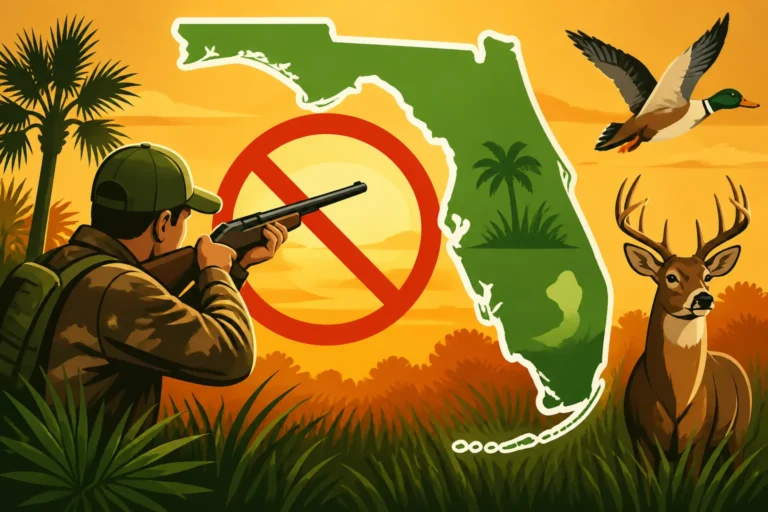
During Florida's archery season, it is generally prohibited to possess any firearm while hunting game that is legal to take with archery equipment. This rule is in place to ensure that hunters are truly committing to the archery challenge. There are very limited exceptions, such as for those with a valid concealed weapon permit who are not actively pursuing game with their bow and are instead using the firearm for personal protection. However, the safest and clearest interpretation for hunting purposes is: if you're bowhunting, leave the gun at home.
Beyond firearms, other prohibited items include:
- Explosive or poisonous arrows: These are strictly illegal. Arrows must kill by hemorrhage from a sharp broadhead, not by chemical or explosive means.
- Lights attached to bows that project a beam onto the target: While lighted pins on your sight are fine, any light source on your bow that illuminates the target itself for aiming purposes is prohibited. This maintains fair chase principles and prevents spotlighting.
- Electronic devices attached to the bow (other than lighted sight pins): This would include range-finding scopes that automatically adjust aim points, or other advanced targeting systems that remove the skill element.
- Drones or other aerial devices: These cannot be used for locating game during the hunt.
It's about maintaining a level playing field and ensuring the challenge inherent in archery hunting remains intact.
Avoiding Common Missteps
One of the easiest ways to accidentally run afoul of regulations during archery season is by bringing along gear intended for other seasons or types of hunting. For instance, while it’s legal to carry a handgun for self-defense if you have a concealed carry permit, using it to dispatch a deer wounded by an arrow would likely be illegal during archery-only season. The spirit of the law is that if you're hunting deer during archery season, you're doing so exclusively with archery equipment.
Another common misstep relates to scouting technology. While mapping apps and GPS devices are invaluable tools for locating game trails, food sources, and property lines – and indeed, resources like GoHunt offer incredible overlay maps for public lands and private land boundaries – using trail cameras that transmit images in real-time to your phone while hunting in a WMA might be restricted. Always double-check WMA-specific rules, as they can sometimes be more stringent than statewide regulations regarding electronic devices or scouting techniques. Remember, the goal is ethical hunting, and that means staying informed about all relevant laws.
Practical Application and Scouting with the Right Tools
Understanding the legalities is one thing, but applying that knowledge effectively in the field is another. Successful archery hunting requires not only compliant gear but also extensive preparation, practice, and smart scouting. This is where your commitment to the sport truly shines, long before you ever step foot in the woods.
Pre-Season Preparation and Practice
You wouldn't run a marathon without training, and you shouldn't head into archery season without consistent practice. Proficiency with your legal equipment is paramount for ethical hunting. Begin practicing months before the season opener, gradually extending your shooting distances and practicing from various positions you might encounter in the field – from a tree stand, on your knees, or even seated on the ground. This ensures that when the moment of truth arrives, you can confidently make a clean, humane shot within your effective range.
Focus on form, shot sequence, and broadhead tuning. Broadhead tuning is especially critical; ensure your broadhead-tipped arrows fly true and hit the same point as your field points. This often involves minor adjustments to your bow or rest. Many archers find that practicing with the actual broadheads they intend to hunt with, at least occasionally, helps build confidence in their flight characteristics. Remember, a legal broadhead is only effective if it's placed precisely where it needs to be.
Leveraging Technology for Archery Season
Modern technology has revolutionized the way we scout and prepare for hunts, even for traditional archery seasons. Tools like GPS devices, rangefinders, and mapping applications can give you a significant edge, helping you navigate vast public lands or understand private property boundaries. For example, using an app like GoHunt can provide invaluable insights into terrain features, vegetation types, and access points on your chosen Public Hunting Land in Florida. It can show you topo maps, satellite imagery, and even property owner information, helping you identify potential hunting spots, escape routes for game, and clear entry/exit paths for yourself.
When scouting for Florida deer, especially in dense palmetto and oak hammocks, understanding the subtle shifts in elevation or where thick cover meets a food source is key. Mapping tools can highlight these features. You can drop waypoints for scrapes, rubs, feeding areas, and bedding sites, creating a comprehensive digital map of your hunting territory. This pre-season reconnaissance, coupled with on-the-ground scouting, helps you formulate a solid hunting plan. Just remember, as mentioned earlier, always check specific WMA rules regarding the use of trail cameras or other electronic aids, as regulations can vary. Using technology to inform your strategy, not to replace your hunting skills, is the ultimate goal.
Disclaimer
Please remember that hunting regulations, including those pertaining to legal weapons, can change. While every effort has been made to provide accurate and up-to-date information, it is always your responsibility as a hunter to consult the most current Florida Fish and Wildlife Conservation Commission (FWC) regulations booklet or website before engaging in any hunting activity. This guide is for informational purposes only and should not be considered legal advice.