Bobwhite Quail in Florida
There's a whisper in the wind that many Floridians, especially those who grew up hunting, dearly miss – the distinctive "bob-white!" call that once echoed across so many of our pine flatwoods and open fields. For generations, the bobwhite quail was an integral part of the Florida landscape, a symbol of wild places and classic upland hunting. But over the decades, the familiar covey flush has become increasingly rare in many areas, leaving a void in our natural heritage and our hunting traditions. This comprehensive guide will take a deep dive into the fascinating world of Bobwhite Quail in Florida, exploring their unique lives, the challenges they face, the places where they still thrive, and what we can all do to help ensure their future in our beautiful state.
The Enduring Legacy of Florida's Bobwhite Quail
For anyone who grew up hunting in the South, the bobwhite quail isn't just a bird; it's a memory, a sound, a feeling. It's the crisp morning air, the excited whine of a pointing dog, the explosive flush of a dozen tiny feathered rockets, and the shared camaraderie of friends and family. Here in Florida, the bobwhite held a particularly special place, thriving in habitats that once dominated vast swaths of the peninsula.
A Brief History of the Bobwhite in the Sunshine State
Back in the early to mid-20th century, if you drove through much of rural Florida, you wouldn't have to look hard to find quail. They were truly ubiquitous. My grandad used to tell me stories about how you could almost trip over coveys just walking through a cow pasture on our old family farm near Ocala. Those were the days when agriculture was less intensive, timber practices were often more haphazard (which, in a way, mimicked natural disturbance), and prescribed fire was a natural, often accidental, occurrence. The landscape was a mosaic of open pine woods, wiregrass prairies, and brushy edges – prime quail country.
This abundance wasn't just a backdrop for hunting; it was part of the cultural fabric. Many Florida families supplemented their tables with quail, teaching younger generations the subtle art of flushing a covey or working a dog. It was an accessible hunt, requiring more patience and dog sense than specialized gear or remote travel. The steady populations meant that many landowners, even those with smaller tracts, could enjoy a good quail hunt right out their back door. This really cemented the bobwhite as an icon for the average hunter, making its decline all the more heartbreaking.
The Unique Biology and Habits of Florida's Quail
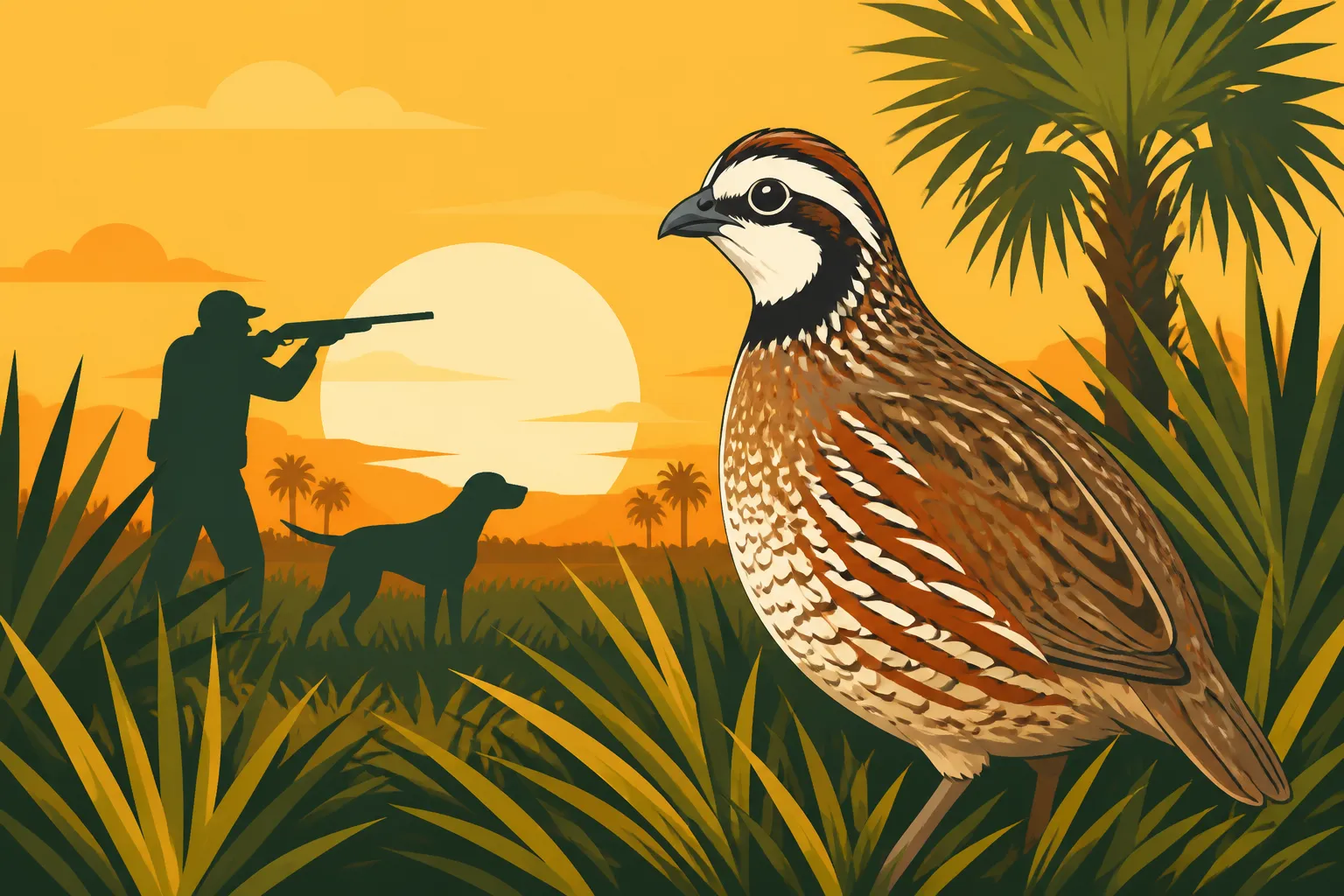
The bobwhite quail ( Colinus virginianus floridanus being the subspecies often found in peninsular Florida) is a small, stout game bird, not much bigger than a softball, known for its distinctive brown and white plumage and that unmistakable "bob-white!" whistle. Males have a crisp white throat and eye stripe, while females sport a buffy, yellowish coloration in the same areas. They're built for life on the ground, with short, rounded wings that allow for explosive, short bursts of flight – just enough to escape a predator or cross a field.
These birds are highly social, forming coveys of usually 6 to 20 individuals outside of the breeding season. This covey structure is crucial for survival, providing warmth in cooler weather and multiple eyes for predator detection. Quail are primarily ground-nesting birds, often creating shallow scrapes in dense vegetation. They lay anywhere from 10-18 eggs, with hens often attempting multiple broods in a season if conditions allow. Their diet is incredibly varied, depending heavily on seeds, native fruits, and, critically, insects, especially for fast-growing chicks. That insect protein is absolutely essential for chick survival and development. Unfortunately, their short lifespan, typically less than a year in the wild, means that a good breeding season and plenty of protective habitat are vital for maintaining stable populations.
Understanding the Decline of Florida's Bobwhite Quail Population
If you've spent any time hunting or just observing nature in Florida over the past few decades, you’ve likely noticed that wild quail are much harder to find than they once were. It’s not just your imagination or a bad hunting season; the numbers tell a stark story. The reasons for this decline are complex and multi-faceted, hitting the quail from several angles. Understanding these pressures is the first step toward finding solutions.
Habitat Loss and Fragmentation: The Primary Culprit
Hands down, the biggest factor in the bobwhite's disappearance across much of Florida is the drastic reduction and fragmentation of suitable habitat. Our state has seen incredible growth, and with that comes development, agriculture, and changes in land management.
Historically, much of Florida was a patchwork of open pine woodlands, like longleaf pine and wiregrass savannas, punctuated by cypress swamps and oak hammocks. This kind of landscape, maintained by frequent natural fires, created the perfect "early successional" habitat that quail absolutely need. They thrive in areas with diverse native grasses and forbs that provide dense overhead cover for nesting and roosting, but open ground beneath for easy movement and finding food. They need brushy escape cover along field edges and in small thickets.
Today, those vast, interconnected habitats are largely gone. Pine plantations are often managed for dense timber production, shading out the understory. Natural prairies have been converted to massive agricultural fields – think vast citrus groves or endless rows of row crops – which offer little in the way of nesting cover or diverse food sources. Urban and suburban sprawl eats up thousands of acres every year, replacing prime quail habitat with concrete and manicured lawns. When habitat is fragmented, even if small pockets remain, it makes it incredibly difficult for coveys to move between areas, find mates, and recover from localized pressures. This is a common story, and if you read about Florida Bobwhite Quail Decline, you'll see it's a trend seen across much of their historic range.
Predation Pressures and Invasive Species Impacts
While habitat loss is the big picture, increased predation is a significant piece of the puzzle, especially when combined with compromised habitat. Quail are ground-nesting birds, and both their nests and the birds themselves are vulnerable to a wide array of predators. As human development expands, certain predator populations, like raccoons, opossums, and domestic/feral cats, often flourish, creating an unbalanced ecosystem. Then there are the wilder predators: foxes, bobcats, and perhaps most notably, coyotes.
Coyotes weren't historically a major predator in Florida until relatively recently. As their populations expanded eastward, they filled a niche that had fewer natural checks, putting additional pressure on ground-nesting birds and small game. For hunters and landowners trying to manage for quail, controlling these predators can feel like a losing battle, but it's often a necessary component of a comprehensive recovery strategy. For more on dealing with these clever canines, you might want to read about Coyote Calling Florida Ranch Land.
Beyond native predators, invasive species also play a nasty role. Fire ants, an unwelcome import, can devastate quail nests, preying on eggs and newly hatched chicks. If a chick is swarmed by fire ants shortly after hatching, its chances of survival plummet dramatically.
Modern Agricultural Practices and Pesticide Use
Modern agriculture is incredibly efficient, but that efficiency often comes at a cost to biodiversity. Vast monoculture fields – growing only one crop over huge areas – replace the diverse mix of plants that quail rely on for food and cover. These fields are often tilled right up to the edge, eliminating crucial fencerows and buffer strips that once provided shelter and travel corridors.
Even more impactful is the widespread use of pesticides and herbicides. Herbicides kill off the native broadleaf plants that produce many of the seeds quail eat and hide in. Pesticides, while targeting crop pests, also wipe out the beneficial insects that are absolutely vital for quail chicks. Remember, those tiny quail chicks need a constant supply of protein-rich insects to grow rapidly during their first few weeks of life. Without this food source, survival rates drop sharply. It's a double whammy: less natural food and less insect protein. When you combine this with the lack of dense cover, it's easy to see why quail struggle to make a living in intensively farmed landscapes.
Where Florida Quail Numbers Hold Up Best Today
Given the challenges, it's easy to get discouraged about the future of bobwhite quail in Florida. But it's not all doom and gloom. There are still places where these resilient birds persist, and even thrive, thanks to dedicated conservation efforts and favorable conditions. These areas offer a glimpse into what's possible and provide critical strongholds for the species.
Private Plantations and Managed Lands
If you're looking for consistent quail hunting in Florida today, your best bet is often on large, privately owned plantations and intensively managed hunting lands. Places like Tall Timbers Research Station and other private quail operations across the Florida Panhandle and into Central Florida are shining examples of what can be achieved with dedicated, science-based habitat management. These landowners often have a multi-generational commitment to quail, and they invest significant resources into creating and maintaining ideal habitat.
What does that management look like? It's a combination of timber management focused on open pine savannas, frequent prescribed burning to maintain an early successional understory, disking and planting food plots with quail-friendly plants, and often, predator control. These operations are often managed by professional wildlife biologists who understand the intricate needs of quail, from nesting cover to winter food sources. While these opportunities are typically exclusive, whether through high-cost memberships or invitation-only hunts, they play a crucial role as laboratories for quail management techniques and as reservoirs for strong, huntable populations. They demonstrate that where the habitat exists, the quail will follow.
Select Public Lands with Active Restoration
It's not just private landowners who are working to bring back the bobwhite. The Florida Fish and Wildlife Conservation Commission (FWC), along with partners like the U.S. Forest Service and various water management districts, are actively engaged in habitat restoration projects on some of Florida's public lands. These efforts often focus on large Wildlife Management Areas (WMAs) and State Forests where the scale allows for meaningful impact.
Areas in the Florida Panhandle, like parts of Apalachicola National Forest or Blackwater River State Forest, often have management plans that incorporate prescribed fire and timber thinning specifically for quail. Similarly, some WMAs in Central and North Florida might have smaller-scale projects. These efforts aren't always about creating prime hunting opportunities, but rather about restoring ecological function and providing core populations that can, hopefully, expand. The challenges on public land are often greater due to diverse user groups, budget limitations, and the sheer size of the areas, but successes here are incredibly important for demonstrating what's possible and offering limited public hunting opportunities. Before heading out, it's always wise to check the specific regulations and quota requirements for any WMA you plan to visit, as many require a Florida WMA Management Area Permit. You can usually find detailed information on the FWC website or use mapping tools like GoHunt to understand land boundaries and management units, helping you identify potential areas where restoration efforts might be underway.
Niche Pockets and Pockets of Resilience
Beyond the large, intensively managed areas, you can still find pockets of wild quail in unexpected places. These often occur in areas with a "mishmash" of land uses – maybe a mix of small farms, unmanaged woodlots, older pastures, and neglected field edges. Think of areas where development hasn't fully taken over, but where intense agriculture isn't the sole land use either.
These "edge" habitats, particularly where there’s a mosaic of tall grasses, brush, and open timber, can sometimes surprise you with a small covey. Farmers who practice less intensive tillage, landowners who let fencerows grow thick, or even older, less manicured cattle ranches can sometimes hold birds. These situations are often more about happenstance than active management, but they show the quail's ability to persist where a semblance of their preferred habitat still exists. Finding these smaller, resilient pockets requires keen scouting, often relying on hearing calls at dawn or dusk, or spotting tracks and droppings. Reading aerial photos for subtle habitat changes, as you might when Reading Aerial Photos for Florida Deer, can also prove useful in locating these smaller, unpressured areas. It's a testament to the quail's hardiness that they can still cling on in these marginal environments.
Hunting Bobwhite Quail in Florida: Traditions and Regulations
Despite the challenges, quail hunting remains a cherished tradition in Florida for those dedicated enough to pursue it. It's a different kind of hunt than chasing deer or ducks; it's slower, more intimate, and deeply rooted in the partnership between hunter and dog. If you're considering trying your hand at quail hunting, it's crucial to understand the rules and the unique tactics involved.
Seasons, Bag Limits, and Licensing for Quail Hunting
Florida's quail season is fairly consistent across the state, generally running from early November through early March. This timing is designed to coincide with cooler weather, which is more comfortable for both hunters and dogs, and typically after the primary breeding season, allowing birds to reproduce.
The daily bag limit for bobwhite quail in Florida is usually 12 birds per person, with a possession limit of 24 birds. These limits are set by the FWC to ensure sustainable harvest and prevent overhunting, especially given the current population status. It’s always best to check the current FWC hunting regulations handbook, available online or at most license vendors, for the most up-to-date and precise dates and limits, as these can occasionally change.
To hunt quail in Florida, you'll need a valid Florida hunting license. For residents, there are various options, including annual or lifetime licenses. Non-residents also have several choices, including annual or shorter-term licenses. You can find detailed information on the costs and types of licenses in the article, Florida Hunting Licenses and What They Cost. If you plan to hunt on a WMA, you'll also need a Florida WMA Management Area Permit, which grants you access to these public hunting grounds. While quail are considered resident game, it's a good practice for any bird hunter to understand migratory bird certification requirements, though it typically doesn't directly apply to quail unless you're also targeting doves or ducks. For any new hunters, remember that Florida Hunter Education Requirements are mandatory for most individuals born after May 31, 1975.
Essential Gear and Tactics for Florida Quail Hunters
Quail hunting is one of those pursuits where the gear list isn't overly complicated, but certain items are absolutely essential for a successful and enjoyable experience.
First up is the shotgun. While any shotgun can technically take a quail, lighter gauges are traditionally favored for their ease of carry and quick swing. A 20-gauge, 28-gauge, or even a .410 are popular choices. You want a gun that feels nimble, as quail flushes can be fast and chaotic. For ammunition, 7.5 or 8 shot are the go-to sizes, providing a dense pattern without overkill on these small birds.
However, the single most indispensable piece of "gear" for serious quail hunting is a good pointing dog. Breeds like Brittanys, English Pointers, English Setters, German Shorthaired Pointers, and even certain versatile breeds are bred for this exact purpose. A well-trained bird dog will systematically cover ground, locate coveys by scent, and "point" them, holding still until you walk in and flush the birds. This takes years of training and a deep bond between hunter and dog. Without a pointing dog, finding coveys in dense cover becomes incredibly difficult, turning the hunt into a much more arduous and less efficient endeavor. The magic of a quail hunt often lies in watching a dog work, locked on point, tail rigid, nose to the wind. For more on this crucial partnership, check out Quail Hunting Behind Pointing Dogs.
As for tactics, it’s mostly about covering ground and letting your dog do the work. You’ll walk through likely quail habitat: field edges, areas with mixed pine and palmetto, thick fencerows, and areas with native grasses. Hunters typically walk abreast, keeping an eye on the dog, ready for the flush. When the dog goes on point, you approach cautiously, expecting the explosive covey rise. Safety is paramount when hunting with others, especially during a chaotic flush. Be aware of your shooting lanes and what's beyond your target.
The Experience of a Florida Quail Hunt
A Florida quail hunt is less about brute force and more about subtlety, observation, and tradition. It's often a slower pace than other hunts, allowing you to truly immerse yourself in the natural surroundings. You'll spend hours walking, soaking in the sights and sounds of the Florida uplands. The distinctive whistle of a "bob-white!" call might be your first clue that birds are nearby, even before your dog gets birdy.
Then there's the thrill of the flush. One moment, the world is quiet, save for the crunch of pine needles underfoot and the jingling of your dog's bell. The next, a dozen birds erupt from underfoot with a whirring explosion of wings, scattering in all directions. It's a moment that can make even the most seasoned hunter's heart pound. It's not just about the shot, it's about the entire ballet of dog work, the anticipation, and the quick reaction.
Beyond the actual shooting, there's the deep camaraderie. Quail hunting is often a social event, shared with friends or family, perhaps with a traditional lunch in the field. It’s an opportunity to connect with a hunting heritage that runs deep in the South. While the landscape and the challenges have changed, the fundamental joy of watching a good dog work and the excitement of a covey rise remains as powerful as ever. It's a chance to step back in time, even just for a day, and experience a truly classic hunt in the Sunshine State.
Conservation Efforts and the Future of Florida Quail
While the challenges facing Florida's bobwhite quail are significant, a dedicated community of conservationists, hunters, and landowners are working tirelessly to reverse the decline. These efforts are multi-pronged, focusing on habitat, research, and engaging people who care about these iconic birds. There's a real sense of hope that with sustained effort, we can bring back the familiar whistle to more of Florida's landscapes.
Habitat Restoration Programs and Prescribed Fire
The cornerstone of all quail recovery efforts is habitat restoration. Since habitat loss is the primary driver of their decline, bringing back what they need is paramount. Agencies like the FWC and organizations such as Quail Forever, in partnership with private landowners, are implementing programs to improve and expand quail habitat.
A key tool in this effort is prescribed fire. Florida's ecosystems are fire-adapted, and historic frequent fires maintained the open, grassy understory that quail thrive in. Without fire, pine flatwoods become choked with dense hardwoods and mid-story brush, shading out the native grasses and forbs that provide food and cover. Prescribed burning mimics these natural fires, clearing out woody growth, promoting the growth of beneficial native plants, and creating the open ground space quail need to move and forage. Thinning pine stands to allow more sunlight to reach the forest floor is another critical practice, especially in timber country. These efforts also involve planting native warm-season grasses and establishing diverse food plots tailored to quail needs. The FWC has specific programs like the Landowner Assistance Program that help private landowners implement these practices. You can learn more about these dedicated efforts in articles like Florida Quail Habitat Restoration Efforts.
Research and Monitoring: What We're Learning
Effective conservation isn't just about doing things; it's about understanding what to do and why. Research and monitoring are critical components of quail recovery. Institutions like Tall Timbers Research Station, located just north of Tallahassee, have been at the forefront of bobwhite quail research for decades, providing invaluable insights into their biology, habitat needs, and population dynamics. They conduct long-term studies on the effects of prescribed fire, timber management, and predator control.
The FWC also conducts various surveys and monitoring programs to track Florida quail population trends. This data helps biologists understand where populations are stable, where they are declining, and how different management strategies are impacting the birds. Researchers study quail genetics, investigate disease impacts, and monitor reproductive success and covey survival rates. This scientific understanding informs management decisions, helping land managers and conservationists allocate resources effectively and implement the most impactful strategies. Tools like GoHunt can provide hunters and landowners with data layers and mapping capabilities to help visualize habitat types and potential management areas, making it easier to see how research applies to specific tracts of land.
How Hunters and Landowners Can Contribute
The good news is that you don't have to be a wildlife biologist or a huge landowner to make a difference. Every little bit helps. Hunters, who are often the most passionate advocates for game species, can contribute significantly. Supporting conservation organizations like Quail Forever, the National Wild Turkey Federation (NWTF – as turkey habitat often benefits quail), or local land trusts provides financial resources for habitat projects. Joining these groups also offers opportunities to volunteer for habitat work days.
For landowners, even those with smaller tracts, implementing quail-friendly habitat improvements can have a positive impact. This could involve selective timber thinning, implementing small-scale prescribed burns (with proper permits and training), establishing native warm-season grass buffers along fields, or simply allowing certain areas to revert to a more natural, brushy state. Even managing invasive plants can help. Advocating for sound land management policies at local and state levels, and educating others about the importance of bobwhite quail, are also crucial. Every voice raised in support of quail habitat contributes to a louder chorus for conservation.
The Challenges and Hopes for Quail Recovery
While the dedication to bobwhite quail conservation is strong, the path to widespread recovery is fraught with significant challenges. These aren't simple problems with easy fixes; they involve complex economic, social, and ecological factors. Yet, within these challenges lies the enduring hope and commitment that fuels the conservation movement.
Overcoming Economic and Land Use Pressures
One of the most formidable hurdles to quail recovery in Florida is the sheer economic pressure on land. Florida is a rapidly growing state, and land values, particularly near urban and coastal areas, are skyrocketing. This makes it incredibly difficult to set aside or manage large tracts purely for wildlife habitat. Developers are constantly looking for new areas to build, and agricultural lands, while sometimes offering some habitat, are often driven by profit margins that necessitate intensive farming practices.
Balancing these economic realities with the needs of wildlife is a constant struggle. How do you incentivize a farmer to leave uncultivated buffer strips or transition to less intensive methods when every acre is valuable? How do you protect core quail habitat from the relentless march of development? This requires creative solutions, such as conservation easements, where landowners are compensated for permanently protecting their land from development, or innovative programs that make quail-friendly practices economically viable for agricultural producers. Without addressing the underlying economic pressures that lead to habitat degradation, widespread quail recovery will remain an uphill battle.
The Role of Public Awareness and Education
Many Floridians today, especially those who didn't grow up with wild quail, might not even realize what's been lost. The bobwhite quail has faded from much of the collective public consciousness, making it harder to garner broad support for conservation efforts. This is where public awareness and education become absolutely critical.
Educating the general public – not just hunters – about the unique biology of the bobwhite, its importance as an indicator species for ecosystem health, and the plight it faces can generate much-needed support. When people understand that restoring quail habitat benefits a host of other species, from gopher tortoises to songbirds, they are more likely to support conservation funding and policies. School programs, nature centers, and community outreach events can all play a role in connecting a new generation to the "ghost of the pines." Highlighting the cultural significance of the bird, both for hunting heritage and broader ecological value, can reignite a passion for its preservation.
A Vision for the Future: Bringing Back the Whistle
Despite the daunting challenges, there is a powerful vision that drives bobwhite quail conservation: the hope of once again hearing that distinctive "bob-white!" whistle ringing across more of Florida's diverse landscapes. It's a long-term vision that requires sustained commitment, collaborative approaches, and a willingness to adapt.
The future of Florida's quail lies in continued investment in habitat restoration, expanding the use of prescribed fire, and forging stronger partnerships between state agencies, private landowners, conservation organizations, and the public. It means supporting research that helps us refine our management strategies and learn more about these resilient birds. It means educating the next generation about the value of wild places and the species that depend on them. The ultimate goal isn't just to increase quail numbers for hunters, but to restore the ecological health of Florida's uplands, creating a more vibrant and resilient ecosystem for all wildlife. The journey is long, but the sound of a covey flush, the sight of a pointing dog, and the unmistakable call of the bobwhite are powerful motivators to keep working towards that brighter future.
Disclaimer
Please remember that hunting regulations and seasons in Florida are subject to change. Always consult the latest official Florida Fish and Wildlife Conservation Commission (FWC) hunting regulations handbook before engaging in any hunting activities. This article is intended for informational purposes and should not be considered a substitute for official FWC guidelines.